Normal Computing raises $50M to solve the AI energy crisis with thermodynamic chip technology


2 Sources
[1]
AI chips are getting too expensive -- and too power-hungry. This startup just raised $50M to change that. | Fortune
New investors include Galvanize, Brevan Howard Macro Venture Fund, and ArcTern Ventures, alongside existing backers Celesta Capital, Drive Capital, Eric Schmidt's First Spark Ventures, and Micron Ventures. CEO Faris Sbahi told Fortune the company's software platform is already being used by more
[2]
Normal Computing raises $50M to tackle the soaring energy demands of AI chips - SiliconANGLE
Normal Computing raises $50M to tackle the soaring energy demands of AI chips Normal Computing Corp., a startup that's trying to reinvent the fundamental physics of artificial intelligence, said today it has raised $50 million in a Series B funding round led by Samsung Catalyst. Today's round
Share
Copy Link
Normal Computing secured $50 million in Series B funding led by Samsung Catalyst to address the escalating cost and power consumption of AI chips. The startup is developing thermodynamic computing technology and an EDA platform already used by half of the world's top semiconductor companies. CEO Faris Sbahi warns data centers will hit an energy wall by 2030.
Normal Computing Secures $50 Million to Address AI Energy Consumption Crisis
Normal Computing has raised $50 million in funding led by Samsung Catalyst to tackle the soaring energy demands of AI chips, bringing its total capital raised to more than $85 million
2
. The Series B round attracted new investors including Galvanize, Brevan Howard Macro Venture Fund, and ArcTern Ventures, alongside existing backers Celesta Capital, Drive Capital, Eric Schmidt's First Spark Ventures, and Micron Ventures1
. Founded in 2022 by former engineers and scientists from Google Brain, Google X, and Palantir, the startup is positioning itself at the intersection of two critical challenges facing the semiconductor industry: the escalating cost and power consumption of AI chips.
Source: Fortune
Electronic Design Automation Platform Gains Traction with Semiconductor Companies
CEO Faris Sbahi revealed that the company's software platform for semiconductor companies is already being used by more than half of the top 10 semiconductor firms by revenue
1
. The Normal EDA platform addresses one of the industry's most pressing issues: the rising complexity of designing advanced AI chips, where even minor errors can trigger expensive delays and rework. Modern AI chips pack in tens of billions of transistors to support today's frontier models and can cost more than $500 million to develop before a single unit ships1
. The chip design software uses a frontier AI technique called auto-formalization, combining large language models with formal logic to help engineers design, optimize and prove the correctness of their silicon designs2
.Thermodynamic Computing Chip Architecture Promises 1,000x Efficiency Gains
Beyond its commercial software business, Normal Computing is developing energy-efficient AI chips based on a radically different approach. The company has already achieved tape-out of its prototype thermodynamic computing chip, the CN101, which represents the world's first thermodynamic computing chip
2
. Unlike traditional GPUs that consume massive amounts of energy fighting the inherent randomness of physical systems to maintain rigid "0" or "1" states, Normal's thermodynamic computing chip architecture harnesses thermal dynamics and treats nature's randomness as a feature rather than a bug2
. This approach aims to deliver 1,000-times energy efficiency gains, initially focused on generative AI inference workloads.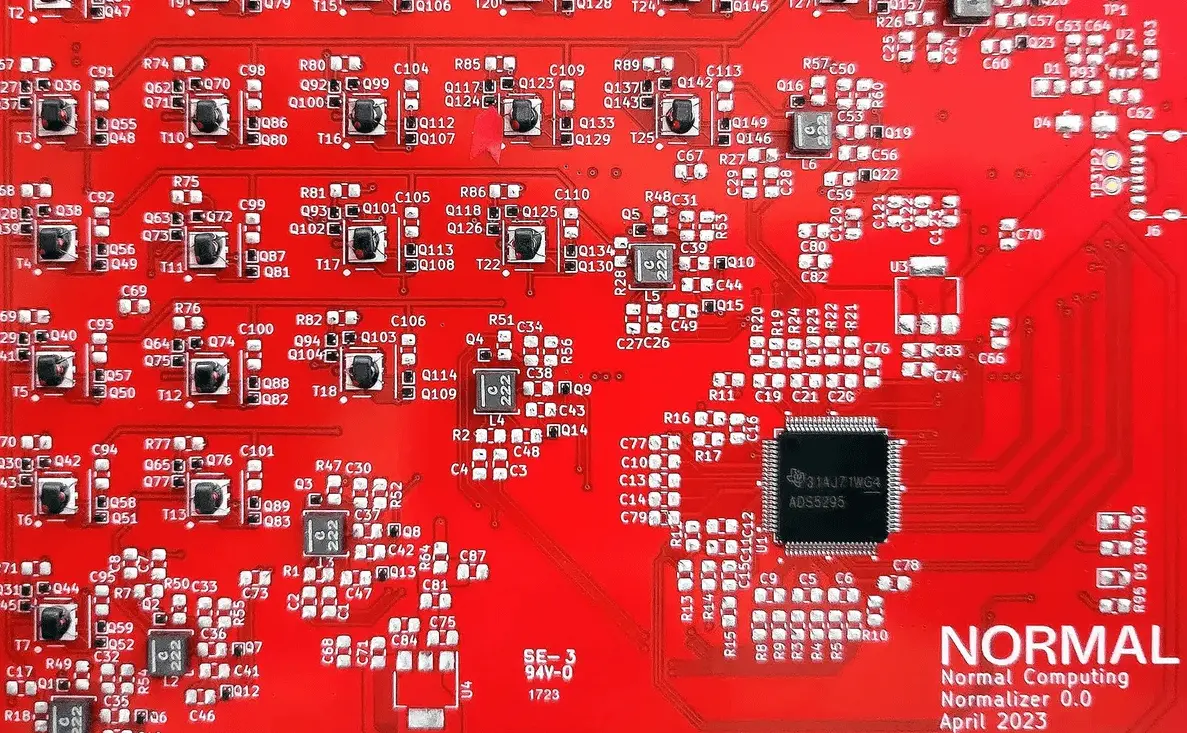
Source: SiliconANGLE
Related Stories


Data Centers Face Energy Wall by 2030
"The mission of the company is to go after this so-called AI energy crisis," Sbahi told Fortune. "Data centers are expected to hit an energy wall around 2030, and most of the strategy now is to find new ways to acquire more energy -- but our position is to solve the problem in terms of the hardware that we're using"
1
. Normal Computing joins a growing cohort of startups exploring alternatives to conventional AI hardware, including Unconventional AI, led by former Intel AI chief Naveen Rao, which raised a $475 million seed round in January led by Andreessen Horowitz and Lightspeed Ventures. The company is researching its thermodynamic chip architecture in collaboration with the U.K.'s Advanced Research and Invention Agency, known as ARIA. Suraj Bramhavar, director of ARIA's Scaling Compute program, noted that Normal's team "has taken a fundamentally unconventional approach and delivered working silicon in CN101," calling it "an exceptionally rare outcome for work this ambitious"2
. The current fundraise will focus on scaling Normal's commercial Electronic Design Automation platform, with the long-term goal of integrating into mainstream semiconductor design manufacturing.References
Summarized by

Navi
Related Stories
Recent Highlights
1
Meta Unveils Muse Wonder Frontier AI Models, Claims Performance Matching OpenAI and Anthropic
Technology

2
IMF Report Warns AI Market Correction Could Spark Global Financial Crisis With $1.4T at Risk
Business and Economy

3
OpenAI Releases 722 AI-Generated Math Solutions, Triggering Existential Crisis in Mathematics
Technology

Recent Highlights
Today's Top Stories








Don’t drown in AI news. We cut through the noise - filtering, ranking and summarizing the most important AI news, breakthroughs and research daily. Follow topics that matter to you and stay ahead.


