4 Sources
[1]
Databricks' former AI chief thinks he can cut AI's power bill by 1,000x
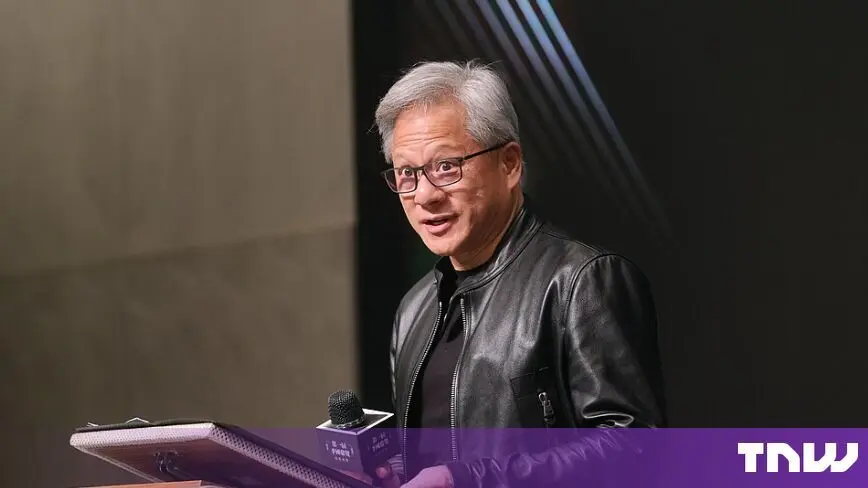
The drive to discover the next big thing in AI has funded some pretty ambitious projects -- but one company is taking it as a chance to rebuild computing architecture from the ground up. Led by Naveen Rao, formerly the head of AI at Databricks, Unconventional AI promises to make inference processing vastly more power efficient. The secret weapon: a new kind of oscillator-based computer architecture. On Thursday, the company released its first model AI -- called Un0 -- an image-generation system tool that shows for the first time how the company's technology can replicate conventional AI systems. In an accompanying new paper, the company's research team details how they built a fully functional image generation model using a software simulation of the new architecture -- one that performs just as well as state-of-the-art diffusion models. "This is the 'hello world' of a new kind of computer," Rao told TechCrunch. "Over the next year, you're going to start seeing some pretty interesting news around this." The output from the new Un-0 model is similar to that of image-generation models like Stable Diffusion or OpenAI's GPT Image 1. The impressive part is how it arrives at that performance. The model is built on an oscillator-based architecture that is completely different from the chips that power conventional computing and traditional LLMs. The advantages of the oscillator-based computing are complex, but Rao believes it will ultimately reduce power use by as much as 1000 times. Much of the infrastructure to get there is still being built. The current version of Un-0 runs on a software simulation of Unconventional's oscillator chips, but the company plans to release schematics for an actual chip soon. From there, the plan is to build an entire inference stack from the ground up, with Unconventional AI eventually supplying compute capacity just like any other provider. "We will build a new kind of system composed of our chips," says Rao. "We will run AI models there, and we will have a network cable where prompts come in and inferences go out, but it'll be done at 1/1000 of power." It's a stunningly ambitious goal, particularly for a company that still counts less than 50 employees. But given the scale of the AI buildout and the anticipated cost of meeting the growing demand for inference, it may be one of the few efforts to meet the scale of the problem. As Rao sees it, the available supply of power will be one of the hard limits for AI in the years to come -- and Unconventional is one of the few projects able to address it. "AI scaling is hard because of energy. It's going to be the fundamental limit in the next few years. You just can't go past it. It's going to be an energy limited problem, at the end of the day," he says.
[2]
Unconventional AI releases its first model, built on an oscillator architecture that could cut AI power use by 1000x
Unconventional AI released Un-0, an image generation model on a simulated oscillator architecture that founder Naveen Rao says could cut AI power 1000x. Unconventional AI, the startup founded by former Databricks AI chief Naveen Rao, has released its first AI model, an image generation system called Un-0 that runs on a completely new kind of computing architecture. The model produces results comparable to state-of-the-art diffusion models like Stable Diffusion, according to an accompanying research paper. The catch is that it runs on a software simulation of hardware that does not yet exist. The company is building an oscillator-based computer architecture that abandons the digital logic underpinning virtually all modern computing. Instead of processing data through transistors performing binary operations, Unconventional's approach uses coupled ring oscillators in a fabric network, encoding and processing information through the physics of the oscillators themselves. Rao told TechCrunch that this approach could ultimately reduce power consumption by a factor of a thousand compared to conventional chips. That claim is aspirational. US utilities are planning to spend nearly one and a half trillion dollars by 2030 on infrastructure driven largely by AI data centre demand, and any technology that could meaningfully reduce that burden would be enormously valuable. But Unconventional has not built a physical chip, and the thousand-fold improvement exists only as a theoretical projection. What Un-0 does demonstrate is that the architecture can replicate the function of conventional AI systems. The research team built a fully functional image generation model using a software simulation of the oscillator architecture, and the paper shows it performing on par with established diffusion models. "This is the 'hello world' of a new kind of computer," Rao told TechCrunch. Rao has a track record that makes investors willing to bet on the premise. He co-founded Nervana Systems, a deep learning chip startup that Intel acquired for roughly $400 million in 2016. He then founded MosaicML, which Databricks acquired for roughly one and a third billion dollars in 2023. Rao holds a PhD in neuroscience from Brown and studied electrical engineering at Stanford. That background, bridging chip design and brain science, is central to his pitch that computing architecture itself needs to change. That track record attracted $475 million in seed funding at a four and a half billion dollar valuation in December 2025, led by Lightspeed and Andreessen Horowitz with participation from Sequoia, Lux Capital, DCVC, and Jeff Bezos. Rao invested $10 million of his own money at the same terms. Unconventional is not the only startup betting that the path to AI efficiency runs through fundamentally new architectures, but its approach is among the most radical. The company plans to release schematics for a physical chip soon and intends to build an entire inference stack from the ground up. The end goal is to operate as a compute provider, with Unconventional supplying inference capacity through its own chips. "We will build a new kind of system composed of our chips," Rao said, adding that prompts would come in and inferences would go out over a standard network connection, but at a fraction of the power. The ambition is enormous relative to the company's size. Unconventional has fewer than 50 employees and is attempting to replace an architecture, the von Neumann stored-program computer, that has dominated computing for roughly 80 years. The race to reduce AI's energy footprint has attracted a wave of startups, but most are working on cooling, efficiency software, or incremental hardware improvements rather than trying to rebuild the computing stack entirely. Rao's argument is that incremental approaches will not be enough. "AI scaling is hard because of energy," he told TechCrunch, adding that power will be the fundamental limit in the next few years. The International Energy Agency projects that global data centre electricity consumption will exceed a thousand terawatt-hours by the end of 2026. The gap between Un-0's software simulation and a working chip running real-world inference at scale is vast, and the company has given no timeline for when physical hardware will be available for commercial use. But the demonstration that oscillator-based computing can produce functional AI output is the first concrete evidence that the approach is more than theoretical. Whether it can deliver on the thousand-fold efficiency promise is a question that only hardware can answer.
[3]
Unconventional AI debuts oscillator-based Un-0 model series
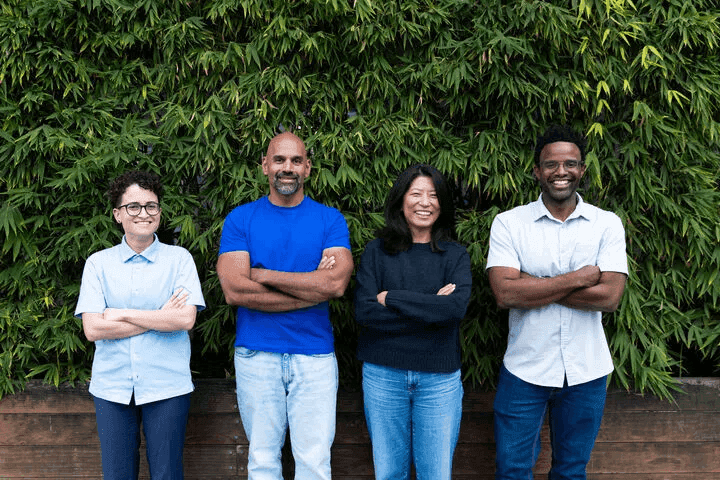
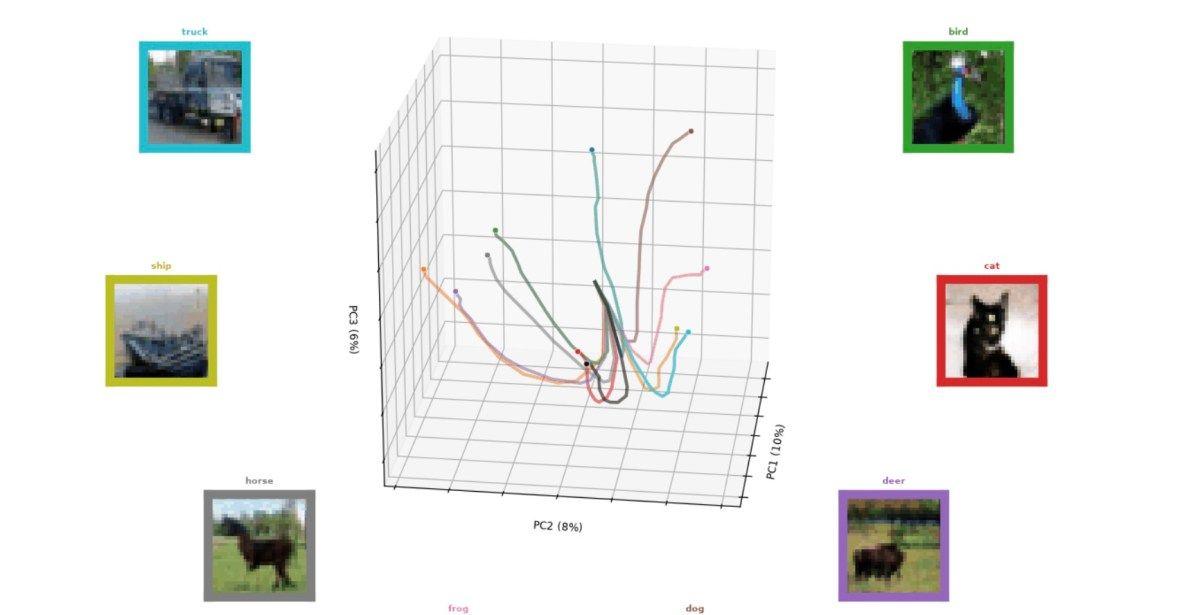
Unconventional AI Inc. has developed an artificial intelligence architecture that could improve the power efficiency of image generation models. The technology is the basis of a new neural network series, Un-1, that the company released on Thursday. Unconventional AI is led by Chief Executive Officer Naveen Rao (pictured, second from the left), the former corporate vice president of Intel's AI platforms group. In December, the company raised $475 million from a consortium that included Amazon.com Inc. founder Jeff Bezos. It's developing chips that can run AI models using significantly less power than today's graphics cards. Not all processors are based on standard silicon transistors. Multiple startups are developing so-called in-memory computing devices that use a mix of transistors and capacitors, tiny energy storage devices. Quantum processors, meanwhile, often substitute silicon with materials such as sapphire. The Un-0 model series is part of an effort by Unconventional AI to develop more efficient AI chip architectures. According to the company, Un-0 is optimized to run not on standard transistor-based circuits but rather oscillators. An oscillator is a device that emits a signal such an electrical pulse at regular time intervals. Unconventional AI says that a large number of miniature oscillators could be assembled into a machine learning accelerator. The semiconductor industry already mass produces such components because they're used in chips such as central processing units. In particular, CPUs rely on oscillators to set the pace at which their other circuits perform calculations. Un-0 doesn't run on a physical oscillator chip. Instead, it generates images using several thousand simulated oscillators. The oscillators are linked together, which means that the signals produced by one virtual device affect the output of the others and vice versa. There are six Un-0 models that vary in size and output quality. The smallest comprises 1,024 virtual oscillators while the largest features 1,6384. Unconventional AI trained the models using two open-source datasets, CIFAR-10 and ImageNet-64, that contain thousands of images optimized for machine learning projects. The training process unfolded differently than in a standard AI project. Usually, developers go about the task by optimizing AI model components such as weights. By contrast, Unconventional calibrated the manner in which Un-0's simulated oscillators affect one another and the frequency at which they generate signals. The workflow through which a standard AI model generates media files starts with an image that contains random noise. Un-0 kicks off the process the same way, but the subsequent steps differ. First, a small group of oscillators generates an instruction that informs the model what type of image it should create. The instruction prompts Un-0's other oscillators to interact with one another. According to Unconventional AI, the interactions produce a series of numbers that can be assembled into an image. The company ran a series of benchmark tests to evaluate Un-0's output quality. It determined that the model can match "the quality of leading conventional image generation methods when they were first published." As a result, Unconventional AI believes that future advances may make it possible to significantly improve the power efficiency of AI applications.
[4]
An 'Unconventional' Way to Bring Down Inference Compute Energy Needs by 1000x
The need for cheaper AI appears to have hit home, thanks to inflated bills in the pay-as-you-use models that AI Labs have moved towards in recent times. So, any opportunity to reduce cost of power consumption is being seen as an option worth exploring as is the case with Unconventional.AI, a company led by former AI head at Databricks. The company, led by Naveen Rao, released its first AI model called Un-0 for image-generation that suggests for the first time that technology can replicate conventional AI systems at a much lower level of power consumption. The new system could ultimately reduce power use by as much as 1,000 times. Now, that would be music to the ears of OpenAI and Anthropic. So, what exactly is the secret sauce? Unconventional.AI says inference processing becomes a vastly power efficiency process through the use of a new oscillator-based computer architecture. A paper released by the company details out the process of how an image generation model was built using a software simulation of the new architecture. A blog written in early May lists out means to reduce the power consumption by 1000x. "For example, don't fully specialize the hardware to the computation, but specialize more than a GPU currently does," it says. The idea is to design the hardware architecture to match an AI model's architecture so that the data movement is minimized. For example, dataflow architectures can be spatially laid out in CMOS to minimize the distance that neuron activations need to traverse to reach the next layer of the neural network, which in turn can reduce energy consumption, it said. Another option relates to an even more extreme than designing the AI hardware to map exactly to the AI model architecture one wishes to run on it, is to specialize to a specific trained instantiation of that model by hard-wiring the model parameters in the chip. This has been an approach adopted by Taalas and advocated for in academic papers. A third several other ideas relates to parameter efficiency by reducing the total amount of memory required by trading off using fewer parameters and more computation with those parameters. "This has been explored in the conventional ML community in work on deep equilibrium models and recursive models. Physical dynamical systems realized in electronic circuits can naturally incorporate the lessons from these approaches, and, in some cases, it is even more natural to implement them with continuous-time physical systems," the blog says. Meanwhile, founder Naveen Rao told TechCrunch that the company would, over the next year, start seeing some pretty interesting news around this. The model released by the company enhances performance using an oscillator-based architecture that vastly different from chips that power conventional computing and traditional LLMs, the report said. For now, Un-0 runs on a software simulation of the company's oscillator chips, but they are in advanced stage of planning the release of schematics from an actual chip soon. Thereafter, it would create an entire inference stack from ground-up with Unconventional.AI then providing compute capacity just any other provider. "We will build a new kind of system composed of our chips. We will run AI models there, and we will have a network cable where prompts come in and inferences go out, but it'll be done at 1/1000 of power," Rao has told TechCrunch. "The high-level approach we are taking is to develop both the AI models and the AI hardware from the ground up together - co-evolving their development so that the hardware operates as close to the limits of what is physically possible with current CMOS technology, and the AI models running on the hardware optimally match the hardware's capabilities, the blog says. Seems to be an interesting experiment, which for the sake of the AI ecosystem, we hope will do its bit to cut down user costs. As Rao says, AI scaling has been tough due to energy which could become the limiting factor in a few years. Which is why he is hoping that his solution could resolve the energy-limitation challenge. We promise to keep a close watch on how things go with Unconventional.AI in the short-term.
Share
Copy Link
Unconventional AI released Un-0, an image generation model running on a revolutionary oscillator-based computing architecture that promises to reduce AI power consumption by 1000 times. Led by Naveen Rao, former head of AI at Databricks, the startup is rebuilding computing from the ground up to address what Rao calls AI's fundamental limit: energy. The model currently runs on software simulation, with physical chips planned soon.

Source: SiliconANGLE
Unconventional AI has released Un-0, an image generation model that represents the first concrete demonstration of a radically different approach to AI computing
1
. Led by Naveen Rao, the former head of AI at Databricks, the startup unveiled its first AI model alongside a research paper detailing how the team built a fully functional image generation model using a software simulation of an oscillator-based architecture2
. The Un-0 AI model produces results comparable to state-of-the-art diffusion models like Stable Diffusion, but operates on computing principles completely different from the chips powering conventional AI systems3
.
Source: TechCrunch
The model series includes six variants ranging from 1,024 virtual oscillators in the smallest version to 16,384 in the largest, all trained using open-source datasets CIFAR-10 and ImageNet-64
3
. "This is the 'hello world' of a new kind of computer," Rao told TechCrunch, suggesting that over the next year, the company will start sharing significant developments around this technology1
.The promise to reduce AI power consumption by 1000 times rests on a fundamental departure from conventional computing. Instead of processing data through transistors performing binary operations, the oscillator-based architecture uses coupled ring oscillators in a fabric network, encoding and processing information through the physics of the oscillators themselves
2
. An oscillator is a device that emits signals at regular time intervals, and the semiconductor industry already mass produces such components for use in CPUs3
.Unconventional AI's approach involves designing AI hardware to match an AI model's architecture so that data movement is minimized, which in turn reduces energy consumption
4
. The training process differs from standard AI projects: instead of optimizing weights, developers calibrate how the simulated oscillators affect one another and the frequency at which they generate signals3
. Benchmark tests determined that the model can match "the quality of leading conventional image generation methods when they were first published"3
.The current version of Un-0 runs on a software simulation of Unconventional AI's oscillator chips, not physical hardware
1
. The company plans to release schematics for an actual chip soon and intends to build an entire inference stack from the ground up, eventually supplying compute infrastructure capacity just like any other provider2
. "We will build a new kind of system composed of our chips. We will run AI models there, and we will have a network cable where prompts come in and inferences go out, but it'll be done at 1/1000 of power," Rao explained1
.The gap between software simulation and working chips running real-world AI inference power consumption at scale remains vast, and the company has provided no timeline for when physical hardware will be commercially available
2
. The thousand-fold improvement exists only as a theoretical projection, though what Un-0 demonstrates is that the architecture can replicate the function of conventional AI systems2
.Related Stories
Rao's argument centers on a hard reality: AI scaling faces fundamental constraints from energy. "AI scaling is hard because of energy. It's going to be the fundamental limit in the next few years. You just can't go past it. It's going to be an energy limited problem, at the end of the day," he stated
1
. US utilities are planning to spend nearly one and a half trillion dollars by 2030 on infrastructure driven largely by AI data center demand, and the International Energy Agency projects that global data center electricity consumption will exceed a thousand terawatt-hours by the end of 20262
.The startup raised $475 million in seed funding at a four and a half billion dollar valuation in December 2025, led by Lightspeed and Andreessen Horowitz with participation from Sequoia, Lux Capital, DCVC, and Jeff Bezos
2
. Rao invested $10 million of his own money at the same terms2
. His track record includes co-founding Nervana Systems, acquired by Intel for roughly $400 million in 2016, and founding MosaicML, which Databricks acquired for roughly one and a third billion dollars in 20232
.With fewer than 50 employees, Unconventional AI is attempting to replace the von Neumann stored-program computer architecture that has dominated computing for roughly 80 years
2
. The demonstration that oscillator-based computing can produce functional AI output offers the first concrete evidence that this approach to sustainable AI is more than theoretical, though whether it can deliver on the energy efficiency promise remains a question only physical hardware can answer2
.Summarized by
Navi
[2]
[3]
09 Dec 2025•Startups

30 May 2025•Technology

19 Nov 2024•Technology

1
Policy and Regulation

2
Policy and Regulation

3
Policy and Regulation