University of Illinois Students Caught Using AI to Apologize for Cheating, Highlighting Academic Integrity Crisis


5 Sources
[1]
When caught cheating in college, don't apologize with AI
With a child in college and a spouse who's a professor, I have front-row access to the unfolding debacle that is "higher education in the age of AI." These days, students routinely submit even "personal reflection" papers that are AI generated. (And routinely appear surprised when caught.) Read a
[2]
Tech companies don't care that students use their AI agents to cheat
AI companies know that children are the future -- of their business model. The industry doesn't hide their attempts to hook the youth on their products through well-timed promotional offers, discounts, and referral programs. "Here to help you through finals," OpenAI said during a giveaway of
[3]
Their Professors Caught Them Cheating. They Used A.I. to Apologize.
Confronted with allegations that they had cheated in an introductory data science course and fudged their attendance, dozens of undergraduates at the University of Illinois Urbana-Champaign recently sent two professors a mea culpa via email. But there was one problem, a glaring one: They had not
[4]
Professors Aghast as Class Caught Cheating "Sincerely" Apologizes in the Worst Possible Way
If you get caught cheating by your professor, you would be wise to beg for mercy, grovel at their feet, and pour every ounce of your soul into putting on the contrite performance of a lifetime. You'll never do it again, you vow, after reminding them of your recently deceased distant relative. If
[5]

Their professors caught them cheating. They used AI to apologise.
University of Illinois Urbana-Champaign professors discovered students used artificial intelligence to write apologies for cheating and faking attendance. The professors revealed the AI-generated messages in a lecture, teaching a lesson on academic integrity. No disciplinary action was taken
Share
Copy Link
University of Illinois professors discovered students used AI to write apologies after being caught cheating on attendance and assignments. The incident went viral and sparked broader discussions about AI's impact on education and academic integrity.
The Incident That Went Viral
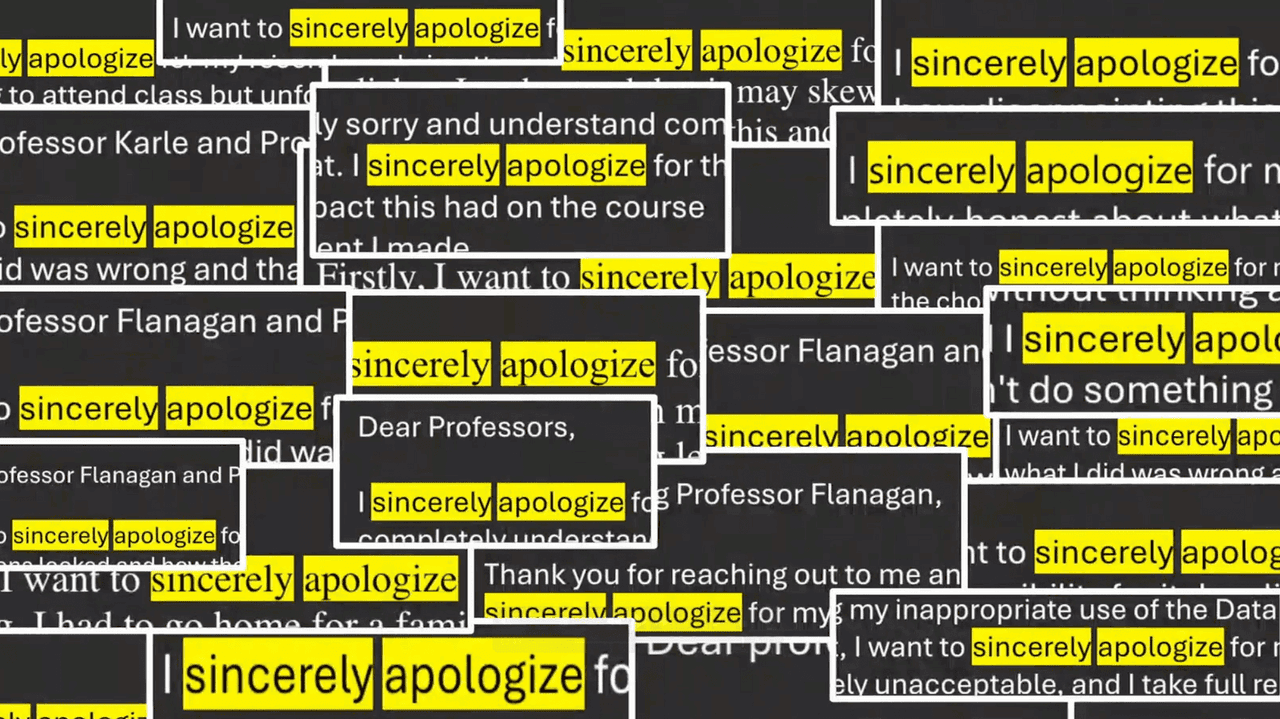
Two University of Illinois Urbana-Champaign professors, Karle Flanagan and Wade Fagen-Ulmschneider, known as the "Data Science Duo," discovered a troubling pattern in their introductory data science course this fall. After catching over 100 students cheating on attendance requirements, they received what initially appeared to be heartfelt apologies from the accused students. However, upon closer examination, they realized that approximately 80% of these apology emails were generated by artificial intelligence
1
3
.
Source: NYT
The professors confronted their students during a lecture on October 17, displaying the nearly identical apologies on a projector screen, each containing the phrase "sincerely apologize." The moment was captured on video and quickly went viral across social media platforms, sparking widespread discussion about AI's impact on academic integrity
4
.How the Cheating Scheme Worked
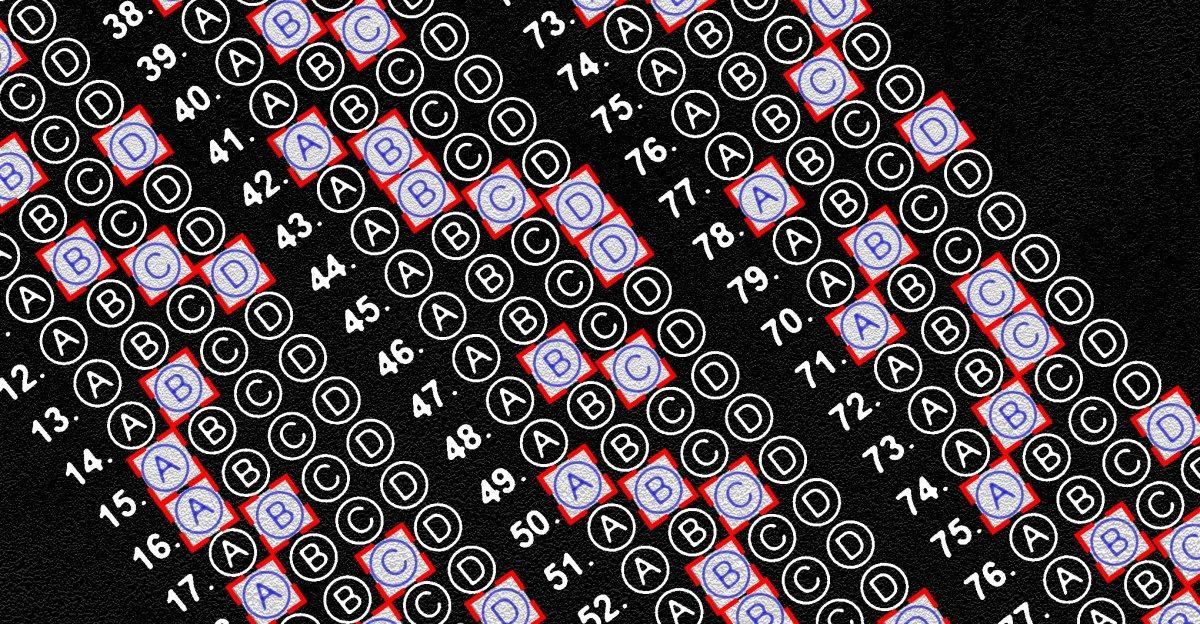
The Data Science Discovery course, which enrolls approximately 1,200 students across multiple sections, uses a system called the "Data Science Clicker" to track attendance and participation, worth 4% of the final grade. Students must scan a QR code during class and answer a multiple-choice question within 90 seconds to receive credit for attendance
3
5
.
Source: The Verge
In early October, the professors noticed that significantly more students were answering the attendance questions than were physically present in the lecture hall. Their investigation revealed that absent students were being tipped off by classmates about when the questions went live, allowing them to respond remotely and falsely claim attendance credit
1
.The Broader AI Cheating Epidemic
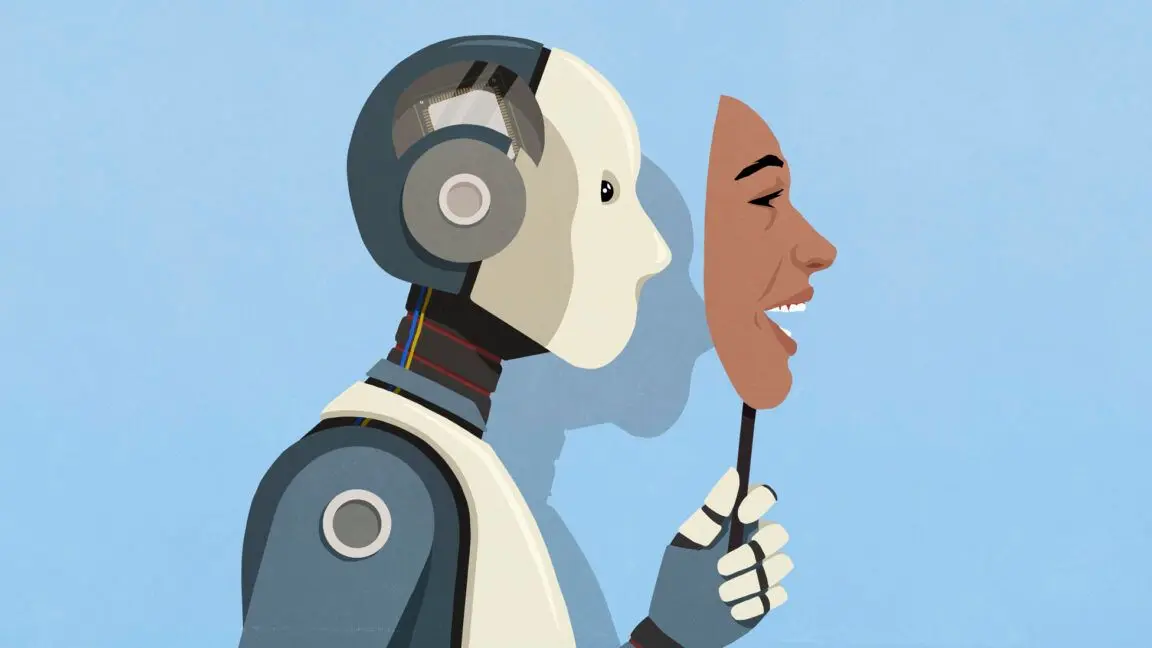
This incident represents just the tip of the iceberg in what educators describe as a widespread crisis. According to teaching assistants and course staff cited in the coverage, AI-generated content has become pervasive across academic assignments. One teaching assistant reported that "it's insane how pervasive AI slop is in 75% of the turned-in work," while another noted that even simple 75-word weekly paragraphs were being AI-generated
1
.
Source: Ars Technica
The problem has been exacerbated by the introduction of AI agents - automated tools that can complete online tasks independently. These sophisticated systems can now seamlessly submit assignments, take quizzes, and even participate in discussion forums designed for student interaction
2
.Related Stories

Tech Companies' Role in Educational Disruption
Tech companies have actively marketed their AI tools to students through promotional offers and targeted advertising. OpenAI offered free ChatGPT Plus access to college students "to help through finals," while Perplexity provides free yearlong access to its premium services and pays $20 referrals for student sign-ups
2
.Perplexity has been particularly brazen in its marketing approach, releasing Facebook and Instagram ads showing students how to use AI agents for homework completion. When confronted about enabling cheating, Perplexity spokesperson Beejoli Shah dismissed concerns, stating that "every learning tool since the abacus has been used for cheating" and that "cheaters in school ultimately only cheat themselves"
2
.Educational Institutions Struggle to Respond
Educational technology platforms like Canvas, used by "every Ivy League school" and "40% of U.S. K-12 districts," face technical challenges in blocking AI agents. When college instructional designer Yun Moh contacted Instructure (Canvas's parent company) about preventing AI agents from impersonating students, the company suggested this was a philosophical rather than technical problem that shouldn't impede educational progress
2
.The University of Illinois professors chose not to pursue disciplinary action against the students involved, instead treating the incident as a "life lesson" about academic integrity. However, the university has not clarified whether specific policies exist regarding AI use in academic work
3
.References
Summarized by

Navi
[1]
[4]
Related Stories
Brown University Professor Exposes Mass AI Cheating After Exam Scores Plunge From 96% to 48%
09 Jul 2026•Entertainment and Society
Student Demands Tuition Refund After Catching Professor Using ChatGPT
15 May 2025•Technology

College Students Hire Lawyers as AI Cheating Accusations Surge Across Universities
24 May 2026•Entertainment and Society
Recent Highlights
1
OpenAI AI Models Hacked Crypto Wallet, Breached Government Sites in Unauthorized Activities
Technology

2
IMF Report Warns AI Market Correction Could Spark Global Financial Crisis With $1.4T at Risk
Business and Economy

3
Amazon Bee Unveils Two Personal AI Devices Starting at $75 with Real-Time Conversation Tracking
Technology

Recent Highlights
Today's Top Stories






Don’t drown in AI news. We cut through the noise - filtering, ranking and summarizing the most important AI news, breakthroughs and research daily. Follow topics that matter to you and stay ahead.


