US-China AI Rivalry Forces Countries to Choose Between Competing AI Blocs


5 Sources
[1]
'Everyone is hedging.' As the U.S. and China divide the world into rival AI blocs, that lends power to 'swing countries' in between | Fortune
With the two leading AI powers, the United States and China, forming their own AI blocs, other countries are maneuvering to harness the strengths of both groupings and avoid losing out. As the rivalry intensifies, experts say the window for countries to be able to choose freely between the two AI
[2]
US vs China: As world splits into AI blocs, where does Europe stand?
As the US and China build rival AI blocs, Europe is scrambling to reduce its dependence on both. But despite its ambitions to become a technological power in its own right, the EU still lacks the chips, infrastructure and homegrown AI models to compete on equal terms. With the two leading AI
[3]
The U.S. and China AI rivalry is intensifying with the formation of these AI blocs
Countries are torn between choosing between Pax Silica and World AI Cooperation Organization. With the two leading AI powers, the United States and China, forming their own AI blocs, other countries are maneuvering to harness the strengths of both groupings and avoid losing out. As the rivalry
[4]
As the US and China form AI blocs, countries are increasingly torn between them
HONG KONG (AP) -- With the two leading AI powers, the United States and China, forming their own AI blocs, other countries are maneuvering to harness the strengths of both groupings and avoid losing out. As the rivalry intensifies, experts say the window for countries to be able to choose freely
[5]

As US and China form AI blocs, countries are increasingly torn between them - The Korea Times
The article says China still trails the United States in top technological capabilities, while its open-source approach can make countries less reliant on the U.S. HONG KONG -- With the two leading AI powers, the United States and China, forming their own AI blocs, other countries are maneuvering
Share
Copy Link
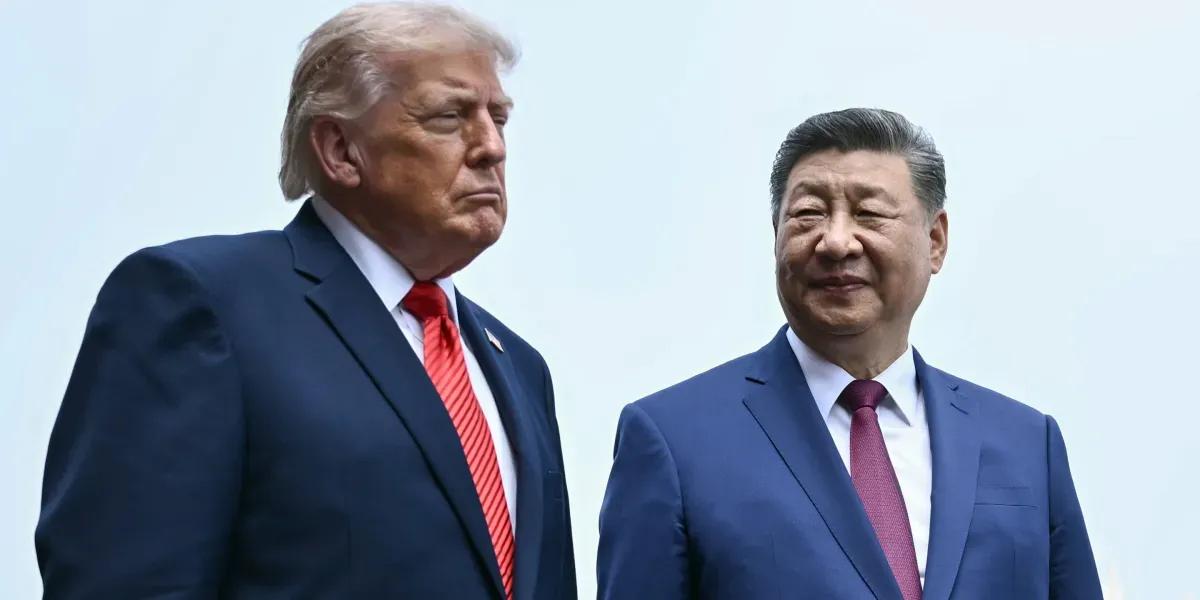
The US and China are forming rival AI blocs, forcing nations worldwide into a difficult choice. Countries must decide between US-led Pax Silica offering advanced AI chips and technologies, or China's World AI Cooperation Organization with affordable open-source systems. This division is reshaping global AI governance and technological sovereignty.
US-China AI Rivalry Creates Global Division
The United States and China are forming separate AI blocs, creating a new geopolitical divide that forces countries worldwide to make difficult choices about their technological future.
1
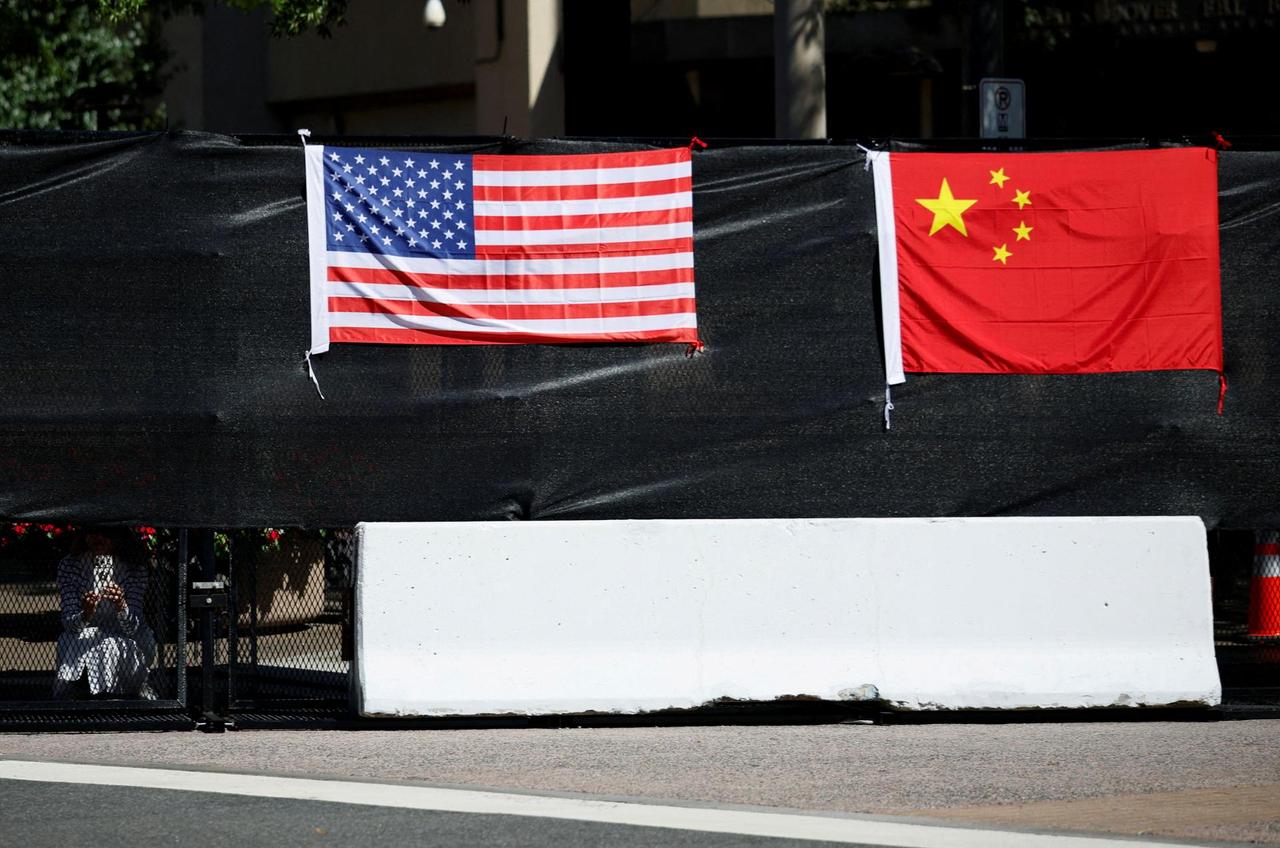
As the US and China AI rivalry intensifies, nations face a dilemma between joining the US-led Pax Silica, which offers access to the most advanced AI chips and AI technologies, or aligning with China's World AI Cooperation Organization, which promotes more affordable open-source systems.3
Experts warn that the window for countries to choose freely between these two AI superpowers may be narrowing, with the US State Department signaling that "countries can't be trusted partners in Pax Silica while substantively engaging in initiatives that advance a competing vision for super intelligence."4
Source: Fortune
Swing Countries Navigate Between AI Blocs
Kazakhstan exemplifies the challenge facing swing countries caught between these competing AI blocs. The Central Asian nation of 21 million people joined both initiatives within three weeks.
1
AI minister Zhaslan Madiyev visited Washington in June to join Pax Silica's efforts to strengthen AI supply chains, then traveled to Shanghai for a signing ceremony making Kazakhstan a founding member of China's World AI Cooperation Organization alongside 28 other countries including Pakistan and Russia.5
"Everyone is hedging," said Dana Masalimova, a former Kazakhstan diplomat at Harvard University's Davis Center for Russian and Eurasian Studies. "We don't want this binary choice."1
Kazakhstan benefits from rich critical mineral resources essential to AI development and cheap electricity to power data centers. The country signed an investment deal worth up to $10 billion involving Nvidia to build a "data center valley," while Chinese foreign direct investment reached a record $2.8 billion in 2025.4
Different Strategies for Global AI Dominance
Both superpowers are leveraging access to AI to increase their global influence through contrasting approaches. President Donald Trump insisted that "whoever wins AI, wins," while US officials have accused China of large-scale distillation of AI capabilities from frontier American models.
3
Beijing has rejected these claims, arguing the US is pursuing an AI monopoly while restricting China's access to cutting-edge AI chips and chipmaking machinery.5
The Chinese embassy in Washington stated: "As both major countries in AI, China and the United States should leverage respective strengths in AI rather than guarding against each other. AI should not be owned by major countries."4
Kyle Chan, a fellow at The Brookings Institution's John L. Thornton China Center, notes that the two AI powers have different messaging largely because Beijing needs to court third countries in its bid to build an alternative coalition, whereas Washington already has a powerful network of allies. This dynamic lends significant power to swing countries.1
Source: Korea Times
Related Stories

Indonesia and Singapore Face Similar Choices
Indonesia and Singapore are also navigating the complexities of AI geopolitics. Like Kazakhstan, Indonesia possesses resources vital for AI technologies, including nickel and copper, and has joined China's World AI Cooperation Organization.
3
Mari Pangestu, Indonesian National Economic Council's vice chair, told reporters at a University of Hong Kong Business School event: "We should be able to be part of both, put it that way. And choose the best system."4
Meanwhile, US AI firms are bringing investments to Singapore, where Anthropic is setting up its latest Asia office, though the city-state says it is also considering joining China's AI organization.1
Europe Seeks Technological Sovereignty
Europe is attempting to position itself as a third force in AI governance, though achieving technological sovereignty remains challenging.
2
The EU unveiled its European Technological Sovereignty Package in June, aimed at boosting chip production capacity, expanding data centers, supporting sustainable AI, and promoting open-source systems.2
Recent investments include a €319 million state aid package for Austrian firm Infineon Technologies to develop next-generation semiconductors, plus €5 billion in Italy and €1.6 billion in Czechia for similar projects.2
However, Europe remains heavily dependent on foreign technology and has no dominant frontier AI model comparable to those developed by OpenAI, Anthropic or China's DeepSeek. The EU is also trying to reduce its €1 billion-a-day trade deficit with China, with up to 90% of Europe's rare earth elements coming from China. The EU AI Act, adopted in 2024, positions Brussels as a global rule-setter, though European companies worry the regulations could stifle innovation as they race to catch up with US and Chinese rivals.2
References
Summarized by

Navi
Related Stories
US Demands Allies Choose Between American and Chinese AI Coalitions as Technology Cold War Escalates
15 Aug 2026•Policy and Regulation
US-China AI competition shifts as regulation clashes with China's cost-efficient model strategy
26 Jun 2026•Policy and Regulation
China's Open-Source AI Push Creates 'Death Zone' for US Models as Competition Shifts to Ecosystems
30 Jul 2026•Business and Economy

Recent Highlights


Recent Highlights
Today's Top Stories




Don’t drown in AI news. We cut through the noise - filtering, ranking and summarizing the most important AI news, breakthroughs and research daily. Follow topics that matter to you and stay ahead.


