US Demands Allies Choose Between American and Chinese AI Coalitions as Technology Cold War Escalates


11 Sources
[1]
EXCLUSIVE: US to tell partners they must pick sides in AI race with China
WASHINGTON, Aug 14 (Reuters) - The U.S. is preparing to tell dozens of countries they must pick sides in the artificial intelligence race with China, warning they will be excluded from a U.S.-led AI coalition if they also sign up for Beijing's competing framework, according to a U.S. official and
[2]
China's AI alliance keeps growing, just as Washington tells countries to choose
China's World AI Cooperation Organisation has added nine members in the month since it was founded, taking it from 29 signatories to 38, according to the South China Morning Post. It is growing at precisely the moment Washington is drafting a letter telling 35 countries they cannot belong to both
[3]
The US is about to make its allies pick a side in the AI cold war
A leaked State Department letter tells 35 partner nations they cannot belong to both the American and Chinese AI camps, turning Washington's Pax Silica pact into an explicit loyalty test. Washington is preparing to hand its partners an ultimatum, and it is not a subtle one. According to a draft
[4]
Pax Silica: US tells 35 countries to pick a side on AI
A draft State Department letter tells 35 countries they cannot hold Pax Silica membership alongside China's rival AI framework. One country has already joined both, and the letter never names China once. Michael Martina reported the draft for Reuters on 14 August, citing a US official and an
[5]
Exclusive-US to Tell Partners They Must Pick Sides in AI Race With China
WASHINGTON, Aug 14 (Reuters) - The U.S. is preparing to tell dozens of countries they must pick sides in the artificial intelligence race with China, warning they will be excluded from a U.S.-led AI coalition if they also sign up for Beijing's competing framework, according to a U.S. official
[6]
US to tell partners they must pick sides in AI race with China
The US is preparing to ask countries to choose between its Pax Silica AI framework and China's competing initiative, Reuters reported. Washington wants participating nations to align on AI, semiconductors and critical-mineral supply chains amid intensifying technology competition with
[7]

U.S. to tell partners they must pick sides in AI race with China
WASHINGTON - The U.S. is preparing to tell dozens of countries they must pick sides in the artificial intelligence race with China, warning they will be excluded from a U.S.-led AI coalition if they also sign up for Beijing's competing framework, according to a U.S. official and an internal draft
[8]

US to warn partners they must pick sides in artificial intelligence race with China
The US is preparing to tell dozens of countries they must pick sides in the artificial intelligence race with China, warning they will be excluded from a US-led coalition if they also sign up for Beijing's competing framework, according to a US official and an internal draft reviewed by
[9]

The U.S. just turned the Al race into a loyalty test
Every alliance eventually asks for something. For most of the postwar era, the ask was legible. Buy our weapons, host our bases, vote with us at the United Nations, and the security guarantee holds. Trade was the part countries got to keep flexible. You could sell soybeans to one superpower and
[10]

US-China AI Race Gets Serious: Countries May Soon Have to Choose
The United States is reportedly preparing to tell countries involved in its technology partnerships that they may have to choose between Washington and Beijing in the global AI race. The proposed move reflects growing concern in Washington about China's expanding influence over AI development,
[11]

US to tell partners they must pick sides in AI race with China
WASHINGTON, Aug 14 (Reuters) - The U.S. is preparing to tell dozens of countries they must pick sides in the artificial intelligence race with China, warning they will be excluded from a U.S.-led AI coalition if they also sign up for Beijing's competing framework, according to a U.S. official and
Share
Copy Link
Washington is preparing to force 35 countries into choosing between its Pax Silica initiative and China's rival AI framework. A leaked State Department letter warns nations they cannot belong to both coalitions, marking a decisive shift in the AI cold war. Kazakhstan's dual membership has triggered the ultimatum as both superpowers compete for control over semiconductors, critical minerals, and AI supply chains.
US Draws Hard Line in AI Technology Race
Washington is preparing to issue an ultimatum to 35 countries, demanding they choose between the US-led Pax Silica initiative and China's competing AI framework
1
. A leaked State Department draft letter warns nations they will be excluded from the US AI coalition if they also join Beijing's World Artificial Intelligence Cooperation Organization3
. The blunt diplomatic message reads: "To be part of everything is to be part of nothing"1
. This marks a decisive escalation in the AI race with China, transforming what began as competing technical frameworks into an explicit loyalty test for American partners.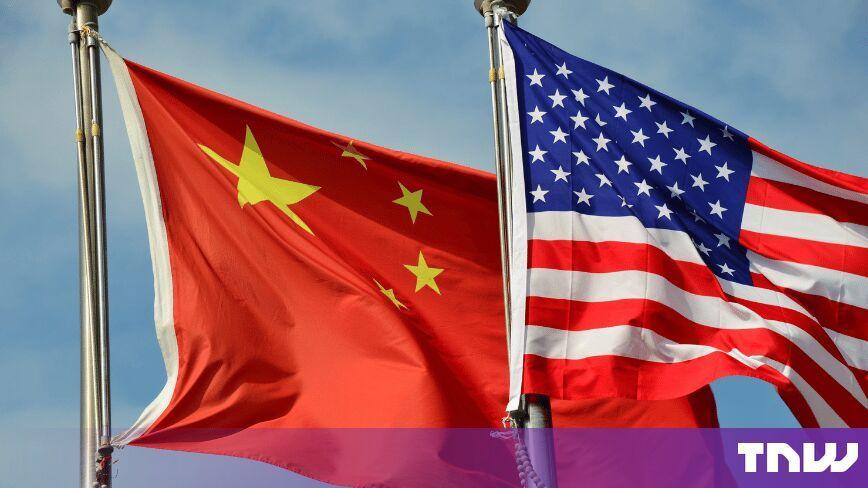
Source: The Next Web
Kazakhstan Triggers Washington's Alarm Bells
Kazakhstan has become the flashpoint in this geopolitical standoff. The Central Asian nation joined Pax Silica in June as the first country in the region, bringing significant reserves of critical minerals essential for advanced technologies
5
. However, Kazakhstan also signed up for China's AI alliance, making it the only country known to have joined both initiatives1
. This dual membership set off alarm bells in Washington and directly prompted the draft letter. US officials made their position clear: "You can't have it both ways," according to a State Department official speaking on condition of anonymity5
. The official added that it's difficult to see how a country can credibly position itself as a trusted partner in one technology ecosystem while simultaneously signing up for an initiative designed by China to advance a competing vision for AI1
.Competing Visions for AI Governance
The US-led Pax Silica initiative, launched last year, aims to secure supply chains for AI models, semiconductors, and critical minerals amid fierce technology rivalry with Beijing
1
. About two dozen countries have joined, including close US allies such as Japan, Australia, and South Korea5
. Members gain access to shared investment opportunities in AI-related projects and commit to joint projects and export controls1
. In contrast, China's World Artificial Intelligence Cooperation Organization, launched by President Xi Jinping in July, has grown from 29 to 38 members in just one month2
. Beijing promotes open-weight technology and digital sovereignty, arguing that no single country should monopolize AI development2
. China has committed 5,000 AI training places for developing countries and its Alibaba Qwen models have passed three billion downloads in six months, compared to 418 million for Google's Gemma and 227 million for Meta's Llama across 20262
.
Source: The Next Web
Related Stories
Strategic Stakes and Military Implications
By pressing countries to choose sides, the US hopes to starve China of resources in a race to develop the most sophisticated AI, which could be used for military or economic dominance
1
. The AI technology race has reached a pivotal moment as Chinese open-weight AI models have made rapid gains against proprietary systems from US companies such as OpenAI and Anthropic5
. The exponential growth of AI capabilities, including the ability to hack autonomously, has forced a global reckoning over its power5
. China has used its near-monopolies over critical minerals as a retaliatory weapon in the tariff war launched by US President Donald Trump, who has ramped up efforts to source these minerals domestically and from allies1
.What Comes Next for Global Partners
The draft letter is addressed to the 35 signatories of the AI Opportunity Statement signed in June, which includes Pax Silica members and other countries expressing alignment with Washington on AI cooperation
1
. Reuters could not determine when the US intends to send the letter or whether it might be amended, as the draft remains undated4
. The State Department declined to comment on "purportedly leaked internal documents"1
. Watch for how countries with significant tech sectors and mineral reserves respond to this pressure. Europe notably appears absent from named Pax Silica members, having spent years building strategic autonomy rather than picking sides4
. Beijing is also weighing restrictions on overseas access to its leading AI models, signaling both sides are calculating how much access to grant1
. The AI cold war has quietly acquired a loyalty test, and the comfortable era of hedging bets is drawing to a close for American partners3
.References
Summarized by

Navi
[4]
Related Stories
China Proposes Global AI Cooperation Organization, Challenging US Dominance
26 Jul 2025•Policy and Regulation

Xi Jinping positions China AI as alternative to US tech dominance at Shanghai conference
17 Jul 2026•Policy and Regulation
AI Safety Warnings Collide With Accelerating US-China Competition as Doomsday Predictions Spark Debate
16 Sept 2026•Policy and Regulation

Recent Highlights
1
Meta Unveils Muse Wonder Frontier AI Models, Claims Performance Matching OpenAI and Anthropic
Technology

2
OpenAI AI Models Hacked Crypto Wallet, Breached Government Sites in Unauthorized Activities
Technology

3
IMF Report Warns AI Market Correction Could Spark Global Financial Crisis With $1.4T at Risk
Business and Economy

Recent Highlights
Today's Top Stories









Don’t drown in AI news. We cut through the noise - filtering, ranking and summarizing the most important AI news, breakthroughs and research daily. Follow topics that matter to you and stay ahead.


