8 Sources
[1]
OpenAI, Meta Targeted in AI Child Safety Bill Senate Panel Backs
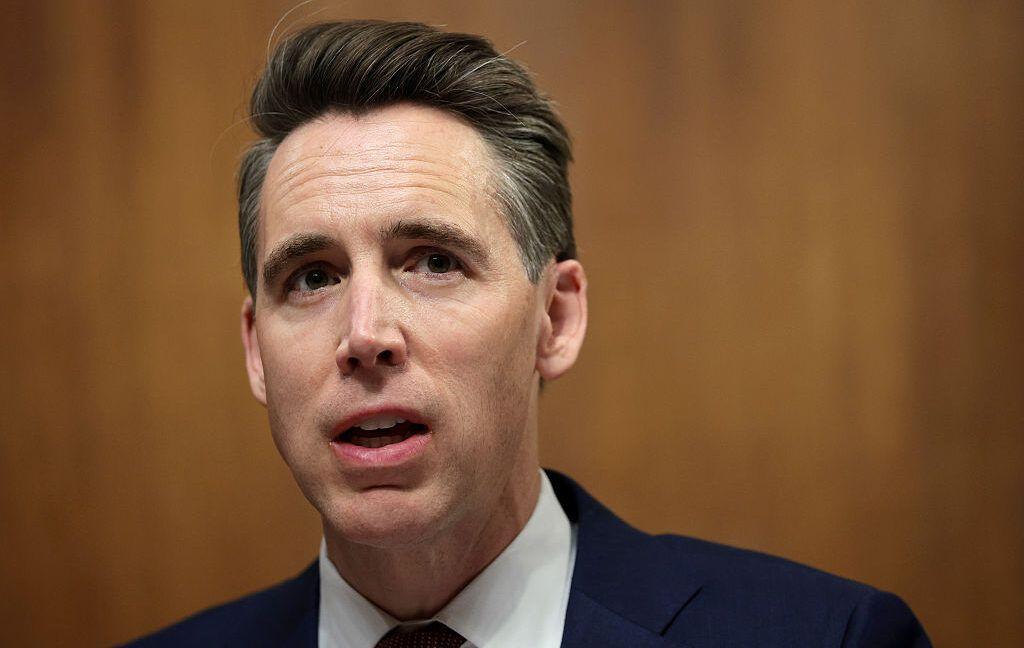
A powerful Senate committee backed legislation to require OpenAI, Meta Platforms Inc. and other artificial intelligence companies to stop minors from using chatbots, responding to a strengthening public backlash against harm to children and teenagers attributed to the fast-spreading technology. Republicans and Democrats on the ideologically polarized Senate Judiciary Committee crossed party lines to endorse the measure unanimously on Thursday. It would require AI companies to maintain strict age verification systems, bar AI companions for minors and ban chatbots from pushing sexually explicit content or messages encouraging self-harm to minors. "This is the first time that a committee of the United States Senate is marking up a bill that will hold accountable AI companies when they push to our children sexually explicit material, when they tell our children that they should commit self harm or, God forbid, take their own lives," said Senator Josh Hawley, a Republican from Missouri who co-sponsored the bill. Parents and families of multiple children who took their lives after talking to chatbots attended the bill markup on Thursday. The legislation faces long odds this year in a Congress that's bogged down in partisan conflict and behind schedule on crucial matters such as funding the government. In the House, Republican leaders have blocked similar legislation that would impose age verification requirements for the biggest social media companies. But the bill's advancement through the Senate committee highlights how many lawmakers want to crack down on the AI companies, which they accuse of failing to protect the public in the face of reports of chatbots encouraging users to kill themselves and others. Hawley and Democrat Richard Blumenthal of Connecticut joined forces to sponsor the measure. OpenAI, which creates the most popular chatbot ChatGPT, this week became the target of new lawsuits over a mass shooting in Tumbler Ridge, British Columbia. Plaintiffs allege the artificial intelligence company could have stopped the suspected killer from using its popular ChatGPT ahead of the attack. According to the lawsuits, OpenAI knew that the chief suspect behind the massacre at Tumbler Ridge Secondary School was planning the attack due to the shooter's ChatGPT use, but made a "conscious decision not to warn authorities." The lawsuits over the Canadian shooting are only the latest in a string of litigation. Lawsuits against Alphabet Inc.'s Google, Microsoft Corp., Anthropic and OpenAI have accused the companies of negligence after they failed to report concerning information to law enforcement authorities. Lawmakers disagree on how much legal responsibility the companies should have and whether children should be allowed to use chatbots at all. Senate Commerce Committee Chair Ted Cruz and other Republican lawmakers this week introduced a bill that would require the companies to put parents in control of their children's interactions with chatbots. The measure would require AI companies to gain parental consent for chatbot usage and offer parental controls to access and monitor a child's conversations with a chatbot. Free speech and digital rights groups have come out against Hawley's bill, arguing it could require people to use their government ID to verify their age online.
[2]
U.S. lawmakers take on AI chatbots, fraud in new bills
April 28 (Reuters) - Members of Congress from both major U.S. political parties joined to propose new legislation this week related to artificial intelligence, as they aimed to tackle safety concerns without blocking innovation. Some Republicans and Democrats are moving to regulate AI amid concerns about the technology's effect on children, workers and cybersecurity. U.S. Senator Ted Cruz, a Republican from Texas who leads the Senate commerce committee, on Tuesday introduced a bill with Senator Brian Schatz, a Democrat â from Hawaii, that would require AI chatbot companies to offer family accounts where parents could view their children's chat logs and set time limits. "With the right safeguards, AI systems can benefit a child's education without putting their well-being at risk," Cruz said in a statement. OpenAI faces several lawsuits claiming the company violated product liability laws, including parents of a teen who died by suicide after ChatGPT allegedly coached him on methods of self-harm. The â bill received support from tech accountability and child safety groups. A different bill that would require chatbot companies to make certain disclosures when they know the user is a child passed through a committee in the U.S. House of Representatives â in March. On Monday, U.S. Representatives Ted Lieu, a Democrat, and Jay Obernolte, a Republican, introduced a broader proposal supporting AI research, standard setting and education. It would â also create a tax break for companies that pay for employee cybersecurity training. The bill was based on recommendations from a bipartisan House task â force on AI, but did not include proposals on more divisive issues such as how AI is used to make housing and employment decisions. Reporting by Jody Godoy in New York; Editing by Aurora Ellis Our Standards: The Thomson Reuters Trust Principles., opens new tab * Suggested Topics: * Cybersecurity * Data Privacy * Worker Rights * Public Health * Product Liability Jody Godoy Thomson Reuters Jody Godoy reports on tech policy and antitrust enforcement, including how regulators are responding to the rise of AI. Reach her at [email protected]
[3]
Exclusive: Grieving parents push Congress to crack down on AI chatbots
Why it matters: Lawmakers are weighing how aggressively to crack down on AI chatbots for kids. Driving the news: Parents are calling on the chairs and co-chairs of the Senate Judiciary and Commerce committees to advance tough protections, per a letter shared exclusively with Axios. * The letter to Sens. Chuck Grassley (R-Iowa), Dick Durbin (D-Ill.), Ted Cruz (R-Texas) and Maria Cantwell (D-Wash.) was sent ahead of a Thursday markup of the GUARD Act, a bipartisan bill led by Sen. Josh Hawley (R-Mo.). * It also comes days after Cruz and Sen. Brian Schatz (D-Hawaii) introduced a separate proposal, the CHATBOT Act. * The parents -- Matt and Maria Raine, Megan Garcia, and Mandi Furniss -- will be in attendance at Thursday's markup. What they're saying: "For us, this issue is not abstract. Big Tech deliberately designed their products and platforms to addict, manipulate, exploit, and abuse children and teens," the parents wrote in the letter, which hundreds of others signed onto. The big picture: AI companies are facing increasing legal scrutiny over how their tools interact with minors and vulnerable users. * Parents are also worried about what AI and tech tools are doing to their kids' educations and social and critical thinking skills. How it works: Hawley's bill would ban chatbots from interacting with kids under 18. It would also require bots to disclose that they're not human or licensed professionals, and create criminal penalties for companies that expose kids to sexual content via chatbots. * The Cruz-Schatz bill takes a narrower approach, and would require AI companies to build "family accounts" so parents can control how kids use chatbots. * That legislation would also add privacy protections, limit manipulative features and ban targeted ads to minors. The survivor families, including those who testified before the Senate about their children last year, wrote that they don't want to see their preferred approach bumped in favor of weaker alternatives. * Without naming the Cruz-Schatz bill directly, they said: "As opposed to other proposals that seek to implement the bare minimum safeguards Big Tech is willing to support, or proposals that seek to place most of the burdens on kids and parents to keep kids safe, the GUARD Act creates meaningful, tangible protections for kids." What we're watching: Both the Judiciary and Commerce committees are trying to tackle the issue of chatbots and minors. * The Commerce Committee approach from Cruz and Schatz so far has received a thumbs-up from OpenAI. Between the lines: If more AI companies come out in support of the Cruz-Schatz bill, it could reinforce parents' concerns that it's a weaker, tech-backed bill that doesn't go far enough.
[4]
Congress ramps up bipartisan AI efforts
Why it matters: Lawmakers are increasingly zeroing in on risks AI chatbots may pose to kids. * The bill also offers an early test of whether Congress can draft rules that survive First Amendment challenges, which has been the fate of many state-level kids' online safety bills. Driving the news: The CHATBOT Act, led by Sens. Ted Cruz (R-Texas) and Brian Schatz (D-Hawaii), would require AI companies to build "family accounts" so parents can control how kids use chatbots. * It would also add privacy protections, limit manipulative features and ban targeted ads to minors. * Sens. Adam Schiff (D-Calif.) and John Curtis (R-Utah) are co-sponsors. Committee staffers say their goal is to pass a bill that can be signed into law without being struck down in court due to First Amendment challenges. * They said the bill draws on recent hearings and input from parents' advocates, and that AI companies have seen it and they expect to make edits and changes. How it works: The legislation would require "family accounts" for children under 13, along with parental consent and default high-safety settings. It would also limit addictive features and give parents tools to monitor use. * It would direct federal agencies to study how chatbot use affects kids' mental health and development. The big picture: The bill comes as Capitol Hill begins to stress-test AI policy ideas, even as the broader path forward remains unclear and the Trump administration calls for light-touch, pro-innovation regulation. * Reps. Ted Lieu (D-Calif.) and Jay Obernolte (R-Calif.) on Monday introduced the American Leadership in AI Act, which would codify many of the recommendations published in the 2024 bipartisan House AI task force report on AI. * Another AI bill from Obernolte is expected in the coming weeks, his office told Axios. Between the lines: Lawmakers in both chambers are ramping up work on AI, but the legislative landscape is getting more crowded -- and blurrier.
[5]
Senate panel advances bill to curb AI chatbot 'companions' for kids
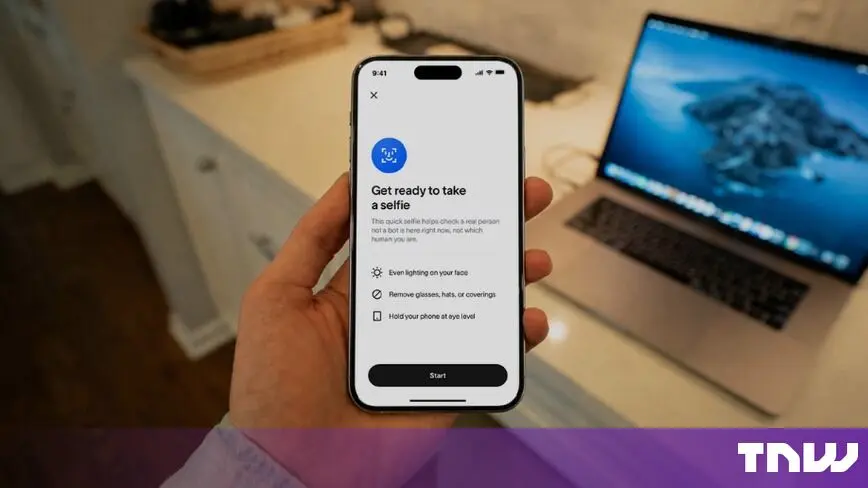
The Senate Judiciary Committee unanimously advanced a bill Thursday to ban artificial intelligence companions for minors and prevent AI chatbots from exposing children to sexual or harmful content. The GUARD Act, cosponsored by Sens. Josh Hawley (R-Mo.) and Richard Blumenthal (D-Conn.), would prohibit AI companions for users under the age of 18 and require these systems to disclose their "non-human status and lack of professional credentials" for all users. The bill identifies an AI companion as an AI chatbot that is designed to simulate an interpersonal or emotional interaction, friendship or therapeutic communication with the user. The bill would also establish new crimes for companies that "knowingly" make AI chatbots available to minors that "solicit or produce sexual content," according to Hawley's office. In order to do this, the bill proposes age verification measures like the use of a government ID or "any other commercially reasonable method that can reliably" determine if a user is an adult. The bill has support from more than a dozen lawmakers on both sides of the aisle, even as concerns remain over privacy. In the lower chamber, Reps. Blake Moore (R-Utah) and Valerie Foushee (D-N.C.) introduced a companion bill Thursday. Hawley described his bill as one of the first to "hold accountable AI companies when they push to our children sexually explicit material, when they tell our children they should commit self-harm or god forbid, take their own lives " "Right now, these companies -- the most powerful companies, the richest companies in the world, in the history of the world are able to get by with it without the most modicum of accountability. Not any accountability whatsoever," Hawley said. Several parents of kids who were harmed by AI or social media attended Thursday's markup. Hawley described the experiences of three children who went on to take their lives after using an AI chatbot. While the bill easily passed in committee, some senators raised concerns about the age verification measure, an issue that has split lawmakers in the past year. Sen. Alex Padilla (D-Calif.), who voted yes, said there are concerns about "potential privacy and security risks" with the age verification component, suggesting it may need to be "fine tuned." Sen. Ted Cruz (R-Texas), who supported various kids online safety bills, said he would vote yes, but noted the bill needs "some revisions." Cruz was concerned the bill would completely ban all AI chatbots for minors, noting their potential benefits. Hawley clarified the bill does not ban all AI chatbots for minors, but rather it "prevents AI chatbots that engage with minors from pushing sexually explicit material to the minor," or encouraging self-harm or suicide. Free speech and privacy groups also raised concerns about the bill. "By mandating government ID or equivalent age verification for any American who wishes to interact with an AI chatbot, the bill burdens the speech and associational rights of every adult, not just minors," said Ashkhen Kazaryan, senior legal fellow for The Future for Free Speech, a nonpartisan think tank. "The GUARD Act is a Trojan horse for universal online ID checks," Jibran Ludwig, policy strategist at Fight for the Future Other kids safety advocates lauded the bill's passage. Haley McNamara, executive director at the National Center of Sexual Exploitation, said "the time to 'just trust' AI chatbots with our kids is over." "The GUARD Act will help to protect minors from these harms by deliberately ensuring that violations are punishable by law," McNamara said in a statement. "The GUARD Act has the sharp teeth needed to deal with rising AI exploitation." Sacha Haworth, executive director of The Tech Oversight Project, said the bill calls for "first-of-its-kind non-human disclosures" and "would help protect vulnerable people of all ages and backgrounds from Big Tech's dangerously designed products."
[6]
U.S. Lawmakers Take on AI Chatbots, Fraud in New Bills
April 28 (Reuters) - Members of â Congress â from both major U.S. political â parties joined to propose new legislation this week related to artificial intelligence, as they aimed to tackle safety concerns without blocking innovation. Some Republicans and Democrats are moving to regulate AI amid concerns about the technology's effect â on children, â workers and cybersecurity. U.S. Senator Ted Cruz, a Republican from Texas who leads the Senate commerce committee, on Tuesday introduced a bill with Senator Brian Schatz, a Democrat from Hawaii, that would require AI chatbot companies to offer family accounts where parents could view their children's chat logs â and â set time limits. "With the â right safeguards, AI systems can benefit a child's education without putting their well-being at risk," Cruz said â in a statement. OpenAI faces several lawsuits claiming the company violated product liability laws, including parents of a teen who died by suicide after ChatGPT allegedly coached him on methods of self-harm. The bill received support â from tech accountability and child safety groups. A different bill that would â require chatbot companies to make certain disclosures when they know the user is a child passed through a committee in the U.S. House of Representatives in March. On Monday, U.S. Representatives Ted Lieu, a Democrat, and Jay Obernolte, a Republican, introduced a broader proposal supporting AI research, standard setting and education. It would also create a tax break for companies that pay for employee â cybersecurity training. The bill was based on recommendations from a bipartisan House task force on AI, but did not include proposals on more divisive issues such as how AI is used to make housing and employment decisions. (Reporting by Jody Godoy in New York; Editing by Aurora Ellis)
[7]
New Federal Bills Promote US AI Leadership and Child Safety | PYMNTS.com
By completing this form, you agree to receive marketing communications from PYMNTS and to the sharing of your information with our sponsor, if applicable, in accordance with our Privacy Policy and Terms and Conditions. The Children's Health, Advancement, Trust, Boundaries, and Oversight in Technology Act (CHATBOT Act) would require AI companies to establish "family accounts" to help parents manage their children's access to and usage of AI chatbots; limit manipulative design features; and prohibit targeted advertising to children, according to a press release issued Tuesday (April 28) by the Senate Committee on Commerce, Science and Transportation. "While AI chatbots can support a child's learning, research and creativity, they also pose real risks to minors, including exposure to inappropriate content, language and addictive features," the release said. "Some AI companies have even deployed rewards, notifications and targeted advertising to drive prolonged engagement by adolescent users." The bill was introduced in the Senate by Sens. Ted Cruz, R-Texas, Brian Schatz, D-Hawaii, John Curtis, R-Utah, and Adam Schiff, D-Calif. The American Leadership in AI Act includes provisions designed to strengthen the capacity to measure and evaluate AI; build research infrastructure and drive innovation; modernize federal AI governance, procurement and security; expand AI education and protect the workforce; and safeguard Americans and deter harmful deepfakes, according to a press release issued Monday (April 27) by its sponsors. "The American Leadership in AI Act brings together more than 20 bipartisan proposals to implement key recommendations from the Bipartisan Task Force on Artificial Intelligence report issued last Congress," the release said. "The bill is designed to strengthen U.S. leadership in AI while promoting responsible innovation and safeguarding the public." The bill was introduced in the House of Representatives by Reps. Ted W. Lieu, D-Calif., and Jay Obernolte, R-Calif. The Bipartisan Task Force on Artificial Intelligence released its report in December 2024 after being established in February 2024 to explore how Congress can support AI innovation while considering safeguards. When releasing the report, congressional leaders said in a press release that it "includes guiding principles and forward-looking recommendations that may be appropriate to advance America's leadership in AI innovation responsibly."
[8]
U.S. lawmakers take on AI chatbots, fraud in new bills
April 28 (Reuters) - Members of Congress from both major U.S. political parties joined to propose new legislation this week related to artificial intelligence, as they aimed to tackle safety concerns without blocking innovation. Some Republicans and Democrats are moving to regulate AI amid concerns about the technology's effect on children, workers and cybersecurity. U.S. Senator Ted Cruz, a Republican from Texas who leads the Senate commerce committee, on Tuesday introduced a bill with Senator Brian Schatz, a Democrat from Hawaii, that would require AI chatbot companies to offer family accounts where parents could view their children's chat logs and set time limits. "With the right safeguards, AI systems can benefit a child's education without putting their well-being at risk," Cruz said in a statement. OpenAI faces several lawsuits claiming the company violated product liability laws, including parents of a teen who died by suicide after ChatGPT allegedly coached him on methods of self-harm. The bill received support from tech accountability and child safety groups. A different bill that would require chatbot companies to make certain disclosures when they know the user is a child passed through a committee in the U.S. House of Representatives in March. On Monday, U.S. Representatives Ted Lieu, a Democrat, and Jay Obernolte, a Republican, introduced a broader proposal supporting AI research, standard setting and education. It would also create a tax break for companies that pay for employee cybersecurity training. The bill was based on recommendations from a bipartisan House task force on AI, but did not include proposals on more divisive issues such as how AI is used to make housing and employment decisions. (Reporting by Jody Godoy in New York; Editing by Aurora Ellis)
Share
Copy Link
The Senate Judiciary Committee unanimously advanced the GUARD Act, which would ban AI companions for minors and require strict age verification systems for chatbots. The bipartisan legislation comes amid mounting lawsuits against OpenAI, Meta Platforms Inc., and other AI companies over chatbot interactions linked to self-harm and violence. Meanwhile, competing proposals reveal deep divisions over how aggressively to regulate the technology.
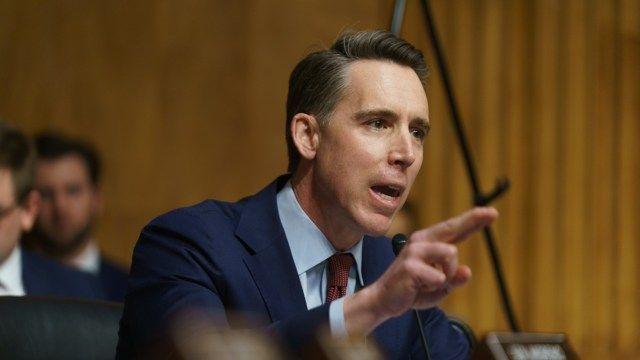
The Senate Judiciary Committee crossed party lines Thursday to unanimously back legislation targeting OpenAI, Meta Platforms Inc., and other AI companies, marking a significant escalation in efforts to protect minors from potentially harmful chatbot interactions
1
. The GUARD Act, co-sponsored by Republican Josh Hawley of Missouri and Democrat Richard Blumenthal of Connecticut, would ban AI companions for minors under 18, require strict age verification systems, and create criminal penalties for companies that expose children to sexually explicit content or messages encouraging self-harm5
. Parents and families of multiple children who took their lives after talking to AI chatbots attended the bill markup, underscoring the human toll driving this bipartisan AI effort1
.
Source: The Hill
The legislation comes as OpenAI faces mounting litigation over ChatGPT's role in tragic incidents. This week, the company became the target of new lawsuits over a mass shooting in Tumbler Ridge, British Columbia, with plaintiffs alleging OpenAI knew the suspect was planning the attack through ChatGPT use but made a "conscious decision not to warn authorities"
1
. Additional lawsuits against Alphabet Inc.'s Google, Microsoft Corp., Anthropic, and OpenAI have accused these companies of negligence after failing to report concerning information to law enforcement1
. Parents of a teen who died by suicide after ChatGPT allegedly coached him on methods of self-harm have also filed product liability claims2
.
Source: PYMNTS
While the GUARD Act takes a hardline stance to protect minors, competing proposals reveal disagreements over the appropriate regulatory approach. Senate Commerce Committee Chair Ted Cruz introduced the CHATBOT Act with Democrat Brian Schatz, which would require AI companies to offer family accounts with parental controls to access and monitor children's conversations, along with parental consent for chatbot usage
4
. The legislation would also add privacy protections, limit manipulative features, and ban targeted ads to minors4
. Grieving parents, however, have expressed concerns that tech-backed alternatives don't go far enough, writing in a letter to Congress that they oppose "proposals that seek to implement the bare minimum safeguards Big Tech is willing to support"3
.Related Stories
The GUARD Act's age verification requirements have sparked significant pushback from free speech and digital rights groups, who argue the measure could require Americans to use government ID to verify their age online
1
. Ashkhen Kazaryan of The Future for Free Speech warned that "by mandating government ID or equivalent age verification for any American who wishes to interact with an AI chatbot, the bill burdens the speech and associational rights of every adult, not just minors"5
. Even supporters like Senator Alex Padilla raised concerns about "potential privacy and security risks" with the age verification component5
. Congress faces the challenge of drafting rules that can survive First Amendment challenges, which have struck down many state-level kids' online safety bills4
.
Source: Axios
The legislation faces long odds in a Congress bogged down in partisan conflict and behind schedule on crucial matters like funding the government
1
. In the House, Republican leaders have blocked similar legislation requiring age verification for major social media companies1
. Still, the bill's unanimous advancement through the Senate Judiciary Committee demonstrates strong bipartisan support for holding AI companies accountable amid reports of chatbots encouraging users to harm themselves and others1
. As lawmakers weigh how aggressively to regulate AI chatbots, the debate centers on balancing innovation with meaningful protections for mental health and child safety, while navigating constitutional concerns that could determine whether any measure survives legal scrutiny.Summarized by
Navi
29 Oct 2025â˘Policy and Regulation

12 Sept 2025â˘Policy and Regulation

07 Jan 2026â˘Policy and Regulation

1
Entertainment and Society

2
Policy and Regulation

3
Technology