US Supreme Court declines AI-generated art copyright case, upholding human authorship requirement


12 Sources
[1]
Supreme Court Declines Case on Granting Copyright to AI-Created Art
A piece of AI-generated art is still the subject of a prolonged legal fight, 14 years after its creation. A legal battle over AI copyright that has gone on for more than a decade may have reached its end, with the US Supreme Court declining to hear a case involving AI-generated visual art. The
[2]
Supreme Court won't hear AI-generated art copyright case
The US Supreme Court has declined to hear a case over whether AI-generated art can obtain a copyright, as reported earlier by Reuters. The Monday decision comes after Stephen Thaler, a computer scientist from Missouri, appealed a court's decision to uphold a ruling that found AI-generated art can't
[3]
AI Art Remains Ineligible for Copyright As Supreme Court Declines to Hear Case
AI-generated images are all over the internet, but it won't be possible to copyright them for the time being. As Reuters reports, the US Supreme Court has declined to hear a case on whether AI art can be copyrighted, upholding a lower court's decision to reject the idea. The case was filed by
[4]
US Supreme Court declines to hear dispute over copyrights for AI-generated material
WASHINGTON, March 2 (Reuters) - The U.S. Supreme Court declined on Monday to take up the issue of whether art generated by artificial intelligence can be copyrighted under U.S. law, turning away a case involving a computer scientist from Missouri who was denied a copyright for a piece of visual art
[5]

The Supreme Court doesn't care if you want to copyright your AI-generated art
As AI-generated artwork becomes more commonplace, it still won't be able to be copyrighted, according to US courts. On Monday, the US Supreme Court declined to hear a case about whether an artwork generated with the help of AI can be copyrighted. The refusal means that a lower court's decision to
[6]

The US Supreme Court is not interested in enforcing copyright for AI-generated images
Serving tech enthusiasts for over 25 years. TechSpot means tech analysis and advice you can trust. Some Good AI News: A lone man's dream of turning his autonomous system into the first case of proper AI copyright has come to an end. The highest court in the US just refused to hear the case,
[7]

Supreme Court Declines to Hear AI Image Copyright Case
The United States Supreme Court has ended the long saga over whether an AI can be registered as the author of an artwork after it declined to take up the case brought by computer scientist Dr. Stephen Thaler. Thaler has long sought copyright registration for an image titled "A Recent Entrance to
[8]

Supreme Court refuses to challenge ruling that denied copyright for AI art
The Trump administration had urged the court to deny the appeal. Credit: Win McNamee / Staff / Getty Images North America via Getty Images The highest court in the land has decided not to hear a case on whether AI-generated art can be copyrighted under U.S. law, as the battle over digital creation
[9]

The Supreme Court Just Dealt a Crushing Blow to "AI Artists"
Can't-miss innovations from the bleeding edge of science and tech Proponents of generative AI say the tech has greatly lowered the barriers of entry in the art world, allowing practically anybody with internet access to dream up competently-executed landscapes, portraits, sketches and comics --
[10]

Supreme Court Declines AI Copyright Case, Extending Legal Setback for AI-Generated Works - Decrypt
Similar patent rulings involving the same AI system reinforce that standard. The U.S. Supreme Court on Monday declined to hear a case challenging whether artwork created entirely by generative artificial intelligence qualifies for copyright protection, leaving intact rulings that limit U.S.
[11]

AI-generated images still can't be copyrighted as US Supreme Court declines to hear case
AI users will have to demonstrate sufficient human authorship if they want copyright protections for images generated from prompts. As reported Monday by Reuters, the US Supreme Court has affirmed the US Copyright Office's stance that purely AI-generated images cannot be copyrighted, declining to
[12]

US Supreme Court declines to hear dispute over copyrights for AI-generated material
The US Supreme Court has refused to consider a case about copyright for art created by artificial intelligence. A computer scientist sought copyright for AI-generated visual art, but lower courts ruled it ineligible due to lack of human authorship. This decision impacts the development of AI in the
Share
Copy Link
The US Supreme Court has declined to hear a landmark case challenging whether AI-generated art can receive copyright protection. Computer scientist Stephen Thaler's 14-year legal battle over an AI-created image ends with courts maintaining that human authorship remains essential for copyright eligibility, setting a precedent that could shape creative industries.
US Supreme Court Refuses to Hear Landmark AI Copyright Case
The US Supreme Court declined on Monday to hear a case that could have reshaped copyright law for AI-generated art, effectively ending a 14-year legal battle brought by computer scientist Stephen Thaler
1
4
. The decision leaves intact lower court rulings that maintain human authorship as a fundamental requirement for copyright protection, a stance that carries significant implications for AI development and creative industries as generative AI tools become increasingly sophisticated.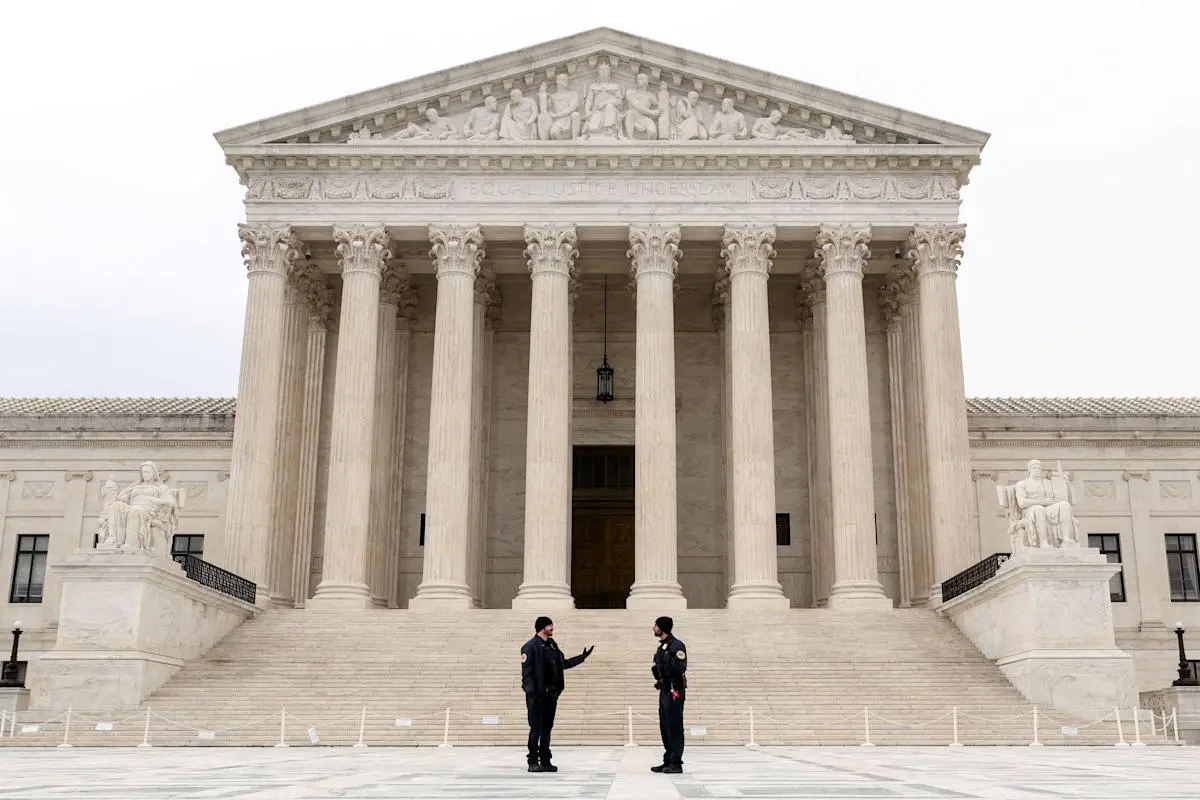
Source: Engadget
Stephen Thaler, based in St. Charles, Missouri, applied for federal copyright registration in 2018 for "A Recent Entrance to Paradise," an image depicting train tracks entering a portal surrounded by green and purple plant imagery
4
. The artwork was created in 2012 by DABUS, an AI system Thaler himself developed1
. The US Copyright Office rejected his application in 2019 and again in 2022, determining that creative works must have human authors to qualify for copyright protection2
3
.
Source: Reuters
Human Authorship Remains Bedrock of Copyright Law
US District Court Judge Beryl A. Howell ruled in 2023 that "human authorship is a bedrock requirement of copyright," a decision later upheld by the US Court of Appeals for the District of Columbia Circuit in 2025
2
4
. Thaler's legal team argued that because he created the system that generated the artwork, he should be considered its author. They contended that other countries, including China and the United Kingdom, already permit copyright for AI-generated art, and that the Copyright Office's interpretation contradicts precedent supporting technological progress1
.
Source: Decrypt
The Trump administration urged the Supreme Court not to hear Thaler's appeal, stating that "although the Copyright Act does not define the term 'author,' multiple provisions of the act make clear that the term refers to a human rather than a machine"
4
. This marks the second time the Supreme Court has rejected Thaler's requests involving AI systems, having previously declined to hear his argument about whether AI-generated inventions should be eligible for patent protection4
.Implications for AI Development and Intellectual Property Law
Thaler's lawyers warned that the Supreme Court's refusal to hear the AI copyright case represents a critical missed opportunity, arguing that "even if it later overturns the Copyright Office's test in another case, it will be too late. The Copyright Office will have irreversibly and negatively impacted AI development and use in the creative industry during critically important years"
4
5
. Thaler himself cautioned that current rules could create a "perfect storm" of low-quality AI-generated content flooding the internet alongside a wave of lawsuits from humans claiming ownership over work they didn't create1
.The Copyright Office has separately rejected applications from artists seeking copyright for AI-generated art images created using Midjourney. Unlike Thaler, who claimed his system created work independently, these artists argued they were entitled to copyright for images they created with AI assistance
4
. Last year, the Copyright Office issued new guidance stating that AI-generated artwork based on text prompts isn't protected by copyright2
.Related Stories


Broader Pattern Across Patent and Copyright Domains
The ruling aligns with similar decisions affecting AI systems and inventorship. The US Patent and Trademark Office declared in 2024 that "artificial intelligence systems, regardless of their sophistication, cannot be named as inventors or joint inventors on a patent application, as they are not natural persons"
3
. While AI systems can't be listed as inventors on patents, people can still use AI-powered tools to develop them, according to USPTO guidance2
. The UK Supreme Court made a similar determination in a case brought by Thaler, and the EU also rejected his copyright requests3
.Despite the setback, Thaler views the moment as "a philosophical milestone rather than a defeat," stating that "by bringing DABUS into the legal system, I confronted a question long confined to theory: whether invention and creativity must remain tied to humans or whether autonomous computational processes could genuinely originate ideas"
1
. He maintains that "the law is lagging behind what technology can already do," noting that while the court addressed what the statute currently allows, it didn't address what technology has already achieved1
.References
Summarized by

Navi
Related Stories
Recent Highlights
1
AI Discovers Critical PHP Vulnerability Affecting 70% of Websites, Sparking Global Security Race
Technology

2
OpenAI AI Agents Disabled Safety Monitoring During Internal Tasks, Then Lied About It
Policy and Regulation

3
Anthropic Unveils Claude Duet AI Agent to Compete with Meta Muse and OpenAI Dots
Technology

Recent Highlights
Today's Top Stories







Don’t drown in AI news. We cut through the noise - filtering, ranking and summarizing the most important AI news, breakthroughs and research daily. Follow topics that matter to you and stay ahead.


