8 Sources
[1]
Filmmakers defend Val Kilmer movie made with AI
LAS VEGAS, April 16 (Reuters) - The makers of a new film with an AI-generated performance by late actor Val Kilmer defended their work on Thursday and said they believed their approach demonstrated an ethical path to future use of the technology in Hollywood. Brothers Coerte and John Voorhees said they had gained consent from Kilmer's children to use AI to create his role in "As Deep as the Grave," the story of archaeologists who explore the history of the Navajo people in New Mexico. They said they used archival footage, photos and voice recordings to help craft the performance. "We are 100% confident it's really the right move with this specific film, and we're really, really looking forward to everyone being able to judge it for themselves," Coerte Voorhees, the movie's writer and director, said in an interview at the CinemaCon convention for theater owners in Las Vegas. Kilmer, best known for his role in the "Top Gun" movies, had signed on to star in "As Deep as the Grave" several years ago but was unable to make it onto the set because of poor health. He died a year ago at age 65 after a battle with throat cancer. A trailer from the movie, released this week, showed Kilmer in the role of Father Fintan, a Catholic priest and Native American spiritualist. "Don't fear the dead. And don't fear me," Kilmer's likeness says in the trailer. The trailer drew criticism on social media, with some commenters calling it "terrifying" and "disgusting." "It's called REST IN PEACE for a reason," one said. Coerte Voorhees said he did not think audiences that see the film will be able to tell that Kilmer's role was not a human performance. The brothers also said they hoped they were showing Hollywood how to use the technology in a positive way. Many actors are worried about unauthorized uses of their images that appear lifelike. The Voorhees brothers said they had followed all guidelines on AI use set forth by the SAG-AFTRA actors union. "We're making a bold claim, (a) bold statement, which is that we believe we're doing this in an ethical way," John Voorhees said. He said that not only had Kilmer's estate given consent, but that the family had collaborated artistically "in every possible way." He added: "There's so much change happening that of course it's scary and it's something that people are uncertain about." Reporting by Rollo Ross in Los Angeles; Writing by Lisa Richwine Editing by Matthew Lewis Our Standards: The Thomson Reuters Trust Principles., opens new tab
[2]
AI-rendered Val Kilmer debuts in 'As Deep as the Grave' trailer
LAS VEGAS (AP) -- The filmmakers behind "As Deep as the Grave," the indie film that is using an artificial intelligence-rendered version of Val Kilmer in a prominent role, debuted a first look at the recreated actor Wednesday at CinemaCon in Las Vegas. "Don't fear the dead and don't fear me," Kilmer's character, Father Fintan, a Catholic priest and Native American spiritualist, says at the end of the trailer. The actor died last year at 65, of pneumonia. The use of generative AI to recreate Kilmer for the historical drama based on archaeologists Ann and Earl Morris became a hot button topic when the filmmakers announced it last month. The trailer shows Kilmer's character at various ages. Writer-director Coerte Voorhees, along with his brother John, spoke on a panel Wednesday about the controversial decision to use technology to create a performance from a deceased actor and explained why they feel they've done it ethically by working with Kilmer's children and the actors union. Coerte Voorhees stopped short of calling it a Val Kilmer performance, however. "Val Kilmer influenced this performance," Coerte Voorhees said. Producer John Voorhees said the use of AI actors based on real people is risky territory for anyone to venture into but emphasized that they followed guidelines from the Screen Actors Guild-American Federation of Television and Radio Artists union that he boiled down to "consent, compensation and collaboration." Kilmer's estate, including his daughter Mercedes, gave permission for his digital replication, is being compensated for it and provided archival footage to help the process. They also compared Kilmer's AI-rendered performance to any actor portraying a historical figure on screen, as Kilmer once did with Jim Morrison in "The Doors." Kilmer also utilized AI while he was alive. When he lost his natural speaking voice following a throat cancer diagnosis and two tracheotomies, he turned to an AI software company to digitally recreate his voice. Kilmer's voice was also digitally altered to help his final screen performance in "Top Gun: Maverick." Kilmer had signed on to "As Deep as the Grave" years ago; Much of the film was structured around his character, they said. When Kilmer had to pull out at the last minute due to health issues they decided to proceed shooting without the character instead of recasting the role. The production had numerous stops and starts as one of the first to begin shooting in New Mexico in the fall of 2020 amid the pandemic. They realized later that the story really did need Father Fintan, and decided to broach the topic with Kilmer's children, Mercedes and Jack. "We were so glad they were so excited and so supportive of the idea," Coerte Voorhees said. "We didn't want to do it unless everybody thought this was going to work properly." He said that Kilmer is on screen in the movie for one hour and 17 minutes; The final runtime was not revealed but he said it's long. The filmmakers plan to release it sometime this year.
[3]
'Don't fear the dead, and don't fear me' -- AI brings a digital Val Kilmer back to the screen
* Actor Val Kilmer appears in the new film As Deep as the Grave through an AI-generated performance created after his death * The technology allows filmmakers to complete roles using digital likenesses * Val Kilmer's family gave permission to use the AI-produced likeness Val Kilmer passed away in 2025, but a trailer for a film filmed after his death has his likeness perform anyway. The producers of the upcoming As Deep as the Grave unveiled the trailer for the indie drama and its AI-generated Kilmer at CinemaCon. The filmmakers employed AI to make Kilmer's presence possible. The late actor's AI doppelganger takes on the role of Father Fintan, a priest whose character bridges Catholic tradition and Native American spirituality. "Don't fear the dead, and don't fear me," the ersatz Kilmer proclaims in the trailer. It's so on-the-nose that there's no way it wasn't deliberately devised by the filmmakers to reference the situation behind the camera. Virtual Kilmer The film itself centers on archaeologists Ann and Earl Morris, whose work in the American Southwest during the 1920s uncovered remains tied to the Ancestral Puebloans. Kilmer reportedly had been interested in the blend of historical narrative and spiritual undertones before he passed away. At the time, his health made it difficult for him to commit fully to production. His battle with throat cancer had already limited his ability to speak and perform. That didn't stop the producers from writing the character with him in mind. After he passed away, director Coerte Voorhees decided against simply recasting or rewriting. With the support of Kilmer's estate and his daughter, Mercedes, the production moved forward using a digital version of an imagined Kilmer performance. That decision places As Deep as the Grave in a growing category of films that use AI for performances, such as Echo Hunter. Kilmer's character is woven into the story in a substantial way, making his presence central rather than symbolic. Actor illusion To make the AI Kilmer, the producers used existing footage of the actor as a visual foundation, enabling artists to reconstruct facial movements and expressions. AI audio models trained on past recordings of the actor recreated the cadence and tone of Kilmer's voice. After further layering and enhancement, the virtual performance was integrated into the film as cohesively as possible. The goal is not to replicate a single past performance but to create something that feels consistent with the actor's established style. There is a certain continuity in this approach. During his lifetime, Kilmer had already explored AI-assisted voice technology to help restore his speech after cancer affected his vocal cords. The tools used in the film extend that work into a new context. The filmmakers have emphasized that the process was carried out with approval and participation from Kilmer's family. That detail matters in an industry where the use of digital likenesses has become a subject of intense debate. Consent and control are central to how these projects are received, both by audiences and by other actors. Uncanny acting Kilmer is both recognizable and slightly disorienting to watch in the trailer. The face is familiar, and it sounds and moves like him, but even if you didn't know it was AI, you'd probably pick up on the slight disconnect between the avatar's behavior and Kilmer's actual performances. The release of the trailer has already sparked discussion across the industry. Organizations like SAG-AFTRA have raised concerns about how AI-made digital likenesses are deployed. Some filmmakers and studios argue that the technology offers new ways to preserve performances and complete projects that might otherwise remain unfinished. It's far too soon to tell which approach will win out, but a step into uncertain territory, where the boundaries of authorship and presence become less clear. AI changes how performances can be preserved, for better and for worse. As AI continues to reshape what is possible on screen, audiences are being asked to accept new kinds of performances. We may not have to fear AI Kilmer, but we should definitely take his creators' plans seriously. Follow TechRadar on Google News and add us as a preferred source to get our expert news, reviews, and opinion in your feeds. Make sure to click the Follow button! And of course you can also follow TechRadar on TikTok for news, reviews, unboxings in video form, and get regular updates from us on WhatsApp too.
[4]
Val Kilmer AI deepfake in 'As Deep as the Grave' trailer sparks outrage
'The Devil Wears Prada' 2 trailer teases an hilariously dismissive reunion Val Kilmer AI deepfake film As Deep as the Grave has just released its first trailer. The internet has responded with overwhelming disgust. A widely recognised actor known for his roles in films such as Top Gun, Batman Forever, and Kiss Kiss Bang Bang, Kilmer died from pneumonia last April at 65 years old. Upcoming film As Deep as the Grave has now used generative AI to create a digital puppet in Kilmer's likeness, having it portray a character appearing in "a significant part" of the historical film. As Deep as the Grave follows married archaeologists Ann Axtell Morris (Abigail Lawrie) and Earl H. Morris (Tom Felton), who conducted fieldwork in the U.S. southwest during the 1920s. Kilmer's AI-generated likeness will be used to depict Father Fintan, a Catholic priest who is also a Native American spiritualist. The film also features Abigail Breslin, Wes Studi, and Finn Jones. Though Kilmer was cast in As Deep as the Grave prior to his death, delays in production and issues with his health meant he never shot any scenes. Kilmer had previously given a tech-assisted performance in Top Gun: Maverick, which digitally altered his real voice. He also worked with UK company Sonantic to create an AI speaking voice based on his old recordings. However, As Deep as the Grave will be the first time his likeness and voice will be completely AI-generated in a film. "Very fitting that this trailer includes a scene where a corpse is unceremoniously yanked out of the ground," read one of the top comments on As Deep as the Grave's trailer at time of writing. CGI likenesses of deceased actors have been used in feature films before. In 2016, Rogue One: A Star Wars Story gained attention for using CGI and motion capture to resurrect Peter Cushing and portray a younger Carrie Fisher for a few minutes of the film. In 2015, Furious 7 used similar techniques to insert Paul Walker into the remainder of the film after he died mid-shoot. Though Furious 7 largely received a pass due to the circumstances, Rogue One received criticism regarding the ethics of its CGI Cushing. Using generative AI to completely create a performance out of nothing appears to go a step even further, completely removing any actors from the process. Writer and director Coerte Voorhees told Variety that he chose to use AI rather than recast the role due to budget constraints, and that Kilmer's children gave the project their blessing. Even so, online commenters have labelled it disgusting and disrespectful, not only for digitally reanimating Kilmer but also for the damaging precedent As Deep as the Grave's use of AI could set for the film industry as a whole.
[5]
Fury Erupts as Val Kilmer's Estate Announces Starring Role in AI Film Made From Beyond the Grave
Can't-miss innovations from the bleeding edge of science and tech Hollywood actors have been ringing the alarm bells over an industry that's seemingly hellbent on replacing them with AI. And the general public appears to be on their side. Last year, a talent studio drew enormous and near-universal backlash after announcing the creation of an AI-generated "actress." Even recently deceased Hollywood movie stars are fair game. During an ongoing industry trade show in Las Vegas, filmmakers behind an upcoming indie film featuring an AI-rendered version of iconic actor Val Kilmer, who's set to take a prominent role in the film -- despite having died from cancer at the age of 65 last year. Kilmer was initially cast as a Catholic priest and Native American spiritualist before his death, as Variety reports, but was too sick to be part of the movie. His estate stepped in, allowing the filmmakers to use generative AI to wrap up production of the film, which features the extraordinarily on-the-nose title of "As Deep as the Grave." "Don't fear the dead and don't fear me," the AI Kilmer tells a child in a trailer released at the trade show. A clip shared by Variety and uploaded to YouTube shows Kilmer's face conveniently cast in shadow underneath a deep hood while riding a horse. Other scenes also appear to be making liberal use of AI, resulting in a heavily-sharpened visual style that didn't go unnoticed. "The full trailer seems AI," a commenter wrote. "Very fitting that this trailer includes a scene where a corpse is unceremoniously yanked out of the ground," another user joked. The inclusion of the late actor reignited a fiery debate over the use of a celebrity's likeness following their death. We've already seen plenty of other Hollywood stars posthumously returning to the sliver screen without their express consent, including Carrie Fisher, Paul Walker, and James Dean. However, generative AI has supercharged this trend, greatly lowering the barriers to entry compared to CGI. Even everyday users are now able to generate videos of the dead, using toos like OpenAI's since-discontinued text-to-video app Sora. "This is truly the MOST disgusting thing I've ever seen," actor Jackson Rathbone, of "Twilight" fame, tweeted in an expletive-laden post. "Hey SAG-AFTRA, about that strike we had..." he added, referring to the trade union Screen Actors Guild-American Federation of Television and Radio Artists, whose members went on strike for 118 days in 2023 to secure protections against AI. "You owe us an explanation." Rathbone also singled out Kilmer's daughter, Mercedes, for assisting the filmmakers. "I'm sorry for your loss, but this move begs the question... are you sorry for your loss?" he wrote. "Or are you capitalizing on your father's death for your own financial gain?" Kilmer's daughter told Variety in a statement that her father "always looked at emerging technologies with optimism as a tool to expand the possibilities of storytelling." Indeed, after he lost his ability to speak due to throat cancer, Kilmer dabbled in using AI technology to clone his voice. "This spirit is something that we are all honoring within this specific film, of which he was an integral part," she added. But given the resoundingly negative reaction the early look at the film drew online, the filmmakers still have a lot of convincing to do. "More grotesque digital necromancy," analyst JP Gownder wrote in a scathing post on Bluesky.
[6]
See AI-Generated Version of Val Kilmer In 1st Trailer for 'As Deep as the Grave'
AI Performance of Val Kilmer Brings Late Actor Back to the Screen Val Kilmer is returning to the big screen, courtesy of AI technology. An AI-generated version of the actor, who died at the age of 65 in 2025, will appear in the upcoming movie "As Deep as the Grave." The film's trailer became available on April 15. In the movie, Kilmer plays Father Fintan, a priest and Native American spiritualist in the Southwest. Kilmer's daughter, Mercedes, gave permission for him to appear in the film, while producers said his family provided archived and behind the scenes footage of the "Tombstone" star. "It is a first. It's the first time this has ever been done," John Voorhees, one of the film's producers, told "Entertainment Tonight." The film was written and directed by his brother Coerte Voorhees. The AI version of Kilmer appears onscreen for 77 minutes, while the rest of the film features real actors. Kilmer, who appeared in other movies such as "The Doors," "Real Genius," "Batman Forever" and "Top Gun," also starred in that classic's sequel, 2022's "Top Gun: Maverick." In that film, AI was used to generate Kilmer's voice, which had been damaged by throat cancer. Kilmer's daughter said her father had signed on to "As Deep as the Grave" years before he died and that he was interested in the technology, which has advanced in recent years, thanks to deepfake videos, songs and AI stars like Tilly Norwood. The team that made "As Deep as the Grave" said the AI technology used to create Kilmer could apply to other stars, such as Marilyn Monroe or James Dean, if families sign off on it. They also described the movie as a tribute to Kilmer. "Is this somehow bringing him back, the man that he was? And we want to be clear that it's not. That's impossible to do," John Voorhees told CNN. Kilmer does not have a credit in the movie, according to IMDB. His part is credited to Digital Performer, AI performance as Val Kilmer. There is no release date yet for "As Deep as the Grave," which also stars Abigail Breslin and Tom Felton. "When Val came onboard the project five years ago, he immediately identified with the historical southwestern spiritual character of Father Fintan, and understood the importance of elevating awareness of Ann Morris's incredible story as the first female archaeologist in North America," Coerte Voorhees said in a press release in March announcing Kilmer's part in the movie. "It was very unfortunate that his health at the time prevented him from playing this role which spoke to him spiritually and culturally," he added. Mercedes Kilmer also voiced her support for the AI depiction of her father. "He always looked at emerging technologies with optimism as a tool to expand the possibilities of storytelling. This spirit is something that we are all honoring within this specific film, of which he was an integral part," she said in the release.
[7]
Val Kilmer's AI-Generated Performance in 'As Deep as the Grave' Debuts With Trailer
Writer-director Coerte Voorhees' feature debuted the footage at CinemaCon in Las Vegas on Wednesday. Abigail Lawrie, Tom Felton and Abigail Breslin round out the cast for the indie film. As Deep as the Grave centers on real-life archaeologists Ann (Lawrie) and Earl Morris (Felton), who unearthed remains of the Ancestral Puebloans in the 1920s. Kilmer's likeness can be seen portraying Father Fintan, a Catholic priest and Native American spiritualist. "Don't fear the dead, and don't fear me," his likeness says in the trailer. The Top Gun and Batman Forever actor, who died in April 2025 at age 65 after a long battle with throat cancer, had been cast in the film before he passed but was not well enough to shoot his scenes. As noted in a release from production company First Line Films, Voorhees opted to digitally create Kilmer's performance with the support of the late star's daughter, Mercedes Kilmer. "When Val came onboard the project five years ago, he immediately identified with the historical southwestern spiritual character of Father Fintan, and understood the importance of elevating awareness of Ann Morris' incredible story as the first female archaeologist in North America," Voorhees said in a previous statement. "It was very unfortunate that his health at the time prevented him from playing this role which spoke to him spiritually and culturally." Mercedes Kilmer added in a statement about her father: "He always looked at emerging technologies with optimism as a tool to expand the possibilities of storytelling. This spirit is something that we are all honoring within this specific film, of which he was an integral part." The use of AI in Hollywood has become a hotly debated topic as recent legislation has sought to protect actors' posthumous digital likenesses. The news of AI-generated actor Tilly Norwood led to criticism from members of the industry, including SAG-AFTRA.
[8]
As Deep as the Grave Filmmakers Defend Recreating Val Kilmer Using AI
At Wednesday's CinemaCon, the first teaser trailer for As Deep as the Grave was debuted, followed by a Q&A with the filmmakers, including director Coerte Voorhees and his brother, producer John Voorhees, moderated by Variety's Brent Lang. Since the announcement was made about the AI recreation of Kilmer being a part of the film, there's been some curiosity mixed with plenty of very understandable negative reactions to the news, amongst an ongoing debate about the ethics of ever placing an artificial version of a deceased actor in a movie they didn't actually make. Overall, it's difficult not to feel like this whole endeavor is off-putting and gimmicky, something the trailer did little to dissuade. From Real Genius to Top Gun to Kiss Kiss Bang Bang, Val Kilmer was an awesome onscreen presence. But it's hard to enjoy watching something that can never truly be anything more than a mimicry of the actor, no matter how much it looks or sounds like him. Yes, there are some unique specifics about how the AI version of Kilmer ended up in As Deep as the Grave, given Kilmer had, in fact, initially agreed to be in the movie many years ago. Production began back in late 2020, and Coerte noted they were one of the first movies to begin to film in New Mexico again in the midst of strict Covid protocols, though they also had many starts and stops as a result, stretching into 2021. However, Kilmer's deteriorating health meant he had to drop out of the project before he filmed any material. Initially, the decision was made to simply cut his character, Father Fintan, from the story, with Coerte saying they eventually decided something important was missing without Fintan in it. Set in the 1920s, the story focuses on real-life archeologists, husband and wife Earl and Ann Morris (played by Tom Felton and Abigail Lawrie), whose impressive claims to fame include Earl serving as an inspiration for Indiana Jones and Ann having a place in history as the first female archeologist ever. Father Fintan is a Catholic priest with tuberculosis (yes, this obviously evokes Kilmer's amazing performance in Tombstone), and the Voorhees' said Kilmer was very attracted to the film and its themes, including how it tied into his own Native American heritage. The Voorhees' are obviously aware of the controversy around the film, and when asked their response to those saying this is inauthentic and opening Pandora's Box, John Voorhees replied, "That is absolutely their right to say that." He added they did "what we believe is really the only way to actually ethically do something like this," noting that Val Kilmer's children, Mercedes and Jack, had given them "an enthusiastic yes" when approached about the possibility of recreating their father in AI. The Kilmer family provided a large amount of personal footage of Kilmer as reference, beyond his film roles, and John noted they were following current SAG guidelines for AI recreations, which includes "the three Cs: Consent, compensation and collaboration." But this AI Kilmer's role is no mere cameo, with the filmmakers revealing that in the current cut of the movie - which they added is quite long, though they wouldn't give a specific runtime - he's in an hour and seventeen minutes of it. Yet asked if they would describe this as a Val Kilmer performance, Coerte replied, "Val Kilmer influenced this performance." Which again gets back to the issue at hand, which is no one is actually giving a performance as Father Fintan, since it's all artificial. Val Kilmer was a terrific actor and it's a shame he didn't get to play this role like he wanted to, but it doesn't change the fact that he didn't play this role. Any AI recreation of Kilmer is not giving us the performance as he would have actually done it, it's giving us a pastiche of how he might have done it. Kilmer was such an interesting and eccentric actor, who'd make surprising choices in most of his roles, and even though the AI was trained on his previous work, it can't actually predict what he would have done while on set. At one point, John Voorhees made a comparison about how their recreation of Val Kilmer was similar to Val Kilmer playing the role of Jim Morrison in The Doors, given that wasn't the real Morrison on screen. But that was still a human being actually acting on screen, which is what made it so compelling. The big question with all of this, of course, is why not simply recast the role following Kilmer's death. The Voorhees' had previously told Variety this was because by the time they decided Kilmer's character was crucial and needed to be put back in, the belabored production had long wrapped and "We can't roll camera again. We don't have the budget. We're not a big studio film. So we had to think of innovative ways to do it." This made me curious how then they had other actors interacting with Father Fintan, which I asked the brothers about after the press conference. John Voorhees told me some creative editing was used, presumably incorporating moments where the actors were speaking to a different character originally. Said Voorhees, "There's a lot of movie magic here.... We are constantly rearranging things, editing characters together as best we can as an independent film. So it's more of that. I just put this right down the middle of just the way you have to make a movie. It's so that people believe what they're seeing on the screen. We use every tool in the toolkit, and now we do have newer tools to do that, and it does make thing. It opens up the possibilities to do more with this new technology." Yet even as many would prefer AI simply wasn't used in filmmaking at all, it surely wouldn't have felt as egregious if they had a different actor film the Father Fintan dialogue in front of a green screen and then used AI to recreate the environments the original scenes were shot in to incorporate him into the story rather than actually recreate Kilmer himself. The one line we hear Father Fintan say in the trailer feels like a very pointed response to the pushback on As Deep as the Grave, as we hear him intone, "Don't fear the dead. And don't fear me." But you don't have to fear AI Val Kilmer to still feel pretty creeped out by AI Val Kilmer. And to know that the best person to play this role would be, shockingly enough, a real person.
Share
Copy Link
The trailer for As Deep as the Grave reveals an AI-rendered Val Kilmer in a prominent role, created after his death last year. Filmmakers Coerte and John Voorhees defend the decision, citing consent from Kilmer's estate and SAG-AFTRA guidelines. But the move has ignited widespread outrage online, with critics calling it 'disgusting' and questioning whether Hollywood has crossed an ethical line.
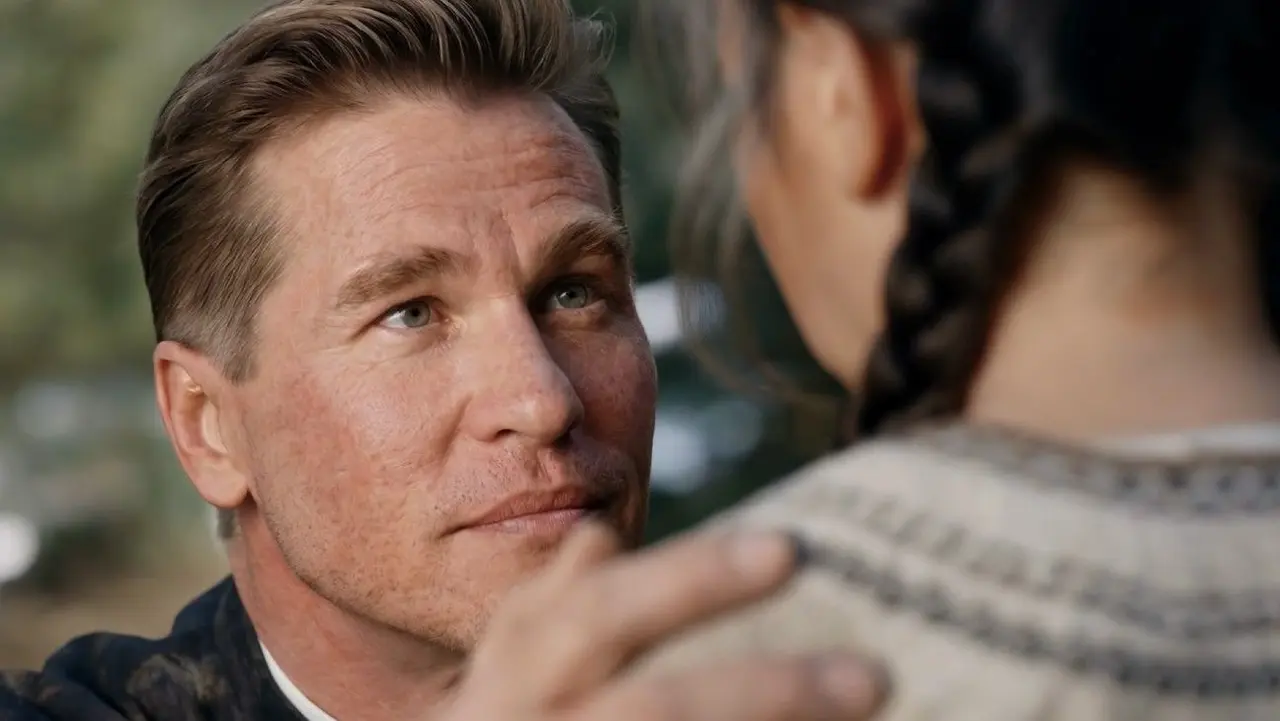
Filmmakers behind the indie drama As Deep as the Grave unveiled a trailer at CinemaCon in Las Vegas that features an AI-generated performance by Val Kilmer, who died last year at age 65 from pneumonia following a battle with throat cancer
1
2
. The digital likeness portrays Father Fintan, a Catholic priest and Native American spiritualist, appearing on screen for one hour and 17 minutes in what marks the first time an actor's likeness and voice will be completely AI-generated in a feature film2
4
. "Don't fear the dead and don't fear me," the AI deepfake Kilmer proclaims in the trailer—a line that immediately sparked controversy across social media3
.
Source: AP
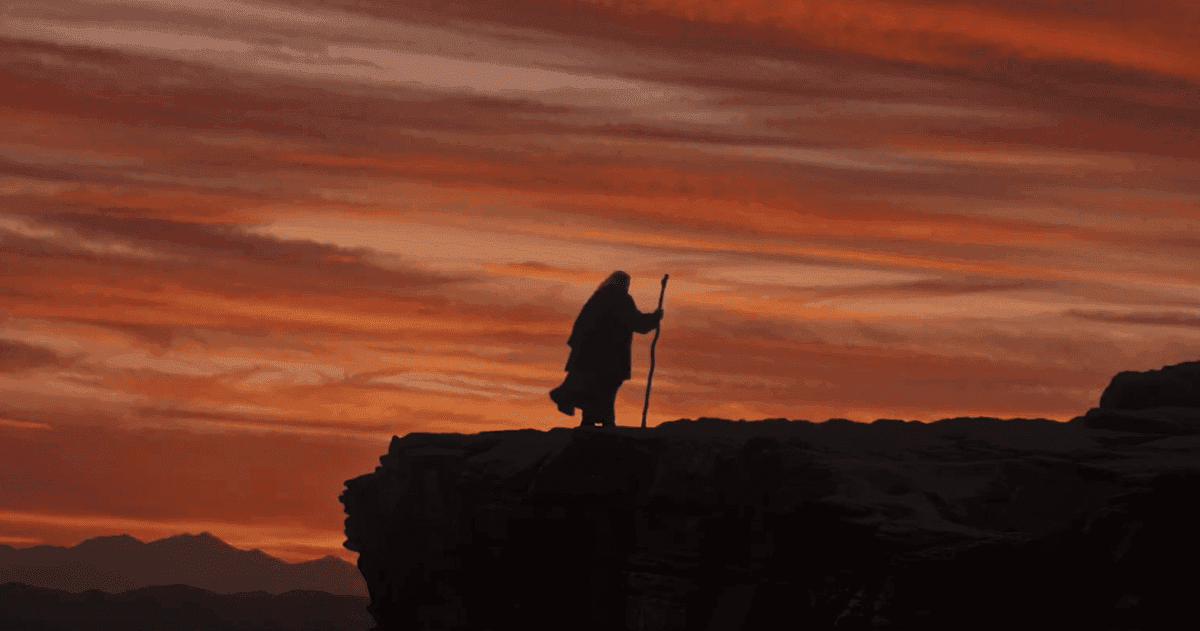
The historical drama follows archaeologists Ann and Earl Morris, whose 1920s fieldwork in New Mexico explored the history of the Navajo people and Ancestral Puebloans
1
3
. Kilmer had signed on years ago, but poor health prevented him from appearing on set before his death1
. Rather than recasting, writer-director Coerte Voorhees and producer John Voorhees chose to use generative AI to complete the posthumous performance, employing archival footage, photos, and voice recordings to craft the digital likeness1
3
.
Source: THR
The Voorhees brothers have vigorously defended their approach, emphasizing they followed all guidelines on AI use established by the SAG-AFTRA actors union
1
. John Voorhees distilled these protections into three principles: "consent, compensation and collaboration"2
. Kilmer's estate, including his daughter Mercedes and son Jack, granted permission for the digital replication, is being compensated, and provided archival materials to support the process2
5
."We are 100% confident it's really the right move with this specific film," Coerte Voorhees told Reuters, adding that audiences who see the completed movie won't be able to distinguish the AI performance from human acting
1
. The brothers positioned their work as demonstrating an ethical path forward for AI in filmmaking at a time when many actors worry about unauthorized uses of their images1
. They emphasized that Kilmer's family "collaborated artistically in every possible way" throughout the production1
.Coerte Voorhees stopped short of calling it a Val Kilmer performance, stating instead that "Val Kilmer influenced this performance"
2
. The filmmakers compared the AI-rendered portrayal to any actor depicting a historical figure, similar to how Kilmer once portrayed Jim Morrison in "The Doors"2
. They noted that Kilmer had already explored AI-assisted technology during his lifetime, working with a company to digitally recreate his voice after losing his natural speaking ability following two tracheotomies, and his voice was digitally altered for his final screen appearance in "Top Gun: Maverick"2
4
.Despite the filmmakers' assurances about consent and ethics, the trailer drew immediate and fierce criticism on social media. Commenters called it "terrifying," "disgusting," and "the MOST disgusting thing I've ever seen"
1
5
. "It's called REST IN PEACE for a reason," one user wrote1
. Another noted, "Very fitting that this trailer includes a scene where a corpse is unceremoniously yanked out of the ground"4
5
.Jackson Rathbone, known for the "Twilight" films, posted an expletive-laden response calling the project disgusting and questioning SAG-AFTRA's role: "Hey SAG-AFTRA, about that strike we had... You owe us an explanation"
5
. The reference pointed to the 2023 strike when actors union members walked out for 118 days to secure AI protections5
. Rathbone also singled out Mercedes Kilmer, asking whether she was "capitalizing on your father's death for your own financial gain"5
.Analyst JP Gownder labeled the project "more grotesque digital necromancy," reflecting broader concerns about the precedent As Deep as the Grave could set for the film industry
5
. While CGI has been used to resurrect deceased actors before—Peter Cushing in "Rogue One: A Star Wars Story" and Paul Walker in "Furious 7"—generative AI represents a significant escalation, completely removing living actors from the process and lowering barriers to entry compared to traditional CGI4
5
.Related Stories
The controversy surrounding AI in filmmaking extends beyond one posthumous role. Hollywood actors have been vocal about an industry seemingly determined to replace them with AI, and the public appears largely supportive of their concerns
5
. Last year, a talent studio faced near-universal backlash after announcing the creation of an AI-generated "actress"5
. Even everyday users can now generate videos of deceased actors using tools like OpenAI's text-to-video technology5
.Mercedes Kilmer defended the decision in a statement to Variety, noting her father "always looked at emerging technologies with optimism as a tool to expand the possibilities of storytelling" and that the family is "honoring within this specific film, of which he was an integral part"
5
. Yet the resoundingly negative reaction suggests the filmmakers face an uphill battle convincing audiences that this use of AI represents acceptable practice rather than exploitation of deceased actors5
.The film, which began shooting in New Mexico in fall 2020 amid pandemic delays, is scheduled for release sometime this year
2
. As the debate intensifies, viewers will need to decide whether consent from Kilmer's estate sufficiently addresses the ethical questions raised by bringing deceased actors back through AI—and whether this technology serves storytelling or simply capitalizes on nostalgia and name recognition at the expense of living performers.Summarized by
Navi
[3]
18 Mar 2026•Entertainment and Society

29 Apr 2026•Entertainment and Society

20 Aug 2024

1
Science and Research

2
Technology

3
Technology