Virginia GOP Candidate Stages AI 'Debate' with Virtual Opponent


5 Sources
[1]
Virginia GOP candidate stages 'debate' against AI-generated opponent
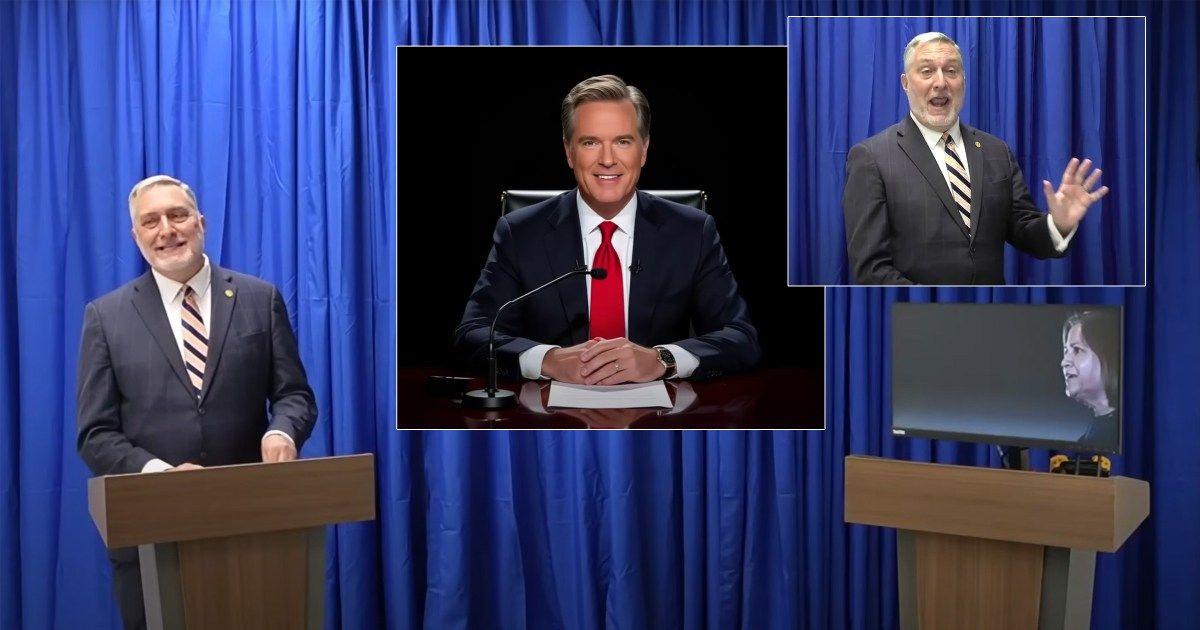
Republican John Reid staged a 40-minute "debate" between himself and an AI-generated bot that represented his opponent in the 2025 Virginia lieutenant governor's race, Democrat Ghazala Hashmi. (John Reid Campaign) After his Democratic opponent declined all of his debate requests in the Virginia
[2]
Virginia GOP candidate debates AI version of his opponent
Why it matters: This election year just keeps getting weirder. Driving the news: Reid, a Richmond-area conservative radio host, staged a 40-minute "debate" solo on Tuesday night after Democratic state Sen. Hashmi repeatedly declined to participate. * The YouTube broadcast involved Reid at a
[3]
Republican Candidate "Debates" Opponent By Sincerely Arguing With AI Deepfake For Nearly an Hour
You've probably heard of a "straw man," a fallacy in which you misrepresent an opponent's argument so it's easier to refute. Put up a false impression of what they're saying, and then knock 'em down. We all do it. But what we all probably don't do is create a full-blown AI-generated deepfake of
[4]
Virginia Republican Debates Opponent In 1 Totally Weird Way: 'I Had To Force The Issue'
The GOP candidate for Virginia lieutenant governor is defending his debate against an artificial intelligence version of his Democratic opponent, calling it the "best-possible alternative" to the real thing. Conservative radio host John Reid (R) on Tuesday shared a video of his not-so-authentic
[5]

Virginia GOP candidate holds debate with AI clone of opponent after...
The Virginia lieutenant governor's race took a bizarre turn on Tuesday after the Republican candidate held a 40-minute debate -- with his Democratic opponent played by an AI stand-in. After State Sen. Ghazala Hashmi refused all his requests for a debate, Republican John Reid held his own event
Share
Copy Link
Republican John Reid holds a 40-minute debate with an AI-generated version of his Democratic opponent, Ghazala Hashmi, sparking discussions on the use of AI in political campaigns.
Unconventional Campaign Tactic Raises Eyebrows
In an unprecedented move, Republican candidate John Reid for Virginia's lieutenant governor race staged a 40-minute 'debate' against an AI-generated version of his Democratic opponent, State Senator Ghazala Hashmi
1
. The event, streamed on Reid's YouTube channel, featured Reid addressing questions alongside a monitor displaying a pixelated image of Hashmi, with AI-generated responses delivered in a robotic voice mimicking the senator2
.
Source: Futurism
The AI 'Opponent'
Reid's campaign claimed the AI was trained on Hashmi's previous public statements, emphasizing their attempt to create a fair representation
1
. The debate covered various topics, including the economy, education, abortion, gun violence, and immigration2
.Reactions and Implications
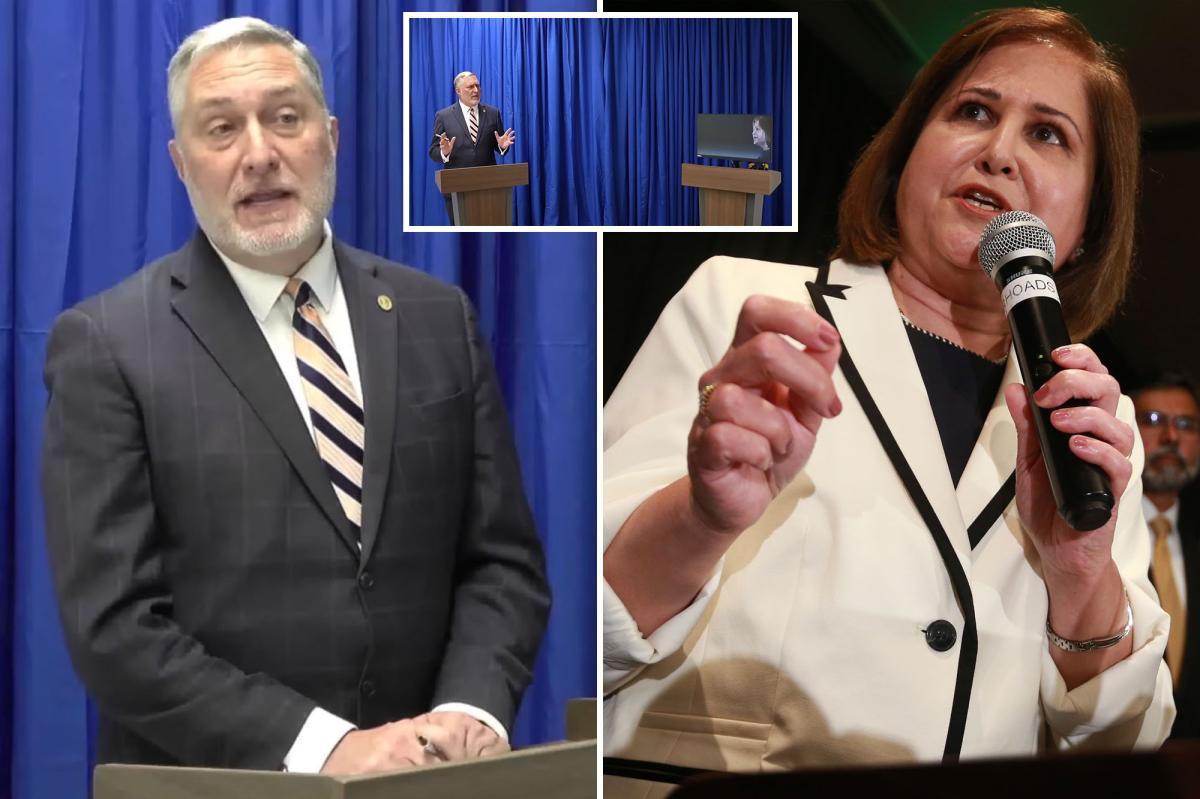
The stunt has sparked discussions about the boundaries of technology in political discourse. While Reid defended it as the 'best-possible alternative' to a real debate, Hashmi's campaign criticized it as a 'shoddy gimmick' and a 'desperate move'
4
.
Source: New York Post
Broader Context of AI in Politics
This incident is not isolated. It follows other controversial uses of AI in politics, such as President Trump's AI-generated video depicting him as a fighter pilot
3
. Political analysts warn that without proper regulations, AI could be used in more sophisticated ways in future campaigns1
.Related Stories


Legal and Ethical Concerns
The use of AI-generated content in political campaigns raises significant ethical and legal questions. Some states have already begun regulating AI in political campaigns, with at least 27 states implementing some form of restriction
2
. However, Virginia Governor Glenn Youngkin vetoed a similar bill earlier this year, calling it 'an unworkable solution'2
.Race Dynamics
Despite the controversy, recent polls show Reid and Hashmi in a close race. The Washington Post-Schar School poll puts Hashmi's lead within the margin of error
5
. This tight contest, combined with the AI debate stunt, has brought increased attention to the typically low-profile lieutenant governor race in Virginia.References
Summarized by

Navi
[1]
[3]
Related Stories
Recent Highlights



Recent Highlights
Today's Top Stories



Don’t drown in AI news. We cut through the noise - filtering, ranking and summarizing the most important AI news, breakthroughs and research daily. Follow topics that matter to you and stay ahead.


