AI Voice Controversy Hits Tomb Raider Remasters: French and Brazilian Actors Take Legal Action


5 Sources
[1]
Remastered Tomb Raider games allegedly used AI to change Lara Croft's French voice
Françoise Cadol is the voice actor for Lara Croft in the French localizations of the Tomb Raider IV-VI Remastered games. She has sent a legal notice to the games' publisher, Aspyr, alleging that a recent patch used artificial intelligence to alter her performance without her consent. The news was
[2]
French voice of Lara Croft files complaint over alleged AI use in Tomb Raider remaster
Serving tech enthusiasts for over 25 years. TechSpot means tech analysis and advice you can trust. In context: The dispute over Lara Croft's voice isn't just about one game or one actor - it's a test case for how AI is reshaping creative work. For Françoise Cadol, whose performances have defined
[3]
French Lara Croft taking legal action against Aspyr for AI-generated voice use in Tomb Raider remasters
Françoise Cadol, the actor who voiced the French version of Lara Croft in all of Tomb Raider games from their inception to 2008, is taking legal action against Aspyr Media for the apparent AI-generated use of her voice in the Tomb Raider 4-6 remasters. Cadol told French newspaper Le Parisien (via
[4]
Lara Croft’s French Voice Actress Alleges AI Is Replacing Her
Lara Croft ain’t real, but the many people who bring her to life are Another day in the 21st century, another fresh round of frustration and accusations that a company is using artificial intelligence to replace the labor of human beings. This time around, Françoise Cadol, Lara Croft’s French
[5]

Lara Croft's French actor pursues legal action against developer Aspyr over alleged AI replications of her work in Tomb Raider 4-6 Remastered
The character's Brazilian actor has also been affected by this, with Aspyr working to remove it Lara Croft's French voice actor is pursuing legal action against Aspyr over accusations AI was used to imitate her performance in the recent remaster. Tomb Raider 4-6 Remastered is a release I somewhat
Share
Copy Link
Françoise Cadol, the French voice of Lara Croft, is pursuing legal action against Aspyr Media for allegedly using AI to replicate her voice in Tomb Raider remasters without consent. The controversy extends to Brazil, raising concerns about AI's role in creative industries.
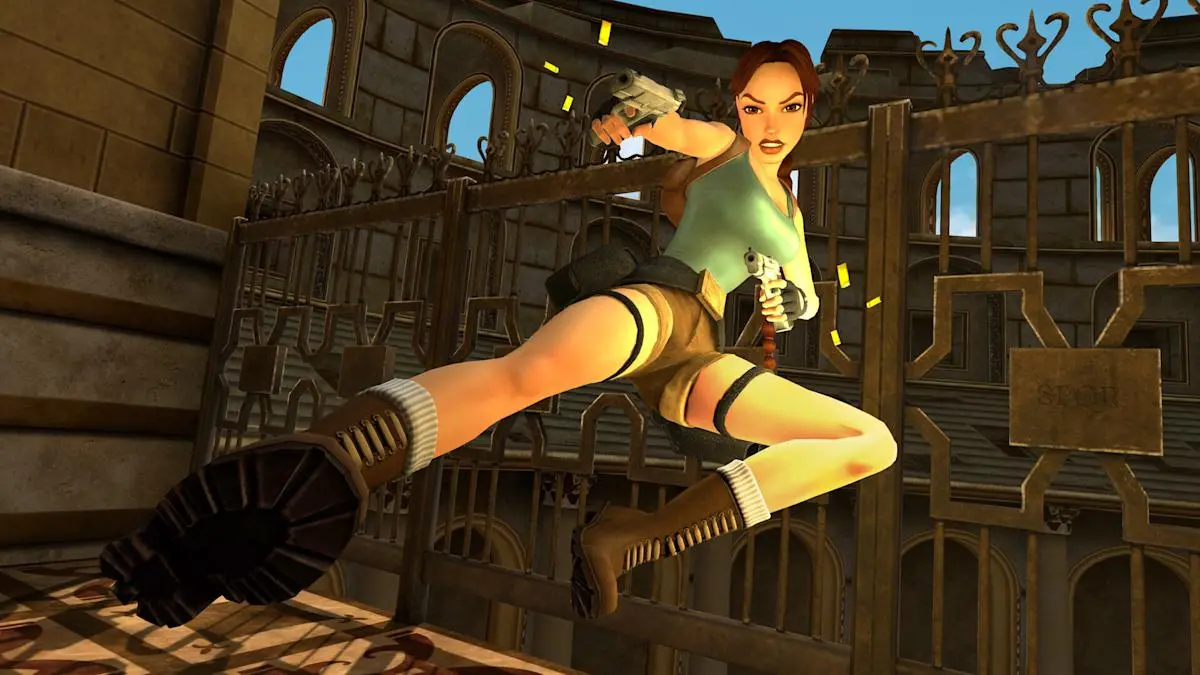
AI Voice Controversy in Tomb Raider Remasters
Françoise Cadol, the iconic French voice of Lara Croft, has taken legal action against Aspyr Media, alleging the unauthorized use of artificial intelligence (AI) to replicate her voice in the recently released Tomb Raider IV-VI Remastered collection
1
2
. The controversy has sparked a heated debate about the ethical implications of AI in creative industries and the rights of voice actors.Unveiling the AI Replication
The issue came to light following a mid-August patch that claimed to restore missing or incorrect voiceover lines in various languages
2
. Attentive fans noticed discrepancies in Cadol's performance, particularly in newly added tutorial instructions, which sounded more mechanical and lacked the natural inflection that defined her earlier work3
.Legal Action and Industry Implications
Cadol has issued a cease-and-desist demand to Aspyr, describing the alleged AI use as a "betrayal" of fan support
3
. This case highlights the growing concerns in the entertainment industry about AI's potential to replicate performers' voices and likenesses without consent or compensation1
.Global Reach of the Controversy
The issue extends beyond France, with Brazilian voice actor Lene Bastos also reporting similar concerns
2
5
. Aspyr has acknowledged the issue in the Brazilian Portuguese localization, attributing it to an external development partner and promising to remove the AI-generated content in an upcoming update5
.Related Stories

Industry-Wide Concerns
This controversy comes at a time when the use of AI in entertainment is under intense scrutiny. The recent SAG-AFTRA strike in the United States focused partly on protections against studios digitally replicating performers' voices and likenesses without consent
2
. Voice actor Ashly Burch emphasized the importance of consent, fair compensation, and transparency in the use of digital replicas2
.Broader Implications for Creative Industries
The Tomb Raider controversy serves as a test case for how AI is reshaping creative work. It underscores the risk that an actor's most personal asset - their voice - can be digitally replicated without consent or compensation
2
. For publishers and developers, it raises pressing questions about accountability in an era where production is increasingly outsourced2
.As the industry grapples with these challenges, the outcome of this case could set important precedents for the use of AI in game development and localization. It highlights the need for clear guidelines and ethical considerations in the application of AI technologies in creative fields.
References
Summarized by

Navi
[3]
Related Stories
AI Voice Cloning Controversy Rocks 'Tomb Raider' Remaster
24 Sept 2025•Entertainment and Society

Horizon's Ashly Burch Voices Concerns Over AI Aloy Demo, Highlighting Industry-Wide AI Debate
15 Mar 2025•Entertainment and Society

Tomb Raider: Legacy of Atlantis AI disclosure reveals generative AI use in game development
03 Jun 2026•Technology
Recent Highlights



Recent Highlights
Today's Top Stories



Don’t drown in AI news. We cut through the noise - filtering, ranking and summarizing the most important AI news, breakthroughs and research daily. Follow topics that matter to you and stay ahead.


