Washington and Beijing are squeezing the same AI loophole


2 Sources
[1]
The US-China AI war accelerates
This could be the next heat in the AI race between the US and China. Chinese factories installed more industrial robots in the last five years than the rest of the world put together, and Chinese embodied AI companies raised 13 billion dollars in the first half of 2026. Alex Xia is CEO of robotic
[2]
The US-China AI war accelerates
STORY: This could be the next heat in the AI race between the US and China. Factories in China installed more industrial robots in the last five years than all other countries combined. China's embodied AI sector raised 13 billion dollars in the first half of this year. Alex Xia is CEO of robotic
Share
Copy Link
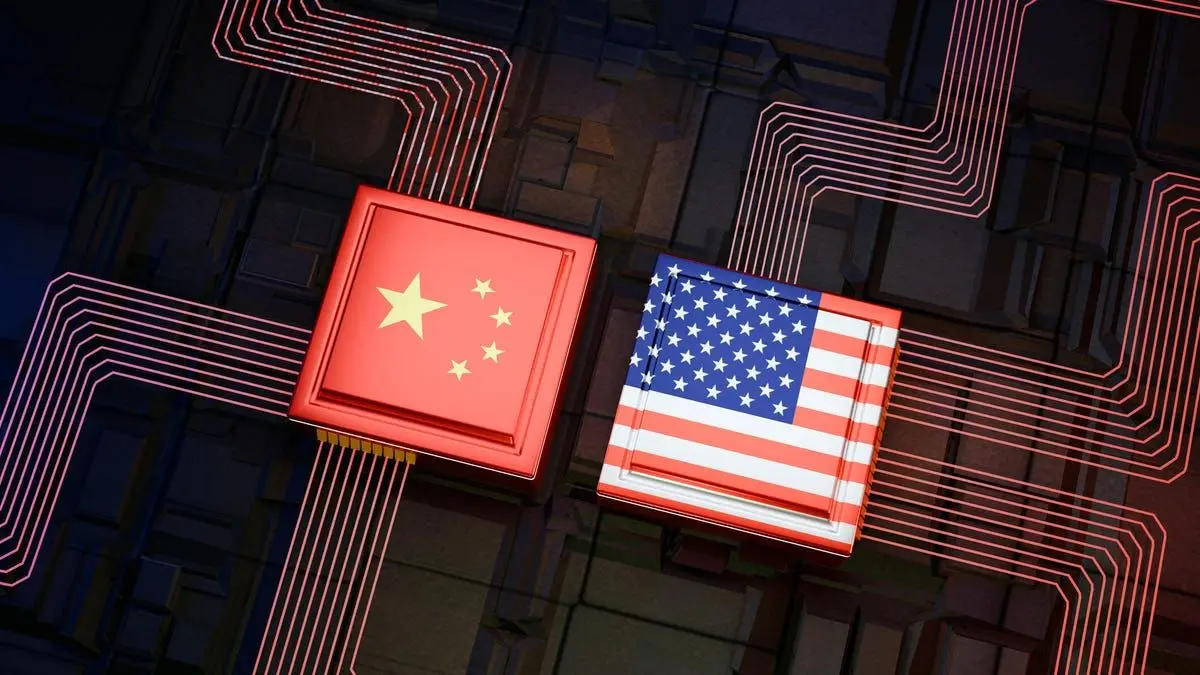
The United States and China are both moving to close the main route Chinese AI developers use to reach Nvidia chips: data centers in third countries. US senators have called for tighter limits on Nvidia's sales to China
1
2
, and Beijing is consulting on export controls that could bar Chinese companies from running their most advanced AI models in data centers outside China1
2
.The route matters because, per the report, Nvidia remains the dominant supplier of the chips Chinese AI and robotics firms need, and Chinese founders say so themselves
1
2
. Since those chips cannot be bought at home, developers get at least part of their access through data centers in third countries1
2
.The deal that collapsed
Tencent, the Chinese AI giant, reportedly pulled out of a $7 billion deal to lease Oracle data center capacity in Southeast Asia
1
2
. Both Washington and Beijing put pressure on the company to walk away1
2
. Neither Tencent nor Oracle has confirmed the reported withdrawal1
2
. The deal was a route to Nvidia chips that are unavailable inside China1
2
.The senator push follows the departure of former Nvidia CEO Jensen Huang, who stepped down after an affair with an alleged Chinese intelligence agent
1
2
.The cheap-model bet
While the compute door narrows, Chinese AI firms are competing on price rather than frontier capability. The bet is that most customers want the cheapest model that does the job
1
2
. Per investor Larry Li, the price gap comes from lower labor, talent, hardware and energy costs in China, plus a large pool of engineering graduates and locally made hardware1
2
.Fintech company Revolut says it cut its compute costs by 90% after moving to a Chinese AI model
1
2
. That figure is the company's own claim; no independent audit has checked it1
2
."They choose whichever model that does particularly a piece of work the best and at the best cost possible," said Fred Sun, Tencent's Europe general manager
1
2
.Li, who has spent decades in Silicon Valley, says the squeeze may backfire on Washington. "I think that will speed up the process of isolation. But this really may not be bad for innovation. So that actually force other countries including China, to innovate on their own," he said
1
2
.Related Stories
Robots as the other front
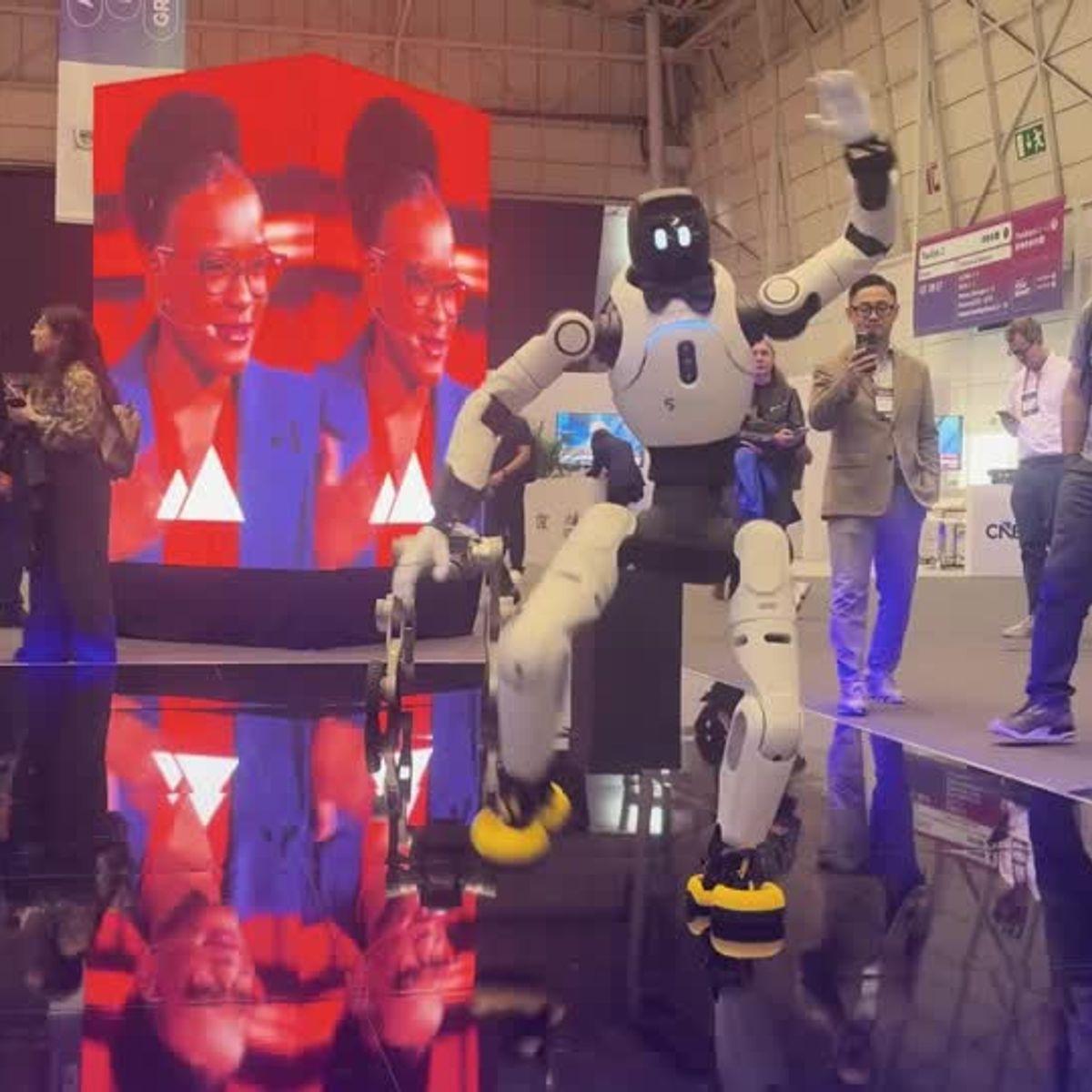
The physical side of the ecosystem is already at scale. Chinese factories installed more industrial robots over the past five years than every other country combined
1
2
. Embodied AI, the field of putting AI into machines that act in the real world, raised $13 billion in China in the first half of 20261
2
.
Source: Reuters
It is a harder problem than chatbot AI, because a robot has to interpret what it sees, what it hears and the physical space around it, not just text
1
2
. Xynova, a Chinese startup developing robotic hands, is one of the companies trying. "These hands can solve the labor shortage problem," said CEO Alex Xia, whose hands are aimed at repetitive work like packing and factory tasks1
2
. Xia says his company watches the sanctions closely to make sure it obeys the rules in every jurisdiction it operates in1
2
.The report's conclusion is that the two AI ecosystems are developing in parallel, and users in third countries may end up having to pick a side
1
2
.References
Summarized by

Navi
[1]
[2]
Related Stories
China's Open-Source AI Push Creates 'Death Zone' for US Models as Competition Shifts to Ecosystems
30 Jul 2026•Business and Economy

US China competition reveals two divergent paths in the global AI race
20 Feb 2026•Policy and Regulation

US-China AI competition shifts as regulation clashes with China's cost-efficient model strategy
26 Jun 2026•Policy and Regulation
Recent Highlights


Recent Highlights
Today's Top Stories







Don’t drown in AI news. We cut through the noise - filtering, ranking and summarizing the most important AI news, breakthroughs and research daily. Follow topics that matter to you and stay ahead.


