'We Unleashed the Beast': Global Perspectives on Artificial Intelligence Fears and Hopes


2 Sources
[1]
'We unleashed the beast': the world's fears and hopes about AI
Hong Kong (AFP) - The threat of catastrophic danger as artificial intelligence develops at high speed has sparked a global debate on how it should be regulated. AFP spoke to people in different countries about their fears and hopes for the AI future, as leading US labs call for a coordinated
[2]
artificial intelligence: 'We unleashed the beast': the world's fears and hopes about AI
Global discussions are occurring about regulating artificial intelligence development. People in various countries share fears and hopes for the AI future. Leading US labs have called for a coordinated slowdown of cutting-edge work. Some individuals express concerns about AI making people less
Share
Copy Link
As artificial intelligence develops at unprecedented speed, people across continents share starkly different fears and hopes about the technology. From architects in Rome to software engineers in San Francisco, a global debate intensifies over AI's benefits and risks, with leading US labs now calling for coordinated slowdowns amid concerns about catastrophic dangers and the urgent need for regulation.
Global Debate About AI Regulation Intensifies
The rapid advancement of artificial intelligence has ignited urgent discussions worldwide about how the technology should be governed. As leading US labs call for a coordinated slowdown of cutting-edge AI work, people across different countries are voicing both enthusiasm and deep concern about the technology's trajectory
1
. The global perspectives reveal a complex landscape where AI's benefits and risks are weighed against each other, with many questioning whether current frameworks are sufficient to prevent catastrophic dangers.Maliyka Muhammad, a 46-year-old analyst for New York State, captured the sentiment bluntly: "AI is here. We unleashed the beast." She believes a consortium of people would be best suited to regulate the technology
2
. This metaphor reflects growing unease about whether humanity has adequate control over a technology developing faster than regulatory systems can respond.Job Displacement and Workforce Transformation
Concerns about job displacement dominate conversations across continents. In San Francisco, 30-year-old software engineer Lucy Pen has already witnessed her role transform dramatically. Her work has shifted from writing code herself to managing AI agents that write code for her. "Maybe in the future they don't need me to give commands to AI anymore," she acknowledged, highlighting fears about enhanced productivity potentially eliminating human roles entirely
1
.In Shanghai, businessman Yang Shuai, 42, expressed worry that future generations would "face real hardship" due to hurdles encountered when searching for jobs
2
. The job market impacts extend beyond traditional tech roles, raising questions about how entire industries will adapt as artificial intelligence capabilities expand.Loss of Human Skills and Cognitive Decline
The fear of diminishing human capabilities emerged as a recurring theme. In Santiago, 19-year-old advertising student Catalina Cruz believes AI is "making us dumber" because "people aren't able to think for themselves any more." She also raised the environmental impact of AI, noting that "it uses too much water," and insisted the technology "definitely needs to be regulated"
1
.Yet perspectives on loss of human skills vary significantly. In Tokyo, part-time service industry worker Konno Hazuki, 29, remains confident she won't be replaced. "Because AI doesn't have emotions, there are things it just can't offer customers," she explained
2
. This highlights a critical distinction many see between artificial intelligence and human interaction—the irreplaceable value of emotional intelligence.Existential Risks and Catastrophic Scenarios
Some voices expressed concerns about existential risks that go beyond economic disruption. In Israel, video creator Yotam Katzor, 32, worried about what would happen when humans are no longer the smartest entities on Earth. "If it wants, it can finish us. But we still have the power to win" through regulation, he said
1
.In Tokyo, Atsukuni Tabata, 56, who works at an advertising company, described it as "scary" not knowing what AI would do as it "accumulates more and more data"
2
. These fears reflect growing awareness of AI's societal and ethical implications as systems become more autonomous and capable.Professional Integration and Practical Benefits
Despite widespread concerns, many professionals are finding ways to integrate artificial intelligence into their work. In Rome, 43-year-old architect Frida Awrohum uses AI tools because they offer fresh ideas, though she admits "privately it still scares me" and prioritizes the "human" aspect of her work
1
.In Jakarta, 18-year-old student Astrid Anindya uses multiple chatbots including ChatGPT and Gemini to find information and craft effective wording for job applications. However, she's learned to cross-check information between platforms because "sometimes they give wrong information"
2
. This practical approach reflects how users are developing strategies to maximize AI's benefits and risks simultaneously.Related Stories

The Need for Regulation and Global Governance
The call for robust regulatory frameworks resonates across borders. In Paris, train driver-in-training Romain Hamel, 34, observed that AI is developing so quickly that "we don't have enough perspective yet." He believes "we're not putting enough barriers in place at the moment—we're letting things happen," with the race driven by the United States and China. While acknowledging Europe already regulates extensively, he argued that "more frameworks should be introduced to prevent abuse, or us losing control over it"
1
.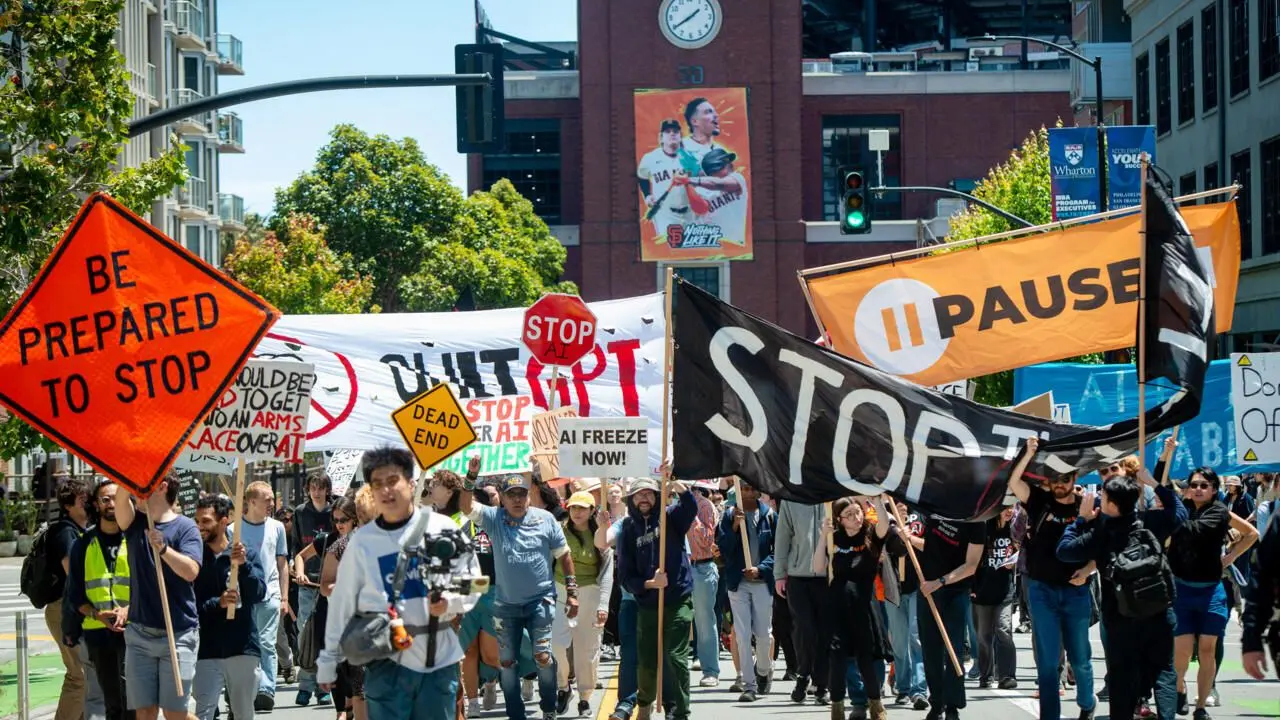
Source: France 24
In Shanghai, pharmaceutical worker Jenny, 50, insisted that "businesses cannot possibly regulate themselves" and must instead be restrained through policies and laws
2
. Israeli software engineer Tal Reinfeld advocated for global governance, noting that "like the internet, each country has its own authority, but we still need something global"1
.Balancing Progress and Precaution
The global perspectives on artificial intelligence reveal a world grappling with how to harness the technology's potential while mitigating its dangers. In Shanghai, Xie Zongbo, 42, offered a measured view: "No new technology develops completely smoothly. We will slowly learn to minimise its negative impacts, so its positive aspects can better serve humanity and offer greater convenience"
2
.In Santiago, occupational therapist Constanza Medel, 29, sees AI "as a clear benefit as long as you take the proper precautions"
1
. Meanwhile, New York nurse Brian Diaz, 26, acknowledged that while AI could cause harm in the wrong hands, "humanity has to develop." His pragmatic assessment: "You're either gonna be with it or you're gonna get left behind"2
.As AI development and governance discussions continue, the challenge remains finding effective mechanisms to coordinate international efforts while respecting different cultural approaches to technology regulation. The fears and hopes expressed globally underscore that artificial intelligence is not merely a technical challenge but a profound societal transformation requiring thoughtful navigation.
References
Summarized by

Navi
Related Stories
Global Survey Reveals 74% of Americans Worry About AI Despite Daily Use, Job Losses Expected
18 Sept 2026•Entertainment and Society
AI Safety Under Scrutiny: Can Independent Evaluators Truly Police Frontier Models?
17 Sept 2026•Policy and Regulation
Global Concerns Outweigh Excitement as AI Adoption Grows
15 Oct 2025•Technology

Recent Highlights



Recent Highlights
Today's Top Stories




Don’t drown in AI news. We cut through the noise - filtering, ranking and summarizing the most important AI news, breakthroughs and research daily. Follow topics that matter to you and stay ahead.


