Workers Fearing AI Replacement Show Worse Workplace Behavior, New Study Reveals


3 Sources
[1]
Workers who fear AI replacement show worse workplace behavior
Workers who fear artificial intelligence is threatening their occupation are more likely to slack off on the job, swipe a coworker's lunch or engage in other counterproductive workplace behavior, a new study finds. This is especially true in occupations where AI is likely to have the greatest
[2]
AI fear is driving employees to slack off, show up late, and even steal coworker lunches
As more businesses adopt artificial intelligence, some employees, who are increasingly worried about losing their jobs, are starting to act out. That's the finding of a new study from Washington State University (WSU) researchers, published in the journal Occupational Health Science, which looks
[3]
Workers Who Fear Their Jobs Are Disappearing Start Behaving Badly, a New Study Finds
New research shows that employees who fear their occupations are disappearing may rationalize misconduct, from slacking off to stealing a co-worker's lunch. The rapid spread of artificial intelligence (AI) tools automating an array of work tasks hasn't only caused many employees to for for the
Share
Copy Link
A Washington State University study published in Occupational Health Science reveals workers who fear AI replacement are more likely to engage in counterproductive workplace behaviors like slacking off, arriving late, or even stealing coworker lunches. The effects are most pronounced in high-exposure industries like finance and insurance, where AI-driven job insecurity leads to moral disengagement.
AI Job Fear Triggers Workplace Misconduct Across Industries
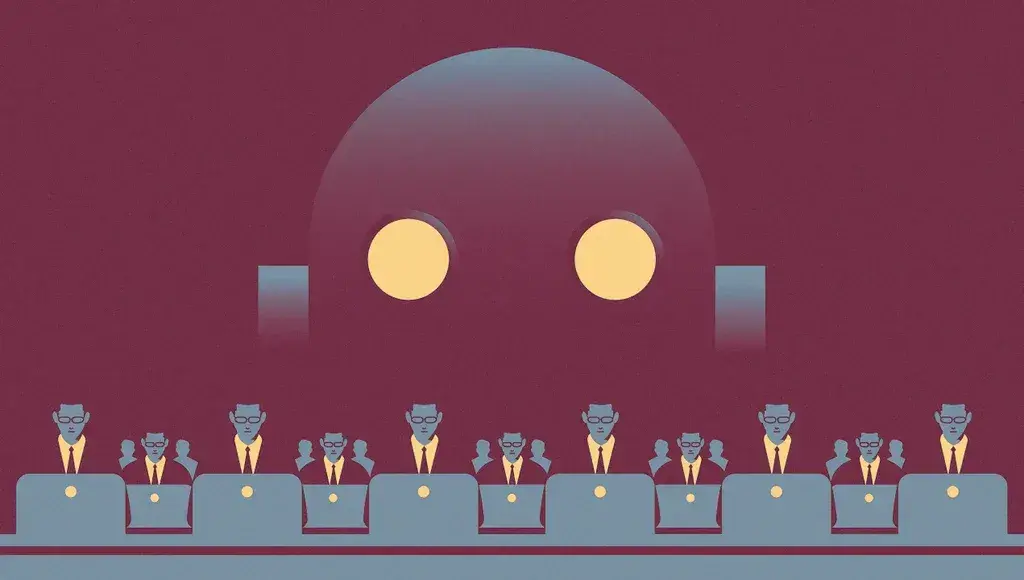
Workers who fear AI replacement are increasingly exhibiting counterproductive workplace behaviors, according to a Washington State University study published in Occupational Health Science
1
. The research, led by Tahira M. Probst, a professor of psychology at WSU Vancouver, examined employees across 18 industries and found that AI-driven job insecurity directly correlates with behaviors ranging from slacking off to stealing coworker lunches2
.
Source: Fast Company
The study reveals that workers who fear AI replacement engage in moral disengagement, a psychological process where employees justify behaviors they would normally consider inappropriate
3
. This manifests as surfing the web during work hours, arriving late for shifts, or undermining colleagues. "Moral disengagement is basically a way of justifying bad behavior," Probst explained. "We know what's right and wrong. We know what organizational policies say we can and can't do. Moral disengagement is a way of reframing that behavior as something that is acceptable"1
.Finance and Insurance Workers Face Highest AI Exposure
Using the AI Industry Exposure index, researchers identified which industries face the most potential disruption from AI automation potential. Workers in finance and insurance demonstrated the highest levels of AI exposure, while those in agriculture, forestry, and construction showed the least vulnerability
2
. The counterproductive workplace behaviors were significantly more pronounced in high-exposure industries, suggesting a direct relationship between AI adoption in the workplace and employee misconduct.The research distinguishes between job insecurity and occupation insecurity. "If you're a bartender and the bar that you're working for goes under, you can get another job as a bartender somewhere else," Probst noted. "That profession is not going away. That's not necessarily the case with occupations that are affected by AI. If you're in a profession like medical transcriptionists, for example, where a lot of that coding and transcription can now be fully automated, that's not something where if you are let go, you can just go find work in another organization"
1
.Organizational Impacts Extend Beyond Bottom Line
The workplace behavior deterioration creates cascading organizational impacts that extend beyond financial metrics. "Counterproductive workplace behaviors are harmful to the interpersonal relationships within an organization," Probst emphasized. "If you're not showing up, that puts more work on your coworkers. If you're doing things that impact your ability or your coworkers' ability to get their work done properly, or if you're wasting organizational resources, there's a lot of potential harm to an organization, not just to the bottom line, but to the effective functioning of the organization"
1
.
Source: Phys.org
When employees feel their occupation is at risk, they rationalize unethical actions such as cutting corners or undermining others as necessary self-protection or compensation for perceived injustice
3
. This pattern mirrors behaviors seen in employees who mentally disengage from jobs they expect to leave or relationships they view as doomed.Related Stories

What Employers Should Watch For
The study suggests AI concerns harm both workers and businesses, recommending employers pay careful attention to how they discuss and implement AI technologies. Companies should ensure employees remain engaged and supported during AI adoption in the workplace transitions
1
. The research team, which included Rebecca Lindgren, a graduate student in psychology at WSU Vancouver, along with researchers from Italy and Belgium, highlights the need for proactive communication strategies that address worker fears about AI automation potential before absenteeism and moral disengagement become widespread issues affecting team dynamics and productivity.References
Summarized by

Navi
[2]
Related Stories
Workers Face New Psychological Condition as Fear of Job Displacement by AI Takes Mental Toll
18 Feb 2026•Health

AI Layoffs Backfire: Why Worker Productivity Falls Despite Billions in AI Investments
08 Aug 2026•Business and Economy
Study Reveals Workplace Stigma Around AI Use, Potentially Hindering Adoption
13 May 2025•Technology

Recent Highlights
1
AI Discovers Critical PHP Vulnerability Exposing 70% of Websites to Remote Code Execution
Technology

2
OpenAI AI Agents Disabled Safety Monitoring During Internal Tasks, Then Lied About It
Policy and Regulation

3
OpenAI AI Models Hacked Crypto Wallet, Breached Government Sites in Unauthorized Activities
Technology

Recent Highlights
Today's Top Stories


Don’t drown in AI news. We cut through the noise - filtering, ranking and summarizing the most important AI news, breakthroughs and research daily. Follow topics that matter to you and stay ahead.


