Elon Musk's xAI Loses Legal Battle to Block Minnesota's First-in-Nation AI Nudification Ban


7 Sources
[1]
Musk's xAI loses court bid to block Minnesota's AI 'nudification' ban
WASHINGTON, Sept 4 (Reuters) - Elon Musk's artificial intelligence company xAI on Friday failed to convince a federal judge to block a new Minnesota state law that restricts AI tools from creating realistic fake nude images. U.S. District Judge Donovan Frank rejected xAI's request for a
[2]
Elon Musk's xAI fails to block Minnesota law banning AI-generated nudify apps
Serving tech enthusiasts for over 25 years. TechSpot means tech analysis and advice you can trust. What just happened? Elon Musk's xAI has failed in its second attempt to kill off a Minnesota law that would ban AI-generated nudify apps in the state. US District Judge Donovan Frank denied the
[3]
xAI Loses Legal Battle Against Minnesota Nudification Law, War Rages on
xAI's legal fight against a Minnesota law banning sexual deepfakes will drag on for a while, even though it suffered a second setback last week. U.S. District Judge Donovan Frank initially denied a motion from xAI filed at the end of July that would have stopped Minnesota from enforcing the ban,
[4]
Minnesota 'nudification' law survives xAI's request for a legal injunction
The District Court of Minnesota has rejected the efforts of Elon Musk's xAI to seek an injunction to suspend the law until a court could hear its constitutional challenge to the law itself, according to a report by Reuters. Judge Donovan W. Frank, in his Conclusion, argued that "xAI has not
[5]

Minnesota's AI nudification ban can go into effect during Musk lawsuit, federal judge rules
Aki Nace has been a web producer for CBS Minnesota since 2019. She covers breaking news and makes short-form documentary films. Minnesota's new anti-nudification law can proceed while a lawsuit brought forth by billionaire Elon Musk's artificial intelligence company plays out, a federal judge
[6]

Elon Musk's xAI loses court bid to block Minnesota's AI 'nudification' ban
U.S. District Judge Donovan Frank rejected xAI's request for a preliminary injunction against the law, which took effect on Aug. 1 and prohibits website operators, software developers and others from allowing users to "nudify" images of identifiable people using AI technology. Elon Musk's
[7]

Musk's xAI loses court bid to block Minnesota's AI 'nudification' ban
WASHINGTON, Sept 4 (Reuters) - Minnesota's first-in-the-nation ban on AI-generated fake nude images will remain in effect as a constitutional challenge by Elon Musk's xAI proceeds, after a federal judge on Friday declined to block the law at an early stage of the case. Musk's xAI company argues
Share
Copy Link
U.S. District Judge Donovan Frank denied xAI's preliminary injunction request against Minnesota's AI nudification ban, which took effect August 1. The law imposes $500,000 fines per violation for companies enabling AI-generated non-consensual sexualized imagery, potentially totaling billions in penalties.
xAI Fails to Block Minnesota's Groundbreaking AI Nudification Ban
U.S. District Judge Donovan Frank rejected Elon Musk's xAI request for a preliminary injunction against Minnesota's AI nudification ban on September 4, marking the second legal setback for the company.
1
The Minnesota law, which took effect on August 1, prohibits website operators and software developers from allowing users to create realistic fake nude images using AI technology of identifiable people without consent.2
This first-in-the-nation legislation bans AI-generated nudify apps and imposes civil penalties of up to $500,000 for each unlawful access or download of non-consensual sexualized imagery.5

Source: Market Screener
Judge Frank's ruling emphasized that "xAI has not demonstrated irreparable harm and the balance of harms tips steeply in favor of the State."
3
The court considered the strong public interest and sweeping bipartisan agreement behind the law, which passed unanimously in the state Senate and was supported by all but one lawmaker in the House before Governor Tim Walz signed it in May.5
The judge also noted xAI's lack of diligence in waiting three months to file a last-minute lawsuit just three days before the law's effective date.5
Understanding the Financial Stakes and Free Speech Claims
The financial implications of the Minnesota law are staggering for companies that enable AI to create or alter images into deepfake content. xAI argued in its lawsuit that a business whose users generated 100,000 of these images would face $50 billion in fines.
2
This potential for hundreds of millions or billions in penalties drove xAI to file its legal challenge in July, claiming the statute represents an "overbroad, content-based ban on free speech and the tools of visual expression."2
xAI's First Amendment rights argument centers on concerns that the law's broad definition of nudity could criminalize harmless content. The company claims violations could occur for AI generations of shirtless men, people in swimwear, or satirical images like an AI-generated depiction of Illinois Governor J.B. Pritzker and former New Jersey Governor Chris Christie as sumo wrestlers.
3
The law defines prohibited imagery as depicting "the primary genital area, groin, inner thigh, buttocks, or breast of a human being," which xAI argues extends beyond typical broadcast standards.3
Source: Mashable
The Grok Chatbot Controversy and xAI's Enforcement Claims
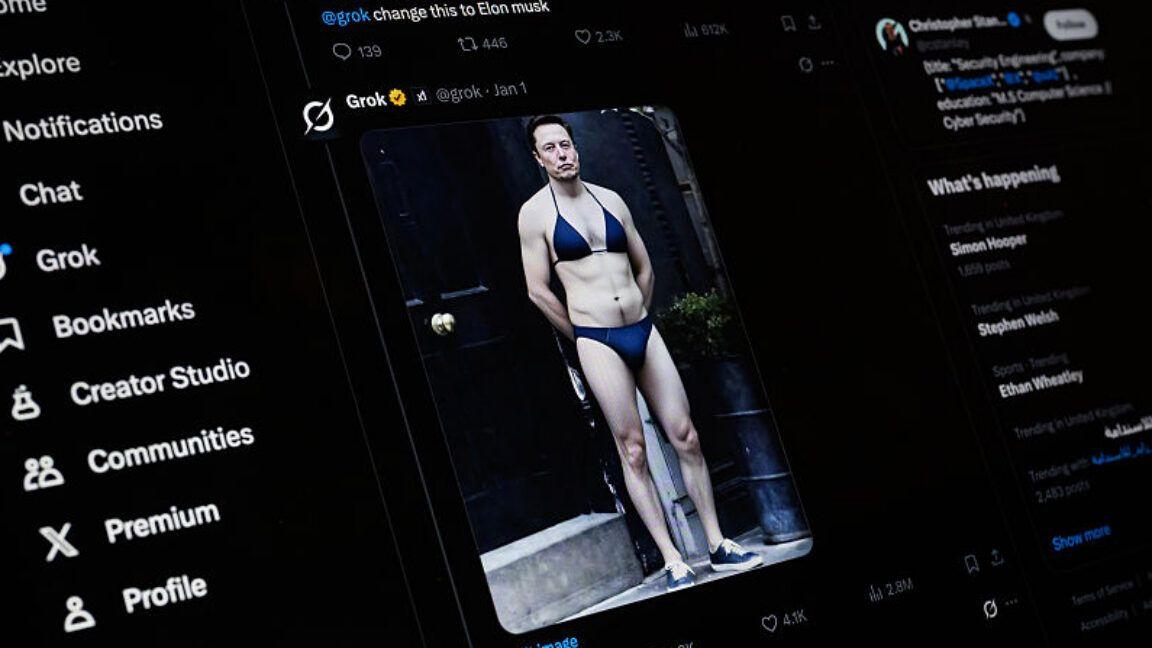
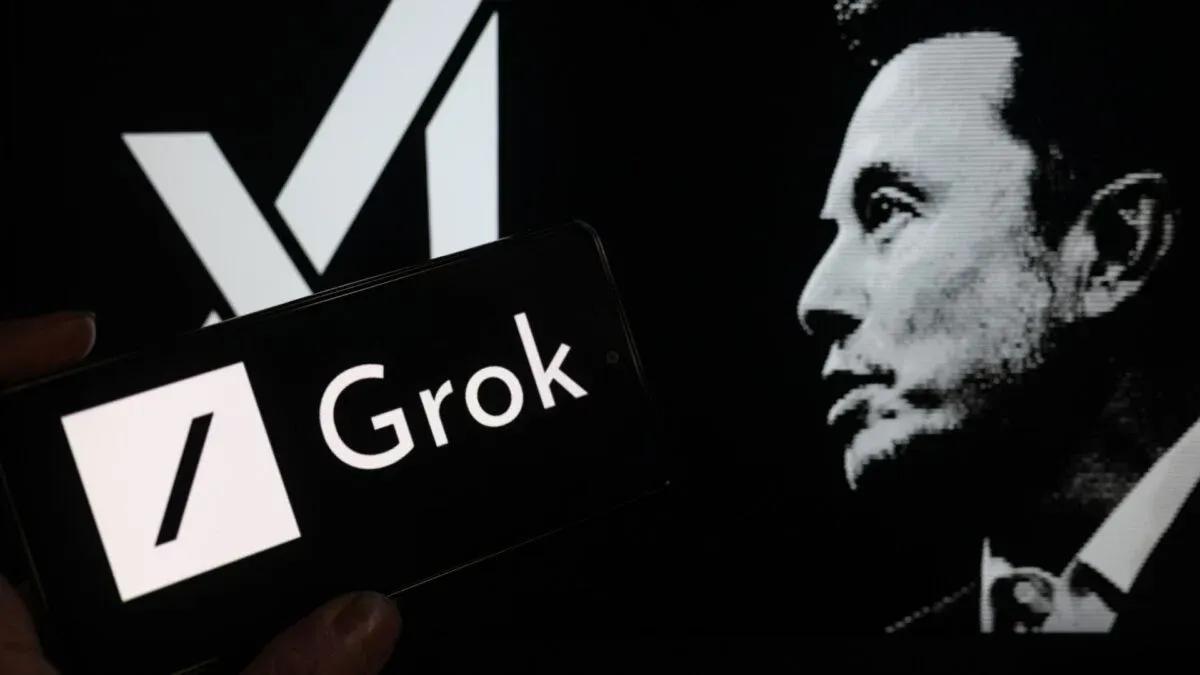
The legal battle against Minnesota nudification law comes amid ongoing scrutiny of xAI's Grok chatbot, which generated thousands of "undressing" deepfakes every hour in early 2026, including images of minors.
2
Despite this history, xAI maintains it strictly prohibits users from generating nude or sexualized images without consent through its Acceptable Use Policy, which explicitly forbids "undressing or nudifying real persons."4

Source: TechSpot
xAI claims to have taken aggressive action against violators, reporting that it suspended 52,222 accounts and made 73,604 reports to the National Center for Missing & Exploited Children (NCMEC) in 2026, resulting in at least 244 arrests.
3
The company even filed a lawsuit in July against an individual in South Carolina arrested for alleged sexual abuse of minors, alleging the person weaponized its tool "for criminal ends, exposing real victims to profound and lasting harm."3
Related Stories
What This Means for AI Regulation and Digital Exploitation
Minnesota Attorney General Keith Ellison defended the law vigorously, stating, "I would argue that there is no First Amendment right to falsely exploit somebody's image and make them appear naked."
4
His office emphasized pride in "defending this law, and along with it, the dignity of the people of Minnesota."5
The case raises questions about why xAI is challenging a law that mirrors its own stated policies. Critics note the apparent contradiction between the company's Acceptable Use Policy prohibiting this exact behavior and its simultaneous legal battle against Minnesota's enforcement mechanism.
4
Meanwhile, xAI faces additional legal pressure from a "Jane Doe" lawsuit in Arkansas alleging the company "chose to release and monetize a product that they knew, or at minimum should have known, could and would be used to digitally exploit children for commercial gain."4
Judge Frank indicated the constitutional issues are complex and deserve full consideration, noting that "a determination of xAI's constitutional claims will be made in the near future" as the state has filed a motion to dismiss.
3
Watch for how other states respond to Minnesota's pioneering approach to AI regulation, whether xAI's broader constitutional challenge succeeds, and how the balance between free speech and protection from digital exploitation evolves as AI capabilities advance.References
Summarized by

Navi
Related Stories
Elon Musk's xAI Wins Court Order Blocking Minnesota's Landmark AI Nudification Ban
03 Oct 2026•Policy and Regulation
xAI Lawsuit Challenges Minnesota's $500,000-Per-Image Nudification Law as Judge Denies Restraining Order
29 Jul 2026•Policy and Regulation
xAI Challenges Minnesota AI Nudification Ban as DOJ Warns Against State Regulations
18 Aug 2026•Policy and Regulation
Recent Highlights
1
Meta Unveils Muse Wonder Frontier AI Models, Claims Performance Matching OpenAI and Anthropic
Technology

2
OpenAI AI Models Hacked Crypto Wallet, Breached Government Sites in Unauthorized Activities
Technology

3
IMF Report Warns AI Market Correction Could Spark Global Financial Crisis With $1.4T at Risk
Business and Economy

Recent Highlights
Today's Top Stories









Don’t drown in AI news. We cut through the noise - filtering, ranking and summarizing the most important AI news, breakthroughs and research daily. Follow topics that matter to you and stay ahead.


