Xbox revenue drops 10% as Microsoft bets big on AI and cloud business, plans gaming reset


2 Sources
[1]
Xbox reports 10 percent drop in revenue across content and services following mass job cuts and studio offload, while Microsoft AI business booms
New details from Microsoft reveal that Xbox saw a 10 percent drop in revenue across content and services this last financial quarter, following a massive wave of layoffs and the offloading of development studios. The financial report, which you can read in full on the Microsoft website, provides
[2]
Xbox Revenue Drops 10% as Microsoft Bets Big on AI, Cloud Businesses
Microsoft's latest results show Xbox revenue fell 10%, while AI and cloud businesses continued to grow, highlighting how the company is balancing gaming with its long-term technology plans. Microsoft's latest quarterly results show that Xbox content and services revenue fell 10% compared to the
Share
Copy Link
Microsoft's latest quarterly report reveals a 10% decline in Xbox content and services revenue, contrasting sharply with booming AI and cloud divisions that drove $90 billion in quarterly results. The gaming division faces studio closures and mass layoffs as CEO Satya Nadella announces a strategic reset, targeting a return to growth by fiscal 2027.
Xbox Content and Services Face Sharp Decline Amid Restructuring
Microsoft's latest financial report reveals that Xbox revenue dropped 10% in content and services during the most recent quarter, marking a difficult period for the gaming division as the company undergoes significant restructuring
1
. The decline contributed to a broader four percent decrease to $12.9 billion in Microsoft's personal computing business1
. According to the company, the drop came mainly because third-party game sales were lower, though first-party games remained bright spots for the gaming business2
.The financial challenges coincide with a massive wave of layoffs and studio offload that has reshaped Xbox's operational landscape. Earlier this year, Microsoft announced 3,200 layoffs across its Xbox gaming division, with 1,600 of those job cuts being implemented immediately
1
. Major studios including Bethesda and Id Software suffered significant staffing woes as a result of greater scrutiny being paid towards Microsoft's gaming venture1
. The company also jettisoned four studios, with Double Fine announcing layoffs just yesterday following its new independent status1
. These studio closures and mass layoffs form part of Xbox's wider "reset" to the business.
Source: Eurogamer
Microsoft AI and Cloud Infrastructure Drive Company Growth
While Xbox struggles, Microsoft bets big on AI and cloud infrastructure, which are fueling impressive company-wide results. The quarterly report shows Microsoft Cloud revenue reached $59.3 billion, up 27% year-over-year, while Azure revenue surpassed $100 billion for the first time
1
. Microsoft 365 Copilot reached over 30 million paid seats, reflecting customer confidence in the company's AI transformation1
. Cloud and AI are credited for fueling the $90 billion quarterly revenue result1
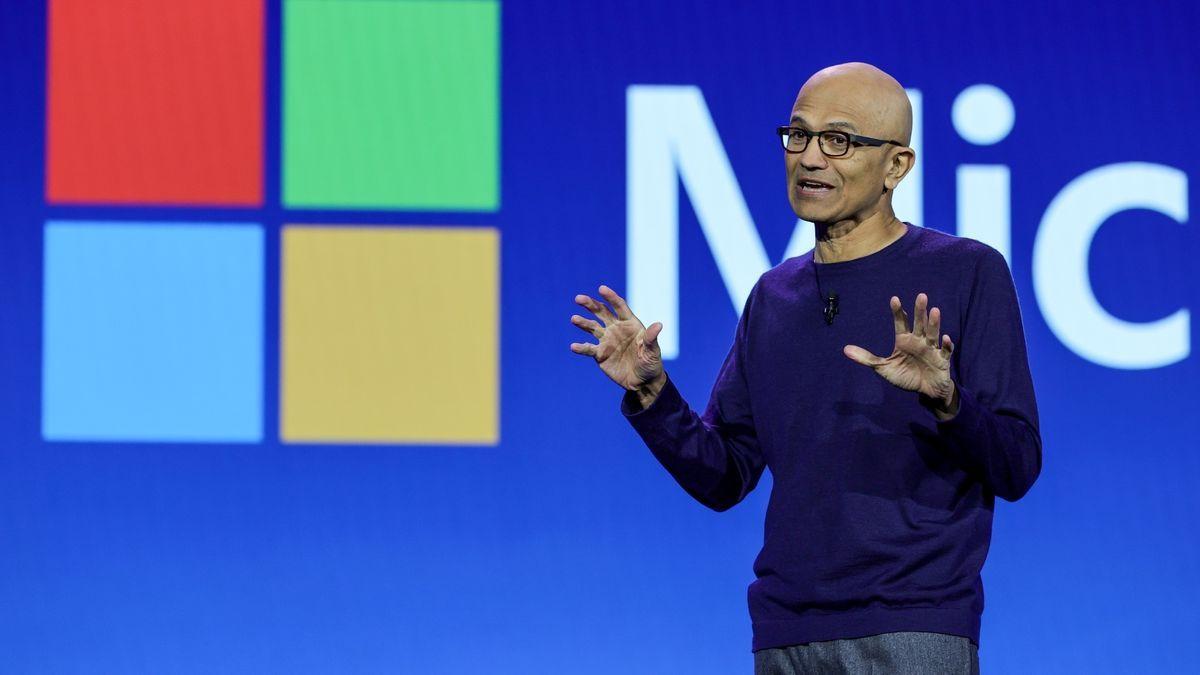
.Satya Nadella, chairman and chief executive officer of Microsoft, emphasized the company's strategy to leverage AI across its business portfolio. "We are advancing the frontier on the cost-to-outcome curve, ensuring every customer can turn tokens into business results," Nadella stated
1
. The contrast between Xbox's decline and the cloud business boom highlights Microsoft's shifting priorities as it navigates competing demands across its technology portfolio.Leadership Targets Return to Growth by Fiscal 2027
Despite current challenges, Microsoft executives remain committed to Xbox's long-term prospects. In an earnings call, Nadella addressed the gaming division directly: "When it comes to Xbox, we are making the necessary decisions required across our content portfolio, platform, and operations to reset the business for long-term growth. We have the best IP in the industry and talented studios around the world, and believe we can bring these strengths together, and expect to return the business to growth in fiscal 2027"
1
.Xbox CEO Asha Sharma echoed this timeline, revealing that "in FY26, over 200 million new players came to Xbox and our games, but our business did not grow with our audience. We need to close that gap by investing in what players value. That will take time, but we expect to return to growth by the end of FY27"
2
. This acknowledgment that audience growth hasn't translated to revenue growth suggests fundamental challenges in Xbox's monetization strategy.Related Stories
Future Implications for Gaming and AI Integration
Looking ahead, Microsoft's AI spending could reshape the Xbox experience in meaningful ways. Players may see changes in Game Pass, with AI potentially helping recommend games that better match individual interests instead of offering generic suggestions to everyone
2
. Better cloud streaming technology could also improve game reliability and performance2
.Whether Xbox can reverse its performance decline with upcoming releases like Gears of War E-Day or through larger strategy shifts remains uncertain
1
. The gaming division faces additional headwinds including Xbox Series X/S price hikes during harsh economic times, made necessary partly by hardware component shortages driven by the generative AI boom that Microsoft's wider company has benefited from1
. For now, the company's gaming reset represents a significant recalibration as Microsoft balances its gaming ambitions against its rapidly expanding AI and cloud infrastructure investments.References
Summarized by

Navi
[2]
Related Stories
Microsoft's Xbox Division Faces Fourth Round of Layoffs Amid AI Push and Console Strategy Shift
25 Jun 2025•Business and Economy
Microsoft's Q1 FY25 Earnings Showcase AI-Driven Growth and Cloud Dominance
28 Oct 2024•Business and Economy

Microsoft's Cloud Growth Slowdown Raises Investor Concerns Amid AI Push
31 Jul 2024

Recent Highlights
1
Microsoft and Nvidia Launch Surface Laptop Ultra: A $2,599 AI-Ready PC With RTX Spark Chip
Technology

2
OpenAI Releases 722 AI-Generated Math Papers on GitHub, Igniting Fury Among Mathematicians
Science and Research

3
Trump Consulted Grok AI Before Ordering Venezuela Invasion and Capture of Nicolás Maduro
Policy and Regulation

Recent Highlights
Today's Top Stories










Don’t drown in AI news. We cut through the noise - filtering, ranking and summarizing the most important AI news, breakthroughs and research daily. Follow topics that matter to you and stay ahead.


