AI Could Break Crypto Encryption in Months, Ethereum Researcher Warns Industry


7 Sources
[1]
Cryptographers Urgently Debating Whether AI Could Break Bitcoin's Security 'in Months'
Ethereum Foundation researcher Justin Drake warned the blockchain industry on Wednesday to begin preparing for what he called "bunker mode," arguing that AI-driven mathematical breakthroughs could crack a digital signature scheme used by Bitcoin before quantum computers do. Bitcoin has historically
[2]
Will AI Break Crypto Encryption? Ethereum's Vitalik Buterin Weighs In on 'Bunker Mode' Shift
It comes a day after Ethereum Foundation researcher Justin Drake also said that AI-accelerated math may break encryption before quantum computing can. Ethereum co-founder Vitalik Buterin says it is "plausible" for artificial intelligence to break encryption within the next two years. As a result,
[3]
Ethereum Researcher Says AI May Break Encryption Before Quantum Does
Drake urged holders not to panic or rush, and said he'll push to accelerate Ethereum's shift to hash-based cryptography. Justin Drake has spent years warning that quantum computers could one day crack crypto's cryptography. Now the Ethereum Foundation researcher says artificial intelligence might
[4]
Ethereum Researcher Warns AI Could Crack Crypto Before Q-Day
The Ethereum researcher said crypto users should consider moving funds to fresh addresses, warning AI could threaten private-key security before quantum computers do. Ethereum researcher Justin Drake has urged the industry to prepare for "bunker mode," recommending users gradually move assets to
[5]
Ethereum Researcher Cautions AI Could Threaten Crypto Wallet Security
Ethereum addresses reveal public keys after signing transactions Justin Drake, an Ethereum Foundation researcher, has asked crypto holders to be ready for the possibility of an AI-enabled cracking of the Elliptic Curve Digital Signature Algorithm (ECDSA), stating on October 7 that a worst-case
[6]

Ethereum Co-Creator Vitalik Buterin Says 'Don't Scramble' to Move Funds to New Wallets, but Take AI Risks
Ethereum (CRYPTO: ETH) co-founder Vitalik Buterin urged the cryptocurrency industry on Wednesday to take "AI-accelerated attacks" on cryptography seriously. Post-Quantum Cryptography Also Vulnerable? In an X post, Buterin warned that AI could accelerate mathematical advances enough to weaken
[7]

AI vs. Cryptography: Vitalik Buterin Reveals the 2-Year Countdown Crypto Holders Can't Ignore
Buterin urges measured preparation, cautioning that rushed wallet migrations can cause losses. Ethereum co-founder Vitalik Buterin has warned that artificial intelligence could accelerate mathematical discoveries enough to weaken some cryptographic systems within two years, adding a new concern to
Share
Copy Link
Ethereum Foundation researcher Justin Drake issued an urgent warning that AI-driven mathematical breakthroughs could crack the elliptic curve digital signature algorithm used by Bitcoin and Ethereum within months. He's calling for a controlled migration to fresh addresses while cryptographers debate the actual risk to crypto wallet security.
AI Could Break Crypto Encryption Before Quantum Computers
Justin Drake, an Ethereum Foundation researcher, issued a stark warning on Wednesday that AI could break crypto encryption before quantum computing poses a threat. Drake urged the blockchain industry to begin preparing for "bunker mode," arguing that AI-driven mathematical breakthroughs could crack the elliptic curve digital signature algorithm (ECDSA) used by Bitcoin and other cryptocurrencies in months rather than years
1
3
. By "break," Drake means fast private key recovery within approximately one week on available hardware such as a large GPU cluster1
.
Source: Cointelegraph
The warning centers on ECDSA, the signature scheme Bitcoin and Ethereum use to prove transaction authorization. When a wallet signs a transaction, its public keys become visible on-chain. If ECDSA were broken, an attacker could work backward from that public key to recover the private key and drain the wallet
3
. Drake pointed to OpenAI's Tuesday release of 722 mathematical results as evidence that mathematical superintelligence is advancing rapidly1
5
.Bunker Mode Strategy and Controlled Migration
Drake recommended that large crypto holders move funds to addresses that have never signed a transaction, keeping public keys hidden behind a hash. He stressed the importance of a controlled, gradual approach, warning that a rushed migration would do more harm than good
4
. According to Drake, sophisticated holders should move the bulk of their funds to fresh addresses, and when they do sign a transaction, they should move remaining funds to a new address5
.Drake specifically urged major platforms including Binance, Bitbank, Robinhood, Bitfinex, and Tether to harden their cold storage. He noted that wallets holding under 50 BTC enjoy partial cover from "Satoshi's shield"—roughly 20,000 exposed addresses tied to Bitcoin's creator, each holding 50 BTC, which would likely be targeted first in any attack
1
5
.Vitalik Buterin Weighs In on Cryptographic Security Risks
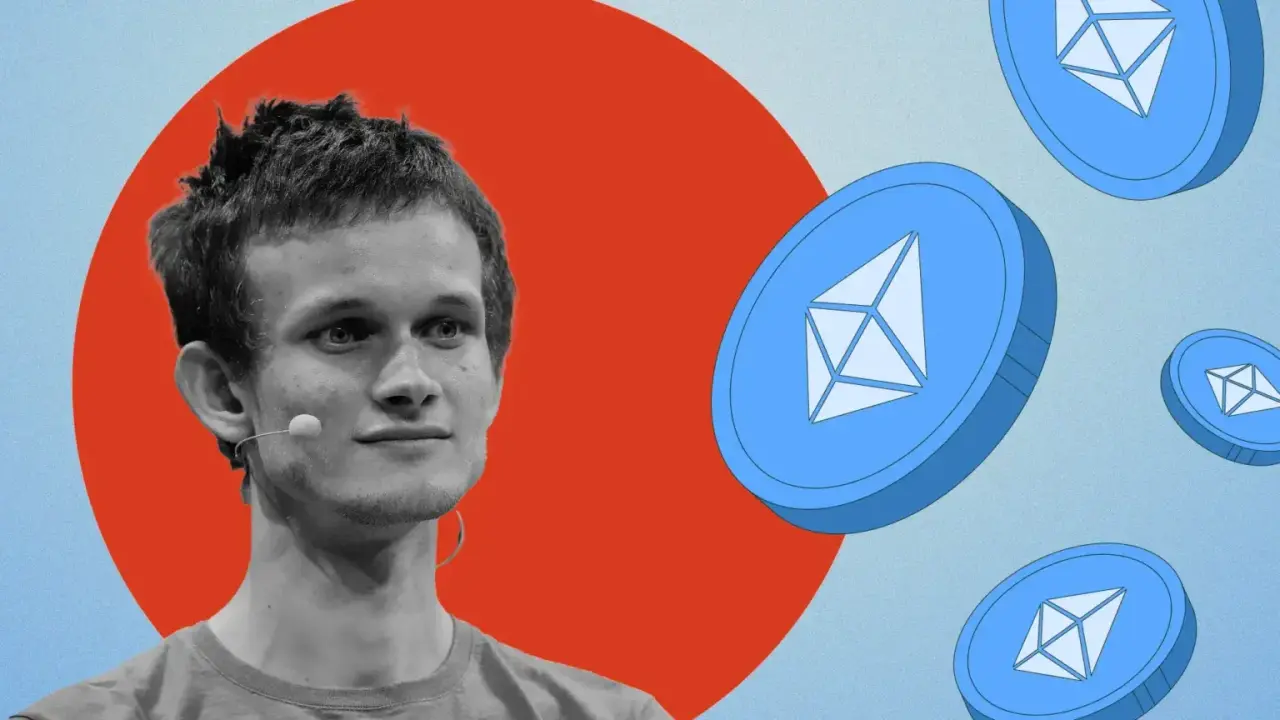
Ethereum co-founder Vitalik Buterin said it is "plausible" for AI to break encryption within the next two years. He expressed concern that the industry needs to protect itself from both AI-vulnerable and quantum-vulnerable cryptography
2
. Buterin suggested that lattice-based cryptography, which some projects like Cardano have considered for quantum-proofing, could also be vulnerable to AI attacks. "If AI will bring us 50 years of math in two years, then that 50 years of math may very plausibly include a level of improvement to our ability to break lattices," Buterin stated2
.
Source: CCN.com
Isabel Foxen Duke, head of Mara Foundation, a Bitcoin quantum proofing project, explained that breaks in cryptography by classical methods potentially created by AI could affect types of cryptography broadly considered quantum secure, such as lattice-based cryptography
2
. Buterin now believes hash-based cryptography is a better route for quantum-proofing, though he acknowledged that AI-driven math could theoretically break hashes too2
.Related Stories
Cryptographers Push Back Against Fear Mongering
The sharpest rebuttal came from Yehuda Lindell, head of cryptography at Coinbase and a professor of computer science at Bar-Ilan University. Lindell, an IACR Fellow and 2026 recipient of the RSA Conference Award for Excellence in the Field of Mathematics, called Drake's warning "fear mongering." He argued there is no evidence whatsoever pointing to a break of decades-old hardness assumptions like elliptic curve cryptography
1
. "Models proving theorems do not show that problems assumed to be hard are not," Lindell wrote, adding that "throwing out - AI is doing amazing math so elliptic curve hardness is in danger has no logical basis whatsoever"1
.Adam Back, Satoshi-candidate, cryptographer, inventor of hashcash, and co-founder and CEO of Blockstream, dismissed Drake's post as a "fud-burger"
1
. Rob Hamilton, CEO of bitcoin custody firm AnchorWatch, questioned which piece of the math was actually degrading, calling it "a strict hypothetical 'math may break'" and asking for meaningful progress on math related to ECDSA that would raise concern1
.Post-AI Cryptography and Ethereum's Roadmap
Drake stated that exiting bunker mode safely will require post-AI cryptography. His inclination is to go all-in on hash-based cryptography and avoid structured mathematical assumptions entirely, whether from curves, lattices, or isogenies
5
. Drake said he would push to accelerate the Ethereum roadmap toward hash-based cryptography, emphasizing maximum defensive acceleration3
.
Source: Decrypt
The Ethereum Foundation formed a dedicated post-quantum team earlier this year led by Thomas Coratger, which Drake referred to as an inflection point as the foundation made post-quantum security a top priority after years of quieter work
1
3
. Drake argued that elliptic curves feel especially vulnerable to mathematical superintelligence because curves carry rich structure with room for fancy tricks like Schoof, Frobenius, and pairings, whereas hashes are designed to minimize algebraic structure4
5
.Ananda Banerjee, founder of analytics firm Charlie Quant Lab, advised caution without treating Vitalik Buterin's two-year scenario as a deadline, stating the posts don't demonstrate these systems have been broken and recommending careful preparation rather than rushing to move funds
2
. The debate highlights the tension between proactive security measures and avoiding unnecessary panic in an industry where threaten crypto wallet security concerns must be balanced against practical operational needs.References
Summarized by

Navi
[2]
[4]
Related Stories
AI Security Tools Uncover Over 1,200 Critical Bitcoin Vulnerabilities in Days
05 Aug 2026•Technology

Security Pioneer Warns DeFi Is Unsafe as AI Threats Expose Smart Contract Vulnerabilities
27 May 2026•Technology
Researchers expose 26 malicious LLM routers stealing crypto credentials through hidden attacks
13 Apr 2026•Technology

Recent Highlights
1
Microsoft and Nvidia Launch Surface Laptop Ultra: A $2,599 AI-Ready PC With RTX Spark Chip
Technology

2
Google Unveils Gemini 4 Argon AI Model, Restricts Access to Trusted Cyber Defenders
Technology
3
OpenAI Releases 722 AI-Generated Math Papers on GitHub, Igniting Fury Among Mathematicians
Science and Research

Recent Highlights
Today's Top Stories









Don’t drown in AI news. We cut through the noise - filtering, ranking and summarizing the most important AI news, breakthroughs and research daily. Follow topics that matter to you and stay ahead.


