Xi Jinping Proposes China-Led Open-Source AI Ecosystem for BRICS Nations at New Delhi Summit


9 Sources
[1]
Xi says China will take lead to foster AI, tech cooperation among BRICS countries
* China will take the lead to help foster artificial-intelligence collaboration and development among developing-economy countries, President Xi Jinping said at the BRICS bloc summit in New Delhi. * The country will also work to establish a BRICS digital ecosystem cloud platform, and conduct
[2]
Xi pitches open-source AI to BRICS as Beijing weighs curbs on its own models
Europe answered the same question about how open a model may be by writing the limit into the AI Act, where it has been enforceable with fines since August Xi Jinping used the BRICS summit to propose a China-led community for open-source AI and to invite members into the World AI Cooperation
[3]
China's Xi Jinping proposes BRICS 'open-source AI zone'
China will lead the creation of an "open-source zone for artificial intelligence" for BRICS countries, President Xi Jinping said on Sunday at a summit of the 11-nation group in New Delhi. Chinese AI companies produce world-leading open-source AI models - whose underlying code is accessible for
[4]
Xi Pushes 'Greater BRICS' Economic Ties to Give Bloc Larger Global Role
(Corrects spelling of headline tag) NEW DELHI, Sept 13 (Reuters) - Chinese President Xi Jinping unveiled on Sunday initiatives in areas ranging from AI to trade to deepen cooperation among the "Greater BRICS" emerging economies, as Beijing seeks to weld the grouping into a practical platform
[5]

Chinese President Xi announces open-source AI ecosystem in 5-point BRICS plan
Chinese President Xi Jinping announced plans for an open-source AI ecosystem for BRICS nations. This initiative aims to boost cooperation in technology, manufacturing, and trade among members. China will pioneer a BRICS AI open-source community and support large language model development. The
[6]

Xi pitches AI Vision at BRICS summit as China duels with U.S.
Chinese President Xi Jinping has sought to turn the annual BRICS summit into another platform for championing Beijing's vision for artificial intelligence, as it vies for global influence over the technology with the U.S. China will lead the creation of what Xi called a BRICS "community" for
[7]
Chinese President Xi proposes 5-point initiative at BRICS, calls for building large integrated market
Chinese President Xi Jinping urged BRICS nations to strengthen global governance and trade architecture. He proposed a five-point initiative to boost cooperation in manufacturing and technology. BRICS should leverage ties with emerging markets and the Global South for integrated markets. The group
[8]
Xi Jinping's five-point BRICS plan puts China's tech ambitions in spotlight
China's President Xi Jinping proposed five initiatives for BRICS cooperation next year. These proposals focus on artificial intelligence and digital industries for economic growth. China will lead in establishing an AI open-source community and a digital ecosystem cloud platform. Initiatives also
[9]

Xi pushes China's open-source AI vision at BRICS summit By Investing.com
Investing.com -- Chinese President Xi Jinping used the BRICS summit in New Delhi to promote Beijing's open-source approach to artificial intelligence, seeking greater international influence over AI development as competition with the U.S. intensifies, according to Bloomberg. Xi said China will
Share
Copy Link
At the BRICS summit in New Delhi, Xi Jinping unveiled China's plan to pioneer an open-source AI community for member nations, supporting large language model development and AI training programs. The initiative positions Beijing as a central technology partner for emerging economies while Europe enforces its AI Act with fines since August.
Xi Jinping Unveils BRICS AI Open-Source Community at New Delhi Summit
Xi Jinping announced China will spearhead the creation of a BRICS AI open-source community at the 18th BRICS summit in New Delhi on September 12, 2026
1
. The Chinese president outlined plans to support cooperation in developing and applying large language models, conduct AI training programs, and build an open AI ecosystem for the 11-nation bloc representing 49.5% of global population and 40% of global GDP5
. This initiative forms part of Xi's broader five-point plan to deepen cooperation among emerging economies in technology, manufacturing, and trade.
Source: The Next Web
The proposal positions China-led AI cooperation as a counterweight to Western AI dominance, particularly as Chinese AI companies produce world-leading open-source AI models while US developers like OpenAI and Anthropic favor closed-door approaches
3
. Xi also invited BRICS members to join the World AI Cooperation Organization, a Beijing-founded body established in July with 29 countries including Russia, Pakistan, Kazakhstan, Indonesia, and Brazil—but no European Union member state2
.China's Push for Digital Ecosystem and Global South Leadership
Beyond the BRICS AI open-source community, Xi proposed establishing a BRICS digital ecosystem cloud platform to facilitate digital skills training, technological exchange, and industrial alignment
1
. The Chinese president also called for creating a BRICS engineer cultivation alliance and a youth exchange program for scientific and technological innovation, aiming to build what he described as "an integrated market" among Greater BRICS nations4
.Xi emphasized that cooperation among emerging economies should maintain stability of industrial and supply chains while advancing intelligent manufacturing capabilities
5
. He called on the Global South to "seize the historical initiative" and become "an active, stabilizing and positive force in international affairs," remarks widely interpreted as challenging Western-dominated global governance structures5
.Europe's AI Act Sets Different Course on Open-Source Models
While Xi promotes unrestricted open-source AI collaboration, Europe has drawn clear boundaries through its AI Act, which became enforceable with fines since August 2
2
. The legislation exempts genuinely free and open-source AI models from certain compliance requirements, provided weights, parameters, and architecture remain public and licenses permit use without monetization. However, the exemption stops at systemic risk—models in that tier must comply fully regardless of their open license, and the European Commission can demand evaluations, restrict market access, and fine violators up to 3% of global turnover2
.This contrast highlights diverging approaches to AI governance framework development. Europe has codified its limits in reviewable statute, while China's boundaries remain undefined. State security minister Chen Yixin accused unnamed countries of using "blacklists and closed ecosystems to sever global AI industrial chains," even as Beijing's own ministry of commerce spent summer 2026 discussing whether to curb overseas access to Chinese models like Qwen, Doubao, and GLM
2
.Related Stories

Geopolitical Implications and Future Outlook
The BRICS summit proposal carries significant geopolitical implications as Beijing positions itself as the technology hub for cooperation among emerging economies. The initiative comes as the AI sector experiences explosive growth, with companies releasing increasingly powerful models at unprecedented pace
1
. Notably, Xi's speech avoided addressing ongoing debates about AI safety, including concerns from researchers who previously worked at OpenAI and Anthropic about existential risks1
.The BRICS joint declaration issued Saturday made no mention of Xi's World AI Cooperation Organization invitation, instead requesting "international cooperation on access to AI resources while ensuring its safety, security, inclusiveness and reliability"
2
. This lukewarm response suggests member nations may be weighing China's technology leadership against their own strategic interests.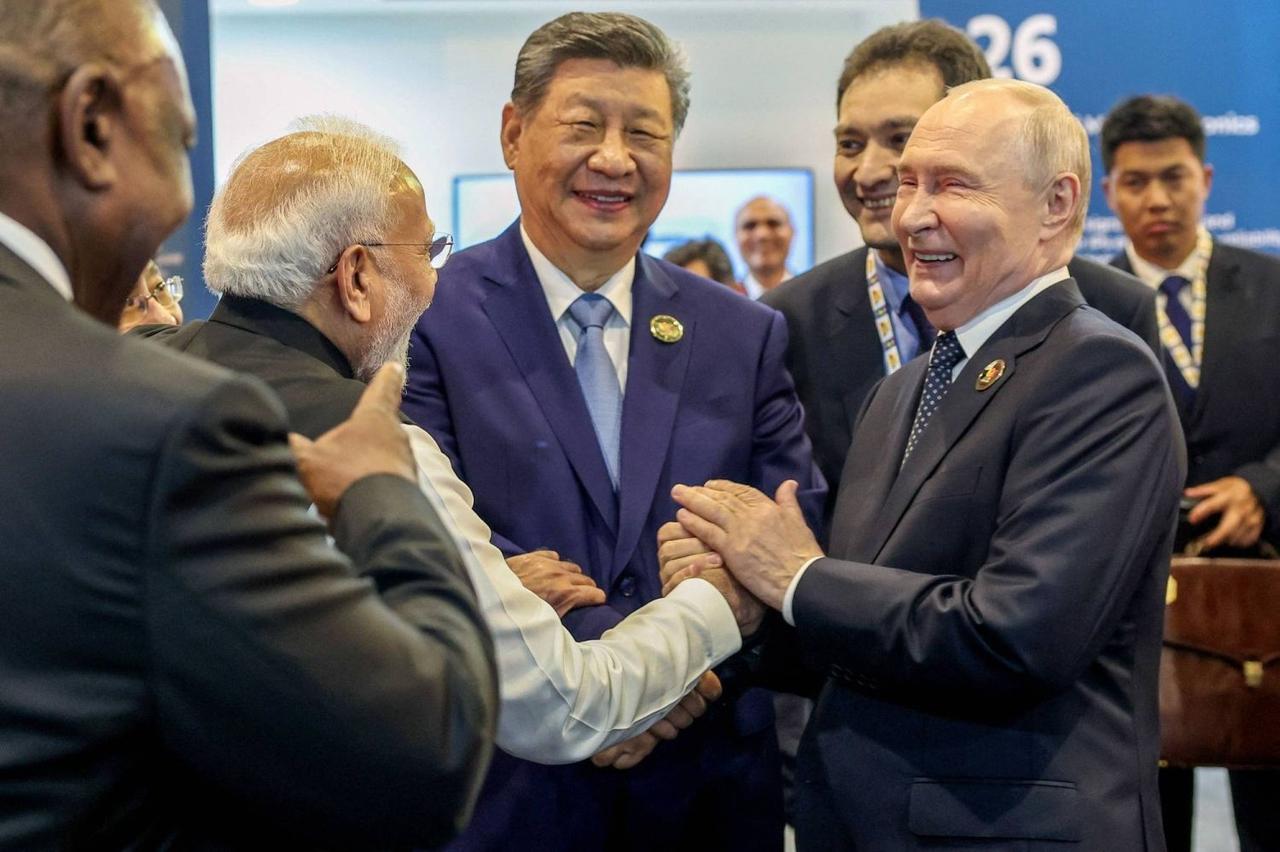
Source: Japan Times
Xi is expected to visit the United States this month for discussions with President Donald Trump, with AI governance likely featuring prominently as fears grow about losing control of rapidly developing technology
3
. The US-China talks will test whether competing visions for open-source AI and AI governance framework can coexist or whether technological spheres of influence will harden further. Watch for how BRICS members balance participation in China-led initiatives against relationships with Western technology partners, and whether Beijing clarifies its own restrictions on powerful AI capabilities before demanding openness from others.References
Summarized by

Navi
Related Stories
Xi Jinping positions China AI as alternative to US tech dominance at Shanghai conference
17 Jul 2026•Policy and Regulation
China Proposes Global AI Cooperation Organization, Challenging US Dominance
26 Jul 2025•Policy and Regulation

Xi Jinping Pushes AI Development and Global South Leadership in Shanghai Visit
29 Apr 2025•Technology
Recent Highlights



Recent Highlights
Today's Top Stories









Don’t drown in AI news. We cut through the noise - filtering, ranking and summarizing the most important AI news, breakthroughs and research daily. Follow topics that matter to you and stay ahead.


