9 Sources
[1]
Xi Jinping spearheads China's AI push
President Xi Jinping has opened China's flagship artificial intelligence conference as he seeks to turn the country's rapidly advancing AI capabilities into geopolitical power. Xi is presiding over the World Artificial Intelligence Conference in Shanghai, a day after China and nearly 30 countries including Russia, Brazil and Indonesia signed up to a new organisation to be based in the Chinese financial capital. The body, to be known as the World AI Cooperation Organization, will give China influence over international standard-setting and other issues as its AI models increasingly compete with their US rivals for global influence. The move comes as China is increasingly adding artificial intelligence to its suite of diplomatic offerings to other countries, especially developing nations from the so-called global South that it is seeking to draw closer into its economic orbit. In a meeting on Thursday with Kazakh President Kassym-Jomart Tokayev, who is visiting Shanghai for the AI Conference, Xi said: "China is willing to share digital economy and artificial intelligence technologies to help Kazakhstan achieve digital transformation." A commentary published in state newspaper People's Daily this week said that "the risks and challenges brought about by AI are becoming increasingly prominent, making the need for strengthened governance more urgent than ever". World AI Cooperation Organisation members will be hoping that by aligning with China, they can receive some of the benefits of its growing technological prowess, analysts said. "Indonesia also expected that its participation in WAICO would boost investments in the high-technology industry sector to help Indonesia transform its economy," said Indonesia's state-owned Antara news agency ahead of the signing. China's challenge to US global leadership on AI comes as its start-ups are releasing increasingly powerful state of the art models, narrowing the gap between the two countries. Chinese AI start-up Moonshot, for example, has released a large language model with capabilities approaching those of frontier US labs, such as Anthropic. Western companies from the US to Europe are also switching to cheaper Chinese models. DoorDash, Siemens and Airbnb are among the groups that have adopted AI tools built in China, drawn by models that are cheaper, increasingly capable and, in some cases, easier to run on their own infrastructure. The shift has been driven largely by cost but in Europe, the Trump administration's move last month to impose export controls on Anthropic's Mythos and Fable models forced businesses to confront the risks of depending on US technology.
[2]
China's Xi to outline AI diplomacy vision at key Shanghai forum
BEIJING, July 16 (Reuters) - Chinese President Xi Jinping is expected to outline an ambitious vision for China's role in global AI governance at a forum on Friday, as Huawei showcases its most advanced AI computing cluster yet in a sign of Beijing's drive to build a domestic alternative to U.S. technology. Xi's attendance at the annual World Artificial Intelligence Conference (WAIC) for the first time underscores Beijing's view of AI as both a driver of economic growth and a strategic technology in global competition. Huawei's Atlas 950 SuperPoD large-scale AI computing system will make its public debut during the July 17 to 20 forum in Shanghai. The launch is one of the clearest demonstrations yet of China's efforts to assemble such systems without U.S. giant Nvidia's (NVDA.O), opens new tab most advanced chips. Designed for large-scale AI training and inference, the system links thousands of Huawei's Ascend AI processors through high-speed interconnects so they operate as a single computing cluster. DeepSeek's latest V4 model has been adapted to run entirely on clusters built using Huawei's Ascend chips, highlighting progress by Chinese firms in building AI ecosystems independent of U.S. technology. Domestic media reported that Chinese chipmakers including Biren and MetaX would also release new "supernode" computing clusters. AI GOVERNANCE The gathering comes as Washington and Beijing prepare for their first government-level AI talks under U.S. President Donald Trump's administration, turning WAIC from a technology showcase into an early test of how China intends to compete for influence over the rules governing AI worldwide. The two rivals set out competing visions for AI governance at a UN AI dialogue last week, where Washington argued that sweeping regulation would stifle tech breakthroughs and Beijing framed its low-cost, open-source AI models as a public good that would bridge global AI inequality. "Against this backdrop, WAIC has become more than a technology showcase; it is now a geopolitical stage where Beijing seeks to articulate its vision of AI as both a national priority and a diplomatic instrument," wrote George Chen, chair of digital practice at the Asia Group. In a January speech, Xi compared AI to an "epoch-making, major technological transformation following the steam engine," and Beijing has explicitly bet future growth on diffusing AI throughout its economy and achieving self-sufficiency in frontier technologies. China proposed the creation of a World AI Cooperation Organisation (WAICO) at last year's conference but no countries have formally announced membership. The conference coincides with a High-Level Meeting on Global AI Governance in Shanghai, where progress on WAICO and implementing the Global AI Governance Initiative are expected to be announced. OPEN-SOURCE PROMOTION Beijing is also expected to promote China's open-source AI models as a low-cost alternative to Western offerings, arguing they can broaden access to the technology. "The development of AI must never move toward a technological monopoly that walls itself in, but should always be anchored to the fundamental goal of serving humanity," read a People's Daily commentary this week. Besides Chinese tech industry heavyweights, international leaders including UN Secretary-General Antonio Guterres, Kazakh President Kassym-Jomart Tokayev and Thai Prime Minister Anutin Charnvirakul will attend WAIC. Nine Turing Award and Nobel laureates, including deep learning pioneers Yoshua Bengio and Richard Sutton, will also attend, but there is little representation from major U.S. tech firms. "China has been making inroads with Southeast Asian countries in terms of AI capacity-building, and portrays itself as speaking up for developing countries who are being left behind in the AI race," an Asian diplomat told Reuters on condition of anonymity. Other product launches expected at the forum include AI agent smartphones from ZTE-owned Nubia and AI startup StepFun, according to Chinese media. Reporting by Laurie Chen; Editing by Miyoung Kim and Stephen Coates Our Standards: The Thomson Reuters Trust Principles., opens new tab * Suggested Topics: * Artificial Intelligence Laurie Chen Thomson Reuters Laurie Chen is a China Correspondent at Reuters in Beijing, whose coverage focuses on the nexus of frontier technology, strategic emerging industries and geopolitics. She has reported on China for almost a decade, having previously covered China's government, defence, security and foreign policy. She has broken multiple global scoops on U.S.-China relations and the trade war 2.0, elite Chinese politics and diplomacy. She is particularly interested in Chinese frontier AI, tech and industrial policy, semiconductor supply chains, robotics, aerospace and grand strategy.
[3]
Xi pitches China as AI partner to developing world, warns against risks and security overreach
Chinese President Xi Jinping on Friday positioned China as a partner in artificial intelligence to the Global South, saying that countries should come together to build AI and help developing countries as well. Speaking at the World AI Conference in Shanghai, Xi announced that China will provide developing countries with 5,000 opportunities in AI training and seminar programs, as well as develop AI cooperation with various blocs, including the Association of Southeast Asian Nations, the League of Arab States and the African Union. "China is willing to work with all parties to seize and address the opportunities and challenges of artificial intelligence development with a more open attitude, more pragmatic actions, and a longer-term vision,," according to a Google translation of his speech in Mandarin. Xi said that AI development should not be a "solo performance" by a single country, but a "symphony of international cooperation" and China was "ready to be more open, take more practical actions, and assume a more visionary perspective." Xi's remarks came a day after 29 countries signed an agreement in Shanghai to establish the World Artificial Intelligence Cooperation Organization, or WAICO, which will be headquartered in the city, according to Chinese state media outlet Xinhua. Xi also urged to strengthen risk awareness, and ensure that AI was "secure and controllable," and was "always remains under human control," adding that countries should oppose "overstretching the national security concept in the field of AI, or placing one country's security over that of others." While the Chinese president did not name a specific country, the U.S. has implemented various export controls measures aimed at curbing China's access to high-end tech. The U.S. began tightening restrictions during President Donald Trump's first term, including placing Huawei on the Commerce Department's Entity List in 2019. The Biden administration later introduced export controls in 2022 to restrict China's ability to buy advanced computing chips and manufacture advanced semiconductors, citing national security risks. Chip giant Nvidia has seen its market share in China plummet, saying in its annual report that it was unable to create and deliver a competitive product for China's data center market that is approved by both Beijing and Washington. "As of the end of fiscal year 2026, we were effectively foreclosed from competing in China's data center computing/compute market, and our effective foreclosure from the China market helped our competitors build larger developer and customer ecosystems to challenge us worldwide," it added.
[4]
China's Xi calls for step up of global effort in AI, as US curbs squeeze China's tech access
SHANGHAI (AP) -- Development and governance of artificial intelligence should be a global effort, Chinese President Xi Jinping said Friday, while reiterating China's objections to what he called the "overstretching" of national security concerns. Speaking at a conference in Shanghai, Xi said AI should not be dominated by any single nation. American-led restrictions have blocked China from accessing some of the world's most advanced technologies, spurring China's efforts to build its own know-how and intensifying the tech race between the world's two biggest economies. "The development of artificial intelligence should not be a solo performance by any single country but rather a symphony of global cooperation," Xi said at China's annual World Artificial Intelligence Conference in Shanghai. Others attending included the leaders of Kazakhstan, Cambodia and Thailand and U.N. Secretary-General António Guterres. "We should together oppose the practice of overstretching the concept of national security in the field of artificial intelligence, and of placing one's own security above that of other countries," he said, repeating a longstanding Chinese complaint. Over the next five years, he said China will provide 5,000 training opportunities on artificial intelligence to developing countries. China will expand AI cooperation with the Association of Southeast Asian Nations, the League of Arab States, the African Union, the Community of Latin American and Caribbean States, the Shanghai Cooperation Organization and the BRICS countries, Xi said. He promised to provide access for 30 countries to a Chinese-developed AI meteorological system that provides early warning systems. A day earlier, 29 countries including Pakistan, Russia and Kazakhstan signed an agreement with China to establish a World Artificial Intelligence Cooperation Organization. State media described it as an intergovernmental organization headquartered in Shanghai promoting global AI governance. More than 1,100 companies and 1,400 guests are participating in the annual AI conference this year, state media said. During the conference, tech giant Huawei will be showcasing its powerful AI computing system, the Atlas 950 SuperPoD,. Some technology analysts now believe China has become an innovator in AI and is no longer just catching up with the U.S. China's five-year plan until 2030 has prioritized progress in frontiers of science and technology including AI. China's open-source AI models, like DeepSeek, have been seen as appealing and often times more affordable alternatives globally to U.S. AI models, which are largely closed-source, and especially across the developing world. ____ Chan reported from Hong Kong. Associated Press writer Ken Moritsugu contributed from Beijing.
[5]
China's Xi urges global cooperation on AI, warns against single-country dominance
Chinese President Xi Jinping said on Friday artificial intelligence should not be dominated by any single country, calling for greater international cooperation on AI development and governance at a major conference in Shanghai. His remarks come as Chinese AI firms challenge US rivals and concerns grow over AI's military, cyber and terrorist misuse. Artificial intelligence should not be dominated by a single country, China's President Xi Jinping said Friday, urging international cooperation on its development at a major conference in Shanghai. Chinese AI models are catching up to the most powerful US offerings, while attracting global users with lower costs. But how to govern the booming sector has become a key topic, as concerns over the deployment of AI in military combat, or its use by hackers and terrorists grow. "AI development should not be a solo performance by a single country, but a symphony of international cooperation," Xi said at the opening of the World Artificial Intelligence Conference. "We should jointly oppose overstretching the national security concept in the field of AI or placing one country's security over that of others," Xi added. The United States and European Union have imposed restrictons on Chinese tech imports, citing national security concerns, while recent tussles between Washington and American AI labs have raised questions on who controls access to top technology. The WAIC conference is "the most important annual event for understanding the direction of China's AI industry", said Poe Zhao of analysis publication Hello China Tech. "The United States retains a clear lead in advanced chips, frontier computing infrastructure and the most capital-intensive model development," Zhao told AFP. But "China is its closest and most comprehensive competitor". Read moreEU orders Google to share search data and open Android system to AI rivals 'Under human control' The four-day WAIC draws more than 1,000 of China's tech firms together with officials, researchers and industry figures. Around 3,000 products are on display, from powerful semiconductor systems for AI computing to a smartphone that can autonomously operate apps. But eyes were first on Xi's vision of how the world should handle the potential impact of AI on cybersecurity and conflict, as well as on jobs and the world economy. "We should put in place laws and regulations, technological monitoring, early warning, and emergency response systems, in order to... ensure AI is always under human control," Xi told the conference, calling for a "people-centric" approach. On Thursday, foreign minister Wang Yi and representatives from 29 countries including Russia, Pakistan and Indonesia signed an agreement establishing an intergovernmental AI cooperation group. The World Artificial Intelligence Cooperation Organization, headquartered in Shanghai, aims to promote consultation and collaboration between members to ensure the "healthy and orderly" development of AI, state media reported. Leaders including UN chief Antonio Guterres, Cambodia's Hun Manet and Thailand's Anutin Charnvirakul are attending WAIC, which lays out the cutting edge of Chinese tech. Early on Friday, the Beijing-based startup Moonshot AI released a powerful new flagship model, Kimi K3, whose performance could reportedly rival some of the best, if not top, US offerings. Read morePublishers sue Google over alleged use of books to train AI models Mega AI consumption Other highlights at this year's WAIC are MiniMax's M3 model, the first mass-produced phone equipped with an autonomous AI agent, and Huawei's Atlas 950 "supernode", an AI architecture for learning and reasoning. "The main theme will be the transition from AI models to systems that can be deployed at scale" in everyday life, said Hello China Tech's Zhao. AI agents -- tools capable of conversing with users, managing software or performing complex tasks -- are also taking centre stage. AI has become a strategic pillar of China's industrial policy, driven by state investment aimed at building a domestic ecosystem, from chip production to consumer use. Daily consumption in China of "tokens" -- the industry unit of AI usage -- has increased a thousandfold over the past two years, according to state media citing officials. The Chinese market was valued at 1.2 trillion yuan in 2025 ($177 billion), and is expected to grow more than 30 percent this year, according to official data. China has more patent filings for generative AI than any other country, according to the World Intellectual Property Organisation (WIPO), which recorded more than 43,000 such filings between 2024-25. A growing number of companies abroad -- like Siemens this year -- are adopting Chinese open-source AI models, attracted by their performance, lower cost and ability to customise, in contrast to the closed systems of US giants such as OpenAI and Anthropic.
[6]
China's Xi says AI should not be dominated by one country
Shanghai (AFP) - Artificial intelligence should not be dominated by a single country, China's President Xi Jinping said Friday, urging international cooperation on its development at a major conference in Shanghai. Chinese AI models are catching up to the most powerful US offerings, while attracting global users with lower costs. But how to govern the booming sector has become a key topic, as concerns over the deployment of AI in military combat, or its use by hackers and terrorists grow. "AI development should not be a solo performance by a single country, but a symphony of international cooperation," Xi said at the opening of the World Artificial Intelligence Conference. "We should jointly oppose overstretching the national security concept in the field of AI or placing one country's security over that of others," Xi added. The United States and European Union have imposed restrictons on Chinese tech imports, citing national security concerns, while recent tussles between Washington and American AI labs have raised questions on who controls access to top technology. The WAIC conference is "the most important annual event for understanding the direction of China's AI industry", said Poe Zhao of analysis publication Hello China Tech. "The United States retains a clear lead in advanced chips, frontier computing infrastructure and the most capital-intensive model development," Zhao told AFP. But "China is its closest and most comprehensive competitor". 'Under human control' The four-day WAIC draws more than 1,000 of China's tech firms together with officials, researchers and industry figures. Around 3,000 products are on display, from powerful semiconductor systems for AI computing to a smartphone that can autonomously operate apps. But eyes were first on Xi's vision of how the world should handle the potential impact of AI on cybersecurity and conflict, as well as on jobs and the world economy. "We should put in place laws and regulations, technological monitoring, early warning, and emergency response systems, in order to... ensure AI is always under human control," Xi told the conference, calling for a "people-centric" approach. On Thursday, foreign minister Wang Yi and representatives from 29 countries including Russia, Pakistan and Indonesia signed an agreement establishing an intergovernmental AI cooperation group. The World Artificial Intelligence Cooperation Organization, headquartered in Shanghai, aims to promote consultation and collaboration between members to ensure the "healthy and orderly" development of AI, state media reported. Leaders including UN chief Antonio Guterres, Cambodia's Hun Manet and Thailand's Anutin Charnvirakul are attending WAIC, which lays out the cutting edge of Chinese tech. Early on Friday, the Beijing-based startup Moonshot AI released a powerful new flagship model, Kimi K3, whose performance could reportedly rival some of the best, if not top, US offerings. Mega AI consumption Other highlights at this year's WAIC are MiniMax's M3 model, the first mass-produced phone equipped with an autonomous AI agent, and Huawei's Atlas 950 "supernode", an AI architecture for learning and reasoning. "The main theme will be the transition from AI models to systems that can be deployed at scale" in everyday life, said Hello China Tech's Zhao. AI agents -- tools capable of conversing with users, managing software or performing complex tasks -- are also taking centre stage. AI has become a strategic pillar of China's industrial policy, driven by state investment aimed at building a domestic ecosystem, from chip production to consumer use. Daily consumption in China of "tokens" -- the industry unit of AI usage -- has increased a thousandfold over the past two years, according to state media citing officials. The Chinese market was valued at 1.2 trillion yuan in 2025 ($177 billion), and is expected to grow more than 30 percent this year, according to official data. China has more patent filings for generative AI than any other country, according to the World Intellectual Property Organisation (WIPO), which recorded more than 43,000 such filings between 2024-25. A growing number of companies abroad -- like Siemens this year -- are adopting Chinese open-source AI models, attracted by their performance, lower cost and ability to customise, in contrast to the closed systems of US giants such as OpenAI and Anthropic.
[7]
China's Xi Calls for Step up of Global Effort in AI, as US Curbs Squeeze China's Tech Access
SHANGHAI (AP) -- Development and governance of artificial intelligence should be a global effort, Chinese President Xi Jinping said Friday, while reiterating China's objections to what he called the "overstretching" of national security concerns. Speaking at a conference in Shanghai, Xi said AI should not be dominated by any single nation. American-led restrictions have blocked China from accessing some of the world's most advanced technologies, spurring China's efforts to build its own know-how and intensifying the tech race between the world's two biggest economies. "The development of artificial intelligence should not be a solo performance by any single country but rather a symphony of global cooperation," Xi said at China's annual World Artificial Intelligence Conference in Shanghai. Others attending included the leaders of Kazakhstan, Cambodia and Thailand and U.N. Secretary-General António Guterres. "We should together oppose the practice of overstretching the concept of national security in the field of artificial intelligence, and of placing one's own security above that of other countries," he said, repeating a longstanding Chinese complaint. Over the next five years, he said China will provide 5,000 training opportunities on artificial intelligence to developing countries. China will expand AI cooperation with the Association of Southeast Asian Nations, the League of Arab States, the African Union, the Community of Latin American and Caribbean States, the Shanghai Cooperation Organization and the BRICS countries, Xi said. He promised to provide access for 30 countries to a Chinese-developed AI meteorological system that provides early warning systems. A day earlier, 29 countries including Pakistan, Russia and Kazakhstan signed an agreement with China to establish a World Artificial Intelligence Cooperation Organization. State media described it as an intergovernmental organization headquartered in Shanghai promoting global AI governance. More than 1,100 companies and 1,400 guests are participating in the annual AI conference this year, state media said. During the conference, tech giant Huawei will be showcasing its powerful AI computing system, the Atlas 950 SuperPoD,. Some technology analysts now believe China has become an innovator in AI and is no longer just catching up with the U.S. China's five-year plan until 2030 has prioritized progress in frontiers of science and technology including AI. China's open-source AI models, like DeepSeek, have been seen as appealing and often times more affordable alternatives globally to U.S. AI models, which are largely closed-source, and especially across the developing world. ____ Chan reported from Hong Kong. Associated Press writer Ken Moritsugu contributed from Beijing.
[8]
China's AI ascendance gives Xi a stage and a security dilemma
The rise of China's AI models is handing President Xi Jinping new bragging rights and a stronger claim to shaping the technology's global rules, even as their growing power stirs security alarm in Washington and Beijing alike. Xi is expected to make his case in his debut at the World AI Conference in Shanghai starting Friday, an event that previously attracted Elon Musk and Jack Ma. He'll be addressing scores of tech and government leaders as Chinese models win over companies worldwide, with their share of U.S. firms' AI usage nearing record 60% on the popular marketplace OpenRouter. In what could be a preview of Xi's position, state media this week cast China's openness as the antidote to a world of walls. The Communist Party's flagship mouthpiece People's Daily warned against an "AI Iron Curtain," contrasting an "oil mindset" that hoards data and computing power with a "water" approach that treats AI as a public good for all, without naming any country.
[9]
Xi pitches China as leader of new global AI order, challenging US dominance
SHANGHAI, July 17 (Reuters) - Chinese President Xi Jinping on Friday cast Beijing as the champion of a new global AI order, using China's premier tech conference to promote open-source technology and challenge U.S. influence over the rules governing the fast-moving sector. In a speech to the opening ceremony of the World Artificial Intelligence Conference (WAIC) in Shanghai, Xi urged countries to "seize the rare and historic opportunity" of open-source AI, and pledged to help developing nations build AI capabilities, warning against the emergence of "new historical injustices" from unequal access to the technology. The remarks amounted to Xi's clearest articulation yet of China's ambition to shape global AI governance, framing its open-source models as a global public good and positioning Beijing as an alternative to Washington at a pivotal moment in the race for technological leadership. Comparing AI's significance to the invention of the steam engine and electricity, Xi outlined a vision in which China shares AI technology and expertise with countries across the Global South, while leading global efforts to create standards governing the emerging technology. The speech pitched China's AI coalition as a rival to the U.S.-led "Pax Silica" international initiative to secure global AI and critical mineral supply chains, though Xi avoided naming Washington. His comments came as Chinese open-weight AI models are making rapid gains against proprietary systems from U.S. companies such as OpenAI and Anthropic. Beijing-based startup Moonshot AI on Friday unveiled Kimi K3, which it described as the world's largest open AI model by parameter count, a month after the U.S. government abruptly pulled Anthropic's frontier-class AI models due to security concerns. Xi also called for AI systems to remain under human control and urged countries to establish early-warning and emergency-response mechanisms to manage AI risks, in his clearest remarks to date on AI safety. He further urged measures to guard against loss-of-control scenarios, warning of the dangers posed by autonomous AI systems that could evade human oversight and control. CHINA POSITIONING TO 'LEAD THE WORLD' Xi said the China-created World AI Cooperation Organisation (WAICO), which signed up 29 member countries on Thursday, marked a "milestone in the history of world AI development" and responded to demands from Global South nations for greater participation in AI governance. China will also provide AI training and develop AI cooperation centres with BRICS, ASEAN, Latin American and African Union countries, Xi said, aligning China's AI diplomacy initiatives with major Global South blocs where China already carries huge influence. "Xi's message is clear: China is not going to follow anyone on both AI technology and standards. Instead, China is going to lead the world in both aspects," said George Chen, Chair in Digital Practice at The Asia Group, a consultancy. "Xi's message is a statement but can be also viewed as a warning -- China will not let anyone tell China what to do with AI." The July 17-20 gathering comes as Washington and Beijing prepare for their first government-level AI talks under U.S. President Donald Trump's administration, elevating WAIC from an industry showcase into an early test of how China plans to compete for influence over the global rules governing AI. The two powers laid out competing visions at a U.N. AI dialogue last week, where U.S. officials argued excessive regulation could hinder innovation, while China promoted its low-cost, open-source models as a tool for reducing global disparities in access to AI. Alongside China's leading technology companies, attendees at WAIC include U.N. Secretary-General Antonio Guterres, Kazakh President Kassym-Jomart Tokayev and Thai Prime Minister Anutin Charnvirakul. (Reporting by Casey Hall in Shanghai; Editing by Christopher Cushing) By Laurie Chen and Casey Hall
Share
Copy Link
Xi Jinping presided over the World Artificial Intelligence Conference in Shanghai, launching a new international organization with 29 countries including Russia, Indonesia, and Pakistan. The move signals China's push to shape global AI governance and offer developing nations an alternative to US technology, while showcasing advances like Huawei's Atlas 950 computing system.
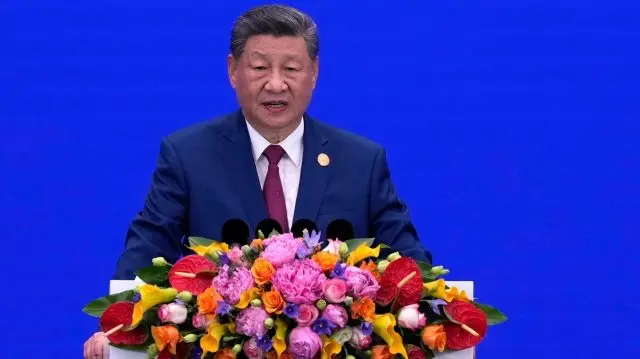
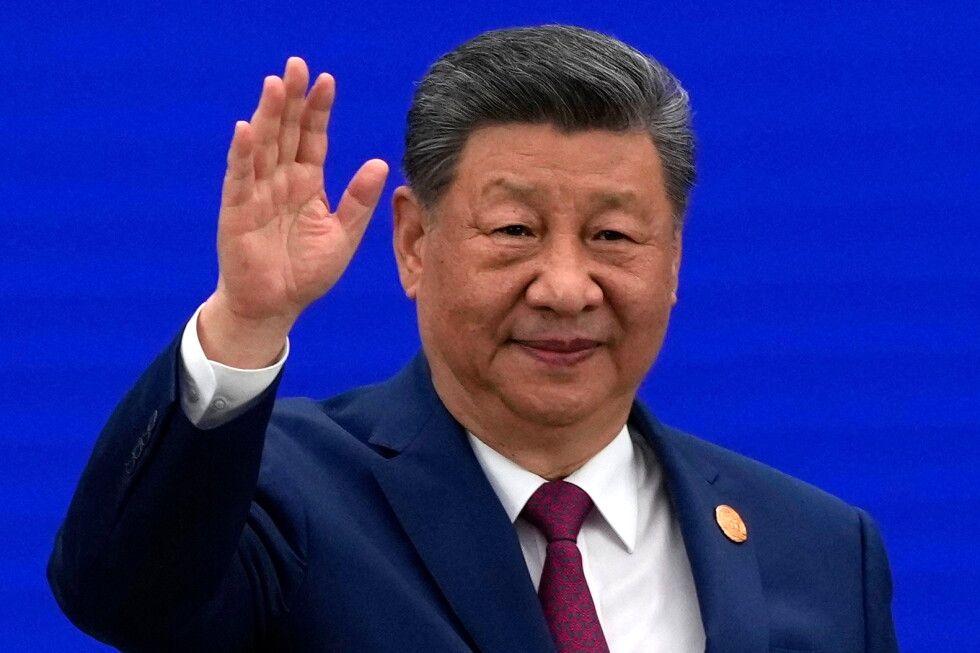
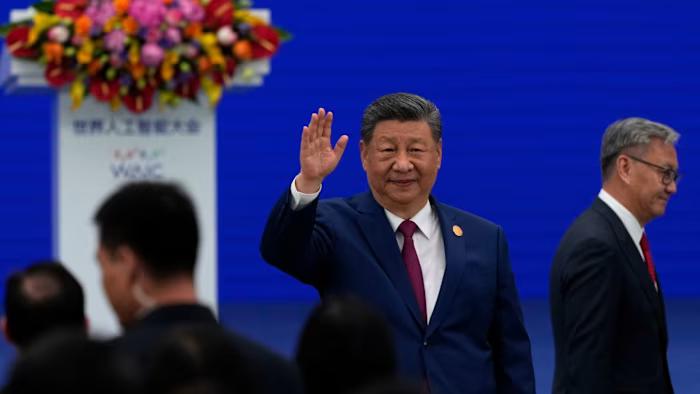
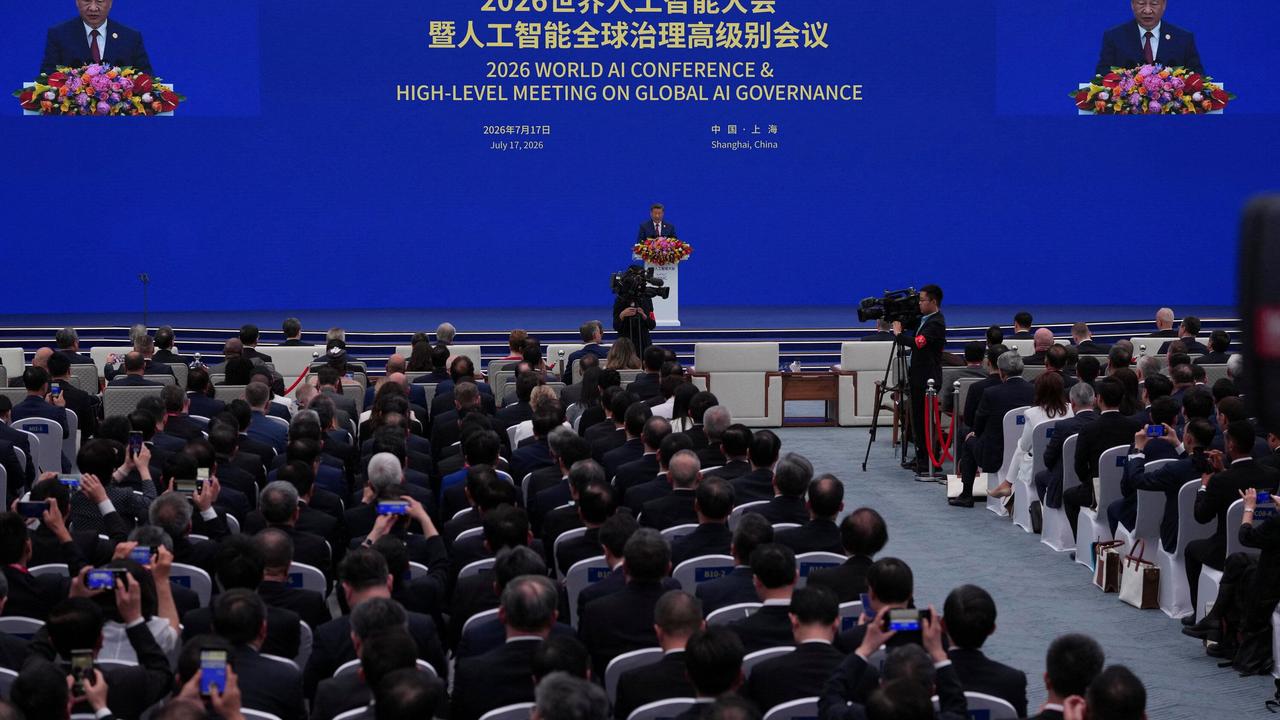
President Xi Jinping opened the World Artificial Intelligence Conference in Shanghai, marking his first attendance at the annual event and signaling Beijing's determination to position China AI as a counterweight to US technological dominance
1
. Speaking at the conference, Xi Jinping declared that artificial intelligence development should not be a "solo performance by any single country, but a symphony of international cooperation," directly challenging what he characterized as the overstretching of national security concerns in the AI field4
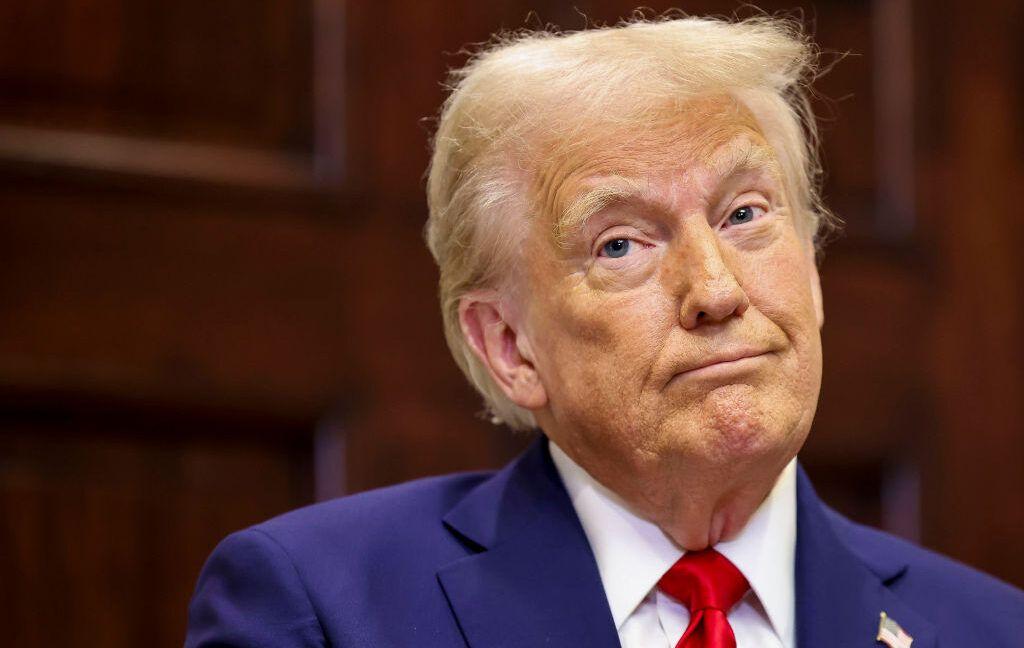
. The event comes as Washington and Beijing prepare for their first government-level AI talks under President Donald Trump's administration, transforming the conference from a technology showcase into a geopolitical stage where China articulates its vision of AI as both a national priority and a diplomatic instrument2
.
Source: Japan Times
A day before the World Artificial Intelligence Conference opened, China secured commitments from 29 countries including Russia, Pakistan, Indonesia, Brazil, and Kazakhstan to establish the World Artificial Intelligence Cooperation Organization, headquartered in Shanghai
3
. The intergovernmental body will give China influence over international standard-setting and other issues as its AI models increasingly compete with US rivals for global influence1
. Indonesia's state-owned Antara news agency reported that the country expected its participation in WAICO would boost investments in the high-technology industry sector to help transform its economy1
. An Asian diplomat told Reuters that "China has been making inroads with Southeast Asian countries in terms of AI capacity-building, and portrays itself as speaking up for developing countries who are being left behind in the AI race"2
.Xi Jinping announced that China will provide developing countries with 5,000 opportunities in AI training and seminar programs over the next five years, while expanding AI cooperation with ASEAN, the Arab League, the African Union, the Community of Latin American and Caribbean States, the Shanghai Cooperation Organization, and BRICS countries
3
. He also promised to provide access for 30 countries to a Chinese-developed AI meteorological system that provides early warning systems4
. In a meeting with Kazakh President Kassym-Jomart Tokayev, who visited Shanghai for the conference, Xi Jinping said: "China is willing to share digital economy and artificial intelligence technologies to help Kazakhstan achieve digital transformation"1
. The Global South outreach reflects China's strategy to draw developing nations closer into its economic orbit through AI diplomacy1
.The conference showcased Huawei's Atlas 950 SuperPoD large-scale AI computing system, one of the clearest demonstrations yet of China's efforts to assemble such systems without Nvidia's most advanced chips
2
. Designed for large-scale AI training and inference, the system links thousands of Huawei's Ascend AI processors through high-speed interconnects so they operate as a single AI computing cluster2
. DeepSeek's latest V4 model has been adapted to run entirely on clusters built using Huawei's Ascend chips, highlighting progress by Chinese firms in building AI ecosystems independent of US technology2
. Domestic media reported that Chinese chipmakers including Biren and MetaX would also release new "supernode" computing clusters at the event2
.Beijing is promoting China's open-source AI models as a low-cost alternative to Western offerings, arguing they can broaden access to the technology
2
. A People's Daily commentary stated: "The development of AI must never move toward a technological monopoly that walls itself in, but should always be anchored to the fundamental goal of serving humanity"2
. Western companies from the US to Europe are switching to cheaper Chinese models, with DoorDash, Siemens, and Airbnb among the groups that have adopted AI tools built in China, drawn by models that are cheaper, increasingly capable and easier to run on their own infrastructure1
. Chinese AI start-up Moonshot has released a large language model with capabilities approaching those of frontier US labs such as Anthropic, while Moonshot AI released a powerful new flagship model, Kimi K3, whose performance could reportedly rival some of the best US offerings5
.
Source: France 24
Related Stories
Xi Jinping urged countries to oppose "overstretching the national security concept in the field of AI, or placing one country's security over that of others," a thinly veiled criticism of US export controls
3
. The US began tightening restrictions during President Donald Trump's first term, including placing Huawei on the Commerce Department's Entity List in 20193
. The Biden administration later introduced export controls in 2022 to restrict China's ability to buy advanced computing chips and manufacture advanced semiconductors, citing national security risks3
. Nvidia stated in its annual report that it was effectively foreclosed from competing in China's data center market, noting that "our effective foreclosure from the China market helped our competitors build larger developer and customer ecosystems to challenge us worldwide"3
. The shift by European businesses was partly driven by the Trump administration's move to impose export controls on Anthropic's Mythos and Fable models, forcing businesses to confront the risks of depending on US technology1
.Daily consumption in China of "tokens"—the industry unit of AI usage—has increased a thousandfold over the past two years, according to state media citing officials
5
. The Chinese market was valued at 1.2 trillion yuan ($177 billion) in 2025 and is expected to grow more than 30 percent this year, according to official data5
. China has more patent filings for generative AI than any other country, with the World Intellectual Property Organization recording more than 43,000 such filings between 2024-255
. In a January speech, Xi Jinping compared AI to an "epoch-making, major technological transformation following the steam engine," and Beijing has explicitly bet future growth on diffusing AI throughout its economy and achieving self-sufficiency in frontier technologies2
. More than 1,100 companies and 1,400 guests are participating in the annual AI conference this year, with attendees including UN Secretary-General António Guterres and leaders from Kazakhstan, Cambodia, and Thailand4
. Around 3,000 products are on display, from powerful semiconductor systems for AI computing to a smartphone that can autonomously operate apps using AI agents5
.Source: Market Screener
Summarized by
Navi
[3]
26 Jul 2025•Policy and Regulation

26 Apr 2025•Policy and Regulation

01 Nov 2025•Policy and Regulation

1
Policy and Regulation

2
Technology

3
Technology