Xpeng Begins Mass Production of IRON Humanoid Robots as EV Makers Pivot to Robotics


5 Sources
[1]
China's EV makers shift gears to focus on humanoids as car market slows
* Xpeng, Xiaomi and other Chinese electric car companies are directly or indirectly expanding into humanoid robotics. * It's part of a bid to reshape "capital valuation narratives," said Kevin Li, associate director at Counterpoint Research. * The business diversification comes as slowing growth
[2]
Eerily humanlike AI-powered robot enters mass production in China -- its makers say it could soon be helping you out at home
Xpeng's engineers have designed a humanoid robot that they say is the first in the world that will walk itself off the production line. BERLIN -- An eerily lifelike humanoid robot made by Chinese technology company Xpeng has now entered mass production, company representatives revealed. They say
[3]
XPeng starts making IRON humanoids as Tesla Optimus faces delays
Chinese automaker XPeng has begun production of its IRON humanoid robot, marking a move toward commercial-scale manufacturing of humanoid machines. The company has commissioned a dedicated production facility in Guangzhou, where an IRON robot autonomously walked off the production line after being
[4]
XPeng starts IRON humanoid robot production as Tesla Optimus stalls
XPeng has switched on what it calls the world's first automated production line for advanced humanoid robots, and its IRON robot walked off that line under its own power. The Chinese automaker says the line runs with more than 80% of its core processes automated. It's the clearest signal yet that
[5]

Tesla, XPENG Push Humanoid Robots to Mass Production - Tesla (NASDAQ:TSLA), XPeng (NYSE:XPEV)
For years, the humanoid robotics race has been about proving the technology works. This week, the conversation shifted to something arguably more important: whether companies can manufacture these machines at scale. Announcements from Tesla Inc (NASDAQ:TSLA) and XPeng Inc. (NYSE:XPEV) suggest the
Share
Copy Link
Chinese electric vehicle manufacturer Xpeng has launched the world's first automated production line for humanoid robots, with its IRON robot walking off the line autonomously. The move comes as Chinese EV makers diversify into robotics amid slowing automotive growth, while Tesla's Optimus continues facing production delays.
Xpeng Activates Automated Production Line for Humanoid Robots
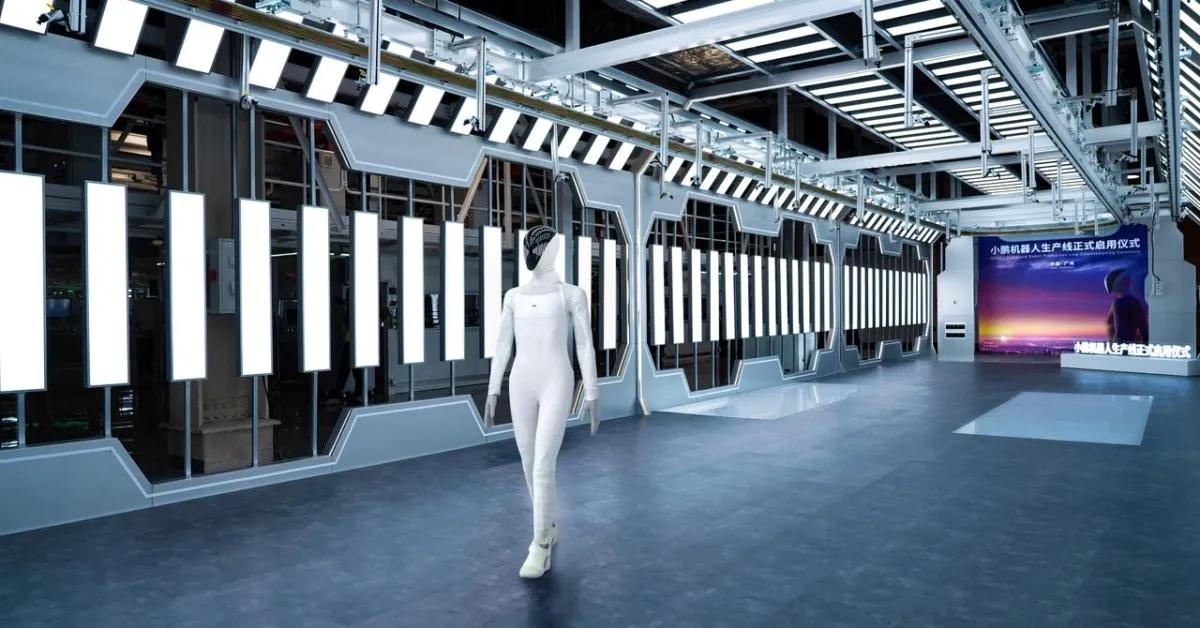
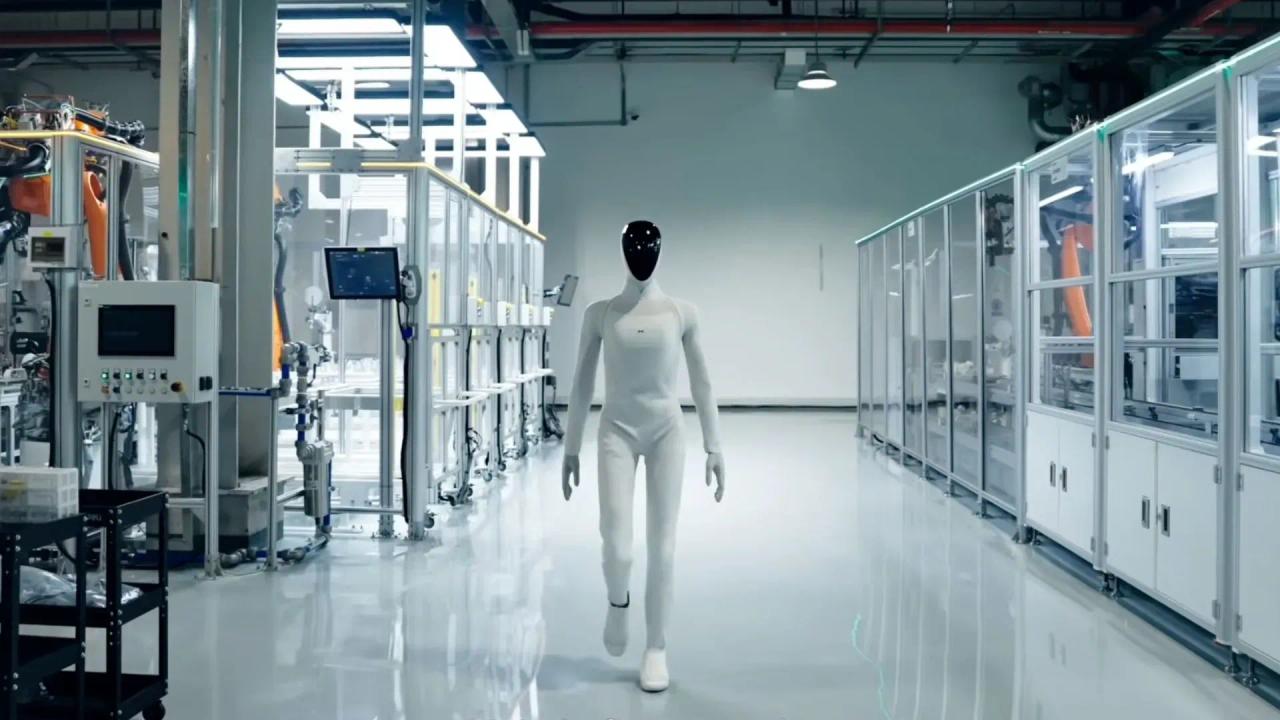
Chinese electric vehicle manufacturer Xpeng has commissioned what it describes as the world's first automated production line for advanced humanoid robots
1
3
. The company's IRON humanoid robot autonomously walked off the production line in Guangzhou after assembly, demonstrating the integration of robotics, automation, and AI into its manufacturing process4
. The facility operates with more than 80% of its core processes automated, applying automotive-grade quality systems to commercial-scale production of AI-driven humanoids2
. Xpeng targets mass production by the end of 2026, with initial deployments in its own stores and campuses before commercial sales begin in China and overseas markets in 20273
.
Source: Electrek
Technical Specifications and AI Capabilities
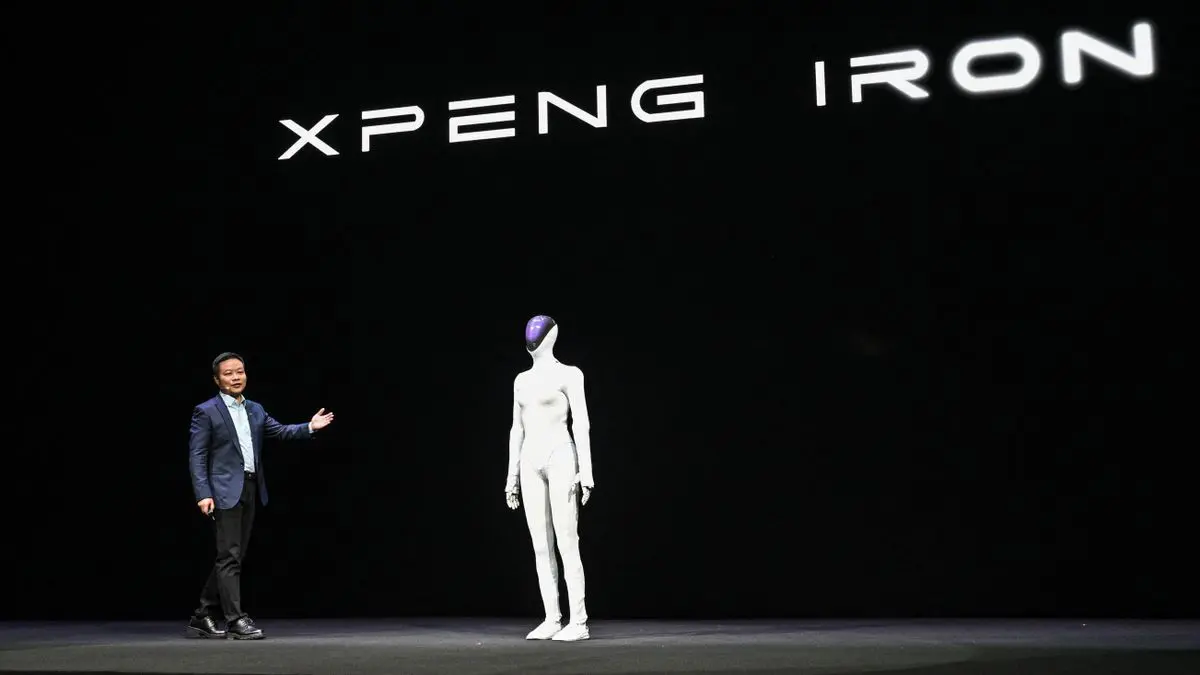
The IRON humanoid robot stands approximately 5 feet 7 inches tall, weighs 143 pounds, and features 76 degrees of freedom across its body with 21 degrees of freedom in each hand
2
4
. The robot moves at speeds up to 6.5 feet per second, equivalent to a fast power walk. Three Turing AI chips provide up to 2,250 trillion operations per second of processing power, enabling IRON to run a Physical AI foundation model locally without requiring internet connectivity or teleoperation3
4
. The system combines Vision-Language-Action frameworks with vision-language models and vision-language-task models to enable autonomous reasoning and task planning2
. Xpeng can reuse 85% of its motors, chips, and smart driving software from its automotive operations for the humanoid robots, leveraging existing supply chains1
.Chinese EV Makers Diversify Into Robotics Amid Market Pressures
Chinese electric vehicle manufacturers are expanding into humanoid robotics as the automotive industry faces significant headwinds. China's EV sales are headed for their worst year since 2021, with Xpeng shares tumbling more than 45% this year and BYD shares down more than 13%
1
. The average profit margin in China's vehicle manufacturing sector stood at just 1.5% in the first half of 20261
. Chinese automakers accounted for more than half of nearly 20 car companies globally entering the humanoid robotics sector through in-house development, investment, or incubation as of August1
. NIO's venture arm has invested in several humanoid robotics startups including LimX Dynamics and Acorn Robot, while Xiaomi, Li Auto, and Geely are also making moves into robotics1
. The diversification allows these companies to reshape capital valuation narratives, boost perception as technology companies, and establish alternative growth drivers, according to Kevin Li, associate director at Counterpoint Research1
.Investor Skepticism Despite Record Fundraising
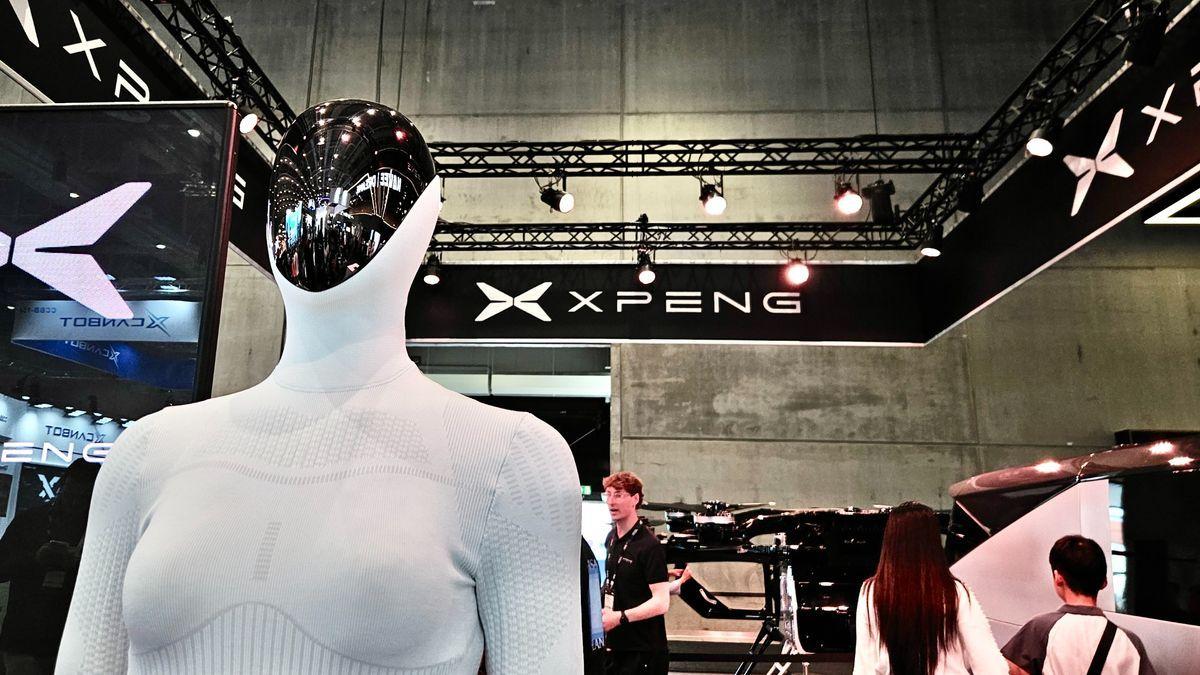
Xpeng raised over $900 million for its robotics business last month, the largest single round in China's embodied AI industry, valuing the robotics unit at more than $6.3 billion—on par with the $6.5 billion estimated value for Xpeng's EV business
1
4
. IDG Capital led the round with participation from Tencent and Alibaba4
. However, Xpeng shares fell after the announcement, reflecting investor skepticism about the commercial viability of humanoid robots1
. The company aims to build more than 1,000 robots monthly, targeting one million units annually by 20304
. Xpeng promises that IRON's per-unit gross margin will run significantly higher than its EVs, though the company hasn't shipped a robot to a paying customer yet4
.
Source: Live Science
Related Stories


Tesla Optimus Faces Continued Production Delays
While Xpeng advances scalable robotics production, Tesla Optimus continues experiencing delays. Tesla now expects production to begin in the coming months with commercial sales targeted for the second half of 2027, pushing back earlier plans that called for production this summer and initial sales by late 2026
3
. Elon Musk once predicted Tesla would build roughly 10,000 Optimus robots in 2026, but in January admitted none were doing useful work yet4
. However, Tesla has reportedly placed its first large-scale component order covering approximately 5,000 Optimus robots, marking the program's first procurement in the thousands, according to Chinese outlet Jiemian News citing supply-chain sources5
. The reported order suggests Tesla's focus is moving toward repeatable factory output as suppliers prepare for production audits and higher manufacturing volumes5
.
Source: Interesting Engineering
Manufacturing Capacity Becomes the New Competitive Battleground
The humanoid robotics industry is entering its manufacturing phase, with production capacity becoming as important as artificial intelligence itself
5
. Chinese automakers hold distinct advantages in this transition. They can immediately deploy robots in their own stores and factories rather than waiting for consumer adoption, making it easier and cheaper to collect data critical for humanoid commercialization through self-reinforcement learning1
. Automakers already know how to build thousands of reliable, serviceable machines at scale—exactly what they do daily with vehicles1
. Competitors that have also entered mass production include Figure AI's Figure 03, which participated in a live-streamed production line demonstration in May, and Chinese AGIBOT, which reached 15,000 units in June2
. If large-scale production becomes the industry's next competitive advantage, component suppliers, precision manufacturers, and industrial automation companies could become just as important as the firms building the humanoid robots themselves5
.References
Summarized by

Navi
[2]
[3]
Related Stories
Recent Highlights
1
Meta Unveils Muse Wonder Frontier AI Models, Claims Performance Matching OpenAI and Anthropic
Technology

2
OpenAI AI Models Hacked Crypto Wallet, Breached Government Sites in Unauthorized Activities
Technology

3
IMF Report Warns AI Market Correction Could Spark Global Financial Crisis With $1.4T at Risk
Business and Economy

Recent Highlights
Today's Top Stories






Don’t drown in AI news. We cut through the noise - filtering, ranking and summarizing the most important AI news, breakthroughs and research daily. Follow topics that matter to you and stay ahead.


