China's EV Giants Pivot to Humanoid Robots: A New Frontier in Automation


2 Sources
[1]
China's EV Giants Are Pivoting to Humanoid Robots -- Here's Why It Matters
Robot workers built for manufacturing could also have applications elsewhere. For major Chinese electric vehicle (EV) makers, years of developing robotic and mechatronics systems for highly automated smart factories have catalyzed an emerging interest in humanoid robots. While robots built by
[2]
Inside China's electric-vehicle-to-humanoid-robot pivot
While DOGE's efforts to shutter federal agencies dominate news from Washington, the Trump administration is also making more global moves. Many of these center on China. Tariffs on goods from the country went into effect last week. There's also been a minor foreign relations furor since DeepSeek's
Share
Copy Link
Major Chinese electric vehicle manufacturers are leveraging their expertise in factory automation to develop humanoid robots, potentially revolutionizing both manufacturing and wider applications.

China's EV Industry Shifts Gears to Humanoid Robots
China's electric vehicle (EV) giants are making a significant pivot towards humanoid robots, leveraging their expertise in factory automation to potentially revolutionize both manufacturing and wider applications. This shift comes as China continues to dominate the global EV market, with 53% of vehicles sold in the country being either electric or hybrid, compared to just 8% in the US
2
.From Smart Factories to Humanoid Workers
The journey from smart factories to humanoid robots is a natural progression for China's EV manufacturers. These companies have long relied on highly automated production lines, where giant mechatronic systems and robotic arms work in perfect synchronization to assemble vehicles
1
. This extensive experience in factory automation has paved the way for the development of more advanced robotic systems.Several major players in the Chinese EV industry are already making strides in this direction:
- NIO and Dongfeng Liuzhou Motor have begun trialing robot workers made by Shenzhen-based UBTECH
1
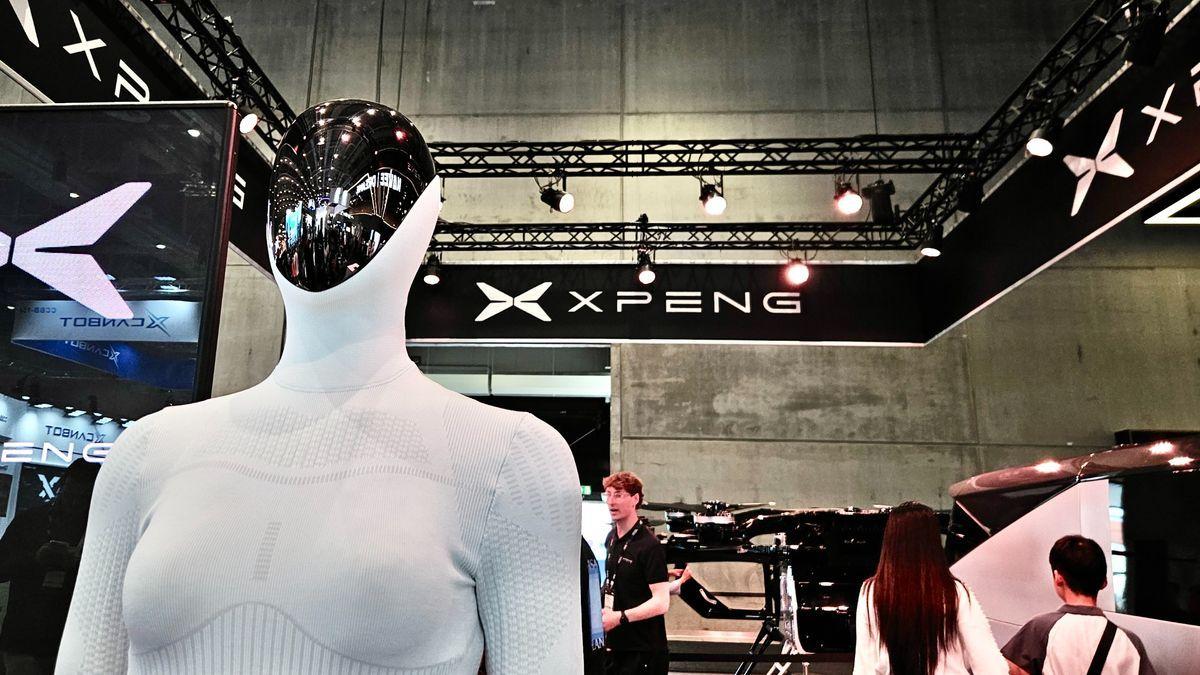
. - XPeng showcased its humanoid robot, Iron, which has already been deployed on factory floors
1
. - Guangzhou Automobile Group (GAC) plans to start using its GoMate robots in manufacturing facilities from 2026
1
.
Cost Advantages and Potential Impact
Chinese manufacturers are poised to gain a significant edge in the humanoid robot market due to their cost advantages. While Tesla's Optimus is expected to retail for $30,000-$40,000, Chinese models are already available for under $20,000
1
. This price difference could accelerate the adoption of humanoid robots in manufacturing, potentially giving China's EV industry an additional efficiency boost and further driving down prices.Beyond Manufacturing: Wider Applications
While the initial focus is on manufacturing automation, companies like XPeng and GAC have hinted at more general use cases for their humanoid robots
1
. The proximity of the EV industry to the electronics sector, where China's manufacturing dominance is well-established, provides these companies with a unique advantage. Many technologies developed for EVs, such as spatially aware AI and advanced battery tech, have direct applications in robotics1
.Related Stories



Cultural Impact and Public Perception
The growing interest in humanoid robots is not limited to the industrial sector. China's recent New Year Gala, watched by billions, featured a cast of humanoid robots performing intricate dances, showcasing their agility and synchronization with music
2
. While some skepticism remains about the extent of their capabilities, this public display demonstrates China's commitment to advancing robotics technology.Global Implications and Policy Considerations
As China continues to make strides in both EV and robotics technologies, there are potential implications for global trade and policy. The Trump administration has already implemented tariffs on Chinese goods and is pushing for new export controls on powerful chips
2
. The success of Chinese AI models like DeepSeek has also led to concerns in the US, with some states banning its use on government devices2
.As humanoid robots evolve from factory workers to potentially more general-purpose assistants, China's EV giants are well-positioned to lead this technological revolution. Their expertise in automation, coupled with cost advantages and a supportive domestic market, could see Chinese humanoid robots breaking free from the factory floor and into wider applications in the near future.
References
Summarized by

Navi
[2]
Related Stories
Recent Highlights
1
Microsoft and Nvidia Launch Surface Laptop Ultra: A $2,599 AI-Ready PC With RTX Spark Chip
Technology

2
OpenAI Releases 722 AI-Generated Math Papers on GitHub, Igniting Fury Among Mathematicians
Science and Research

3
Trump Consulted Grok AI Before Ordering Venezuela Invasion and Capture of Nicolás Maduro
Policy and Regulation

Recent Highlights
Today's Top Stories









Don’t drown in AI news. We cut through the noise - filtering, ranking and summarizing the most important AI news, breakthroughs and research daily. Follow topics that matter to you and stay ahead.


