Share
Linkedin
Twitter
Facebook
Whatsapp
Copy Link
Adobe has introduced four new AI features to Acrobat Studio that transform how users interact with PDFs. The updates include generating podcast summaries with two AI hosts discussing documents, creating presentations from multiple files, and editing PDFs through natural language prompts. These capabilities position Adobe as a direct competitor to Google NotebookLM while integrating seamlessly with Adobe Express.
Serve Robotics announced a $29 million acquisition of Diligent Robotics, marking its first expansion beyond sidewalk delivery robots into indoor healthcare environments. The deal brings Moxi hospital delivery robots, deployed in over 25 U.S. facilities with 1.25 million autonomous deliveries completed, into Serve's growing Physical AI platform.
The Gates Foundation and OpenAI announced Horizon1000, a $50 million partnership to deploy AI-powered technology in clinics across Rwanda and other African nations by 2028. The initiative aims to address severe healthcare worker shortages in Sub-Saharan Africa, where nearly 6 million health professionals are needed, by supporting clinical record-keeping and decision-making without replacing medical staff.
A three-month-old AI startup founded by alumni from Anthropic, xAI, and Google DeepMind just raised one of the largest seed rounds ever. Humans& secured $480 million at a $4.48 billion valuation to build foundation models designed for social intelligence and collaboration. The company argues that coordination between people and AI systems is the next frontier, moving beyond chatbots that serve one user at a time.
Researchers at UC San Diego are using Dungeons & Dragons as a testing ground for AI agents that need to function independently over extended periods. The tabletop role-playing game's complex rules and teamwork requirements provide ideal benchmarks for evaluating AI performance on long-term tasks, addressing a critical gap in current LLM assessment methods.
Despite heavy investment in agentic AI, 60% of companies report minimal returns due to inadequate governance and data infrastructure. Leaders achieve five times the revenue gains by prioritizing foundational work over rapid deployment. Singapore introduces the world's first formal AI governance framework as enterprises struggle to balance autonomy with accountability.
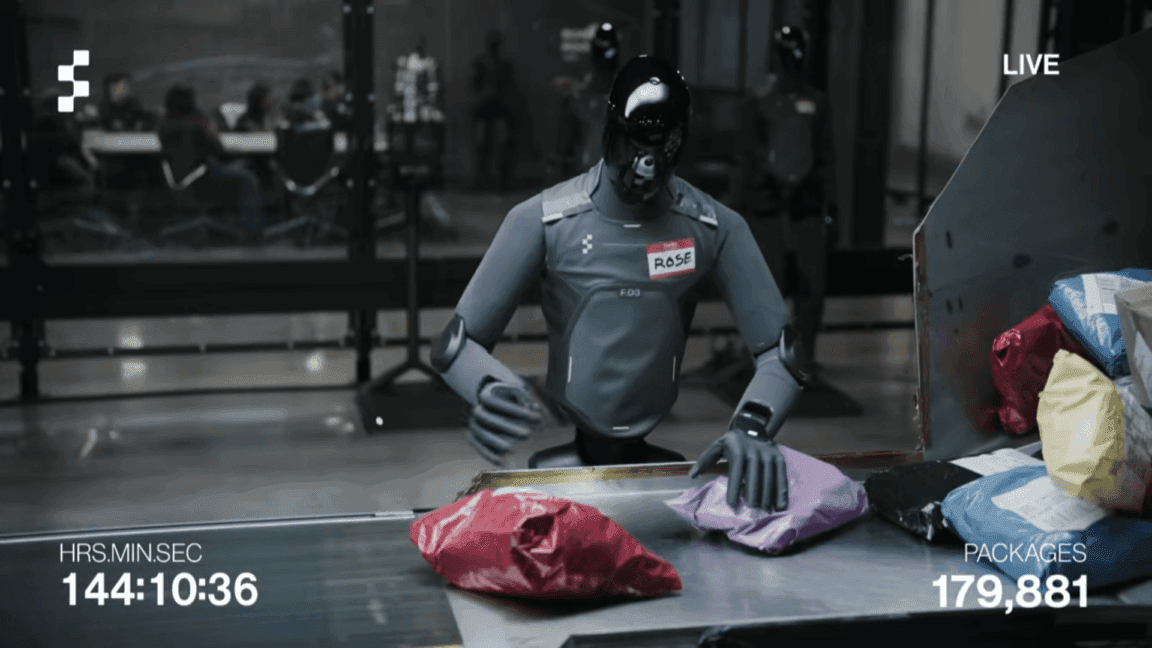
China leads the global race to deploy humanoid robots in workplaces, with over 200 companies developing robot coworkers compared to just 16 in the US. Unitree's robots perform backflips and cost a tenth of American counterparts, while labor shortages and AI advancements push these machines from experimental labs into real manufacturing environments. Morgan Stanley predicts 302.3 million humanoid robots in China by 2050.
Meta's new president Dina Powell McCormick made her Davos debut calling AI transformation a 'group sport' requiring industry collaboration. Speaking eight days into her role, she urged tech companies to align on core values ensuring AI safety and productivity, while highlighting the need for 500,000 electricians to power the next phase of AI growth.
Microsoft researchers analyzed over 200,000 workplace interactions with Copilot to identify which jobs have the highest AI applicability score. Translators, historians, writers, and customer service representatives top the list of roles most aligned with AI capabilities. The study reveals that knowledge-based jobs requiring Bachelor's degrees face significant exposure, while hands-on roles like water treatment operators remain largely unaffected.
Professors at Barnard College and George Washington University are creating custom AI teaching assistants to help students learn academic writing and research skills. Benjamin Breyer spent two years developing Althea, a chatbot trained on his lectures and student work, securing $30,000 in grants. These educators aim to teach critical and effective AI use while mitigating biases found in commercial AI tools like ChatGPT.
Sweden's music industry body IFPI Sweden has excluded a viral folk-pop song by 'Jacub' from its official charts after discovering the track was partly AI-generated music. The song amassed over 5 million Spotify streams and topped the platform's Swedish rankings before investigative journalist Emanuel Karlsten revealed its AI origins. The decision highlights tensions between AI music innovation and human creativity as the industry grapples with transparency and royalty payment concerns.
Rupert Murdoch's News Corp has signed a major deal with Symbolic.ai, an AI journalism startup founded by former eBay CEO Devin Wenig and Ars Technica co-founder Jon Stokes. The platform promises productivity gains of up to 90% for complex research tasks and will be deployed across News Corp's media properties, starting with Dow Jones Newswires.
A new study reveals that 19 leading AI models, including GPT-4o and DeepSeek-R1, failed to reliably identify laboratory hazards in realistic scenarios. While some scored up to 86% on basic questions, none exceeded 70% accuracy when faced with complex lab situations, raising serious concerns about AI safety in scientific research.
Digg has emerged from over a decade of dormancy with a public open beta launch. Original co-founder Kevin Rose and Reddit co-founder Alexis Ohanian have reacquired and rebuilt the pioneering social news aggregation site with AI-driven trust tools designed to combat bots and toxicity while maintaining community-driven content discovery.
Anthropic's Claude Code is transforming how software gets made, allowing users with no programming experience to build fully functional apps in hours. The AI coding tool reached a $1 billion run rate within six months and has tech industry professionals questioning the future of traditional software development as advanced AI capabilities automate tasks that once required teams of developers and weeks of work.
Don’t drown in AI news. We cut through the noise - filtering, ranking and summarizing the most important AI news, breakthroughs and research daily. Follow topics that matter to you and stay ahead.