Share
Linkedin
Twitter
Facebook
Whatsapp
Copy Link
Story rebrands as the DATA Foundation and launches DATA Network with a flagship Kled AI integration, registering 1.5 billion user-contributed records. The Foundation introduces Trace, the first public audit layer for consent, licensing, and data provenance at scale, as frontier AI labs face a multi-billion dollar data bottleneck with the scrapable internet effectively exhausted.
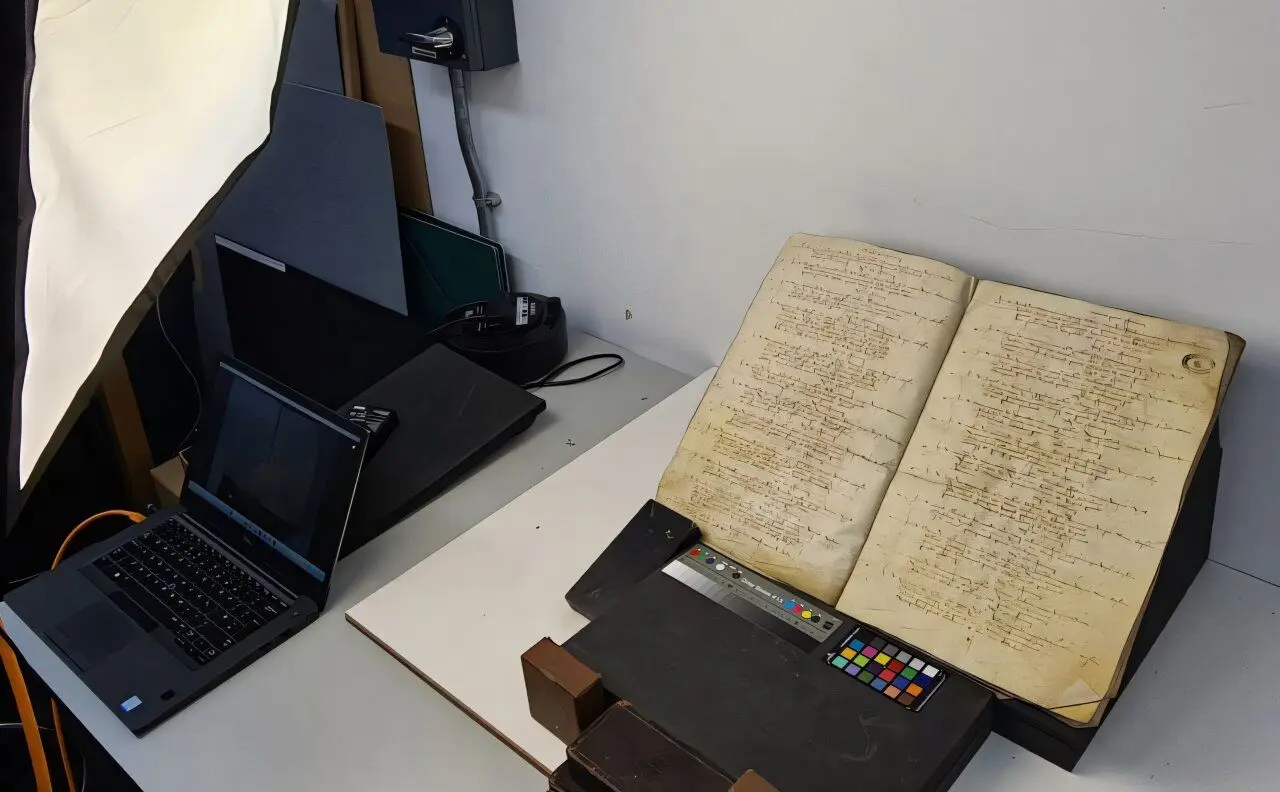
Researchers from the Vesuvius Challenge have successfully read an entire sealed scroll from Herculaneum for the first time, using AI and advanced X-ray imaging. The breakthrough reveals ancient stoic philosophy written on PHerc. 1667, a scroll too charred to physically open after Mount Vesuvius' 79 AD eruption destroyed the Roman town.
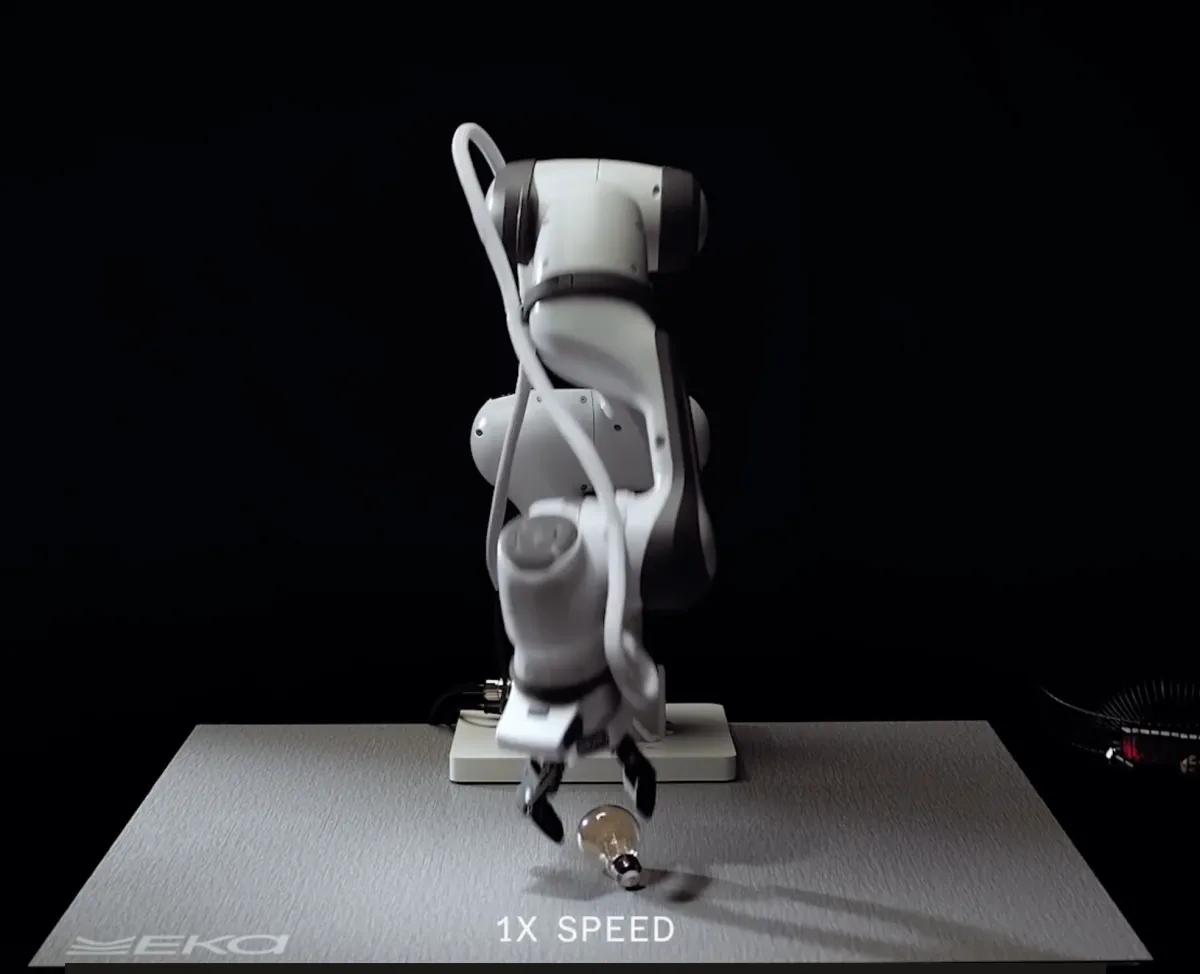
Leading AI researchers are pivoting from chatbots to world models that teach AI agents how to navigate physical environments. Pioneers like Yann LeCun and Fei-Fei Li argue that true intelligence requires more than text prediction—it demands spatial and causal understanding of how actions produce consequences in real-world settings.
Google launched a dedicated Android app for Google Finance, marking the platform's exit from beta after AI-powered redesign. The app provides real-time market data, live financial news, and AI research tools with Key Moments explaining stock movements. New portfolio tracking features let users consolidate investments in one dashboard, while scheduled briefings deliver custom market analysis. An iOS version is coming later this year.
Researchers achieved the first complete reading of Herculaneum scrolls carbonized by Mount Vesuvius nearly 2,000 years ago using AI and 3D scanning. The breakthrough reveals 1.5 meters of text on stoic philosophy, potentially authored by Chrysippus, and marks a turning point in digital archaeology as hundreds more scrolls await decoding.
AI entrepreneurs are moving beyond chatbots to develop world models that teach AI systems how to understand and navigate physical environments. Led by pioneers like Fei-Fei Li and Yann LeCun, this shift toward physical AI promises smarter robots and immersive virtual worlds, attracting significant venture capital interest despite less obvious near-term applications.
NVIDIA unveiled the BioNeMo Agent Toolkit, providing domain-specific tools for AI agents in life sciences research. The toolkit combines over a decade of NVIDIA's life sciences libraries with technologies like Nemotron and NIM microservices, enabling agents to execute complex scientific workflows. Over 50 companies, including Lilly, OpenAI, Anthropic, and Schrödinger, are already adopting the platform to accelerate drug discovery and biological research.
Natasha Martin from UC San Diego has secured a prestigious $5.6 million NIH Avant-Garde Award to develop AI tools that prevent HIV, hepatitis C, and overdose. The AMPLIFY project will create digital twins—AI-powered simulations trained on community data—to help public health departments allocate resources and design interventions tailored to people who use drugs across the United States.
Researchers at UCLA Health Jonsson Comprehensive Cancer Center developed an AI platform that combines 3D bioprinting, advanced imaging, and artificial intelligence to monitor how cancer responds to treatment. The technology analyzes thousands of patient-derived tumor organoids simultaneously, detecting rare resistant tumor populations and helping identify promising therapies for rare and hard-to-treat cancers.
Insilico Medicine has partnered with South Korea's SK Biopharmaceuticals in a deal worth over $2.5 billion to develop AI-driven neuroimmune therapies. The collaboration combines Insilico's Pharma.AI platform with SK's clinical expertise to accelerate treatments for central nervous system disorders, marking Insilico's largest Asia-Pacific partnership to date.
Bayer AG has announced a collaboration with Iambic Therapeutics to develop small molecule medicines using AI-driven platforms including Enchant and NeuralPLexer technologies. The partnership aims to tackle difficult-to-drug targets and reduce the traditional 10-15 year drug discovery timeline that costs approximately $2.6 billion with over 90% clinical trial failure rates.
A Microsoft AI researcher constructed a functioning neural network inside Age of Empires II using goats, grass, and bridges to illustrate the absurdity of assuming LLMs possess human-like consciousness. Adrian de Wynter's experiment demonstrates that over 57% of recent computer science papers incorrectly assume chatbots have anthropomorphic traits without proper experimental protocols.
Users across social media report ChatGPT suddenly got smarter this week, sparking speculation that OpenAI is quietly testing GPT-5.6 inside its platform. The suspected new AI model shows stronger reasoning capabilities and advanced 3D generation, but takes significantly longer to process complex tasks—up to 87 minutes compared to GPT-5.5's 34 minutes in some tests.
Researchers at the University of Pennsylvania used AI to uncover a surprising source of antibiotics: prion proteins known for causing fatal brain diseases. The deep-learning platform identified over 1,000 antimicrobial peptides called prionins, with dozens showing strong activity against drug-resistant bacteria in lab and mouse tests.
NASA tested ERNEST, a compact four-wheeled prototype rover, across 16 miles of California desert terrain with minimal human intervention. The next-generation rover prototype achieved speeds up to 0.6 mph—ten times faster than current Mars rovers—while demonstrating advanced robotic autonomy and the ability to lift its wheels over obstacles that would stop Curiosity and Perseverance.
Don’t drown in AI news. We cut through the noise - filtering, ranking and summarizing the most important AI news, breakthroughs and research daily. Follow topics that matter to you and stay ahead.