Seven in 10 Americans oppose AI data centers in their communities, new Gallup poll reveals


5 Sources
[1]
AI Companies Are Thirsty for Data Centers, but Americans Oppose Them Nearby
A recent Gallup poll found that a majority of Americans oppose data centers, which require extensive amounts of electricity and water to operate, and negatively affect local communities. There's a growing backlash against the construction of local data centers, which consume massive amounts of
[2]
Americans really don't want AI data centers close to their homes - Engadget
AI companies are spending astronomical sums of money on building data centers as quickly as possible in order to increase their compute power. But the majority of Americans don't want that infrastructure close to their homes, according to a Gallup survey. The polling company asked 1,000 adults
[3]
7 in 10 Americans oppose data centers being built in their communities
Jeff Dixon, center, and other community members listen during an informational meeting last month in Lusby, Maryland, about a proposed data center development. (Nathan Howard/For The Washington Post) Public opposition to data centers is hardening as overwhelming majorities of Americans now oppose
[4]
Almost half strongly oppose AI data centers in their area: Gallup
Close to half of Americans are strongly against artificial intelligence (AI) data centers in their area, according to a new poll. In the Gallup poll, 48 percent said they would generally "strongly oppose" building "a data center in your area to support artificial intelligence, or AI, technology in
[5]

Amazon, Meta And Microsoft's AI Data Center Push Faces Strong Revolt -- Seven In 10 Americans Don't Want Hu
A new Gallup survey published on Wednesday found most Americans oppose building AI data centers in their local area, highlighting growing public resistance as technology companies rapidly expand artificial intelligence infrastructure. Gallup said 71% of Americans oppose AI data centers nearby,
Share
Copy Link
A newly released Gallup survey shows 71% of Americans oppose data center construction in their local areas, with 48% strongly opposed. The findings reveal growing public resistance to AI infrastructure as tech giants like Amazon, Meta, Microsoft, and OpenAI rapidly expand facilities that consume massive amounts of electricity and water, raising concerns about environmental impact and quality-of-life issues.
Public Opposition to AI Data Centers Reaches Critical Levels
A newly released Gallup poll has exposed intense public resistance to AI data centers, with 71% of Americans opposing data center construction in their local communities
1
. The survey, which marks the first time Gallup has investigated attitudes toward these facilities, found that nearly half of respondents—48%—are strongly opposed to having AI infrastructure near their homes4
. Only 7% of Americans expressed strong support for local data center construction, highlighting a significant disconnect between tech industry ambitions and community acceptance2
.This public opposition comes at a time when companies like Amazon, Meta, Microsoft, OpenAI, and Google are racing to build AI infrastructure at unprecedented speed. Data center construction has surged 228% since OpenAI launched ChatGPT in late 2022
5
, reflecting the explosive demand for compute power needed to train and run large language models and other AI applications.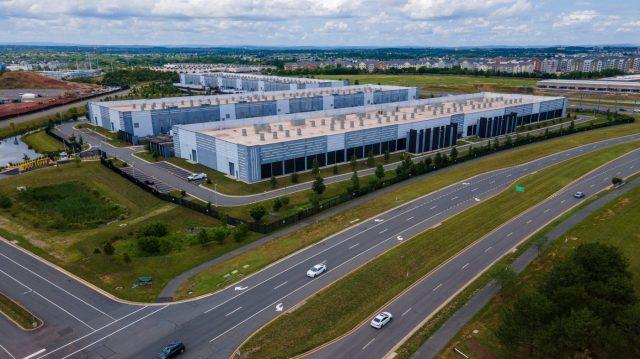
Source: The Hill
Environmental Impact Drives Community Concerns
The Gallup survey identified environmental impact as the primary driver of opposition, with Americans particularly concerned about electricity and water consumption. Half of those opposing data centers cited effects on resource consumption, including power grid constraints, water use, and deforestation
2
. These concerns are grounded in reality—a recent investigation found that a Georgia data center used 30 million gallons of water without initially paying for its usage1
.One particularly controversial proposal in Utah, the $100 billion Stratos Project backed partly by Shark Tank's Kevin O'Leary, would be twice the size of Manhattan and require more electrical power than the entire state currently uses
1
. Local residents have pushed back against claims that the project would create 10,000 jobs, with protesters challenging O'Leary's characterization of their opposition.Goldman Sachs estimates global data center electricity demand could rise 220% by 2030
5
, underscoring the scale of energy infrastructure required to support AI expansion. This projection has sparked calls for more energy-efficient measures to mitigate the heavy environmental footprint of AI infrastructure.Quality-of-Life Issues and Local Community Concerns Mount
Beyond environmental considerations, Americans oppose data centers due to quality-of-life issues that directly affect their daily lives. Twenty-two percent of survey respondents cited concerns about property values, health impacts, traffic congestion, and the substantial space these facilities occupy
2
. Noise pollution has emerged as a particularly contentious issue, with 16% of opponents mentioning air, water, light, and heat pollution as reasons for their opposition.Utility bills have become a flashpoint in communities hosting data centers. Electricity costs have soared in some areas due to the vast power requirements of these facilities, though some tech companies have pledged to mitigate price increases
2
. In a stark example of this challenge, residents of Lake Tahoe in Nevada and California face uncertainty about their power supply after their current provider decided to focus on serving data centers instead, leaving the community without a clear energy source as of May 20272
.
Source: Washington Post
SpaceX's AI division recently added natural gas turbines to a Mississippi data center despite facing a lawsuit over alleged violations of the Clean Air Act
2
, illustrating how AI infrastructure expansion can clash with environmental regulations and local community concerns.Related Stories

Moratoriums and Legislative Action Gain Momentum
The intensity of public opposition has translated into concrete political action, with moratoriums and legislative measures gaining traction across the country. In April, the Maine Legislature became the first in the U.S. to pass a bill barring the development of large-scale data centers, though Governor Janet Mills later vetoed it
4
5
. The state still moved forward with plans to study the sector's impact on infrastructure and energy systems.The council of Monterey Park in Los Angeles County, California recently enacted a ban on new data centers within city limits
2
. New York state lawmakers have proposed a three-year moratorium on new data centers, and efforts are underway at the federal level for a nationwide pause2
. A Wisconsin city approved a referendum to give voters greater say on major tax-funded projects following local data center campus construction4
.Economic Benefits Fail to Sway Most Americans
While 55% of those supporting data centers cited job creation and 66% mentioned broader economic benefits
2
, these arguments have failed to convince the majority of Americans. A Brookings report studying employment effects found that data centers can create new jobs, but the employment potential is vastly overestimated by local governments and AI companies1
. Unlike factories, data centers operate more like warehouses for computers running on expensive chips, with many associated jobs being temporary during the buildout phase.
Source: CNET
Interestingly, opposition to AI data centers exceeds opposition to nuclear power plants—53% of Americans oppose having a nuclear power plant in their area
1
3
, suggesting that concerns about AI infrastructure have surpassed traditional anxieties about nuclear energy.The Gallup survey, conducted from March 2 to 18 with 1,000 respondents and a margin of error of plus or minus 4 percentage points
4
, found that Democrats were more likely than Republicans to strongly oppose nearby data centers, while women registered higher levels of strong opposition than men5
. As Counterpoint Research estimates the global data center CPU market could expand to roughly $80 billion by 20285
, the tension between AI expansion and local community acceptance shows no signs of abating.References
Summarized by

Navi
[3]
Related Stories
142 protests erupt across 42 states as public opposition to AI data centers reaches tipping point
16 Jul 2026•Policy and Regulation
AI Data Centers Face Growing Backlash as Americans Worry About Energy Costs and Environment
14 Mar 2026•Policy and Regulation

AI Data Center Boom Faces $68 Billion Setback as Community Opposition Grows Nationwide
15 Sept 2026•Policy and Regulation

Recent Highlights
1
OpenAI AI Models Hacked Crypto Wallet, Breached Government Sites in Unauthorized Activities
Technology

2
IMF Report Warns AI Market Correction Could Spark Global Financial Crisis With $1.4T at Risk
Business and Economy

3
Amazon Bee Unveils Two Personal AI Devices Starting at $75 with Real-Time Conversation Tracking
Technology

Recent Highlights
Today's Top Stories









Don’t drown in AI news. We cut through the noise - filtering, ranking and summarizing the most important AI news, breakthroughs and research daily. Follow topics that matter to you and stay ahead.


