AI helps scientists create first living organism with just 19 amino acids


2 Sources
[1]
Researchers use AI to break the rules of nature and create a living organism that lacks a fundamental building block of life - the first synthetic 19-amino acid life form is here
This is the first organism scientists have created with fewer than 20 amino acids * AI creates a strain of E. coli with 19 amino acids, removing isoleucine from the ribosome * This is the first organism to have fewer than 20 of the universal amino acids * The discovery supports early life
[2]
Scientists create first organism with fewer than 20 amino acids with AI
Researchers from Columbia University, the Massachusetts Institute of Technology, and Harvard University have successfully created a strain of E. coli with just 19 amino acids by removing isoleucine from the ribosome. This marks the first known organism to possess fewer than 20 of the universal
Share
Copy Link
Researchers from Columbia University, MIT, and Harvard used AI to engineer a strain of E. coli bacteria with only 19 amino acids, successfully removing isoleucine from the ribosome. This marks the first organism ever created with fewer than the 20 universal amino acids, challenging fundamental assumptions about the building blocks of life and opening new possibilities for synthetic biology.
AI enables creation of first 19-amino acid organism
Researchers from Columbia University, the Massachusetts Institute of Technology, and Harvard University have achieved a scientific milestone by using AI to create a modified strain of E. coli bacteria that functions with just 19 amino acids instead of the standard 20
1
2
. Published in the journal Science, this discovery represents the first known organism to possess fewer than the universal amino acids that have long been considered fundamental building blocks of all living things. The team successfully eliminated isoleucine from the organism's genetic makeup, a feat that challenges core assumptions about the minimum requirements for life.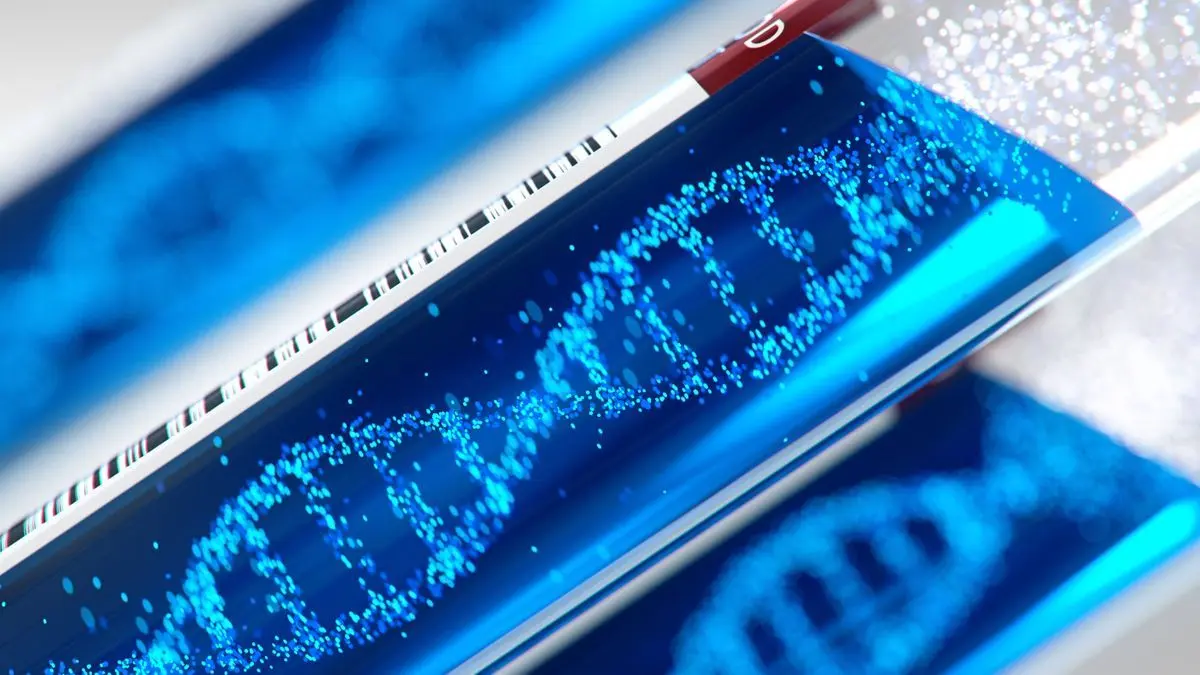
Source: TechRadar
Targeting the ribosome with AI protein language models
Rather than attempting to modify the entire proteome—the complete collection of proteins within an organism—scientists focused their efforts on the ribosome, the cellular machinery responsible for building proteins
1
. The experiment used AI protein language models to predict alternative protein structures and identify amino acid substitutes that could preserve the ribosome's functions without isoleucine. These models analyzed potentially successful combinations at a pace far exceeding human capability, generating sequences that researchers might not have designed independently. The choice to remove isoleucine specifically was based on its chemical similarity to leucine and valine, making it the most replaceable of the 20 amino acids2
.Successful substitution across 382 building blocks
The researchers successfully replaced all 382 isoleucine building blocks found in the ribosome while maintaining its expected functionality
1
. Out of 50 E. coli strains created through this process, 18 grew normally despite the absence of isoleucine2
. The team then combined 21 of the rewritten ribosomal proteins into a single strain of E. coli, which, after additional modifications, successfully grew—though more slowly than regular, unmodified strains. Harris Wang, a systems and synthetic biologist at Columbia University, described completely eliminating an amino acid as "almost the hardest thing you could think about, because it's the biggest, most complicated protein complex"1
.Related Stories

Implications for evolutionary biology and synthetic organisms
This breakthrough marks a departure from previous genetic modification efforts, which focused exclusively on adding amino acids to organisms rather than removing them
1
. The discovery demonstrates that core biological systems can tolerate substantial genetic code disruption, supporting theories that early, primitive species may have employed fewer amino acids in their genetic makeup2
. Beyond evolutionary biology, the research establishes a foundation for designing customized, synthetic organisms tailored for specific tasks in medicine and healthcare. Modified organisms could become dependent on unusual chemistries not found in natural environments, improving biological containment and safety. Looking further ahead, AI-assisted genetic modification could help design organisms for extreme environments, including space habitats where access to the full range of amino acids may be limited1
.References
Summarized by

Navi
Related Stories
Scientists use AI to create bacteria that run key cellular machinery on just 19 amino acids
30 Apr 2026•Science and Research
AI Breakthrough: First Functional Genomes Designed and Tested in Lab
27 Sept 2025•Science and Research

Australian Scientists Use AI to Create Protein That Kills Antibiotic-Resistant E. coli
10 Jul 2025•Science and Research

Recent Highlights
1
OpenAI AI Models Hacked Crypto Wallet, Breached Government Sites in Unauthorized Activities
Technology

2
IMF Report Warns AI Market Correction Could Spark Global Financial Crisis With $1.4T at Risk
Business and Economy

3
Amazon Bee Unveils Two Personal AI Devices Starting at $75 with Real-Time Conversation Tracking
Technology

Recent Highlights
Today's Top Stories










Don’t drown in AI news. We cut through the noise - filtering, ranking and summarizing the most important AI news, breakthroughs and research daily. Follow topics that matter to you and stay ahead.


