A third of this college's students signed a petition to cancel its AI licenses


2 Sources
[1]
The Anti-A.I. Campus Movement Is Growing
Some students are refusing to use A.I., and others are starting petitions to limit it across entire campuses. Colleges have taken notice. Last March, a handful of students at Transylvania University created a petition, attempting to slow the advance of artificial intelligence on their campus. It
[2]
The anti-AI campus movement is growing
In March, a handful of students at Transylvania University created a petition, attempting to slow the advance of artificial intelligence on their campus. It asked the administration to cancel chatbot licenses with AI giants and instead invest the money in "human-centered education." About a third
Share
Copy Link
In March 2026, students at Transylvania University, a tiny liberal-arts college in Lexington, Kentucky with under 1,000 students, petitioned the administration to cancel the school's chatbot licenses with major AI companies and spend the money on what the petition called human-centered education
1
2
. About a third of the student body signed1
2
.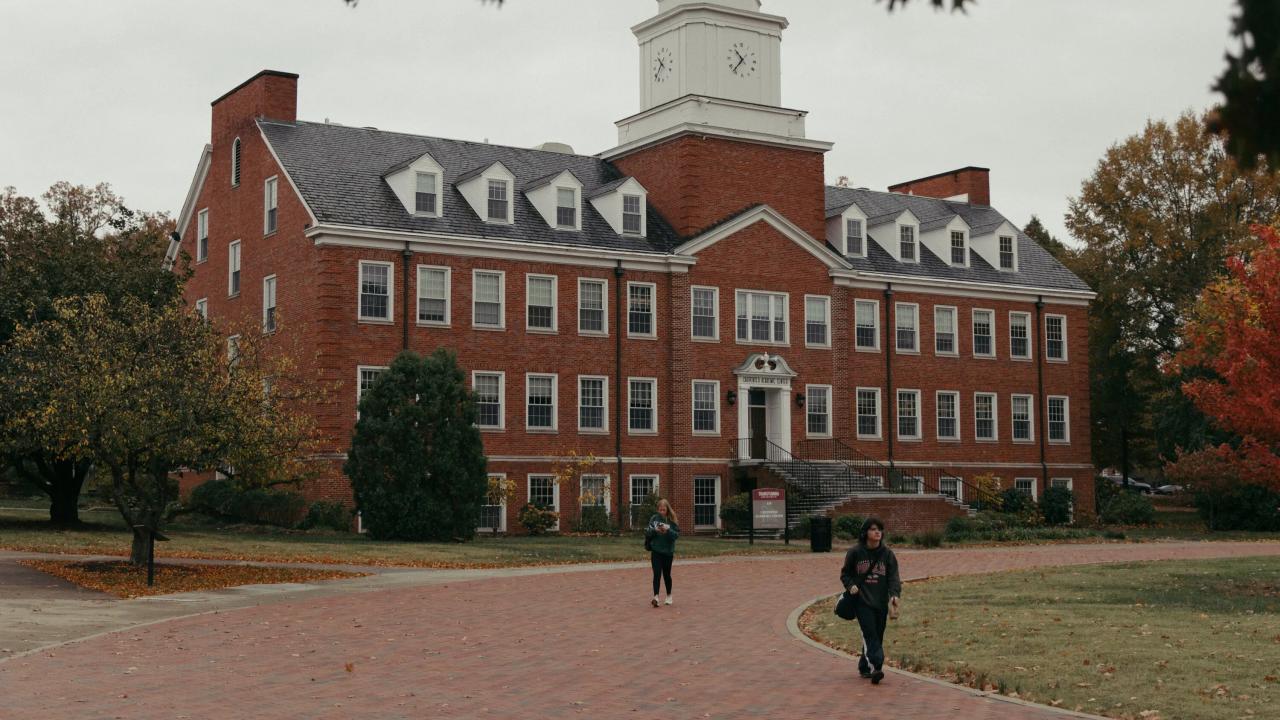
Source: NYT
The trigger, students said, was money. The student newspaper had reported the university paid $120,000 for licenses to ChatGPT and Gemini
2
. Alice Beatty, then a senior, helped lead the drive after joining a discussion group formed by AI-skeptical professors2
. By her account, when she and classmates collected signatures near the dining hall, almost everyone they spoke to signed. Some peers told her, "I use AI, and I am ashamed I use it"2
.The conscientious objectors
The petition is the opening example of a wider student resistance movement to AI on campuses
1
2
. Polls show a vast majority of American students use chatbots for schoolwork, and college leaders have generally embraced AI as key to workforce preparation1
2
. Against that, resisters from California to Sydney to Paris are publishing manifestos with three demands. They want no college partnerships with AI companies and no requirement that professors use generative AI in teaching or grading. They also want a student right to refuse chatbot-required assignments without grade penalties1
2
.The opposition draws mostly from the political left, citing environmental harm, threats to workers and military uses of AI, and the loudest voices come from arts and law students
1
2
. A core worry is that AI removes the productive struggle of learning1
2
.The refusal is organized beyond students. Emily Tucker, executive director of Georgetown Law's Center on Privacy and Technology, put her name to an open letter alongside 1,300 other educators refusing generative AI adoption in schools
2
. She says AI degrades students' ability to read dense legal texts and risks incorrect case-law citations. She concedes AI can help with some tasks, like searching within a large set of documents2
. At the University of Kentucky, one research employee obtained a religious exemption from using AI2
. At Cornell, which announced free AI access for students in October, psychology professor Shimon Edelman lets his students choose but called using AI in his own research "unthinkable"2
.Students say the split runs through social life too. Several said friend groups often settle on a shared view of AI. "If you can't generate a coherent thought without ChatGPT, I genuinely lose a lot of respect for you," said Emmali Simmelink, a senior at Whitman College who raises AI's environmental impact whenever she hears someone mention the tool
2
.Colleges begin to respond
Georgetown University began offering free Gemini access in March, letting each professor set their own AI rules. Its own focus groups found 40% of student sentiment toward AI cautious or negative against 25% positive or hopeful, and its student newspaper editorialized against the license
2
. This fall, under new president Eduardo Peñalver, Georgetown announced a faculty committee to draft AI-use principles, clearer course expectations, tech-free spaces and more weight on oral presentations and in-person tests2
. Peñalver said the changes are meant to make course AI expectations more transparent and protect in-person learning, while expanding access because the tools have potential to do good2
. He also said an encyclical Pope Leo XIV recently wrote on AI's risks will be an important influence at the Jesuit institution. "We're not interested in pushing people to use AI in ways that don't align with their values," he said. "But I certainly encourage people to learn about it"2
. The university is continuing to expand free AI access, the same policy its student newspaper editorialized against2
.Transylvania, for its part, declined an interview but said professors remain free to embrace, limit or ban AI in their own classes, and no licenses were canceled
2
.Colleges should fix how they assess students rather than push adoption, she argues
2
. "There is silence about these major tech issues," she said, "students just seeing grown-ups being inconsistent and letting them down"2
.Related Stories

References
Summarized by

Navi
[2]
Related Stories
College Students Report Resignation and Despair as Pressure to Use AI Intensifies Across Campuses
20 Jun 2026•Entertainment and Society

AI in Education: Reshaping Learning and Challenging Academic Integrity
12 Sept 2025•Technology

Graduates boo tech CEOs praising AI at commencement speeches as job anxiety deepens
19 May 2026•Entertainment and Society
Recent Highlights


Recent Highlights
Today's Top Stories







Don’t drown in AI news. We cut through the noise - filtering, ranking and summarizing the most important AI news, breakthroughs and research daily. Follow topics that matter to you and stay ahead.


