Graduates boo tech CEOs praising AI at commencement speeches as job anxiety deepens


30 Sources
[1]
In desperate times, graduates find hope in humiliating tech CEOs
University graduates are booing and heckling corporate executives who praise AI during their commencement ceremonies, and the only people who seem to be genuinely surprised by this are the executives themselves. In a procession of viral videos, 2026 commencement speakers like former Google CEO
[2]
The class of 2026 has heard enough about AI, thanks
From campus ceremonies to Linux communities and academic journals, resistance to LLM evangelism is getting louder It's exam and graduation time in the academic year, and some students are making their anti-AI feelings heard. It's not the only place. Former Google CEO Eric Schmidt gave the
[3]
The AI bots are coming and the young are booing, not applauding
LONDON, May 20 (Reuters) - The AI revolution is here and the boos are getting louder. As artificial intelligence reshapes industries and markets around the world, a sense of dread is deepening among young "digital natives" now entering the workforce, fearful of the impact on jobs and daily life as
[4]
Why new grads are booing commencement speakers: There's an 'ambient anxiety that AI is going to make things dramatically worse'
A spate of recent university commencement speakers was met with boos rather than the usual cheers when their remarks turned to the topic of AI. The students' vocal displeasure has brought into focus many Gen Zers' opposition to AI and anxiety around the challenging entry-level job market. Trying
[5]

Graduates are booing pep talks on AI at college commencements
As artificial intelligence casts a shadow over career prospects, it is becoming an unwelcome subject at this season's college commencements. At several campuses, graduates have interrupted speakers with stadium-wide boos when the topic turned to AI. Former Google CEO Eric Schmidt faced repeated
[6]

Video: Opinion | Graduating Into A.I. Pessimism
Backlash to artificial intelligence is here, and digital natives are leading the charge. The Opinion columnist Michelle Goldberg argues that the A.I. pessimism in America stems from a lack of responsible regulation. I hate A.I. And I have always assumed that the backlash was coming. "A.I. sucks!"
[7]

Why College Students Are Booing AI
College students have been booing commencement speakers who dare to mention artificial intelligence. The boos were heard at the University of Central Florida, when Gloria Caulfield, a real-estate executive, called AI "the next Industrial Revolution." And at the University of Arizona, when former
[8]

Gen Z is not booing AI. It is booing its own job market
Eric Schmidt stood at a lectern at the University of Arizona's spring commencement and told a stadium full of graduates that the impact of artificial intelligence would be 'larger, faster, and more consequential' than anything they had so far lived through. The former Google chief executive was
[9]

Advice for 2026 commencement speakers: Don't bring up AI
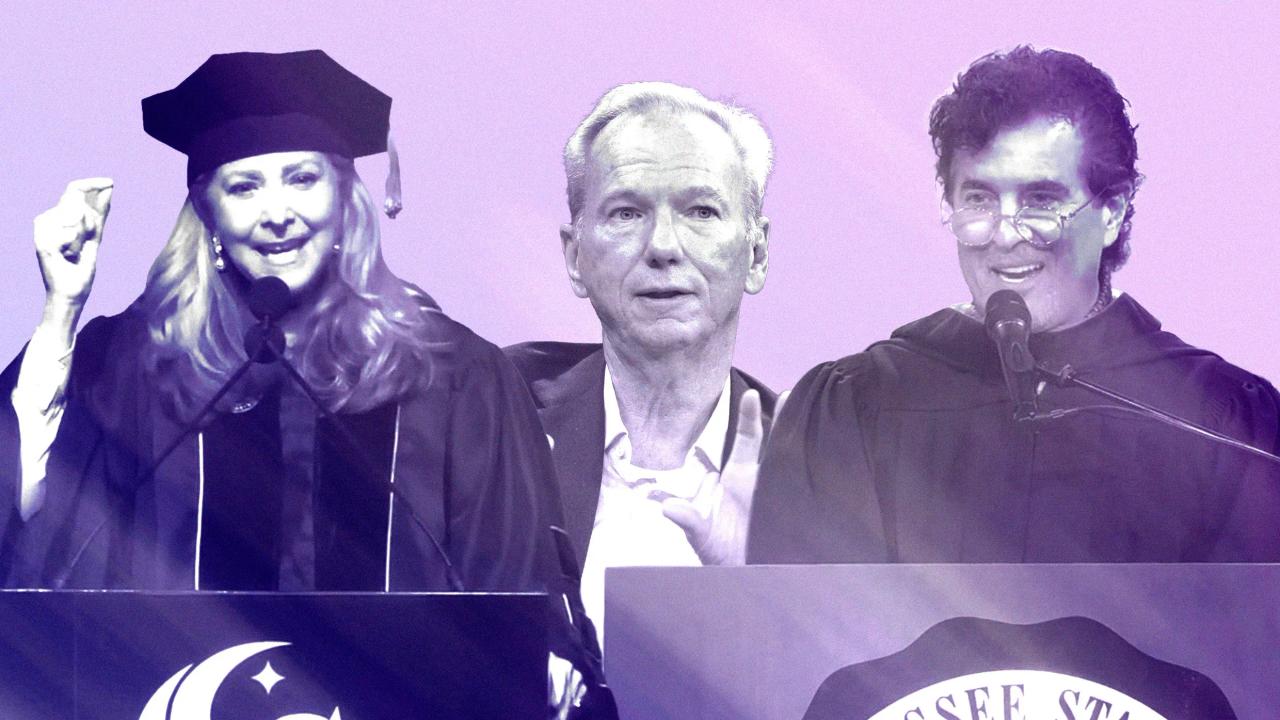
Real estate executive Gloria Caulfield (left) was the graduation speaker at University of Central Florida and Big Machine Records CEO Scott Borchetta spoke at Middle Tennessee State University's graduation. Both speakers were booed by students when they brought up artificial intelligence.
[10]

US students on why they booed their pro-AI graduation speakers: 'They're not reading the room'
Recent college grads are not very fond of commencement speakers hyping up a technology they see as a threat to their career prospects When Jacob Pagel graduated from Middle Tennessee State University this spring, predictions about artificial intelligence already had him questioning the value of
[11]

AI backlash hits graduation season
The big picture: The class of 2026 is entering a job market that's on ice as employers anticipate how AI will change their workforce needs. * So, many grads weren't jazzed about the technology's front-and-center role in their graduation ceremonies. Driving the news: Glendale Community College
[12]

'Learn to read the room': ex-Google CEO Eric Schmidt is the latest commencement speaker to get booed for mentioning AI
* Eric Schmidt is the latest AI advocate to get booed by students * The University of Arizona class of 2026 weren't impressed by his AI remarks * There's been a growing backlash to the tech from graduates Less than a week after University of Florida students booed real estate executive Gloria
[13]

The sound of graduating from college in the AI summer of 2026: boo! | Fortune
Former Google CEO Eric Schmidt faced repeated jeers over the weekend during his keynote address to about 10,000 University of Arizona graduates on the rise of AI. "It will touch every profession, every classroom, every hospital, every laboratory, every person and every relationship you have,"
[14]

Recent commencement speeches show students are souring on AI. How deep does the disapproval go?
Mary Cunningham is a reporter for CBS MoneyWatch. She previously worked at "60 Minutes," CBSNews.com and CBS News 24/7 as part of the CBS News Associate Program. Public attitudes toward AI seem to be evolving as quickly as the technology permeates society. That dynamic was on full display on
[15]
The new college graduation ritual: booing AI
Driving the news: Former Google CEO Eric Schmidt drew repeated boos Friday while discussing AI at the University of Arizona's commencement. * Real estate executive Gloria Caulfield called AI "the next industrial revolution" at the University of Central Florida's commencement, and was immediately
[16]

The students booing AI aren't Luddites
It's graduation week, which means the emissaries of the nation's elite are now descending onto college campuses to deliver the much-discussed and, they hope, indelibly quotable college commencement address. These speeches are their own sort of literary genre. The celebrities, politicians, and
[17]
3 reasons kids hate AI -- especially the ones who refuse to even try it | Fortune
The vibe: I don't want AI to do my thinking for me. That's the whole point of being a person. There are millions and millions of teenagers like this. Across classrooms, online forums, and in polling data, a surprising segment of the generation that was supposed to lead AI adoption is instead
[18]

The generation that grew up with AI hates it
When Eric Schmidt, former CEO of Google, started talking about artificial intelligence during a commencement speech at the University of Arizona on Friday, the graduates erupted in boos. "AI is going to touch everything," said Schmidt, as his stadium-sized audience roared its disapproval. "Whatever
[19]

Something Strange Is Happening at College Graduations Across the Country
Are you sure you want to unsubscribe from email alerts for Nitish Pahwa? Sign up for the Slatest to get the most insightful analysis, criticism, and advice out there, delivered to your inbox daily. It's graduation season, so you know what that means: a lotta commencement speeches from wealthy
[20]

Here's why people are booing college commencement speakers this year
UCF graduates boo a commencement speaker after comments calling artificial intelligence the next industrial revolution at a May 8 ceremony. A time usually marked by loud cheering, congratulatory handshakes and perhaps a few tears of joy was interrupted this commencement season, as graduation
[21]

Graduates Are Booing Pep Talks on AI at College Commencements
As artificial intelligence casts a shadow over career prospects, it is becoming an unwelcome subject at this season's college commencements. At several campuses, graduates have interrupted speakers with stadium-wide boos when the topic turned to AI. Former Google CEO Eric Schmidt faced repeated
[22]
Students keep booing AI at graduation speeches this year
It's graduation season and that means commencement speakers are offering up their best advice for how to live a happy, healthy, and successful life. But instead of being met with welcoming smiles and engaged head nods, one topic is being met with anger and boos -- AI. In a series of recent
[23]
College students are booing commencement speakers celebrating AI, but the wave of hate hasn't stopped them from using it to cheat on their exams | Fortune
For today's college students, attitudes toward AI can seem paradoxical. On one hand, they've made their ire toward the technology clear: Former Google CEO Eric Schmidt was met with hisses during his commencement remarks at the University of Arizona's graduation ceremony on Sunday when he invoked
[24]

Young People Can't Stop Using AI -- But that Doesn't Mean They Like It
College used to be different. We had computers, sure, but when it was 5 a.m. and you were staring down a 9 a.m. deadline for a 10-page paper, there was no algorithm there to save you. You got used to the taste of 5 Hour Energy, or you accepted failure. Muscles honed by long hours in AOL chatrooms
[25]

Gen Z and AI: As AI takes centre stage, youth stand in disapproval
Young people express growing anger and anxiety about artificial intelligence. AI is reshaping industries and impacting jobs globally. Tech giants are cutting staff, citing AI advancements. Surveys show a rise in negative emotions towards AI among the youth. Many believe AI's risks outweigh its
[26]

Speakers At College Commencement Ceremonies Are Being Met With Boos For Bringing Up AI
"What happened?" one commencement speaker asked during her speech after students booed her for saying artificial intelligence was the next industrial revolution. Students at Glendale Community College booed the school's president when she revealed the college had used artificial intelligence to
[27]

The AI bots are coming, and the young are booing instead of applauding
The artificial intelligence revolution is here, and the boos are getting louder. As AI reshapes industries and markets around the world, a sense of dread is deepening among young "digital natives" now entering the workforce, fearful of the impact on jobs and daily life as ChatGPT, Claude and
[28]

Graduates are booing pep talks on AI at college commencements - The Korea Times
Google CEO Eric Schmidt addresses graduates during commencement ceremonies at the University of Pennsylvania in Philadelphia, May 18, 2009. AP-Yonhap As artificial intelligence casts a shadow over career prospects, it is becoming an unwelcome subject at this season's college commencements. At
[29]

Graduates are booing pep talks on AI at college commencements
As artificial intelligence casts a shadow over career prospects, it is becoming an unwelcome subject at this season's college commencements. At several campuses, graduates have interrupted speakers with stadium-wide boos when the topic turned to AI. Former Google CEO Eric Schmidt faced repeated
[30]

The AI bots are coming and the young are booing, not applauding
LONDON, May 20 (Reuters) - The AI revolution is here and the boos are getting louder. As artificial intelligence reshapes industries and markets around the world, a sense of dread is deepening among young "digital natives" now entering the workforce, fearful of the impact on jobs and daily life as
Share
Copy Link
University graduates across the US are booing corporate executives who promote AI during commencement ceremonies. Former Google CEO Eric Schmidt faced sustained jeers at the University of Arizona, while similar incidents occurred at UCF and Middle Tennessee State. The backlash reveals deep AI anxiety among Generation Z entering a bleak job market, with 70% seeing AI as a threat to their careers.
Tech CEOs Face Hostile Reception at Graduation Ceremonies
University graduates are making their feelings about artificial intelligence unmistakably clear. Former Google CEO Eric Schmidt encountered a chorus of boos at the University of Arizona when he told approximately 10,000 graduates that AI "will touch every profession, every classroom, every hospital, every laboratory, every person and every relationship you have"
1
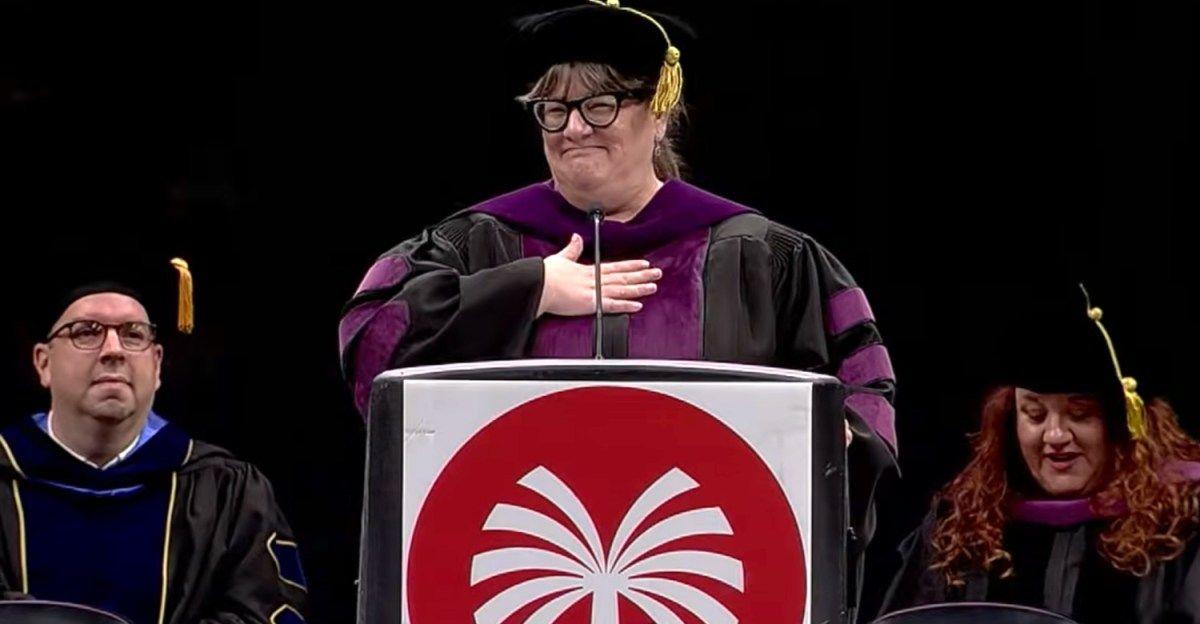
. The hostile reception wasn't isolated. Real estate executive Gloria Caulfield faced similar heckling tech CEOs treatment at the University of Central Florida after calling AI "the next industrial revolution," while music industry CEO Scott Borchetta was jeered at Middle Tennessee State University when discussing how AI is reshaping music production5
.
Source: Fast Company
These commencement speeches have struck a nerve with graduates booing corporate leaders who appear disconnected from their reality. "They deserve everything they're getting," Penny Oliver, a recent George Mason University graduate, told The Verge. "It just shows a level of arrogance and a disconnect"
1
. The anti-AI sentiment reflects mounting frustration among young people who spent tens of thousands of dollars on education, only to face an uncertain future where the technology they're being told to embrace might eliminate their career opportunities.AI Anxiety Grips Generation Z Entering Workforce
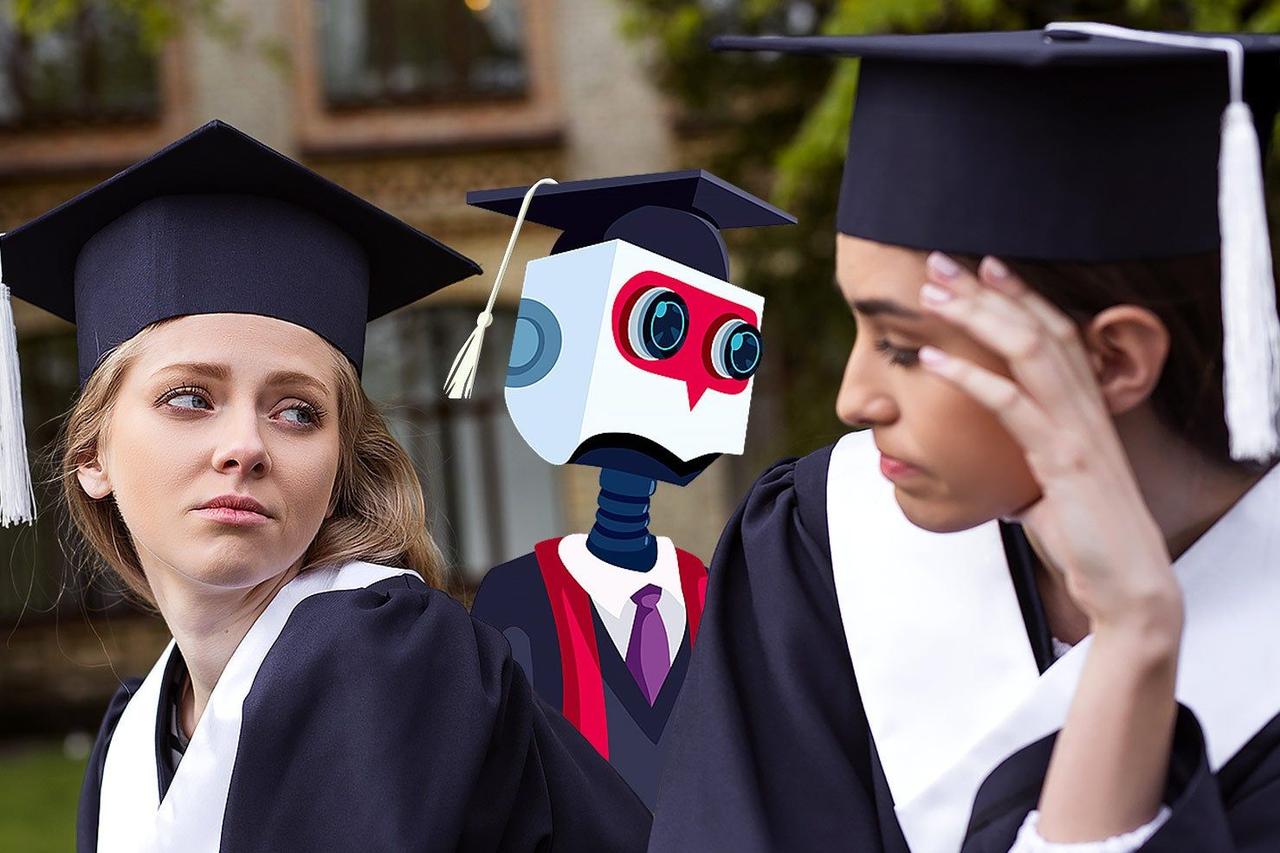
The backlash at graduation ceremonies reflects deeper AI anxiety pervading Generation Z as they enter the workforce. About 70% of college students see AI as a threat to their job prospects, according to a 2025 poll by the Institute of Politics at the Harvard Kennedy School
5
. A recent Gallup report revealed that negative sentiment towards AI among Gen Z has intensified over the past year, with nearly half of respondents saying the risks outweigh the benefits—a much bleaker view than a year earlier3
.
Source: Slate
"There definitely is this ambient anxiety that AI is going to make things dramatically worse," says Sneha Revanur, a 21-year-old Stanford senior and founder of AI policy nonprofit Encode AI
4
. This fear isn't unfounded. Standard Chartered announced plans to cut over 7,000 jobs and replace "lower-value human capital" with AI, while Meta is planning to lay off 10% of its workforce globally. Amazon has axed some 30,000 corporate jobs in recent months as it pushes AI efficiency, and fintech firm Block cut nearly half its staff in February3
.AI's Impact on the Entry-Level Job Market Creates Perfect Storm
The class of 2026 faces unprecedented challenges. Trying to land an entry-level job right now "is like throwing darts to begin with," Revanur explains
4
. The unemployment rate among recent college graduates ages 22 to 27 reached 5.6% in March, compared to 4.2% among all workers and 3.1% among all college graduates4
. ZipRecruiter's 2026 grad report observed a 14.9% year-over-year increase in clicks per job posting across all jobs in March, and a 21.7% increase for entry-level jobs. Meanwhile, entry-level roles made up only 38.6% of overall job postings on ZipRecruiter, the lowest share in at least three years4
.
Source: Seattle Times
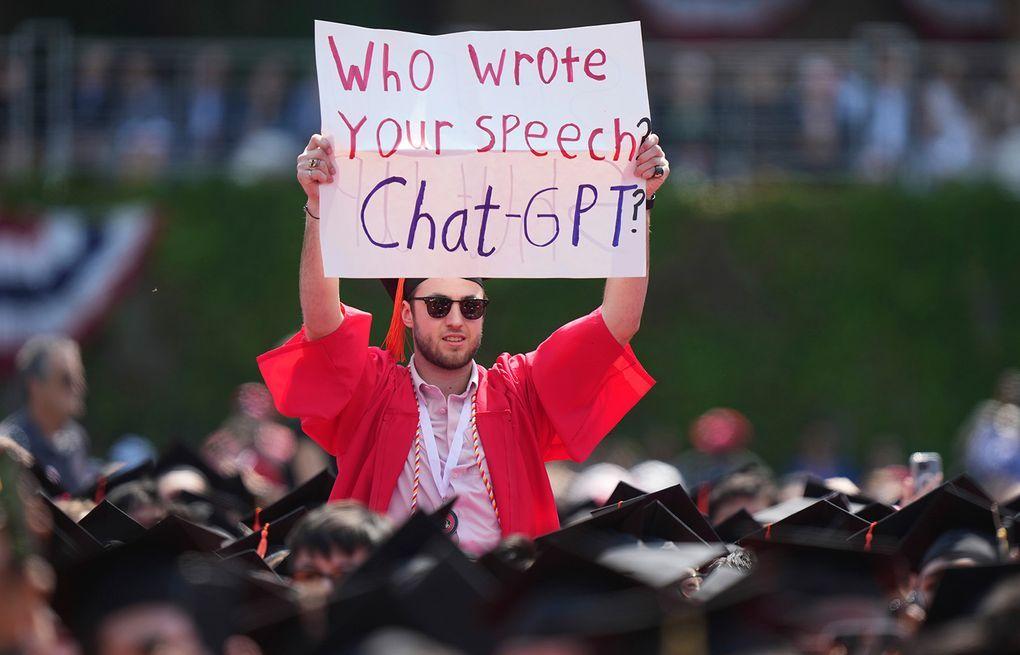
This bleak job market context makes commencement speeches praising AI feel particularly tone-deaf to university graduates. "We as students are discouraged from using it and penalized for using it. And then to have our speaker be the champion of AI is just like, OK? Why?" said Olivia Malone, a 22-year-old University of Arizona graduate
5
. Madison Fuentes, who recently graduated from UCF with a degree in English creative writing, echoed this sentiment: "I think we're just having a hard time acknowledging that it's taking away job opportunities from us"4
.Related Stories

Liberal Arts and Humanities Students Lead the Resistance
The strongest negative sentiment towards AI has emerged from liberal arts and humanities students facing existential threats to creative professions. At CalArts, President Ravi Rajan was booed off stage by graduates of the legendary California art school, known as an incubator for animation industry talent. Rajan has faced criticism after eliminating creative programs and pushing AI adoption through corporate partnerships with tech companies
1
.Austin Burkett, a game designer who recently graduated with an MFA from NYU Game Center, describes the disconnect between tech evangelists and real people. "These are not the people who have to worry about rent, and they're not the people who have to worry about their job being replaced," Burkett told The Verge. He notes that some of his former classmates have been forced to take on fleeting gig work training the AI models that are replacing them
1
.Broader Pushback Against Generative AI Gains Momentum
The resistance at commencement ceremonies reflects growing pushback against generative AI across multiple sectors. The Register reports increasing levels of resistance in the tech community itself, with both Fedora and Ubuntu facing negative sentiment from their communities over plans to include more AI features. The Fedora AI Developer Desktop Initiative proposal, approved at the start of May, is now blocked by two negative votes from community members
2
.Resistance has emerged from Chinese courts to unions at South Korean carmakers, Hollywood scriptwriters, and India's film industry
3
. The Gallup data suggests that while positive views of AI increase with usage levels, overall sentiment is shifting as young adults in the workforce recognize the technology's potential for job displacement. Corporate leaders promoting an "adopt-or-die" attitude toward AI appear increasingly out of touch with the concerns of those whose livelihoods face disruption. As graduation season continues and videos of graduates booing go viral, the incidents signal a widening gap between tech industry optimism and the lived reality of young people navigating an uncertain future shaped by forces beyond their control.References
Summarized by

Navi
[2]
Related Stories
College Students Boo AI at Commencements as Job Market Anxieties Intensify
29 May 2026•Entertainment and Society
Students boo Eric Schmidt and other speakers over AI mentions at graduation ceremonies
11 May 2026•Entertainment and Society

AI Malfunction Disrupts Glendale Community College Graduation as Students Boo Name-Reading Failure
19 May 2026•Entertainment and Society
Recent Highlights
1
OpenAI AI Models Hacked Crypto Wallet, Breached Government Sites in Unauthorized Activities
Technology

2
IMF Report Warns AI Market Correction Could Spark Global Financial Crisis With $1.4T at Risk
Business and Economy

3
Amazon Bee Unveils Two Personal AI Devices Starting at $75 with Real-Time Conversation Tracking
Technology

Recent Highlights
Today's Top Stories








Don’t drown in AI news. We cut through the noise - filtering, ranking and summarizing the most important AI news, breakthroughs and research daily. Follow topics that matter to you and stay ahead.


