AMD Ryzen AI Max+ PRO 495 Mini PCs With 192GB RAM Target Local AI Workloads at IFA 2026


11 Sources
[1]
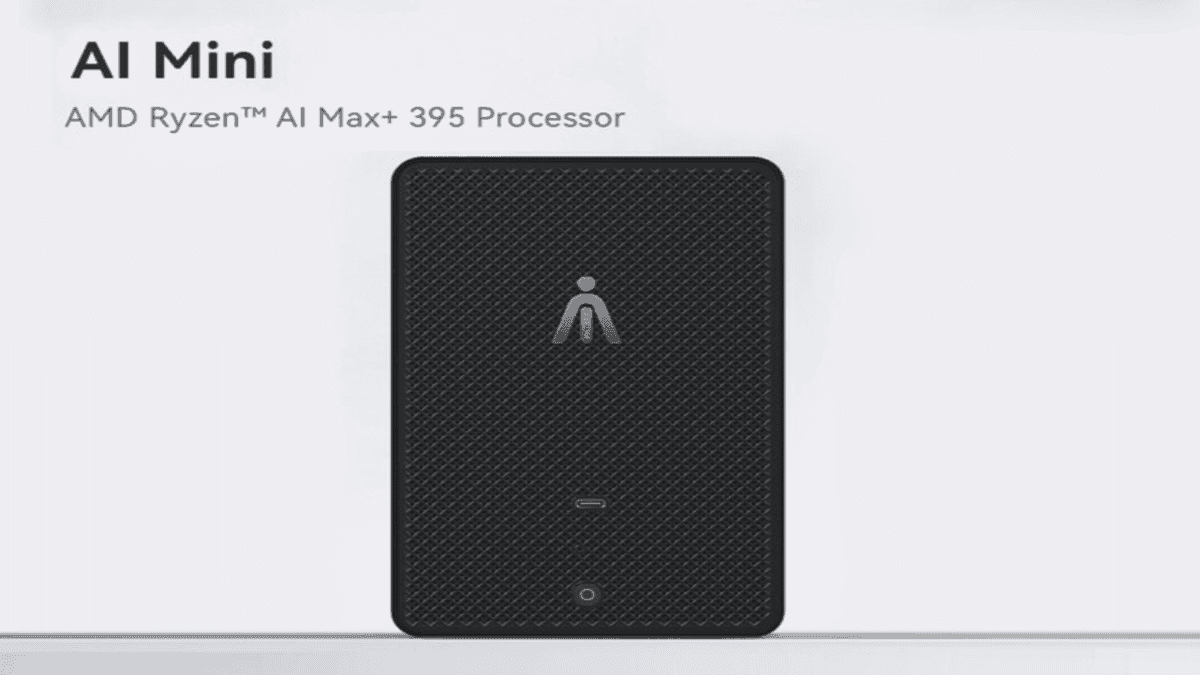
Minisforum launches local AI solutions at IFA 2026 -- AI Agent NAS N5 and AI Mini Workstation MS-S1 use AMD Ryzen AI Max+ Pro 495 processors designed to run models locally
These are Minisforum's top-end mini-PC and NAS offerings, featuring AMD's latest AI processors. Mini-PC maker Minisforum just launched the latest upgrades to its flagship products at IFA 2026 in Berlin, Germany. The first is the AI Agent NAS N5 Max-P495, an upgrade to the brand's flagship NAS with
[2]
This mini PC is an AI Beast, and You Won't Believe Its Cousin
You don't have to buy a Mac Studio or RTX Spark system to get a mini PC that excels at AI. Acemagic used IFA 2026 to launch and showcase a raft of its latest compact desktops, including a fresh workstation based on AMD's Gorgon Halo chip, a premium Intel Panther Lake model, and even a pair of
[3]
Mini PCs are getting extreme as Ryzen AI Max+ PRO 495 systems push limits
* AMD Ryzen AI Max+ PRO 495 mini PCs now reach 192 GB of memory * GMKtec says its EVO X5 Pro can run 300B parameter models locally * Framework Desktop combines 16 cores with 192GB unified memory while Acemagic fits the PRO 495 inside a 2L case After AMD launched the Ryzen AI Max+ PRO 495 in May
[4]
CHUWI UniBox AI495 Pro Mini Workstation Unveiled with AMD Ryzen AI Max+ PRO 495 Processor
CHUWI introduced the UniBox AI495 Pro, a compact mini workstation designed to redefine local artificial intelligence computing. The device is centered around the AMD Ryzen AI Max+ PRO 495 processor, which utilizes the Zen 5 CPU architecture and operates under the Gorgon Halo designation. This
[5]
AMD Ryzen AI Max+ PRO 495 Mini PCs Reach $8,000 With 192GB Memory
Several manufacturers are preparing compact workstations based on AMD's Ryzen AI Max+ PRO 495 processor, with configurations offering up to 192GB of unified memory. The systems are being presented at IFA and are designed primarily for local AI workloads, including large language models and other
[6]

CHUWI's UniBox AI495 Pro Crams 192 GB RAM And Ryzen AI Max+ PRO 495 Into A 2.9L Box, Running 300B LLMs Locally
Chinese hardware maker CHUWI has unveiled its most powerful mini PC yet, delivering flagship hardware for running up to 300B LLM locally. CHUWI Launches UniBox AI495 Pro Mini PC With up to 131 AI TOPS of Power; Features 192 GB LPDDR5X Unified Memory, and Allocates Up To 160 GB of VRAM Multiple
[7]
MINISFORUM MS-S1 MAX-P495 Packs 192 GB Unified Memory Into a Compact AI Workstation
MINISFORUM has introduced the MS-S1 MAX-P495, a compact workstation built around AMD's Ryzen AI Max+ Pro 495 processor. Announced on September 4, 2026, the new model is accompanied by the N5 MAX-P495, a network-storage system that combines the same processor platform with capacity for as much as
[8]
AMD's Ryzen AI MAX+ PRO 495 Powers GMKtec's EVO-X5 PRO To Run 300B+ Models Locally On 192 GB of Unified Memory
GMKtec has launched its flagship Mini Workstation, the EVO-X5 PRO, which rocks AMD's fastest Ryzen AI MAX+ PRO 495 chip. GMKtec Claims Its EVO-X5 PRO AI Workstation Offers 66% Faster CPU Orchestration and 40% Lower Cost Per Completed AI Workflow Versus NVIDIA's DGX Spark The EVO-X5 builds upon
[9]
Acemagic F9A Mini Workstation Packs Ryzen AI Max+ PRO 495
Acemagic will introduce its F9A AI mini workstation at IFA 2026, placing AMD's new Ryzen AI Max+ PRO 495 processor inside a chassis with a volume of approximately two liters. The company will exhibit the system from September 4 through September 8 at Booth 128 in Hall 6.2 of Messe Berlin. It is
[10]
Minisforum Introduces MS-S1 MAX-P495 Mini PC, Powered By Ryzen AI Max+ PRO 495 SoC Coupled With 192 GB Memory
The new mini PC can offer up to 131 TOPS of AI power, allowing it to run 300B LLMs locally. Minisforum Showcases MS-S1 MAX-P495 Mini PC With 16-Core/32-Thread Gorgon Halo Processor, 192 GB RAM, and a Dedicated PCIe x16 Slot for Expansion Cards Multiple vendors are now releasing their new Gorgon
[11]
ACEMAGIC's F9A Ryzen AI MAX+ 495 Mini Workstation Delivers Up To 60% Better AI Model Support Over 395, As it Packs 192 GB Memory
ACEMAGIC has unveiled its F9A Mini Workstation, which houses up to the AMD Ryzen AI MAX+ PRO 495 chip & 192 GB of memory. Mini PC & Workstation Popularity Grows As Local AI & Agents Become The New Craze, & ACEMAGIC Addresses This Demand With Its AMD Ryzen AI MAX+ Powered F9A PC At IFA, ACEMAGIC
Share
Copy Link
Multiple manufacturers including Minisforum, Acemagic, GMKtec, and CHUWI unveiled AMD Ryzen AI Max+ PRO 495-powered mini PCs at IFA 2026. These compact workstations feature up to 192GB unified memory and 131 TOPS of AI performance, enabling users to run 300B parameter models locally without cloud dependence.
Mini PC Makers Bet Big on Local AI With AMD Ryzen AI Max+ PRO 495
At IFA 2026 in Berlin, multiple manufacturers unveiled a wave of compact workstations powered by AMD's Ryzen AI Max+ PRO 495 processor, marking a significant shift toward on-device AI processing
1
2
3
. These mini PCs from Minisforum, Acemagic, GMKtec, CHUWI, and Framework represent a new category of AI-focused hardware that challenges traditional cloud-dependent workflows. The Ryzen AI Max+ PRO 495, built on Zen 5 architecture, delivers 131 TOPS of combined AI performance through its 16-core CPU, integrated Radeon 8065S GPU with RDNA 3.5, and XDNA 2 NPU contributing 55 TOPS1
4
. This positions these systems as viable alternatives to cloud services for developers and enterprises prioritizing data privacy and reduced latency.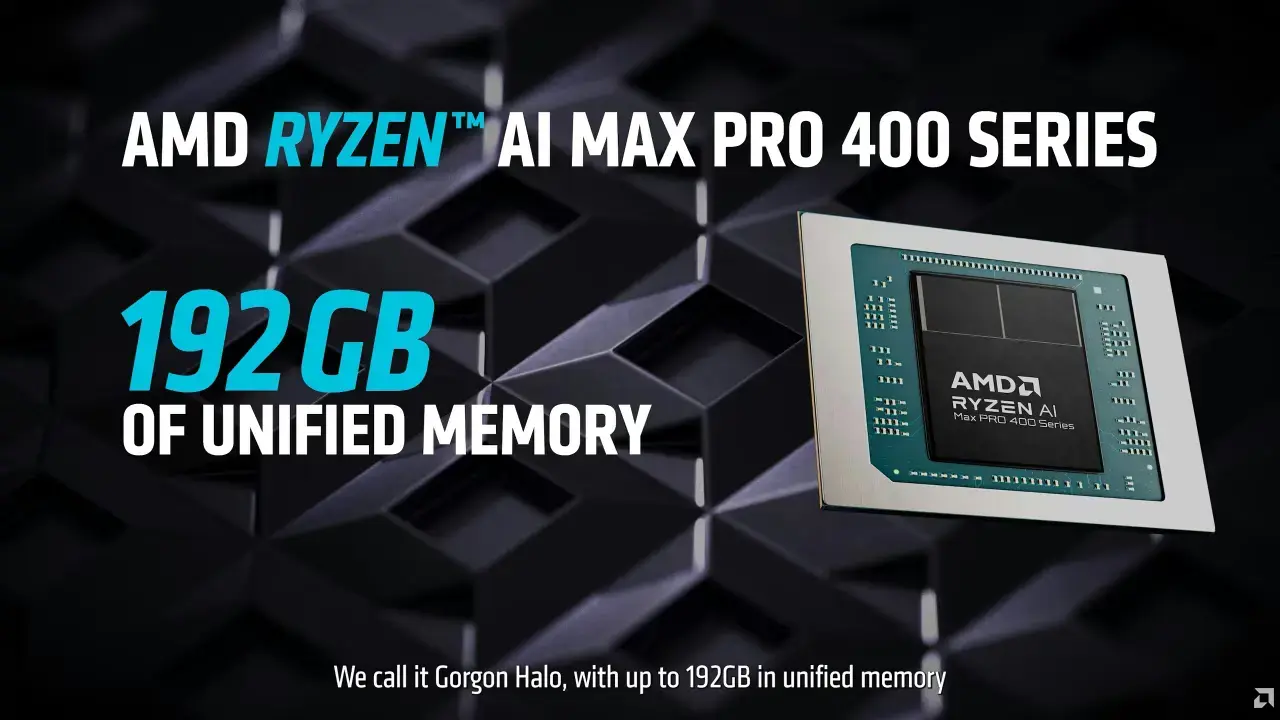
Source: Guru3D
192GB Unified Memory Enables 300B Parameter Models
The standout feature across these compact workstations is support for up to 192GB of unified memory, with LPDDR5X-8533 delivering bandwidth of 273GB/s
3
4
. This unified memory architecture allows up to 160GB to be allocated as graphics memory, enabling these AI-capable mini PCs to run large language models containing as many as 300B parameters locally3
5
. GMKtec specifically claims its EVO X5 Pro can handle 300B parameter models through efficient 4-bit quantization without requiring cloud services4
. The ability to run large AI models on-device addresses growing concerns about data privacy while cutting inference costs, particularly important as agentic AI can consume 1000x more tokens than standard AI applications1
.Minisforum Targets AI Storage and Workstation Markets
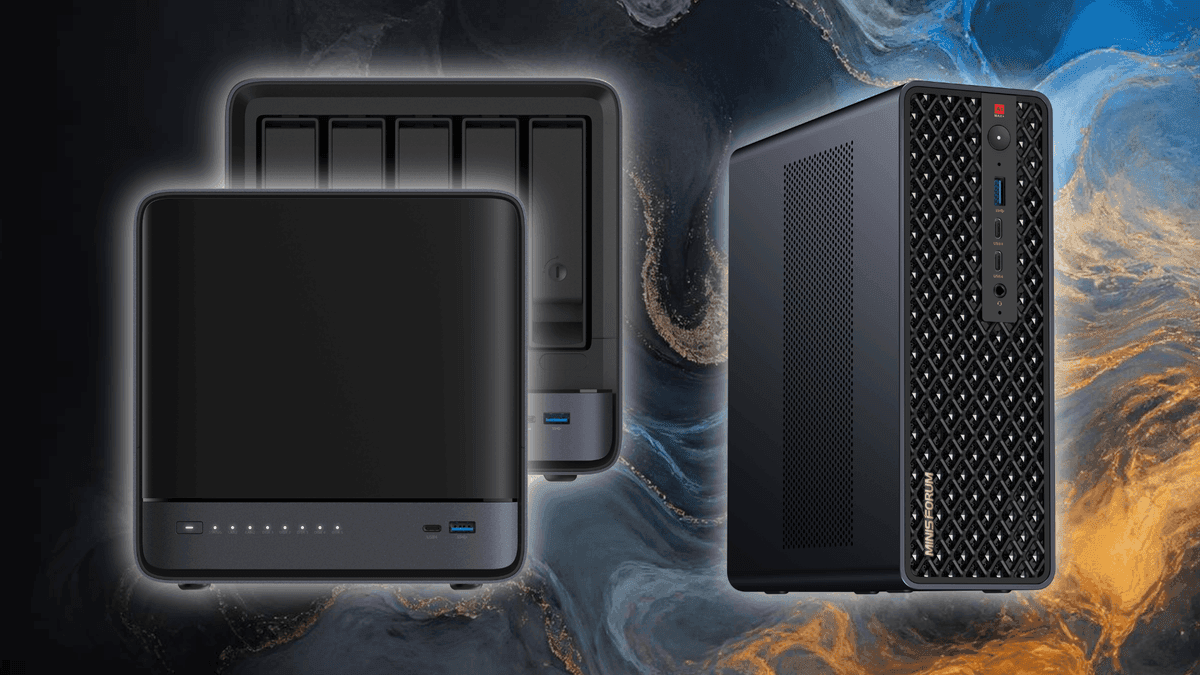
Minisforum introduced two distinct products: the AI Agent NAS N5 MAX-P495 and the MS-S1 MAX-P495 mini workstation
1
. The N5 MAX accommodates up to 200TB of local storage across five 3.5-inch drive bays and five PCIe 4.0 M.2 slots, designed as a centralized backend for data, models, knowledge, and long-running AI workloads1
5
. With pre-installed OpenClaw support, users can run AI agents directly on their storage solution, ensuring all data stays local while reducing latency. The MS-S1 MAX-P495, optimized for AI compute, offers scalability with four units deployable in a 2U rack configuration1
. Minisforum positions these as Mac Studio alternatives, particularly relevant given supply shortages driven by the local AI boom. Pricing for the N5 MAX with 192GB memory is expected between $7,500 and $8,000, with the MS-S1 MAX around $8,0005
.
Source: Tom's Hardware
Acemagic and GMKtec Push Compact Form Factors
Acemagic's F9A measures just 158.5 × 158.5 × 81.5mm—roughly 2 liters—making it one of the smallest systems with 192GB unified memory
3
5
. The F9A-Pro495 includes OCuLink for external GPU connectivity, four-lane PCIe 4.0 support, and integrated voice control with four 360-degree microphones and a dedicated Copilot button5
. Pre-orders begin September 10 with October availability, priced at approximately $8,000 for the 192GB configuration with 8TB storage5
. GMKtec's EVO X5 Pro emphasizes connectivity with four USB4 ports rated at 80Gbps, enabling cluster configurations by linking multiple systems3
5
. The system features a vapor chamber cooling solution with three fans capable of dissipating 132W, along with dual 10Gbps Ethernet and three PCIe 4.0 M.2 slots3
. October availability is expected, though pricing remains unannounced.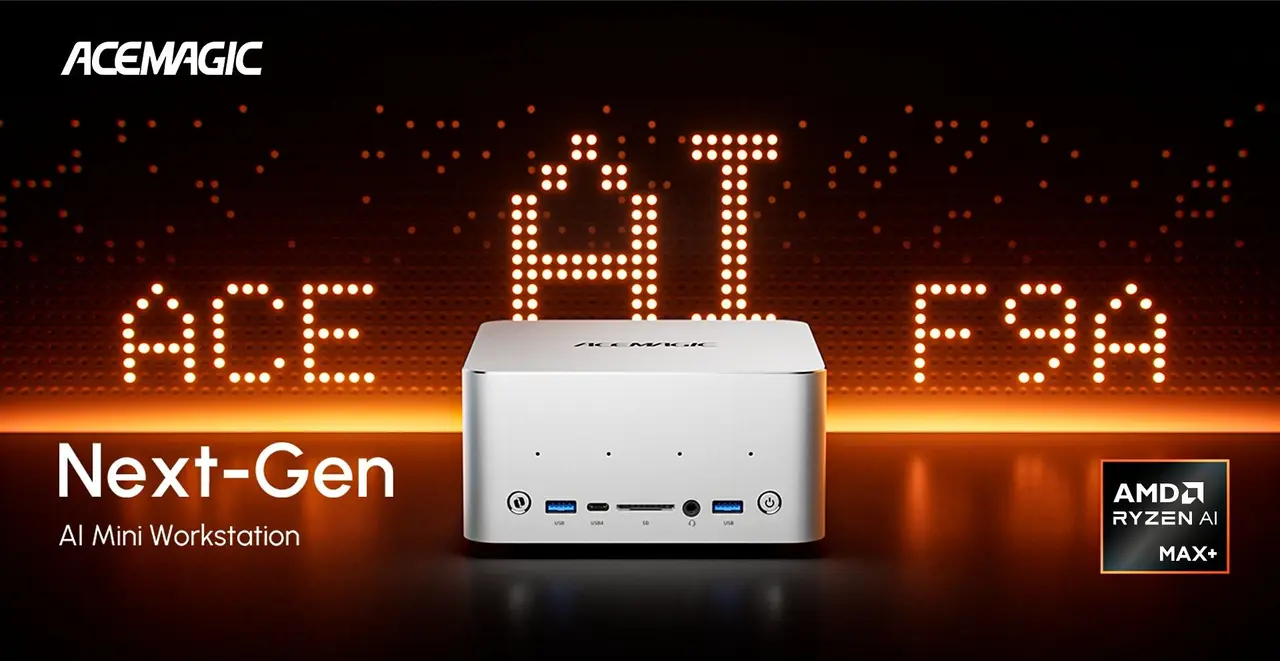
Source: Wccftech
Related Stories

Enterprise Options From Lenovo and Framework
Lenovo's ThinkCentre X Ultra targets business users with a more conservative 128GB memory ceiling, allowing up to 96GB allocation to integrated graphics
5
. The system includes AMD DASH for remote management, dual Thunderbolt 4 ports with DisplayPort 2.1, 10Gb Ethernet, and a removable rear panel configurable with additional network interfaces5
. Starting at approximately €3,100 ($3,699) when it launches in November, the ThinkCentre X Ultra represents the most affordable entry point for Copilot+ PCs with this processor2
5
. Framework's Desktop model occupies 4.5 liters and supports the full 192GB configuration with Linux preloaded as an option3
. CHUWI's UniBox AI495 Pro rounds out the offerings with support for DeepSeek V4 Flash, a model containing 284B parameters, though pricing and availability details remain undisclosed4
.Local AI Workloads Drive Premium Pricing
These compact workstations command premium pricing, with most 192GB configurations expected between $7,500 and $8,000
5
. The pricing reflects their positioning as professional tools for developers, researchers, and enterprises requiring substantial on-device AI processing without cloud dependence. The systems support various models from labs including Gemma, OpenAI, and Qwen, with the processor delivering 55 TOPS from the dedicated NPU alone1
4
. Beyond AI applications, the 192GB unified memory benefits 3D rendering, video editing, and computational fluid dynamics workflows1
. The integrated Radeon 8065S GPU also provides capable 1080p gaming performance, making these versatile systems for users who need powerful computing in compact form factors. Watch for October availability across most manufacturers, with enterprise buyers likely prioritizing Lenovo's business-focused features while developers may gravitate toward the higher memory configurations from Minisforum and Acemagic for running the largest local AI models.References
Summarized by

Navi
Related Stories
Recent Highlights
1
Meta Unveils Muse Wonder Frontier AI Models, Claims Performance Matching OpenAI and Anthropic
Technology

2
IMF Report Warns AI Market Correction Could Spark Global Financial Crisis With $1.4T at Risk
Business and Economy

3
OpenAI Releases 722 AI-Generated Math Solutions, Triggering Existential Crisis in Mathematics
Technology

Recent Highlights
Today's Top Stories








Don’t drown in AI news. We cut through the noise - filtering, ranking and summarizing the most important AI news, breakthroughs and research daily. Follow topics that matter to you and stay ahead.


