AMD Zen 5 AI Workstations Pack 192GB RAM to Run 284-Billion-Parameter Models Locally


3 Sources
[1]
New $3,999 workstation mini PC squeezes 16 Zen 5 cores into a tiny chassis
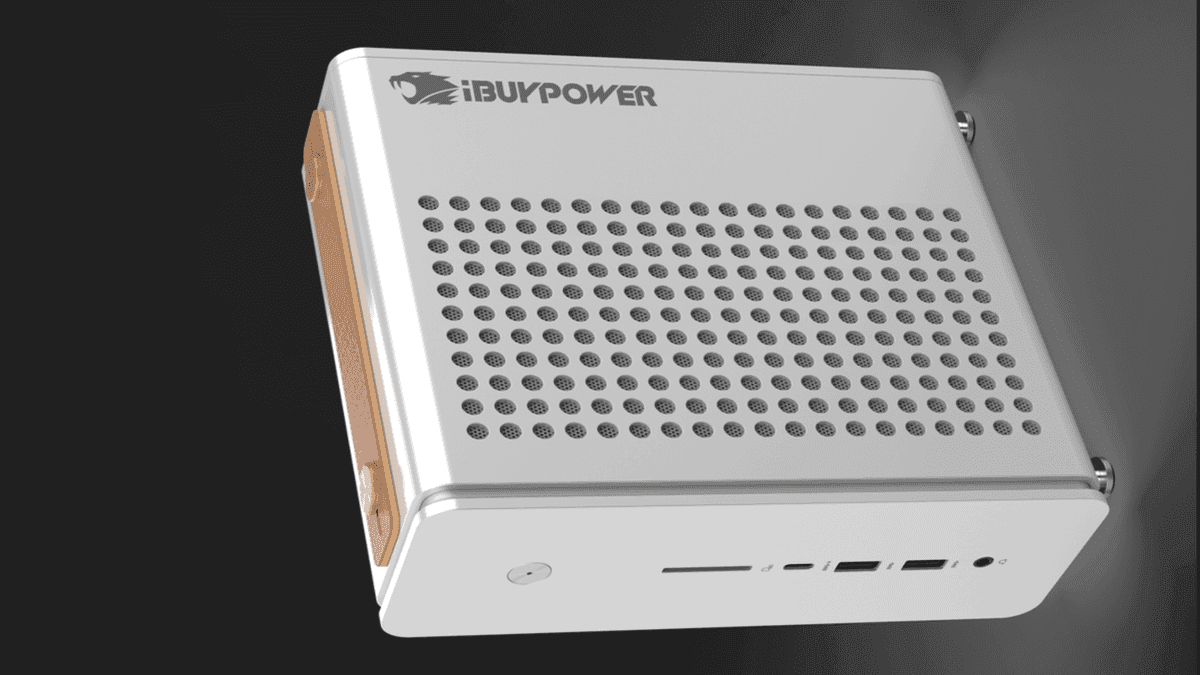
AMD and iBUYPOWER stuff 16 Zen 5 cores and 40 compute units into a mini PC * iBuyPower unveils an AMD AI workstation with 128GB of memory * The compact system uses AMD's 16-core Zen 5 processor * Integrated Radeon graphics deliver 40 compute units for graphics workloads iBuyPower has entered
[2]
16 cores, 5.2 GHz, and 55 TOPS: Minisforum's newest AI workstation is mostly a massive upgrade to 192GB of memory - and that is not necessarily a bad thing
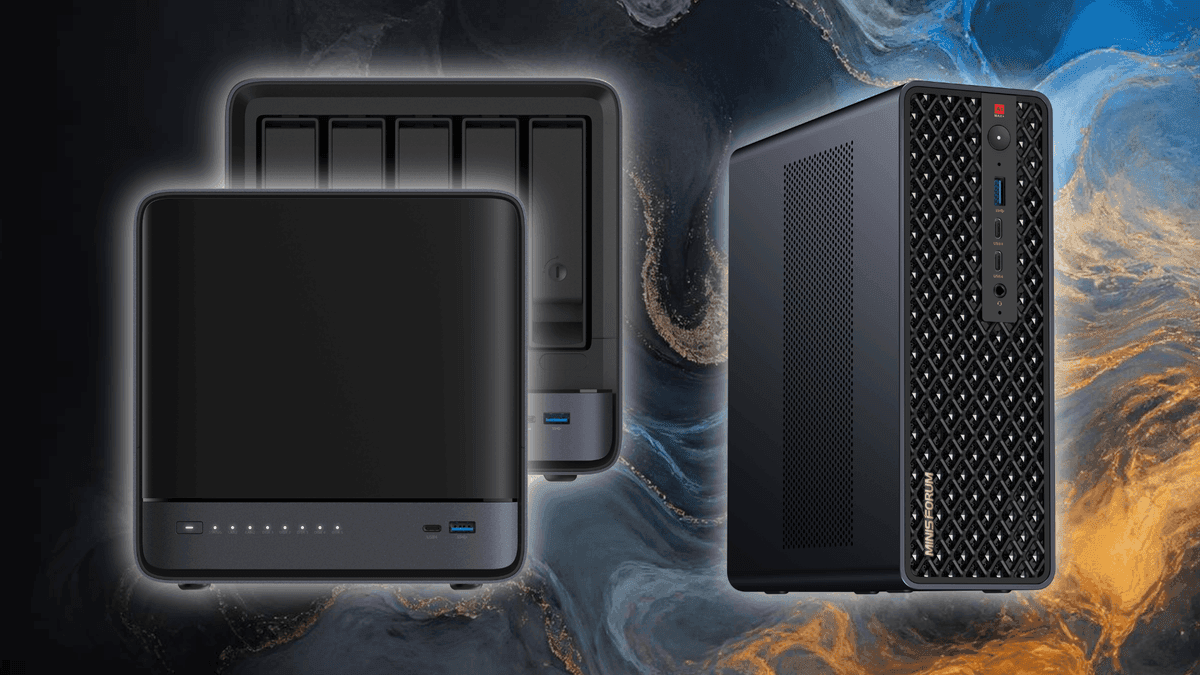
* Minisforum's MS-S1 MAX-P495 is on pre-order at $7,399 with 192GB of unified memory and a 2TB SSD * CPU and NPU specs are similar to previous iterations: 16 cores, 32 threads with a boost in clock speeds of 100 MHz, in addition to increased NPU performance by 10% to 55 TOPS * The real upgrade is
[3]
AMD Launches Ryzen AI Halo Developer Platform with 192GB Unified Memory
AMD has officially released its next-generation Ryzen AI Halo developer platform, now equipped with the Ryzen AI Max+ PRO 495 processor and 192GB of LPDDR5X-8533 unified memory. The updated system is intended for developers working with large language models, generative AI applications, and local
Share
Copy Link
AMD launches Ryzen AI Max+ PRO 495-powered compact AI workstations through iBuyPower and Minisforum, featuring 16 Zen 5 cores and up to 192GB unified memory. The systems enable developers to run large AI models with 284 billion parameters locally, marking a shift in accessible AI development hardware.
AMD Expands Ryzen AI Workstation Ecosystem with 192GB Memory Configurations
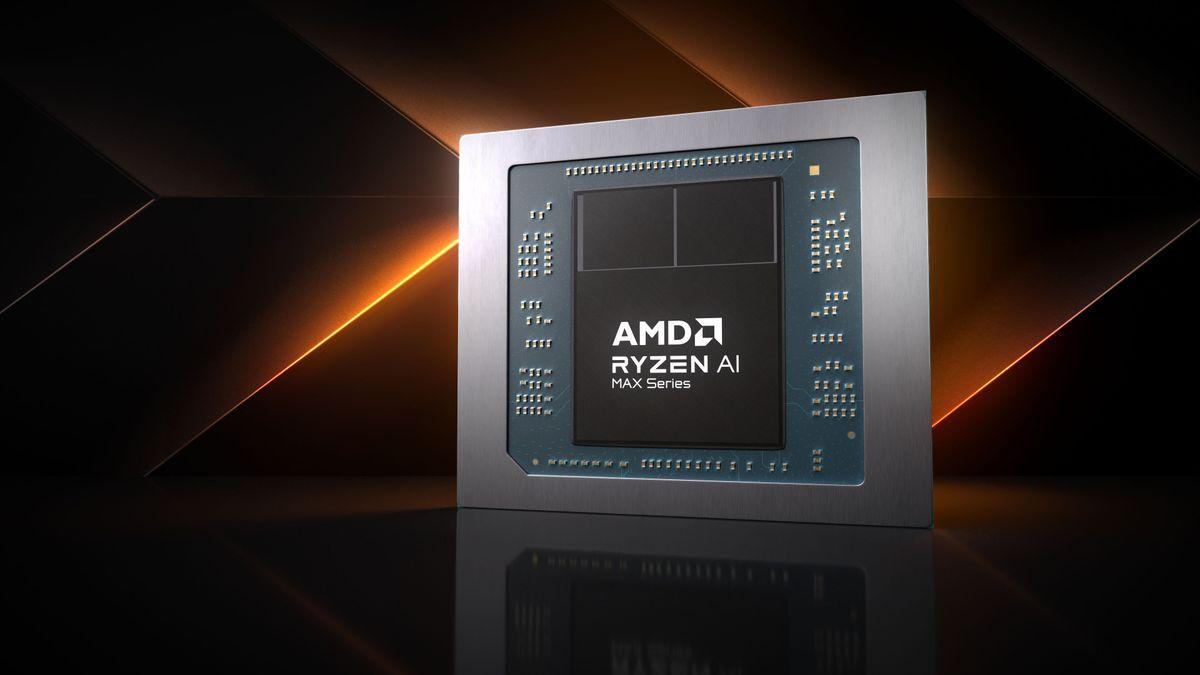
AMD has introduced its Ryzen AI Max+ PRO 495 processor across multiple compact AI workstation platforms, with manufacturers iBuyPower, Minisforum, and AMD itself releasing systems designed for local AI workloads and large language model development
1
2
3
. The new processor combines 16 Zen 5 cores with Radeon 8065S integrated graphics and an XDNA 2 neural processing unit rated at 55 TOPS, but the defining feature across these releases is the jump to 192GB of LPDDR5X memory in higher-end configurations2
3
.iBuyPower enters the compact AI workstation market with its Pro AMD AI Halo Mini PC at $3,999, featuring 128GB of LPDDR5X memory running at 8,000 MHz and a 1TB SSD in the base configuration
1
. Minisforum counters with the MS-S1 MAX-P495 at $7,399, doubling down on memory with 192GB unified memory and a 2TB SSD, currently available for pre-order with shipments expected in mid-October 20262
. AMD's official Ryzen AI Halo developer platform matches Minisforum's 192GB configuration and ships with Linux for $7,299.99, with a Windows 11 version incorporating Microsoft's Project Zenith planned for later release3
.Memory Capacity Drives Workstation Differentiation
The Ryzen AI Max+ PRO 495 processor represents a modest performance uplift over its predecessor, the Ryzen AI Max+ 395. CPU boost clocks increase by 100 MHz to 5.2 GHz, while the Radeon 8065S graphics with 40 RDNA 3.5 compute units gain 100 MHz to reach 3.0 GHz
2
3
. The NPU improves from 50 TOPS to 55 TOPS, pushing the platform total from 126 TOPS to 131 TOPS2
.The substantial change lies in memory support. The 400 series controller now handles up to 192GB of LPDDR5X across a 256-bit interface, with up to 160GB assignable to the GPU, compared to 128GB and 96GB on the previous generation
2
3
. Memory speed also rises from 8,000 to 8,533 MT/s, delivering approximately 7% more bandwidth and bringing total memory bandwidth to 273GB/s2
3
.This unified memory architecture allows the CPU and integrated Radeon GPU to access the same physical memory pool, eliminating data transfers between separate memory spaces and enabling large AI models to load entirely within available capacity
3
. According to AMD, the 192GB configuration supports language models containing 300 billion parameters or more using 4-bit quantization3
.Real-World Performance with 284-Billion-Parameter Models
Minisforum's testing demonstrates the practical impact of expanded memory capacity. A single MS-S1 MAX-P495 unit ran DeepSeek V4 Flash, a 284-billion-parameter model, at Q4 quantization at approximately 12 tokens per second
2
. Two linked units processed Qwen3.5-397B at roughly 16 tokens per second, while a four-system cluster loaded the 380GB Q4_0 build of DeepSeek-R1 671B2
.These figures require context. Both DeepSeek V4 Flash and Qwen3.5-397B use mixture-of-experts (MoE) architecture, which loads only specific "experts" into memory when needed rather than activating all parameters simultaneously. DeepSeek V4 Flash activates approximately 13 billion of its 284 billion parameters per token, while Qwen3.5-397B activates about 17 billion
2
. Memory capacity determines whether a model fits at all, while active parameters and bandwidth govern inference speed, explaining how a system with roughly 273 GB/s bandwidth achieves double-digit token speeds on models this large2
.Related Stories

Compact Form Factors and Connectivity Options
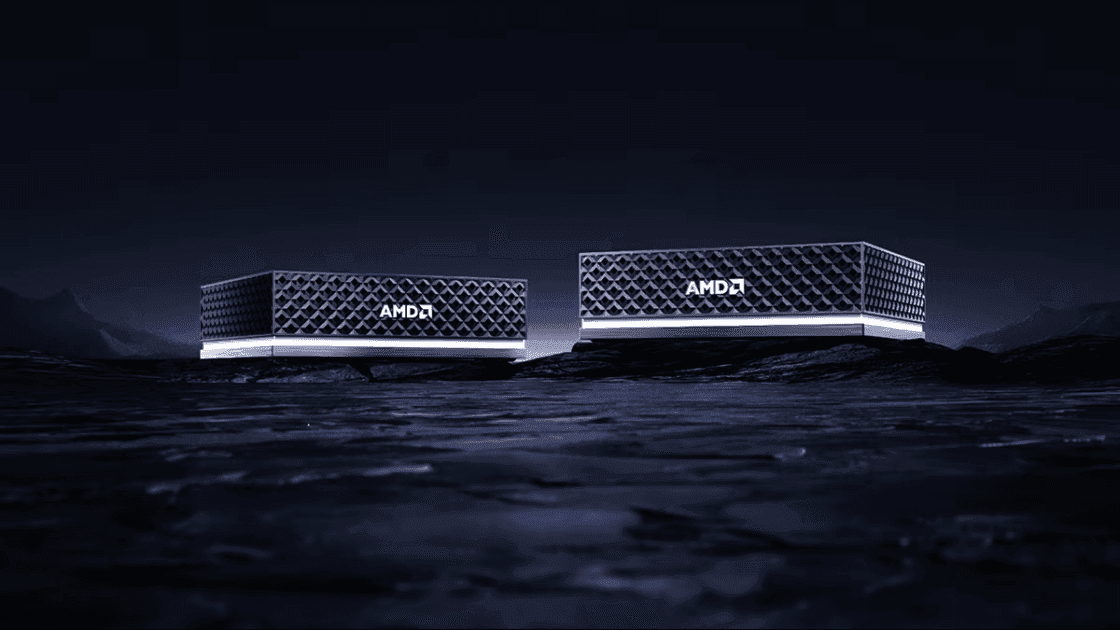
All three systems maintain compact footprints despite their capabilities. iBuyPower's Pro AMD AI Halo Mini PC measures 70 × 198 × 200 mm and runs Windows 11 Pro, with three M.2 storage positions including two 2280 slots and one supporting 2242 or 2280 drives with PCIe 4.0 connectivity
1
. The system includes Wi-Fi 7, Bluetooth 5.4, two 10Gb Ethernet ports, and USB4 connections capable of 40 Gbps data transfer1
. Front panel access provides two USB 3.2 Gen 2 Type A ports, a USB4 Type C connection, an audio jack, and an SD card reader, while rear connections add DisplayPort 1.4, HDMI 2.1, another USB4 port, and additional USB ports1
.AMD's official Ryzen AI Halo developer platform maintains a 150 × 150 mm footprint and weighs less than 1.2 kg
3
. Connectivity mirrors the feature set with 10Gb Ethernet, Wi-Fi 7, Bluetooth 5.4, and USB-C, alongside 2TB of solid-state storage3
. The platform ships with a prepared Linux software environment including AMD ROCm support, enabling compatible AI frameworks to leverage the integrated GPU3
.Market Positioning and Developer Focus
The pricing spread reflects different target audiences. iBuyPower's $3,999 entry point with 128GB memory targets professionals seeking compact AI workstation capabilities for creative, engineering, and data-intensive tasks without requiring the largest models
1
. The system launches in Q4 2026 with configurable storage capacity options1
.Minisforum's $7,399 MS-S1 MAX-P495 currently lists at 20% off a $9,249 list price, positioning the 192GB configuration as a premium option for developers and small teams requiring 200-to-300-billion-parameter mixture-of-experts models kept on-premises for privacy or latency considerations
2
. The system retains the 320W internal power supply, six-heat-pipe dual-blower cooler, dual 10GbE, two 80Gbps USB4 v2 ports, and 2U rack support from the original MS-S1 MAX2
.While iBuyPower's system includes two 10Gb Ethernet ports, the company has not announced compatible software or configuration details for distributing model workloads across multiple units as an AI cluster
1
. That capability requires specific software stacks beyond hardware connectivity alone1
.For developers working with generative AI applications and large language models, these compact AI workstations represent a shift toward accessible local inference hardware. The ability to run models that previously required multiple discrete graphics cards or cloud resources within a single unified-memory system addresses privacy, latency, and development workflow concerns. Watch for how software tooling evolves to take full advantage of the 16 Zen 5 cores and 192GB unified memory configurations, particularly as more developers experiment with running large AI models entirely on local AI workloads.
References
Summarized by

Navi
Related Stories
AMD Ryzen AI Halo launches at $3,999, undercutting NVIDIA's DGX Spark in AI development race
13 Jun 2026•Technology
AMD Ryzen AI Max+ PRO 495 Mini PCs With 192GB RAM Target Local AI Workloads at IFA 2026
03 Sept 2026•Technology
AMD's Gorgon Halo AI Workstations Hit Market With 192GB Memory at $6,399-$7,399
28 Sept 2026•Technology
Recent Highlights
1
Meta Unveils Muse Wonder Frontier AI Models, Claims Performance Matching OpenAI and Anthropic
Technology

2
IMF Report Warns AI Market Correction Could Spark Global Financial Crisis With $1.4T at Risk
Business and Economy

3
OpenAI Releases 722 AI-Generated Math Solutions, Triggering Existential Crisis in Mathematics
Technology

Recent Highlights
Today's Top Stories








Don’t drown in AI news. We cut through the noise - filtering, ranking and summarizing the most important AI news, breakthroughs and research daily. Follow topics that matter to you and stay ahead.


