AI ads flooded Super Bowl 2026, but quality concerns and bubble fears cast shadows over the hype


8 Sources
[1]
AI-generated ads dropped the ball at this year's Super Bowl
It feels like everyone who produced ad spots for this year's Super Bowl with gen AI failed in terms of making gen AI seem useful or like something worth getting excited about. Though we've seen plenty of AI generated commercials before (at previous Super Bowls, no less), this year's event was
[2]
Super Bowl LX ads: all AI everything
Super Bowl LX is nearly here, with the Seattle Seahawks taking on the New England Patriots. While Bad Bunny will be the star of the halftime show, AI could be the star of the commercial breaks, much like crypto was a few years ago. Last year's Super Bowl featured a Google Gemini ad that fumbled a
[3]
AI companies pour big money into Super Bowl battle
AI is being used to produce more ads, which could help lower the production cost. Artificial intelligence companies are playing their biggest role yet at the Super Bowl, with all the major AI players buying ads to showcase their tools - both for consumers and for businesses - to the expected
[4]
Super Bowl ads go all-in on AI as brands spend up to $10M per spot
Many companies utilized the platform not only to promote AI-powered products and services, but also to challenge their rivals. At the same time, several ads were themselves produced using AI tools. For instance, US vodka brand Svedka ran what it claims is the first "primarily" AI-generated
[5]
Do Super Bowl Ads Predict a Bubble? Dot-Coms, Crypto and Now AI
Super Bowl LX featured 10 ads for different AI products, and some observers believe it could be a sign that the AI financial bubble will soon burst. Advertisements for the Super Bowl -- the championship game of American football -- are some of the most watched and most expensive. The game on
[6]

The Super Bowl Was Overrun by AI Ads -- And There's a Reason Viewers Weren't Buying It
Super Bowl commercials can spark as much conversation as the Halftime show or the game itself -- and this year, what people are talking about is the substantial number of ads there were trying to sell America on AI. One in particular that got people talking was for Ring, a doorbell video camera
[7]

AI Companies Sold Us Their Vision of the Future at the Super Bowl. Here's Why We Should Reject It
Are you feeling like your football-scouting operation has been taking a beating lately? Do you sometimes wonder why your spreadsheets can't get generated fast enough? Or perhaps your software coding is going slower than you always thought it would? Most of all, does your kid struggle with not
[8]
Super Bowl AI War Set as OpenAI, Anthropic, Gemini and Amazon Alexa+ Face Off
In the Super Bowl ad for Amazon's Alexa+ AI assistant, Chris Hemsworth fears that the AI is trying to kill him. Perhaps it will trigger a rogue garage door, or close the pool cover while he is out for a swim. Ultimately, of course, he learns that the AI just wants him to be happy, offering a
Share
Copy Link
Super Bowl 2026 featured 10 AI advertisements as tech giants and startups spent up to $10 million per 30-second spot to reach 127 million viewers. But the heavy use of AI-generated commercials drew criticism for poor quality, with brands like Svedka and Artlist producing entirely AI-created spots that many viewers labeled as 'slop.' The saturation has sparked comparisons to previous tech bubbles.
AI Ads Take Center Stage at Super Bowl 2026
Super Bowl 2026 marked a turning point as artificial intelligence dominated the advertising landscape, with 10 different AI ads appearing throughout the broadcast that reached approximately 127 million viewers
5
. AI companies poured unprecedented resources into the event, with 30-second spots costing a record $8 million on average and some priced as high as $10 million3
. Deep-pocketed tech giants and startups alike seized the opportunity to showcase AI-powered products to a massive national audience, with major players including Anthropic, OpenAI, Google, Meta, and Amazon all buying airtime3
.
Source: THR
The battle among AI companies began before kickoff when Anthropic's Claude debuted an advertisement mocking OpenAI's decision to include ads in ChatGPT, using the tagline "Ads are coming to AI. But not to Claude"
4
. This triggered a response from OpenAI CEO Sam Altman that drew even more attention to the campaign. OpenAI returned with its own 60-second spot carrying the message "Now you can just create something," emphasizing how AI tools have simplified creative processes4
. Google ran ads for Gemini AI for the second consecutive year, while Meta promoted its Oakley Meta AI glasses rather than its chatbot3
. Amazon leaned into concerns about AI in the home with a spot for Alexa+ featuring actor Chris Hemsworth expressing comedic worries about AI risks3
.AI-Generated Advertisements Draw Sharp Criticism
Beyond promoting AI-powered products, several brands used generative AI to actually produce their Super Bowl commercials, with results that drew widespread criticism for poor quality. Vodka brand Svedka ran what it claimed was the first "primarily" AI-generated national Super Bowl spot, resurrecting its Fembot character alongside a new companion called Brobot
4
. According to parent company Sazerac, the production took nearly four months to rebuild Fembot and train the AI to replicate facial expressions and movement4
. Despite these efforts, the ad featured awkwardly dancing AI-generated humans and a scene where Brobot malfunctions after drinking vodka, with liquid spilling down his chassis in a way that resembled the gross accidental video output AI models are known to generate1
.
Source: Interesting Engineering
Artlist delivered what critics called one of the worst examples of AI in advertising. The Israeli creative firm's commercial, which only aired in New York and Los Angeles, boasted that it purchased its Super Bowl space just a week before the event and spent a mere five days producing the spot
1
. Rather than telling a compelling story, the ad consisted of very short clips of animals doing weird things strung together with a voiceover, featuring the hallmarks that have convinced people to see AI-generated video as slop1
. With commercial production costs for traditional Super Bowl ads typically starting at $1 million and running far higher, the response to these AI-generated commercials could have major implications for how high-profile ads are produced in the future3
.Public Skepticism and Quality Concerns Mount
The oversaturation of AI-generated advertisements revealed an undeniable cheap and sloppy quality compared to traditionally-produced ads from previous Super Bowls, where spending money on ad production led to commercials that felt more premium
1
. So much animosity now exists around generative AI that people quickly assume wonky visuals are AI-generated, even when sloppy editing work might actually be to blame. This phenomenon affected even a star-studded Jurassic Park-themed ad for Comcast's Xfinity network that digitally de-aged Sam Neill, Laura Dern, and Jeff Goldblum—while people across social media remarked that the questionable CGI looked like AI slop, Industrial Light & Magic and Lola VFX were actually credited for creating the visual effects [1](https://www.theverge.com/entertainment/875886/super-bowl-2026-ai-generated-ads-were-terrible].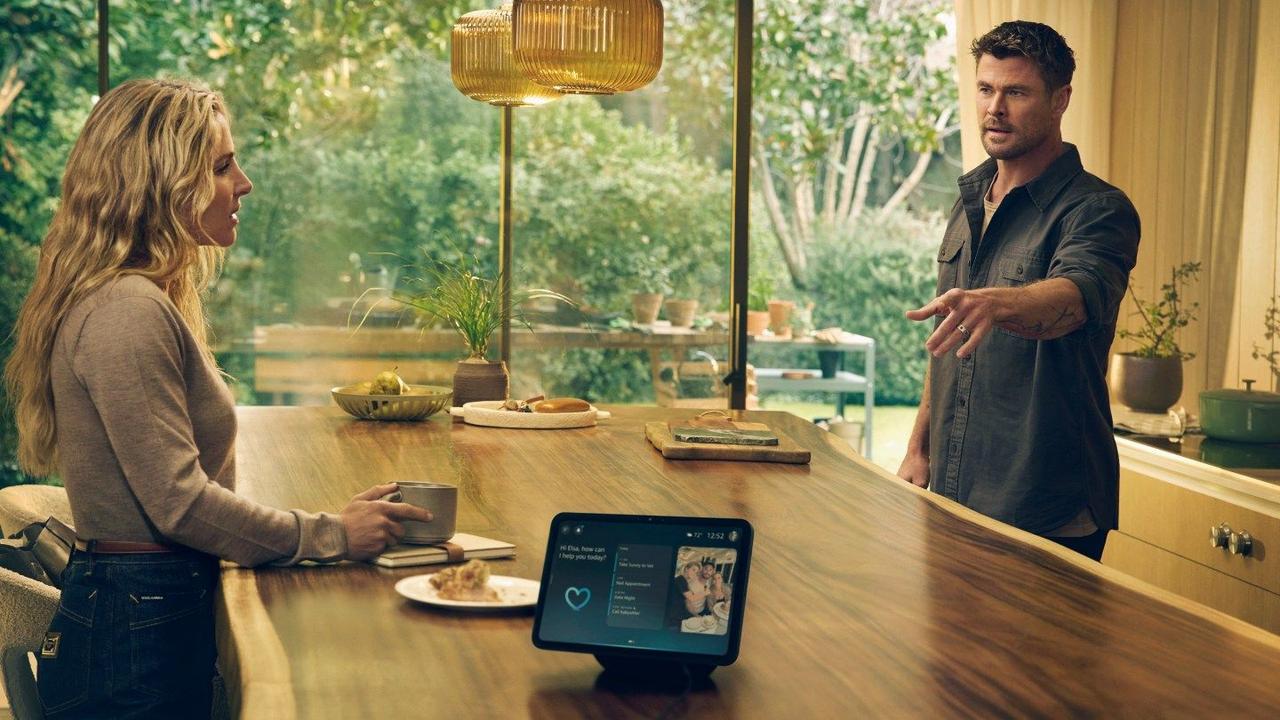
Source: THR
Sazerac's chief marketing officer Sara Saunders told The Hollywood Reporter that using AI to create the Svedka ad didn't actually save the company much time or money, but rather that an AI aesthetic could be thematically resonant for the brand identity
1
. However, critics argued that the most pro-human thing companies could do would be to hire more humans to develop better ideas rather than relying on AI tools that produce subpar results.Related Stories


Historical Parallels Raise AI Bubble Concerns
The concentration of AI product advertisements at Super Bowl 2026 has sparked comparisons to previous tech bubbles that burst shortly after similar advertising blitzes. In January 2000, the "dot-com bowl" featured 17 different ads about the world wide web, and just two months later, the dot-com bubble began a steep decline that lasted until October 2002
5
. Similarly, Super Bowl 2022 became the "crypto bowl" with four different crypto companies airing ads, and just months later the crypto market unraveled with multiple major companies becoming insolvent5
.Economics professor Gary Smith and consultant Jeffrey Funk wrote that in the current AI bubble, prices of AI-dependent stocks have become untethered from realistic projections of future profits, with companies like OpenAI and Anthropic losing enormous amounts of money yet receiving valuations in the hundreds of billions of dollars
5
. The ads focus on onboarding new users to the technology, and in the absence of profits, tech companies increasingly emphasize user numbers—a metric that was popular during the dot-com bubble5
. As AI companies continue to battle for market share and consumer attention, observers will be watching closely to see whether the "AI bowl" proves to be another harbinger of an impending bubble burst.References
Summarized by

Navi
[2]
[4]
[5]
Related Stories
Recent Highlights



Recent Highlights
Today's Top Stories









Don’t drown in AI news. We cut through the noise - filtering, ranking and summarizing the most important AI news, breakthroughs and research daily. Follow topics that matter to you and stay ahead.


