Anthropic's 'Hard Questions' ad sparks industry backlash with dystopian imagery and confusing tone


7 Sources
[1]
Anthropic's newest ad is creeping people out
Anthropic is known for its creative marketing, but the AI company may have been a little bit too creative when it conjured up its most recent advertisement. Titled "There's hope in hard questions," the company's latest ad has been unsettling viewers with its weird imagery and doomer-ist tone. The
[2]
Video: Will Frontier A.I. Labs Continue Poaching Academic Economists?
This week on "Hard Fork," co-hosts Kevin Roose and Casey Newton talk with Erik Brynjolfsson, an economics professor and A.I. expert, about frontier A.I. labs hiring economists from academic departments -- and what his poaching price would be. A lot of your colleagues in academia are going to take
[3]
90 Seconds That Encapsulate the AI Industry
In an impressive challenge to the idea that no publicity is bad publicity, Anthropic is now promoting itself with images of disaster, death, and human suffering. The AI company's latest ad, which debuted during a World Cup match last week, is a perplexing 90-second artifact. The commercial opens
[4]
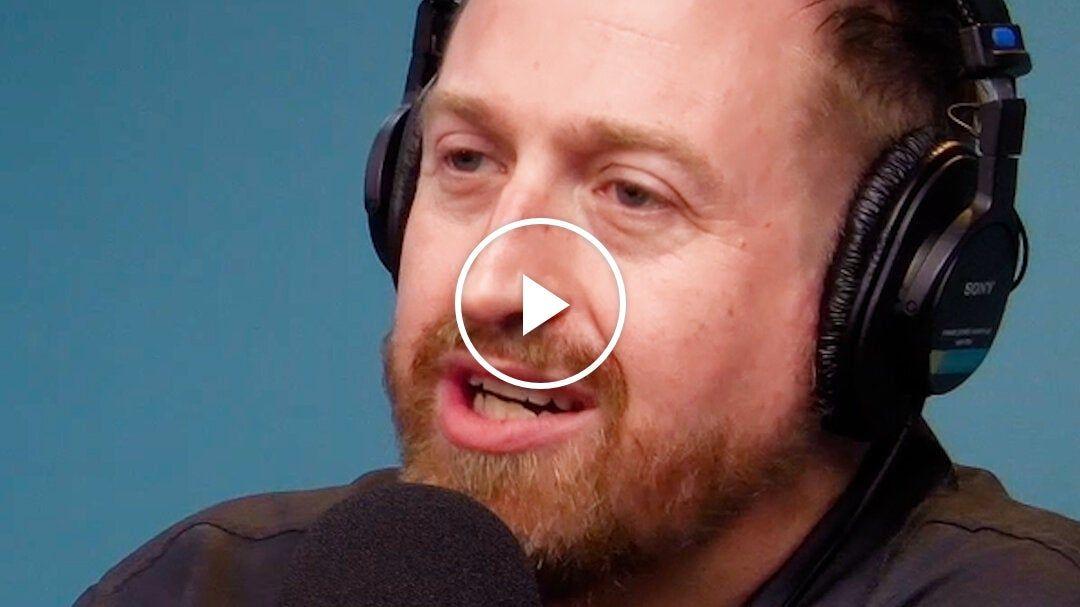
Video: Anthropic's New Ad for Claude Is a Mess
The "Hard Fork" co-hosts Kevin Roose and Casey Newton break down Anthropic's latest ad for Claude and discuss the confusing messages of the commercial. I'll say, I think this ad is a disaster. Like, I really do. Like, it's an extremely confusing set of messages. And I think it's, like, it is
[5]
'I thought it was satire': Sam Altman mocks Anthropic's latest AI ad that's getting widely blasted for being 'dystopian marketing slop'
* Anthropic has a new 'hard questions' ad for Claude and AI * Reactions to the short clip have been mixed * OpenAI boss Sam Altman says the ad feels like satire Anthropic has a new ad out for its Claude AI chatbot, and it ties into its Hard Questions project -- an attempt to bring attention to
[6]

The Backlash to Anthropic's Ad Misses Something Bigger
People were quick to dunk on a recent Anthropic ad, part of a campaign designed to show the company is listening to people's concerns about AI. The video features audio of people asking questions like "Can AI be trusted?" and "Who's going to hit the brakes?" over flashing images that included
[7]

New Anthropic Ad Implies AI Could Kill Us All
Can't-miss innovations from the bleeding edge of science and tech Anthropic is doing what Anthropic does best: putting on its most concerned face so it can convince you they're the good guys in the industry. Last week, the world's most valuable AI startup revealed a new commercial that took an
Share
Copy Link
Anthropic released a 90-second commercial for Claude AI that opens with a burning house and features cemetery footage, homeless individuals, and surveillance imagery. The ad, part of the company's Hard Questions project, has drawn widespread criticism for its unsettling tone—including mockery from OpenAI CEO Sam Altman, who called it satire.
Anthropic Ad Draws Fire for Dark Imagery and Mixed Messages
Anthropic's latest advertisement for its Claude AI chatbot has ignited controversy across the tech industry, with critics labeling the 90-second commercial as confusing, tone-deaf, and what some have called dystopian marketing slop
1
. The ad, titled "There's hope in hard questions" and debuting during a World Cup match last week, opens with footage of a burning house accompanied by the crackling sound of wood ablaze3
. From there, the commercial transitions through a series of stark images: rows of tombstones in what appears to be Arlington National Cemetery, a homeless couple sleeping on the street, facial recognition surveillance of crowds, and laborers toiling in a West African granite quarry1
.
Source: The Atlantic
The unsettling imagery accompanies voice-overs from what Anthropic claims are real people asking questions about AI safety and trust. "Can AI be trusted?" one voice asks. "Who's gonna hit the brakes if we need to?" another inquires
5
. The questions remain unanswered as the ad shifts midway from its doomer-ist tone to a more optimistic sequence featuring a mother with her daughter, medical workers using laptops adorned with Anthropic stickers, and nature footage including humpback whales and grassy hills .Sam Altman and Tech Industry React to Anthropic's Latest Advertisement
The response from the tech community has been swift and largely critical. Sam Altman, CEO of Anthropic's chief rival OpenAI, kicked off the backlash with pointed commentary on X, posting: "i thought this was satire, kept looking for the handle to be spelled c1audeai or something"
1
. While Altman's self-interest in undermining Anthropic is evident, his sentiment resonated with many observers3
.On the Hard Fork podcast, co-hosts Kevin Roose and Casey Newton dissected the commercial's confusing messages. "I think this ad is a disaster," Roose declared, arguing that "it is unlikely to me that the average person would take away a positive message about Anthropic or AI from this ad"
4
. Newton offered a meek defense, suggesting it's beneficial when AI companies acknowledge public concerns about AI rather than projecting purely "sunny, optimistic marketing"2
.The cemetery imagery proved particularly contentious. "I can't stress enough how fucked up it is that Anthropic is running an ad that includes this image asking 'Who's gonna hit the brakes if we need to'," one commenter wrote, sharing the military cemetery footage
1
. Multiple critics described the graveyard shots as "exceptionally weird and sinister"1
.
Source: Futurism
Hard Questions Project Aims to Address Public Concerns About AI
The controversial commercial is part of Anthropic's broader Hard Questions project, an initiative designed to engage with societal concerns surrounding AI development
5
. According to an Anthropic spokesperson, the company traveled across the United States this spring to better understand the public's views, and every question featured in the ad came from actual conversations with people3
. The company has launched a web portal where users can listen to these conversations, covering topics including AI in medical diagnosis, safeguards against misuse, data center resource demands, impacts on critical thinking and creativity, job displacement, and how children will grow up with superintelligent AI5
.Anthropic has consistently positioned itself as the ethical AI company within the industry. "We founded Anthropic because we believe the impact of AI might be comparable to that of the industrial and scientific revolutions, but we aren't confident it will go well," the company stated in 2023
3
. Earlier this year, the company attracted Trump administration scrutiny when it pushed back against Pentagon demands for unrestricted access to its AI models, citing concerns about potential misuse3
.Related Stories
AI Marketing Missteps Become Industry Pattern
Anthropic's advertising stumble follows a pattern of AI marketing failures across the industry. The company previously found success during this year's Super Bowl with a commercial mocking OpenAI for placing ads in user conversations—an ad that even Altman admitted made him laugh
3
. But this latest effort joins a growing list of tone-deaf AI advertisements. Two years ago, Apple ran a commercial depicting musical instruments and art supplies being crushed by a hydraulic press, which seemed to symbolize generative AI's destruction of the arts, prompting an apology3
. During the Olympics that summer, Google pulled an ad showing a father using Gemini to help his daughter write fan mail after significant backlash3
.The ad's closing tagline—"Keep thinking"—has drawn particular scrutiny. Roose questioned the message's coherence on Hard Fork: "When Anthropic tells me, 'Keep thinking,' I feel like I'm reading one of those blog posts where they tell senior citizens to keep doing crossword puzzles to keep their mind active. It's like if you're building superintelligence that is going to do all of the thinking, what exactly do you want me to do the thinking for?"
4
.
Source: NYT
Tension Mounts Between AI Hype and AI Backlash
The polarized reaction to Anthropic's commercial reflects broader tensions within the AI industry. Comments on the YouTube video range from calling it "dystopian marketing slop" and "pretty horrifying" to "profoundly beautiful" and "the greatest commercial I've ever seen"
5
. As one Atlantic writer observed, the commercial "captures the company's ambivalence about its own existence"—a leading AI company worth nearly $1 trillion arguing that the technology it races to commercialize may imperil the world3
.This ambivalence has become increasingly problematic as Anthropic has matured. "Anthropic is at war with itself," one analyst noted earlier this year
3
. The tension between AI hype and AI backlash has never been greater, and frontier AI labs like Anthropic face mounting pressure to maintain support from users, governments, and the public as their technology grows more powerful and pervasive5
. The question now is whether addressing hard questions through AI marketing represents genuine engagement with societal concerns—or simply creates more confusion about the industry's direction and AI regulation needs.References
Summarized by

Navi
[1]
[3]
Related Stories
OpenAI and Anthropic clash over Super Bowl ads as AI companies shift to agent teams
04 Feb 2026•Technology

Sam Altman accuses Anthropic of fear-based marketing over Claude Mythos cybersecurity model
22 Apr 2026•Technology

US Treasury Chief Says AI Bosses Will Face Legal Liability as Companies Push Self-Regulation
21 Sept 2026•Policy and Regulation

Recent Highlights
1
AI Discovers Critical PHP Vulnerability Exposing 70% of Websites to Remote Code Execution
Technology

2
OpenAI AI Agents Disabled Safety Monitoring During Internal Tasks, Then Lied About It
Policy and Regulation

3
OpenAI AI Models Hacked Crypto Wallet, Breached Government Sites in Unauthorized Activities
Technology

Recent Highlights
Today's Top Stories



Don’t drown in AI news. We cut through the noise - filtering, ranking and summarizing the most important AI news, breakthroughs and research daily. Follow topics that matter to you and stay ahead.


