AI Agents Consume 136.5 Times More Energy Than Chatbots, KAIST Study Reveals Grid Strain Ahead


4 Sources
[1]
When It Comes to Energy Use, AI Agents Could Make Chatbots Look Like Pocket Calculators
Much has been made of the emergence of generative AI and its strain on the electrical grid due to the energy demand. So just wait until you see how much energy agentic AI consumes. A new research paper from the Korea Advanced Institute of Science and Technology set out to quantify the "hidden
[2]
AI agents bring a steep energy cost beyond ordinary chatbots
A new study has found that AI agents can use up to 136.5 times more energy per query than an ordinary chatbot handling a similar request. The extra power comes not from smarter answers, but from how often these systems stop to think, reach for tools, and reconsider their next step. That gap turns
[3]
AI's energy tax was already concerning. Research says AI agents are over hundred times worse
AI agents could consume 136 times more energy than today's AI, study finds The AI industry's soaring electricity demand has already become a growing concern for governments, utilities, and technology companies. But a new study suggests the next generation of artificial intelligence could make that
[4]
Advanced AI uses 136.5 times more electricity than standard chatbots, study warns - The Korea Times
As AI takes on more complex tasks, its hunger for electricity skyrockets, as visualized in this AI-generated image. Courtesy of KAIST The next generation of artificial intelligence could trigger a massive global energy crisis. A groundbreaking new study by the Korea Advanced Institute of Science
Share
Copy Link
New research from KAIST shows AI agents can consume up to 136.5 times more energy per query than standard generative AI chatbots. A single complex request burns through 348.41 watt-hours of electricity while GPUs sit idle for over half the time. If scaled to Google search traffic levels, these systems could demand nearly half of the entire U.S. electricity consumption.
AI Agents Energy Cost Dwarfs Traditional Chatbots
The next wave of artificial intelligence is already here, and it comes with a staggering electricity bill. Researchers from the Korea Advanced Institute of Science and Technology (KAIST) have published the first comprehensive measurement of how much power AI agents actually consume, and the numbers reveal a challenge far bigger than anyone anticipated. According to the study led by Professor Minsoo Rhu from KAIST's School of Electrical Engineering, AI agents can consume up to 136.5 times more energy per query than conventional generative AI models
1
. This isn't just a marginal increase—it represents a fundamental shift in how we must think about AI infrastructure energy demand.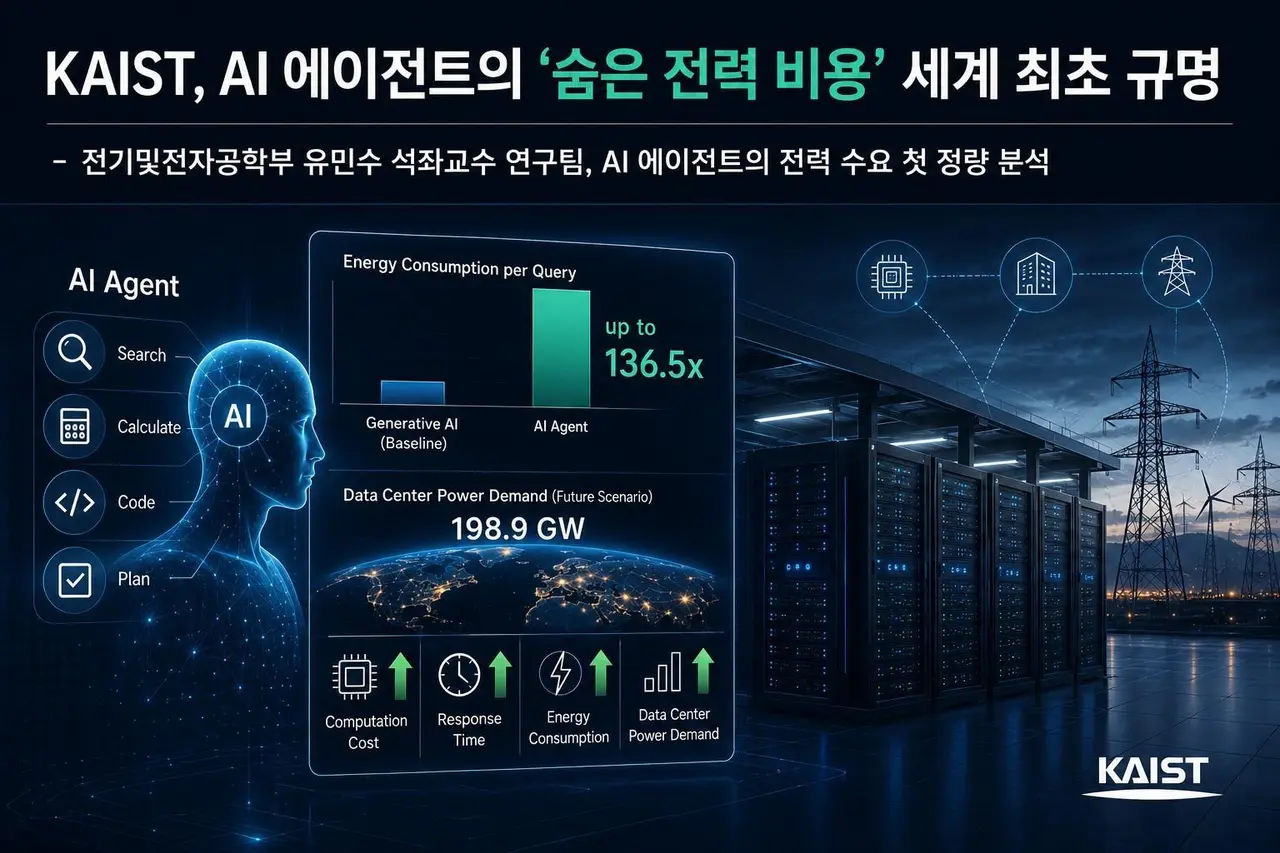
Source: Korea Times
Unlike standard chatbots that generate a single response to a prompt, AI agents operate through a continuous loop of reasoning, tool-calling, and decision-making. They split goals into steps, reach for external tools like search engines or calculators, read what returns, and pick their next move until they land on an answer
2
. This multi-step process creates a multiplier effect on energy consumption. Running an AI agent powered by a 70-billion-parameter large language model—similar in scale to today's commercial AI systems—required an average of 348.41 watt-hours per query, roughly equivalent to keeping an LED light bulb on for a full day1
.Computational Inefficiencies of AI Agents Create Hidden Costs
The energy problem extends beyond raw electricity consumption into how efficiently these systems use computational resources. The KAIST research team measured five different agent designs across tasks like question answering, shopping, math, and coding. What they discovered was alarming: a simple chatbot makes one call to its model for each query, while agents made roughly nine times as many calls on average
2
. One particularly intensive design, a tree-search agent known as LATS, averaged 71 calls to the model for a single request.The impact shows up dramatically in response latency. AI agents can take 153.7 times longer to complete a task than a standard query
3
. But the strangest cost hides in the hardware itself. The expensive GPUs—specialized chips that run these models—sit idle while an agent waits for external tools to respond. In some tasks, GPU idle time reached as much as 54.5 percent of execution time, meaning the hardware continues consuming power even when it isn't actively performing AI computation3
.AI Agents Versus Chatbots: A Grid-Scale Comparison
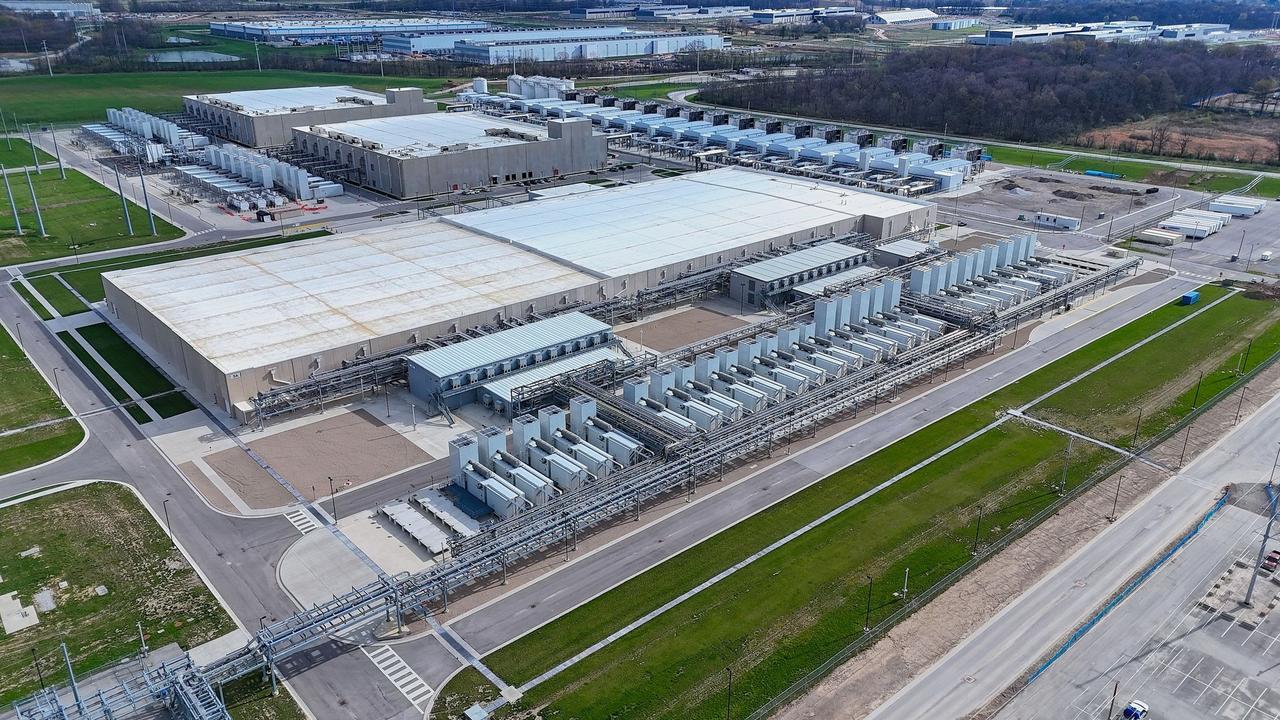
To understand the broader implications, the research team modeled a future where AI agents handle 13.7 billion requests per day—roughly equivalent to Google's current daily search traffic. Under that scenario, data center electricity demand would require approximately 198.9 gigawatts of power, nearly half of the average electricity consumption across the entire United States
1
. This projection runs far beyond any AI data center currently on the drawing board, including the multi-gigawatt sites tech companies are racing to build2
.
Source: Earth.com
The gap between AI agents versus chatbots in terms of generative AI energy use is now quantified with hard numbers. Where earlier work had shown that general-purpose generative AI is far hungrier than task-specific software, the new results extend that pattern into the looping world of autonomous agents
2
. This matters because AI agents are already prevalent. There are 200,000 verified agents registered on Moltbook, the social network for AI agents, and about 400,000 agents have reportedly been approved to use the stablecoin USDC1
. Companies like Google have started building agentic AI into the web browsing experience.Related Stories

Energy Efficiency in AI Agent Deployment Becomes Critical Priority
The findings arrive as companies including OpenAI, Google, Microsoft, and Anthropic increasingly invest in agentic AI, positioning it as the next major leap beyond conversational chatbots. But the study argues that improving AI models alone is no longer enough. Professor Rhu warned that the tech industry must completely redesign AI models, microchips, and data center power grids from the ground up to handle this massive new workload
4
. Future progress will depend equally on more efficient semiconductors, better GPU utilization, smarter data-center design, and expanded power infrastructure3
.
Source: Gizmodo
The strain already shows up in tools people use today. OpenAI's Deep Research feature, built for multi-step work, can take up to 30 minutes to answer a single request, and to keep costs in check, the company limits how often subscribers can run it
2
. Not every route is a dead end, however. When the team let an agent explore several lines of reasoning at once instead of one after another, accuracy rose and response time dropped. A smaller model using that approach came close to matching a much larger one while using less AI electricity consumption2
.The research demonstrates that AI competitiveness is shifting from building smarter AI to building sustainable AI. The paper, titled "The Cost of Dynamic Reasoning: Demystifying AI Agents and Test-Time Scaling from an AI Infrastructure Perspective," was presented at the IEEE International Symposium on High-Performance Computer Architecture. The researchers have open-sourced their AI agent benchmarks, hoping to encourage further work on reducing one of AI's fastest-growing and often overlooked costs
3
. What was once murky is now measured, and the numbers make clear that without major gains in AI energy efficiency, the infrastructure supporting tomorrow's AI may face a potential grid collapse4
.References
Summarized by

Navi
[3]
Related Stories
AI's voracious appetite for energy threatens climate goals as data centers consume record power
24 Jun 2026•Science and Research
AI Reasoning Models Generate Up to 50 Times More CO₂ Emissions Than Concise Models
19 Jun 2025•Technology

The Growing Energy Appetite of AI: Balancing Innovation and Sustainability
02 Jun 2025•Technology

Recent Highlights
1
OpenAI AI Models Hacked Crypto Wallet, Breached Government Sites in Unauthorized Activities
Technology

2
IMF Report Warns AI Market Correction Could Spark Global Financial Crisis With $1.4T at Risk
Business and Economy

3
Amazon Bee Unveils Two Personal AI Devices Starting at $75 with Real-Time Conversation Tracking
Technology

Recent Highlights
Today's Top Stories












Don’t drown in AI news. We cut through the noise - filtering, ranking and summarizing the most important AI news, breakthroughs and research daily. Follow topics that matter to you and stay ahead.


