UC Berkeley & NVIDIA Reveal Agentic Robotics: AI Agents Write Their Own Robot Code


3 Sources
[1]
Are We Ready for Robots That Code Their Own Skills?
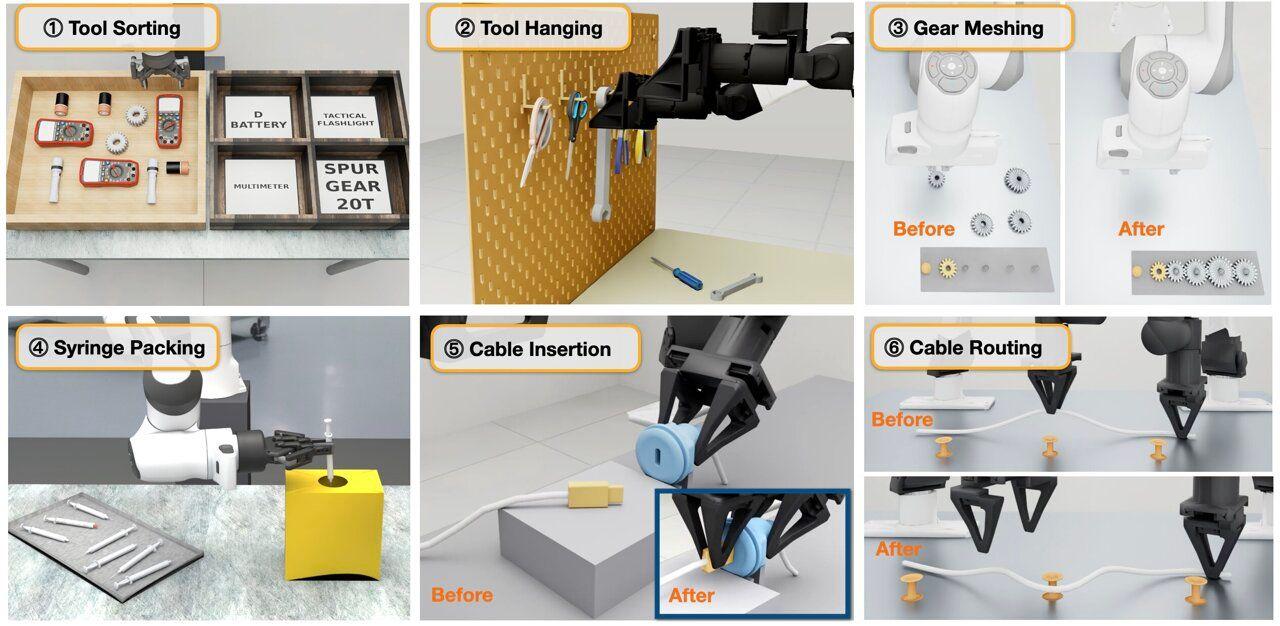
A 3D rendering shows an agentic robotic arm depositing used hypodermic needles into a disposal box. The simulated task required that agents successfully navigate variable sub challenges, such as differently shaped disposal boxes. Robotics companies are investing heavily in the belief that data
[2]
New model helps robots learn tasks faster with less human programming
Industrial trials increased parcel-sorting capacity by over 15,000 packages annually per robot. UC Berkeley researchers have developed an AI-driven approach that could significantly accelerate how robots are programmed and trained for real-world tasks. Called agentic robotics, the approach uses
[3]
AI agents test and improve robot code in virtual worlds before deployment
In recent months, artificial intelligence agents that can reason, plan and use external tools to accomplish multistep tasks have already reshaped computer coding, online shopping, dinner reservations and cyberattacks. Robotics might be next. Ken Goldberg, a UC Berkeley roboticist and professor of
Share
Copy Link
UC Berkeley and NVIDIA announced agentic robotics at the 2025 Conference on Robot Learning. The approach uses AI agents to autonomously generate, test, and refine robot-control programs in simulated environments before deployment. Industrial trials increased parcel-sorting capacity by over 15,000 packages annually per robot.
UC Berkeley and NVIDIA Pioneer New Approach to Robot Programming
UC Berkeley and NVIDIA jointly announced agentic robotics at the 2025 Conference on Robot Learning this week, introducing a fundamentally different approach to robot programming
1
. Unlike traditional methods that rely on massive training datasets, agentic robotics uses teams of AI agents to autonomously write, test, and improve robot code in simulated environments before physical deployment2
. Ken Goldberg, UC Berkeley professor of robotics and co-founder of industrial robotics company Ambi Robotics, developed the approach alongside Spencer Huang, Director of Product for Robotics at NVIDIA3
.The breakthrough addresses two critical obstacles that have plagued robotics development: the enormous data requirements for training robots and the intensive engineering effort needed to manually program robot behaviors
3
. "Agentic robotics is a fundamental shift in how robots are controlled," Goldberg explained. "Instead of collecting massive amounts of data and hand-tuning every behavior, teams of agents can quickly generate, test and refine robot programs that allow human engineers to interpret how the programs work for fine-tuning and verification"3
.How AI Agents Write and Test Robot Code
The agentic robotics approach uses a framework called Graph-as-Policy, which breaks down complex robotic tasks into smaller, reusable skills
2
. These individual building blocks include identifying objects, planning grasps, and moving robotic grippers without colliding with surrounding objects1
. AI agents then connect these skills to construct complete robot-control programs using natural language instructions1
.
Source: Tech Xplore
Using NVIDIA's Isaac simulation framework, the AI agents test programs under different conditions, identify problems, and repeatedly modify code to improve performance before engineers deploy the resulting programs on physical machines
2
. This allows robots that code their own skills to undergo multiple rounds of virtual testing in simulated environments, dramatically reducing the trial-and-error needed with physical hardware1
.In one demonstration, researchers gave OpenAI's Astra model access to their simulation interface and a short video of a robot using a sponge to wipe ink from a metal bar
3
. In less than an hour, the AI-driven robotic programming system created and fine-tuned a physics simulation that accurately reproduced the task, including realistic sponge deformations3
. The AI then generated a robot-control program, tested it repeatedly in simulation, and when researchers ran the code on a real robot, it worked3
.Industrial Trials Show Measurable Performance Gains
The technology has already been tested in industrial logistics with significant results
2
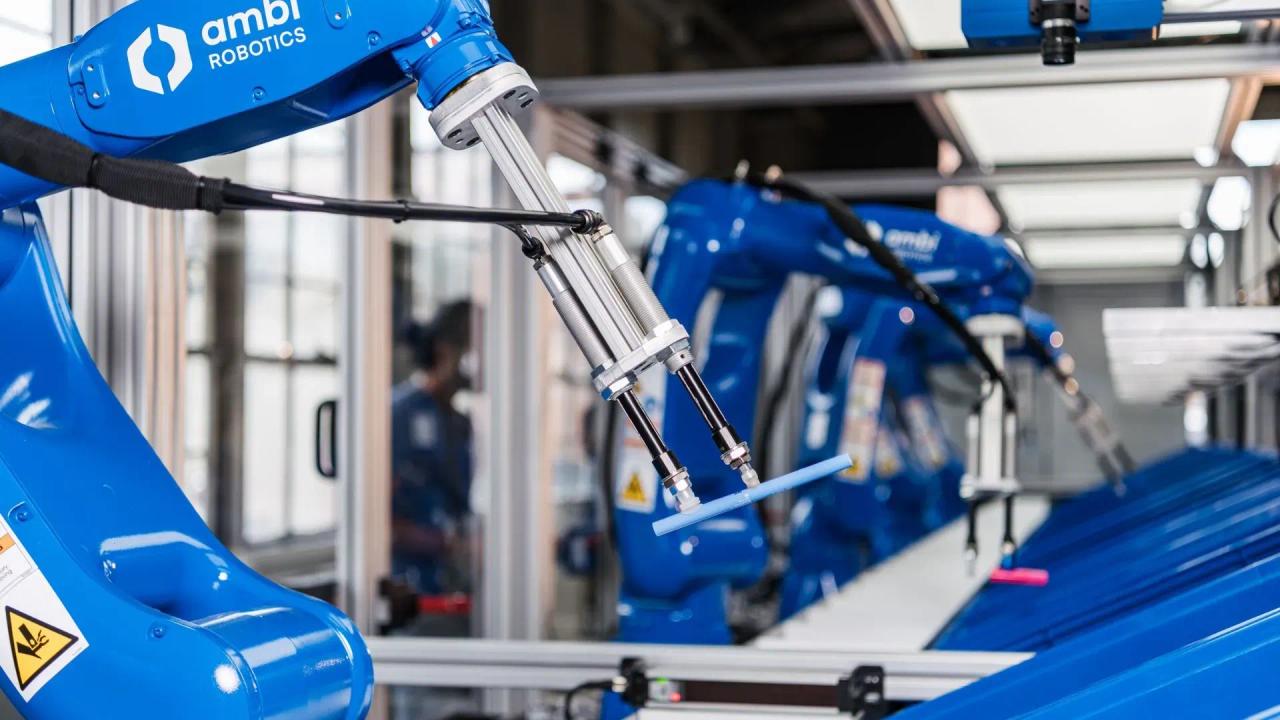
. A warehouse robotics company applied the methods to parcel sorting, analyzing production data and testing updates to robot behavior2
. The trials increased sorting capacity by more than 15,000 packages annually per robot2
. The company has since deployed the improvements across 30 percent of its U.S. fleet2
.
Source: Interesting Engineering
Goldberg, who works with industrial partners including Siemens and Bosch, has experienced firsthand the limitations of imitation learning in industrial applications
1
. "The imitation learning paradigm has hit a plateau," he explained. "It's promising for things like home robots, where speed and reliability are less of an issue. But for industrial applications, it's very hard to get the reliability that industry requires"1
. When robots trained on data encounter unexpected situations, adding more demonstrations doesn't always solve the problem1
.Related Stories

Addressing the 100,000-Year Data Gap
The reason language models like ChatGPT achieved breakthrough performance is that they trained on data at the scale of the Internet
1
. No dataset for robotics approaches that scale, and while robotics companies desperately attempt to generate needed data, it remains a slow, expensive process1
. Last year, Goldberg warned that a "100,000-year data gap" would prevent robots from gaining real-world skills as quickly as AI agents gained language fluency3
."I was discouraged by the daunting amount of data that we would need to collect," Goldberg said. "Agentic robotics provides a missing link between model-based and model-free methods. It's a way forward that doesn't require any additional data"
3
. The approach transforms robot programming from a data problem into a coding problem, directly leveraging the scale and capabilities of large language models1
.Open-Source Tools and Industry Benchmarks Released
The researchers are releasing open-source code built around NVIDIA's Isaac simulation framework, alongside an industrial benchmark for evaluating robot performance across different tasks
2
. This allows other roboticists to experiment with the agentic robotics approach and helps developers rapidly test and improve robot code in virtual worlds before deployment3
."Robots are advancing quickly, but developing them for real-world environments remains slow, data-intensive and difficult to scale," said Spencer Huang. "Working with UC Berkeley, NVIDIA is helping advance a new approach combining agentic AI, simulation and open industrial task-focused benchmarks to help developers rapidly test and improve robot behavior before deployment"
3
.The immediate potential lies in making robot programming, testing, and improvement faster and more adaptable, particularly in structured industrial settings where repetitive operations offer opportunities to test and refine robot behavior at scale
2
. The approach helps robots learn tasks faster with less human programming while maintaining the transparency and reliability that industrial applications demand1
.References
Summarized by

Navi
[2]
Related Stories
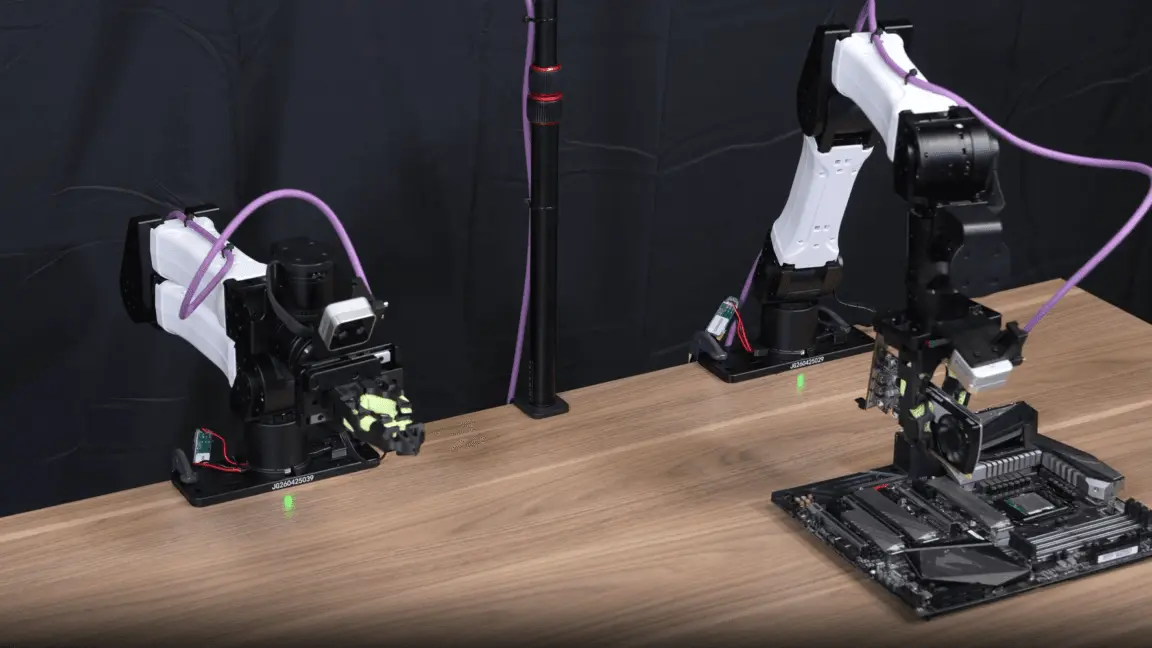
Nvidia ENPIRE lets AI coding agents train robots to install GPUs and master precision tasks
17 Jun 2026•Technology
MIT Develops Novel AI Technique for Training General-Purpose Robots
29 Oct 2024•Science and Research

Google DeepMind's Gemini Robotics 1.5: A Leap Towards 'Thinking' AI-Powered Robots
25 Sept 2025•Technology
Recent Highlights



Recent Highlights
Today's Top Stories








Don’t drown in AI news. We cut through the noise - filtering, ranking and summarizing the most important AI news, breakthroughs and research daily. Follow topics that matter to you and stay ahead.


