AI Data Centers Drive US Power Use to Record Highs as Grid Struggles to Keep Pace


4 Sources
[1]
Record US power use as AI surges, and more energy stories
For more on the World Economic Forum's work in the energy space, visit the Centre for Energy and Materials. Artificial intelligence (AI) may be reshaping electricity systems faster than many grids can adapt. But while it is driving up power demand, the technology is also offering tools that could
[2]
Net zero planning needs an AI update. COP31 is the moment
At COP31 in Antalya this November, we have the opportunity to put down on paper a shared plan for long-term climate scenarios - whether demand or efficiency eventually wins out in the end. Artificial intelligence was not in the room when the world designed its net zero targets. At COP31 in Antalya
[3]
Can AI solve the energy problem it created?
We have all the electricity we need to power AI's data center demand -- and AI can unlock it for next to nothing. It costs about $5 and takes roughly 15 minutes to train an AI model that can help determine where America's next data centers should be built. That's not a rounding error. The world
[4]
How AI and power systems are rewriting each other's rules
The task now is to build for a world in which intelligence is infrastructure - and in which decisions about AI procurement, grid expansion and energy storage are no longer made in separate rooms. What happens when two critical infrastructures - AI on the one hand, and our electricity
Share
Copy Link
US electricity consumption is breaking records as AI data centers surge, with power use expected to reach 4,391 billion kWh by 2027. While AI-focused facilities increased energy consumption by 50% in 2025, the technology also offers solutions through grid optimization and capacity mining that could unlock unused power resources.
AI and Energy Demand Reach Critical Juncture
The relationship between AI and energy has reached a pivotal moment as artificial intelligence reshapes electricity systems faster than many grids can adapt. US power consumption is expected to break records again in 2026 and 2027, after hitting a second consecutive annual high in 2025, according to the US Energy Information Administration
1
. Total electricity use will rise from 4,195 billion kilowatt-hours (kWh) in 2025 to 4,268 billion kWh in 2026 and 4,391 billion kWh in 2027, driven largely by AI data centers and broader electrification1
.AI-driven data centers now consume 67.7GW of electricity worldwide, representing approximately 1.9% of global generation, marking a 17% increase over the previous year
1
. AI-focused facilities specifically increased their electricity consumption by 50% in 20251
. The International Data Center Authority warns that current grid capacity constraints are only the beginning, as AI fundamentally alters the trajectory of digital infrastructure power consumption1
.The AI-Energy Paradox Emerges
A complex dynamic is unfolding that researchers call the AI-energy paradox. While AI increases electricity demand, it simultaneously offers tools to make global energy systems more efficient and resilient
1
. Google reports that a median Gemini text prompt now uses about 0.24 watt-hours, after a 33-fold reduction in one year2
. Power consumption per AI task is declining by at least an order of magnitude annually, an unprecedented rate in energy history2
.Yet this extraordinary efficiency improvement is racing against rising total demand. The IEA's central projection sees global data center demand roughly doubling from 485 terawatt-hours (TWh) in 2025 to 950 TWh by 2030, representing about 3% of global electricity
2
. Without new grid construction, AI data centers could jump from consuming 6% of US power in 2025 to 12% by 20301
. Bloomberg projects that data centers will consume up to one-fifth of all power in the US by 2035, reaching up to 200 gigawatts3
.Capacity Mining Offers Immediate Solutions
Before building new power plants, experts suggest examining how much grid capacity already sits unused. It costs about $5 and takes roughly 15 minutes to train an AI model that can help determine where America's next data centers should be built
3
. Power systems are sized for the handful of hours a year when demand peaks, and the rest of the time, that capacity sits idle. Across most hours, we use only about half of existing grid capacity3
.This capacity mining approach applies AI models to match data center demand against existing grid headroom, citing locations and operating profiles where available power and operational flexibility already exist
3
. At one large investor-owned utility, calculations show that large loads, including data centers, can generate roughly $1 million per megawatt per year in new revenue, about $1 billion per gigawatt3
. Structured correctly, that revenue offsets fixed grid costs every other customer currently shoulders alone.Power Systems and AI Infrastructure Converge
AI and electricity infrastructure are no longer separate stories. AI is entering the operating core of power systems, while power systems are becoming a binding condition for AI deployment
4
. Industrial facilities that were once passive users of electricity are becoming autonomous energy managers through companies like Envision, continuously balancing on-site solar, battery storage and grid interaction without compromising production4
.Battery storage solutions from companies like Hithium are addressing the gap between AI's rapid scaling and infrastructure buildout timelines. Their approach pairs long-duration storage at the energy source with lithium-sodium systems at the load side, providing grid-scale reliability and millisecond response on deployment timelines of one to two years rather than five to ten
4
. Dr. Nazar Yi, Hithium Board Member and Vice President, notes that fast-response storage combined with long-duration flexibility provides the reliability that AI data center operators require4
.Related Stories
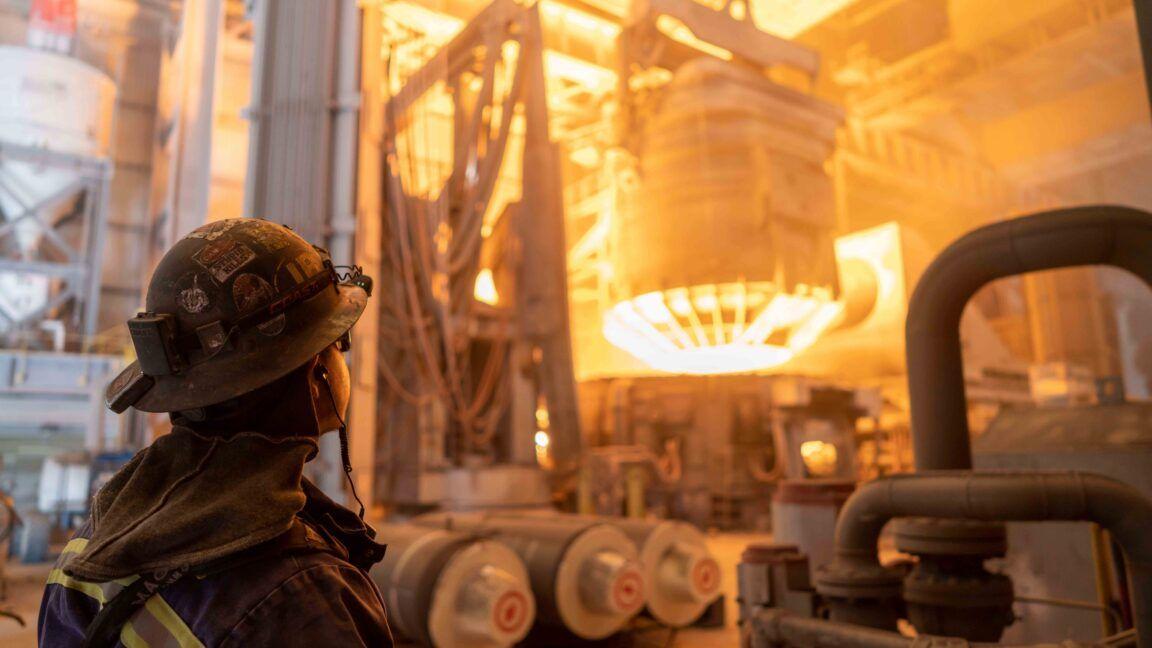
Net Zero Planning Requires AI Update at COP31
Artificial intelligence was not in the room when the world designed its net zero targets, but at COP31 in Antalya this November, that needs to change
2
. The incoming COP31 Presidency made electrification the flagship of its Action Agenda, proposing a collective goal to raise electricity's share of final energy demand from just over 20% today to 35% by 20352
.The 2015 Paris Agreement invited countries to prepare long-term low-emission development strategies, and eighty have been submitted. However, the framework largely predates generative AI, and data centers are not consistently represented as a distinct end-use sector
2
. The first structured attempt to model data center demand to 2050 within established climate-scenario frameworks finds a range of 1,800 to 5,000 TWh, a nearly threefold spread2
.Grid Resilience Through AI's Transformative Role in Energy
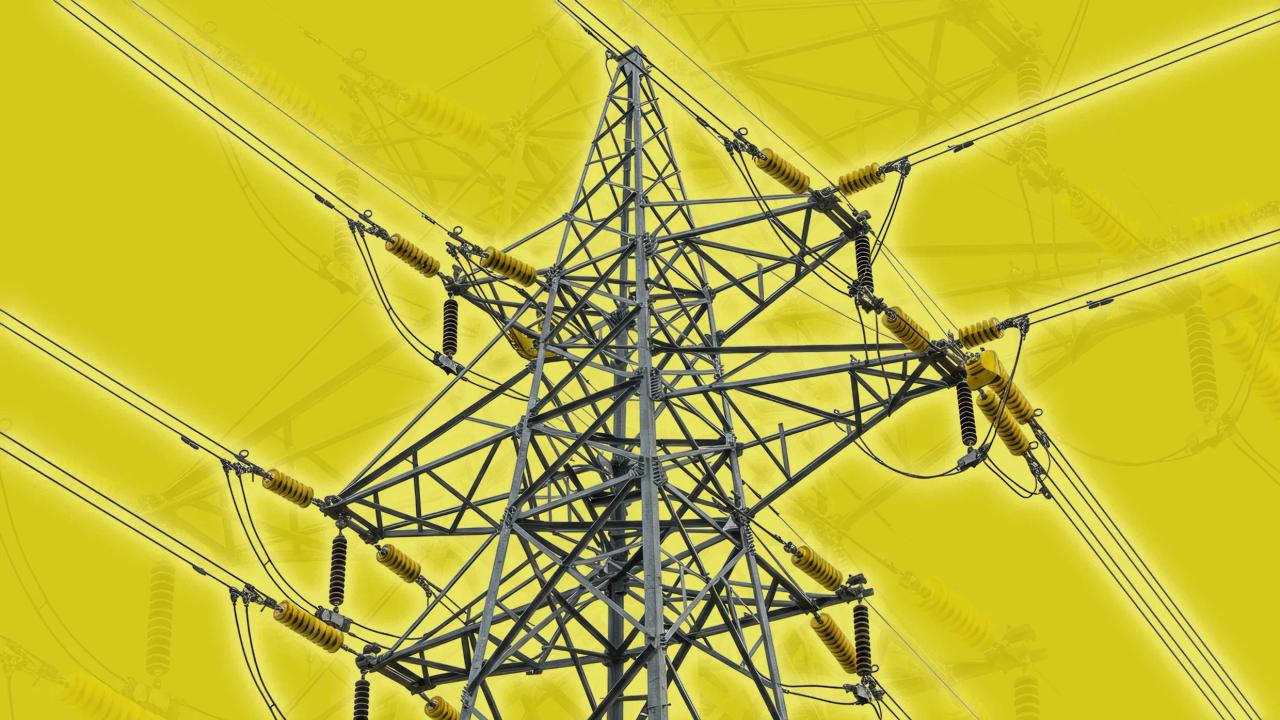
PJM Interconnection, the biggest US grid operator serving a fifth of the population, is preparing proposals to close a widening gap between available electricity supply and demand, led largely by AI data centers
1
. Similar pressures are being felt worldwide as the data center industry expands faster than many electricity networks can support1
.
Source: Fast Company
AI's transformative role in energy extends beyond demand to becoming the means by which power systems see trouble, absorb it and recover. As grids carry more variable renewables and face extreme weather and cyber risks, grid resilience is becoming less about reserve capacity alone and more about speed of response
4
. Energy optimization through AI enables systems that can sense, respond and adapt in real-time, fundamentally changing how transmission networks operate.The question facing policymakers and industry leaders is whether AI's efficiency gains will outpace adoption growth, or whether Jevons' paradox will prevail. Long reasoning queries already consume roughly 13 times more energy than a standard prompt
2
. Every siting approval, grid connection and power-purchase agreement embeds a view of AI's long-term electricity appetite, shaping infrastructure decisions that will last decades. Clean energy growth continues despite headwinds, suggesting that demand from companies, states and consumers, alongside falling technology costs, is supporting investment in renewables and clean energy infrastructure1
.References
Summarized by

Navi
[3]
Related Stories
AI's Energy Paradox: How Data Centers Are Reshaping Global Power Demand and Climate Goals
18 Nov 2025•Technology

Power Infrastructure Emerges as the Biggest Bottleneck Choking AI Data Centers Growth
20 Oct 2026•Business and Economy
AI's Energy Challenge: Balancing Innovation and Sustainability in the Race to Net Zero
13 Jan 2025•Technology

Recent Highlights



Recent Highlights
Today's Top Stories







Don’t drown in AI news. We cut through the noise - filtering, ranking and summarizing the most important AI news, breakthroughs and research daily. Follow topics that matter to you and stay ahead.


