AI's Energy Paradox: How Data Centers Are Reshaping Global Power Demand and Climate Goals


5 Sources
[1]
How artificial intelligence can help achieve a clean energy future
Caption: Researchers at MIT and elsewhere are investigating how AI can be harnessed to support the clean energy transition. There is growing attention on the links between artificial intelligence and increased energy demands. But while the power-hungry data centers being built to support AI could
[2]
The energy war of the 21st century isn't about oil anymore
There was a time when the world's biggest battles over energy were fought in oil markets, through pipelines, refineries, and OPEC negotiations. Today, those battles have moved to a very different arena. Data centres. The vast, windowless warehouses that dot the edges of cities have become the
[3]
How AI can accelerate the energy transition, rather than compete with it
Starting with COP30, collaboration is essential to ensure that AI development accelerates the broader energy transition. The COP30 climate summit in Belém, Brazil is happening at a pivotal moment for the global clean energy transition. But the event has also attracted noticeably limited
[4]
Inventing an electrified future at the intersection of hot and cool
The infrastructure we all rely on is going through a fundamental shift, and electricity demand is at the core. Electrification -- the global trend of more energy systems relying on electricity -- is accelerating. It started with the world moving away from fossil fuels toward cleaner energy, but the
[5]

A.I., Data Centers and Climate Impact: How Leaders Are Rewriting the Energy Equation
The environmental footprint of A.I. and data centers is under increasing scrutiny. Concerns over rising electricity demand, water use and the carbon cost of compute now dominate headlines and policy discussions. Yet a deeper, data-driven look reveals a far more nuanced -- and more promising --
Share
Copy Link
As AI drives unprecedented electricity demand through data center expansion, the technology sector is simultaneously becoming a major force in clean energy investment, creating both challenges and opportunities for the global energy transition.
The New Energy War: Data Centers Eclipse Oil
The global energy landscape is undergoing a fundamental transformation as artificial intelligence reshapes power demand patterns worldwide. According to the International Energy Agency's November 2025 World Energy Outlook, the world will spend $580 billion on data centers in 2025—$40 billion more than total global spending on new oil supplies
2
. This unprecedented shift marks the end of oil's dominance in energy investment and signals the beginning of what experts are calling the "energy war of the 21st century."
Source: Observer
The scale of this transformation is staggering. In the United States alone, average data center rack power has jumped from 8 kilowatts to 1-3 megawatts—more than a 100-fold increase
4
. Data centers consumed 4.4% of total U.S. electricity supply in 2023, with projections reaching as high as 12% by 2028.AI's Exponential Power Appetite
Electricity consumption from AI servers alone will increase fivefold by 2030, contributing to a doubling of total data center electricity demand worldwide
2
. This growth is highly concentrated, with the United States, China, and Europe accounting for 82% of global data center capacity today and capturing more than 85% of all new additions this decade.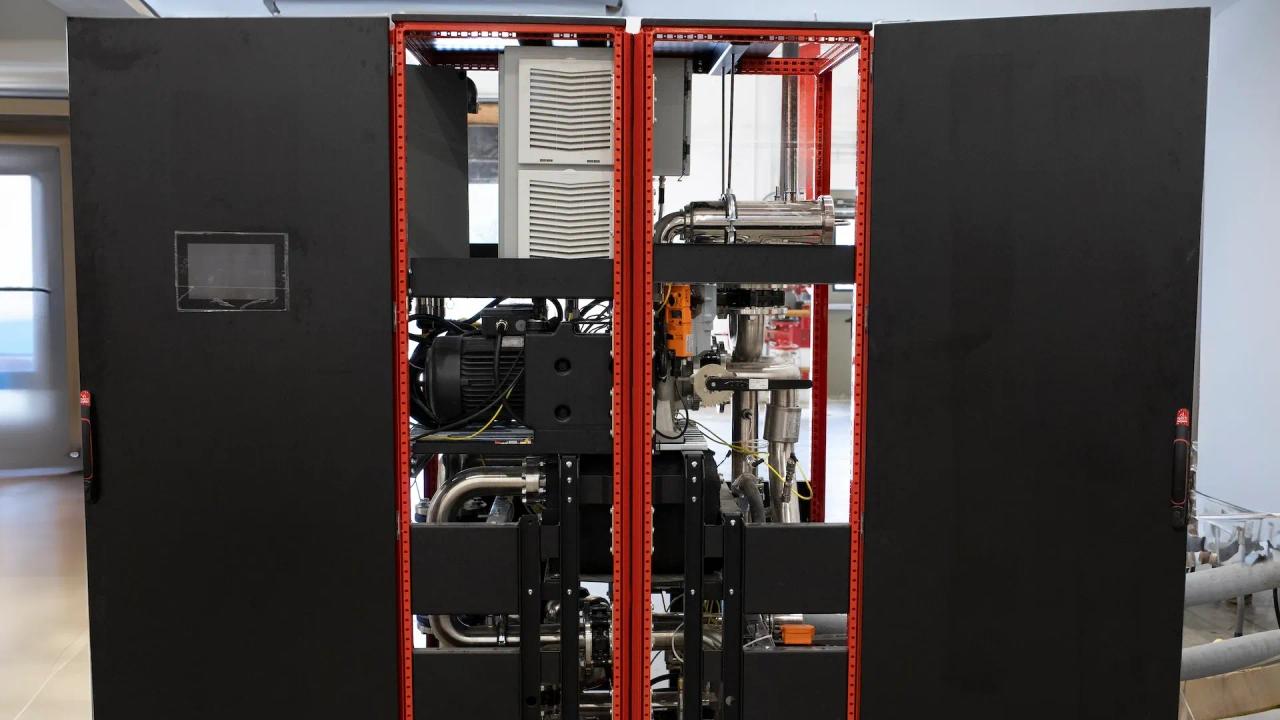
Source: Fast Company
The infrastructure challenges are becoming apparent across major markets. In the United States, most developers face delays of one to three years before connecting to the grid, while Northern Virginia—the world's largest data center hub—sees wait times stretching to seven years
2
. Dublin has stopped accepting new data center connections entirely until 2028, highlighting the strain on existing grid infrastructure.The Clean Energy Paradox
While AI's energy demands pose significant challenges, the technology is simultaneously driving unprecedented investment in clean energy infrastructure. Tech giants including Microsoft, Amazon, and Google are signing long-term clean-power contracts, investing directly in generation projects, and financing early-stage nuclear and geothermal ventures
3
.This creates what researchers call AI's "energy paradox"—while the technology accelerates clean energy deployment and system optimization, its rapidly rising electricity needs pose new challenges for grids and long-term planning
3
. Data center investments are projected to reach $1.1 trillion by 2029, alongside a global push to scale renewables and upgrade grid infrastructure.Grid Optimization and Smart Management
AI is proving instrumental in managing the complexity of modern electrical grids. As MIT's Anuradha Annaswamy explains, "you need to introduce a whole information infrastructure to supplement and complement the physical infrastructure"
1
. AI algorithms help forecast which plants should run while ensuring proper frequency, voltage, and power characteristics for grid operation.
Source: MIT
The technology enables new approaches to supply and demand management. Electric vehicle batteries can serve as grid power sources when needed, while smart thermostats and flexible data center operations can reduce demand during peak periods
1
. AI also enables predictive maintenance, alerting operators to potential equipment failures before they cause costly downtime or blackouts.Related Stories


Global Climate Implications
The relationship between AI development and climate goals remains complex. Data centers could represent around 3% of global electricity demand by 2030, raising concerns about supporting this demand while meeting net-zero commitments
3
. However, analysis by the International Data Center Authority shows that nations with robust digital infrastructure tend to generate more economic output per ton of emissions.The United States, despite hosting the world's densest concentration of data centers, operates at roughly half the global average of 357 tons of greenhouse gas per million dollars of economic output
5
. Several European Union nations with strong digital infrastructure perform even better, suggesting that AI-driven economic efficiency can coexist with climate goals.The Nuclear Renaissance
The nuclear revival unfolding within the tech sector represents one of the most significant developments in energy policy. Tech companies are signing long-term electricity deals with nuclear plants, with some power purchase agreements explicitly referencing future capacity from small modular reactors designed to serve data center loads
2
.Currently, U.S. data centers derive more than 40% of their electricity from natural gas, compared to roughly 25% from renewables, 20% from nuclear, and 15% from coal
2
. By 2035, natural gas is projected to supply over half of the tripled data center electricity consumption unless renewable and grid expansion dramatically accelerates.References
Summarized by

Navi
[2]
Related Stories
Recent Highlights
1
Microsoft and Nvidia Launch Surface Laptop Ultra: A $2,599 AI-Ready PC With RTX Spark Chip
Technology

2
Google Unveils Gemini 4 Argon AI Model, Restricts Access to Trusted Cyber Defenders
Technology

3
Trump Consulted Grok AI Before Ordering Venezuela Invasion and Capture of Nicolás Maduro
Policy and Regulation

Recent Highlights
Today's Top Stories






Don’t drown in AI news. We cut through the noise - filtering, ranking and summarizing the most important AI news, breakthroughs and research daily. Follow topics that matter to you and stay ahead.


