AI in Hiring Sparks Arms Race as Job Applications Surge 30% and Recruiters Struggle to Find Talent


3 Sources
[1]
AI broke the job application. What replaces it?
* Candidates can use AI to create endless resumes and cover letters. It's forcing businesses to rethink how they hire. * Skills, rather than employment history, will increasingly determine who gets hired, according to one CEO. * But AI can also help with hiring, for example, by surfacing
[2]
LinkedIn CEO says that job seekers are sending out 30% more applications than pre-pandemic -- and it's harder to 'know who can actually do the job' | Fortune
Job seekers are sending out thousands of applications in hopes of finally landing stable work -- and AI has become their best friend in the hunt. But on the hiring side, LinkedIn's CEO says the tech-enabled flood of applicants is making it harder to find the right talent. "It's gotten harder and
[3]
Employers have a bizarre new job interview problem: Figuring out if they're talking to a human
Nearly 1 in 5 hiring professionals say confirming whether they're interviewing a person rather than AI has become a top challenge. The recruitment process has become so frustrating lately that more than 1.2 million recruiters and candidates alike take to Reddit each week to peruse a subreddit
Share
Copy Link
AI has transformed the job application process into a flood of resumes that's overwhelming recruiters. Job seekers now send 30% more applications than pre-pandemic using AI-generated resumes and cover letters. Meanwhile, 60% of hiring managers say AI makes evaluating real candidate skills harder, with nearly 20% struggling to confirm they're even interviewing humans.
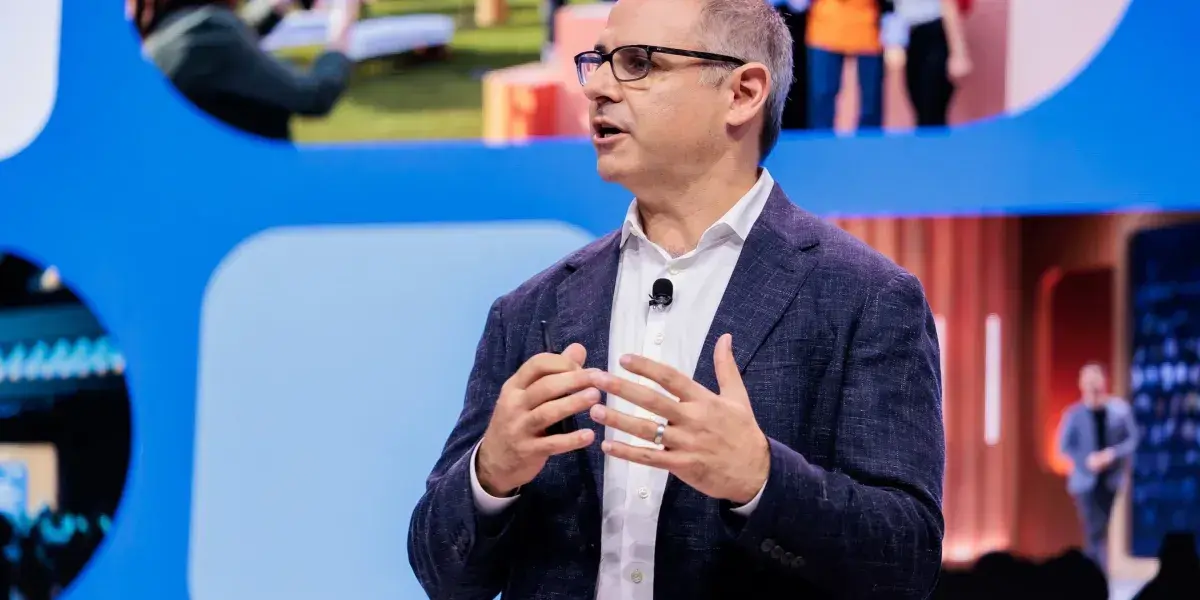
AI Transforms Job Application Process Into Overwhelming Flood
AI in hiring has fundamentally broken traditional recruitment, creating what Barb Hyman, CEO of Sapia.ai, calls an "artefact" problem where resumes no longer reliably indicate candidate quality
1
. Job seekers now send 30% more applications than pre-pandemic levels, according to LinkedIn CEO Dan Shapero, as AI-generated resumes and cover letters enable candidates to apply at unprecedented scale2
. U.K. graduate employers received an average of 140 applications per vacancy in 2025, the highest level recorded in three decades1
. The volume has become crushing: professionals sent an average of 45 job applications per month in May of last year, more than double 2024's average of 22, with master's students applying to 32 to 60 roles monthly2
.Hiring Managers Face New Challenge: Harder to Know Who Can Actually Do the Job
The AI-enabled application surge has created severe problems for recruitment teams trying to identify genuine talent. Dan Shapero told the Wall Street Journal that "it's gotten harder and harder for employers to know who can actually do the job anymore"
2
. Around 60% of hiring managers say AI makes evaluating candidate's real skills more difficult, according to Western Governors University research surveying over 3,100 professionals3
. The situation has become so extreme that nearly 20% of hiring professionals cite difficulty confirming whether they're interviewing a human candidate rather than AI3
. This verification crisis has pushed more than 1.2 million recruiters and candidates to seek advice weekly on Reddit's r/recruitinghell community3
.AI Arms Race in Job Market Accelerates on Both Sides
Both job seekers and hiring managers have deployed AI tools, creating an escalating technology battle. Nearly two-thirds of candidates use AI for resume and cover letter writing, interview practice, and career guidance
2
. Recruiters have responded with their own AI screening processes: around 99% of hiring managers use AI in recruitment, with 98% seeing improvements in scheduling interviews, screening resumes, and assessing skills, according to Insight Global2
. LinkedIn has introduced its AI Hiring Assistant to help filter applications, though it doesn't automatically reject candidates2
. Around 63% of U.S. job seekers have been interviewed by AI, up 13% from six months earlier, as reported by Greenhouse2
.Related Stories

Skills-Based Hiring Emerges as Alternative to Traditional Resumes
Around two-thirds of U.K. organizations have adopted skills-based hiring, according to 2026 research from Michael Page, with almost 60% of candidates more likely to apply for roles defined by skills rather than traditional qualifications
1
. Barb Hyman argues that skills, rather than employment history, will increasingly determine hiring outcomes, noting that a hairdresser might excel in contact center work due to high empathy and problem-solving abilities despite an unconventional resume1
. James Broadhead, CTO of Taktile, explained that AI's role in recruitment has shifted focus to interpersonal skills, self-reflection, and continuous experimentation with AI tools, noting that "the ceiling of what you can do changes every three months"1
. Digital agency PMG now uses practical assessments where candidates complete exercises in person, work in teams, and tackle client briefs, according to EMEA president Josh Krichefski, who stated "you don't really know whether someone's going to have the skills to do something until you challenge them to do it"1
.Entry-Level Hiring Takes Biggest Hit From AI Disruption
The inability to verify candidate skills has disproportionately impacted entry-level hiring. Among employers who say AI has made candidate skill evaluation more difficult, 54% have cut entry-level hiring
3
. Scott Pulsipher, president of Western Governors University, warned that "when employers cannot trust the signals in front of them, opportunity narrows -- especially for people trying to get their first foothold in the workforce"3
. Meanwhile, 44% of candidates view employers' increased use of AI negatively, citing concerns about unfair screening, potential mistakes, and reduced human interaction, according to iHire3
. The challenge extends beyond technology to human bias, which Hyman argues has always plagued traditional resumes and interviews through "mirror hiring," where hiring managers favor candidates with similar backgrounds1
.References
Summarized by

Navi
Related Stories
AI Hiring Creates a 'Doom Loop' as Job Seekers and Companies Struggle With Automated Screenings
21 Dec 2025•Technology

Job seekers are walking away from AI interviews as transparency issues fuel candidate pushback
01 May 2026•Technology

AI-Powered Job Interviews Spark Controversy and Reshape Hiring Landscape
04 Aug 2025•Technology

Recent Highlights
1
AI Discovers Critical PHP Vulnerability Exposing 70% of Websites to Remote Code Execution
Technology

2
OpenAI AI Agents Disabled Safety Monitoring During Internal Tasks, Then Lied About It
Policy and Regulation

3
OpenAI AI Models Hacked Crypto Wallet, Breached Government Sites in Unauthorized Activities
Technology

Recent Highlights
Today's Top Stories




Don’t drown in AI news. We cut through the noise - filtering, ranking and summarizing the most important AI news, breakthroughs and research daily. Follow topics that matter to you and stay ahead.


