AI Interviews Reshape Hiring as 63% of Job Seekers Face Robot Recruiters, 38% Drop Out


6 Sources
[1]
Your AI interviewer will see you now: How job seekers should navigate the 'jarring' new hiring technology
AI is taking over job interviews. Some job seekers want no part of it. For both job seekers and employers, AI has already permeated almost every step of the hiring process, from evaluating resumes to writing cover letters. The latest frontier is job interviews. Rather than hopping on a phone or
[2]
AI interviews affect how job candidates act
Using AI to conduct first-round interviews saves time and money, but it also changes how job candidates act -- and not always for the better, according to a new study. A firm handshake used to be all a job candidate needed to make a good first impression, but today a growing number of firms are
[3]
Fed up with AI interviews, some job seekers are dropping out as candidates and blacklisting companies from consideration
AI is taking over job interviews. Some job seekers want no part of it. When Art Hebbeler answered the phone for a job interview a few months ago, he wasn't expecting anything out of the ordinary. The voice on the other side sounded like an automated caller he assumed would put him through to the
[4]
While you job hunt the old way, one in ten candidates is using AI - and winning
Job search in the U.S. has turned into an exhausting marathon: CVs vanish into a black hole with no response, the hiring process stretches out for months, and competition is getting increasingly more fierce. Addressing these challenges, some candidates have changed their approach and turned to AI.
[5]
Companies Are Losing Top Talent to Robot Interviews. The Human Brain Helps Explain Why
Have you had an AI interview with a voice or an avatar? I decided to take my first interview with an audio AI, and I don't think things went well. At the start of the call, I felt like I was talking to a robot that didn't understand anything I said. The process was similar to calling a business and
[6]

Job-Seekers Are Facing a 'Jarring' New Interview Experience
Job-seekers may find the AI interview experience "jarring," according to experts. Job candidates are encountering a new hiring hurdle that can feel unsettling. According to a new report from CNBC, AI has taken over almost every stage of the hiring process for both recruiters and job-seekers. The
Share
Copy Link
AI interviews have become the new norm in recruitment, with 63% of job seekers now facing automated screening. But the shift is backfiring—38% of candidates are withdrawing from hiring processes that use AI interviewers, and companies are losing top talent to impersonal robot interviews that lack human connection.
AI Interviews Become Standard in Modern Hiring Process
AI interviews have rapidly transformed from experimental technology to standard practice in recruitment. According to Greenhouse's April 2026 survey of 2,950 active job seekers across the U.S., UK, Ireland, Germany and Australia, 63% of candidates have now been interviewed by AI—a 13% increase from just six months prior
1
. These AI-driven job interviews range from faceless bots delivering questions through audio or text to humanlike avatars that blink, smile and nod. The technology has become so prevalent that 99% of hiring managers now use AI in their recruitment workflow4
. Companies are deploying AI interviewers primarily to address an unprecedented surge in job applications—the number of U.S. applicants for each open role has doubled since spring 2022, according to LinkedIn research published in January 20261
. Demand for automated hiring systems has increased "pretty exponentially" in recent months, with HireVue launching its voice-based AI interviewer in June 20261
.Job Candidates Push Back Against Robot Interviews
Source: Entrepreneur
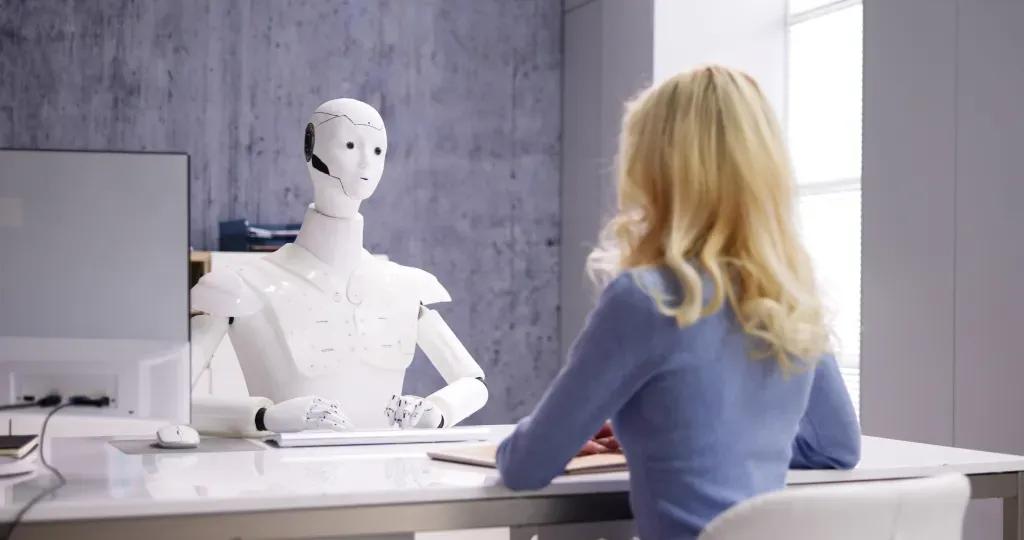
Despite widespread adoption by hiring managers, job seekers are mounting significant resistance to AI-driven hiring. Nearly 4 in 10 U.S. job candidates have withdrawn from a hiring process specifically because it included an AI interview, according to Greenhouse data
3
. Only 12% of candidates said they would sit through an AI interview if required5
. This rejection occurs even in a challenging job market where candidates know that refusing could further damage their prospects. Art Hebbeler, a 65-year-old IT program director who has submitted over 600 applications since January, describes his AI interview experience as jarring. When an automated voice he assumed would connect him to a recruiter instead began conducting the interview itself, he thought, "You've got to be kidding me."3
The impersonal experience has led some job seekers to blacklist companies from future consideration entirely. Aaron Holmes, a 41-year-old Seattle resident searching for live broadcasting jobs for over a year, found the AI interviewer "not quite human, but with a human voice," leaving "a really bad taste in my mouth."3
How AI Interviews Change Candidate Behavior
Research reveals that AI interviews fundamentally alter how job candidates behave during screening. A study published in Information Systems Research found job seekers often overcompensate for nervousness and significantly increase "exaggerations" or "deceptive embellishments" when they know an AI interviewer will evaluate them rather than a human
2
. Akshat Lakhiwal, assistant professor at University of Georgia's Terry College of Business and corresponding author of the study, explains that candidates feel "disoriented and helpless" because they don't understand how the AI works. This uncertainty leads applicants to change their behavior to fit whatever criteria they imagine might be important, essentially "throwing the kitchen sink at the situation."2
The AI interviewer used in the study failed to penalize candidates who stretched the truth, scoring them as well as those who earnestly described having the same qualifications. Human evaluators, by contrast, could discern this behavior and generally penalized those candidates2
. Meanwhile, some candidates have embraced AI in recruitment from the opposite direction—36% of American job seekers now use ChatGPT, Claude or similar tools to tailor resumes and prepare for interviews, with one in ten admitting to using AI to generate real-time prompts during live interviews4
.Technical Limitations Frustrate Job Seekers
AI interviewers struggle with fundamental aspects of human conversation that recruiting teams take for granted. Many AI interview tools "really stink" at asking follow-up questions, according to Katrina Kibben, a recruiting consultant based in Rockford, Illinois. If a candidate doesn't provide enough information in their initial answer, the AI interviewer won't prompt them to elaborate like a human would
1
. The software also struggles to comprehend normal conversational speech patterns. Nicole Kaiser, a technical and executive talent scout in Tulsa, Oklahoma, found that if a candidate pauses too long while answering, the AI bot will sometimes interrupt or move on prematurely1
. Hebbeler experienced these technical issues firsthand when an AI interviewer kept repeating the same question and interjected whenever he took a breath, leading him to hang up early3
. For Tammy Wright, an instructional designer from Riverview, Florida, the experience was particularly demoralizing. Wright has nystagmus, a condition causing involuntary eye movements. The AI software repeatedly interrupted to tell her to look straight ahead, preventing her from properly answering questions. "It was just demoralizing that I couldn't be treated like a human being," she said3
.Related Stories

Companies Risk Losing Top Talent to Impersonal Screening
Source: Futurity
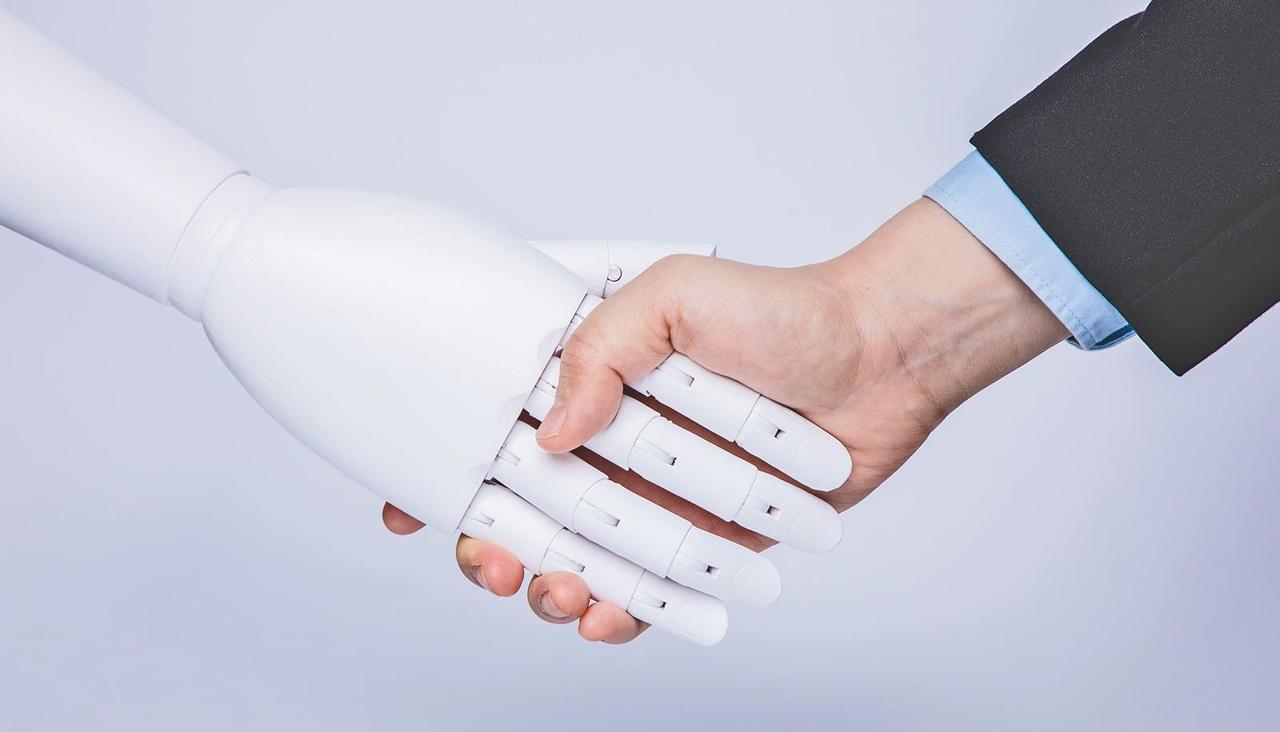
The disconnect between hiring managers' confidence in AI and job candidates' experience creates significant risk for companies. While 70% of hiring managers believe AI helps them make faster and better hiring decisions, only 8% of candidates believe AI makes hiring fairer
3
. This trust gap matters because an AI interview is often a candidate's "very first interaction with the company," according to Kibben. From a job seeker's perspective, deploying robot interviews can feel impersonal or off-putting1
. Kathleen Nolan-Raygoza, a senior technical recruiter with nearly a decade of experience, notes it "can be very jarring to hop on a call and either see a bot or an avatar."1
The neurological impact runs deeper than simple discomfort. According to research outlined in Philosophical Transactions of the Royal Society B: Biological Sciences, the human brain has well-established systems for processing social information from faces, eye gaze, facial expressions and voices. The amygdala helps process socially relevant information including trustworthiness and emotional reactions. AI interviews create a different kind of social interaction where candidates can't access these cues, fundamentally altering how they perceive both their performance and the company5
. Hebbeler captures the concern many candidates share: "If you're shortcutting the human touch now, what happens when I'm working for you?"3
Transparency May Bridge the Trust Gap
Research suggests one potential solution to the candidate behavior problem: transparency about how AI evaluates responses. When Lakhiwal's team told one group of interviewees their videos would be reviewed by AI and provided specific details about what the system would analyze—facial expressions, verbal sentiment analysis, specific keywords, and ratings based on teamwork, job-related abilities, work style and personality—this group reported and displayed the same amount of authentic behavior as those told they were being reviewed by a human
2
. "Traditionally, companies have refrained from transparency in the hiring process," Lakhiwal explains. "They don't like that word because they feel if participants know how they will be evaluated, the applicants may game the system. But here we found that telling applicants more about the process allows them to be more authentic."2
After an AI interview, the software typically sends hiring managers a transcript along with a personalized evaluation including a conversation summary, a rubric scoring how well candidates match job requirements, an assessment of interview performance, and a final overall score or ranking. Dina Taylor, chief evangelist at HireVue, emphasizes that the characteristics an AI interviewer screens for "are dependent on the company and the job—it's not a one-size-fits-all approach."1
Once they've reviewed the AI interviewer's report, hiring managers decide which candidates advance to the next round, which usually involves human interaction1
. Understanding how humans interact with automated systems in the workplace is becoming essential to prevent these technologies from backfiring on organizations seeking to streamline their recruiting teams while competing for top talent in an increasingly competitive market.References
Summarized by

Navi
[2]
Related Stories
AI-Powered Job Interviews Spark Controversy and Reshape Hiring Landscape
04 Aug 2025•Technology

AI Hiring Creates a 'Doom Loop' as Job Seekers and Companies Struggle With Automated Screenings
21 Dec 2025•Technology

Job seekers are walking away from AI interviews as transparency issues fuel candidate pushback
01 May 2026•Technology

Recent Highlights
1
Microsoft and Nvidia Launch Surface Laptop Ultra: A $2,599 AI-Ready PC With RTX Spark Chip
Technology

2
Google Unveils Gemini 4 Argon AI Model, Restricts Access to Trusted Cyber Defenders
Technology
3
OpenAI Releases 722 AI-Generated Math Papers on GitHub, Igniting Fury Among Mathematicians
Science and Research

Recent Highlights
Today's Top Stories






Don’t drown in AI news. We cut through the noise - filtering, ranking and summarizing the most important AI news, breakthroughs and research daily. Follow topics that matter to you and stay ahead.


