Job seekers are walking away from AI interviews as transparency issues fuel candidate pushback


5 Sources
[1]
Recruiters turn to AI in quest to find the perfect connection
Speak to recruiters about what makes their job truly worthwhile, and many talk about the satisfaction of knowing they have paired the right candidate with the right job, leaving everyone happy. But in the AI era, finding that perfect connection is proving challenging. Against the backdrop of a
[2]
'Most AI in hiring today is making a bad system worse': Candidates are hitting back at employers using AI interviews - with many prepared to walk out
* Candidates are increasingly pushing back on AI interviews * Greenhouse study finds workers happy to walk away if they see AI being used * Employers need to be more open and honest about the tools they are using New research has exposed how many businesses are now using AI in job interviews,
[3]
'Completely horrible': UK job hunters share frustration with AI interviews
People describe awkward and unnatural process as survey finds nearly half of job seekers have been interviewed by AI Nearly half (47%) of UK job seekers have had an AI interview, research from the hiring platform Greenhouse has found. In its survey of 2,950 active job seekers, including 1,132
[4]
Nearly 4 in 10 job candidates have bailed on a hiring round because it required an AI interview | Fortune
Even if they go through with an AI interview, many job-seekers are met with radio silence afterwards.Vadym Pastukh -- Getty Images Workers are worried about AI taking their jobs -- and it turns out they hate it when AI is involved in their screenings for roles, too. Now, virtual avatars and
[5]

Employers are blindsiding candidates with AI interviews -- and scaring them off
The AI interview has grown so ubiquitous, in fact, that a new report from the hiring platform Greenhouse found that nearly two-thirds of job seekers have been interviewed by AI during the hiring process -- an increase of 13 percentage points from just six months ago. But that doesn't mean they are
Share
Copy Link
Nearly two-thirds of U.S. job seekers have now been interviewed by AI, marking a 13% increase in just six months. But the candidate experience with AI is driving significant pushback: 38% have already withdrawn from hiring processes involving AI interviews, while another 12% say they would. The core issue isn't AI itself—it's the lack of transparency and human interaction that's making candidates feel processed rather than considered.
Job Seekers Revolt Against AI-Powered Interviews
The hiring process has reached a breaking point as AI interviews become increasingly common, yet candidates are rejecting them in significant numbers. Research from Greenhouse surveying nearly 3,000 candidates reveals that 47% of UK job seekers and 63% of U.S. job seekers have now been interviewed by AI during the recruitment process
2
4
. This represents a 13% increase from just six months ago, signaling rapid adoption of AI in hiring4
. However, the rollout has triggered substantial candidate pushback: 38% of U.S. candidates have already withdrawn from a hiring process because it included an AI interview, with another 12% prepared to do so4
5
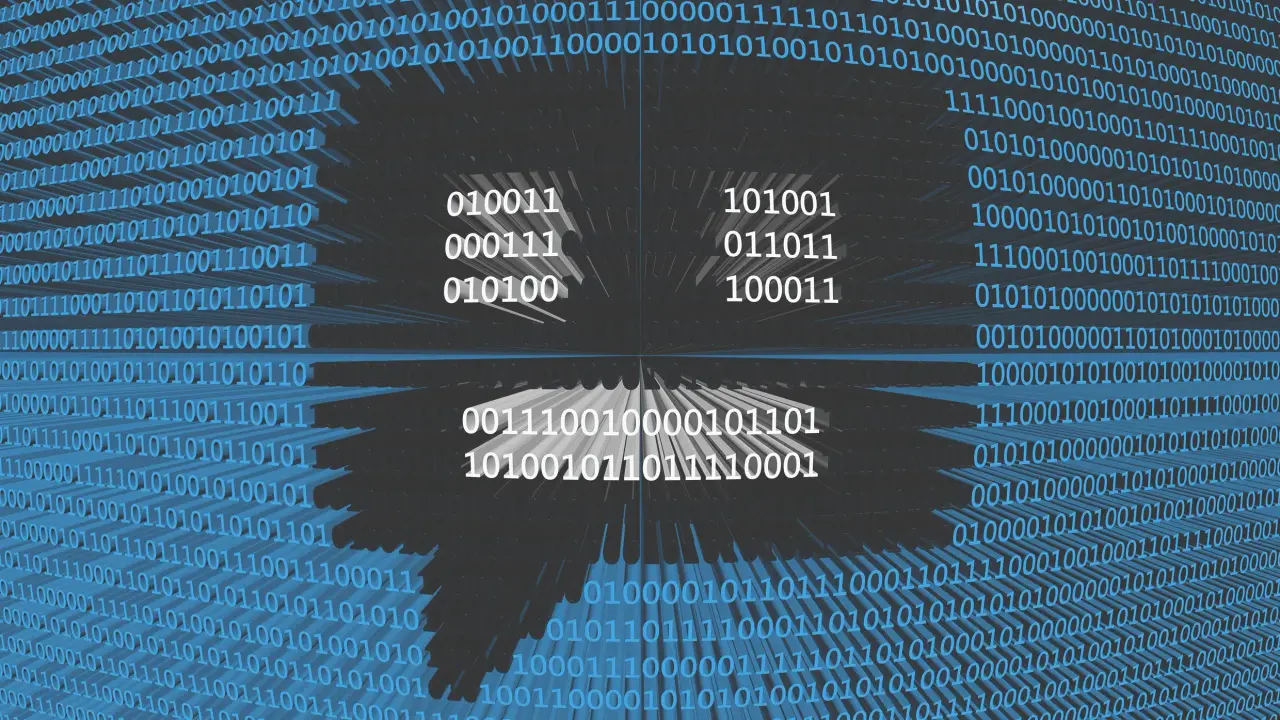
.
Source: Fast Company
The fundamental problem isn't the technology itself but how employers are deploying it. A staggering 82% of UK candidates say they were never clearly told upfront that AI would be evaluating them, and one in four only discovered this fact once the interview had started
2
. This lack of transparency in AI is eroding trust at a critical moment in the candidate-employer relationship. Daniel Chait, CEO of Greenhouse, argues that "most AI in hiring today is making a bad system worse: more applications, less signal, and less transparency"2
. The situation has created what he calls an "AI doom loop," where job applications per position have more than doubled since 2022, yet employers struggle to distinguish high-quality candidates from AI-generated submissions1
.The Human Cost of Automated Hiring Systems
Candidates describe AI interviews as deeply unsettling experiences that strip away the human judgment essential to meaningful recruitment. Job seekers report facing pre-recorded video interviews where they speak to a blank screen with a countdown timer, unable to gauge reactions or ask clarifying questions
3
. Thomas, a 21-year-old university student in northern England, found the experience "frustrating" and unnatural: "It doesn't feel real, it's like you're looking into a mirror and speaking to yourself. There's no human interaction"3
. For neurodivergent candidates, the challenges are even more pronounced. David, a 47-year-old marketing consultant, described his AI interview as "completely horrible for the autistic brain," noting the impossibility of asking questions or pausing to think3
.
Source: Fortune
The biggest triggers driving candidates away include pre-recorded video interviews scored by AI with no human present (25%), companies failing to disclose how AI would be used (24%), and AI monitoring during the process (24%)
2
. Beyond the awkwardness, there's a perception problem: about 51% of candidates who completed an AI interview were either ghosted entirely or are still waiting to hear back4
. Susannah, a 44-year-old scientist from Cambridge, received "very general feedback and a rejection" a week after her 10-minute AI interview, adding: "I'm not even sure anybody watched the interview"3
.Screening Candidates With AI: Benefits and Boundaries
Despite the backlash, recruiters defend AI in recruitment as essential for managing overwhelming application volumes. Companies like McLaren received more than 21,000 applications for its graduate scheme and introduced Microsoft tools to support screening in September
1
. Korn Ferry uses generative AI to gather industry information and create long lists of candidates, while Robert Half developed AI Recommended Talent to produce shortlists1
. Bryan Ackermann, head of AI strategy at Korn Ferry, says automating recruitment mechanics is essential to "clear the decks for those human moments," though he emphasizes "we are not believers that AI is going to take [the whole process] from first touch to the first day"1
.At Cisco, recruiters use the company's internal AI tool CircuIT to generate first drafts of job descriptions and receive recommendations on assessment processes
1
. Staffing company Randstad launched AI chatbots to conduct screening interviews that can communicate in India's 30-plus languages1
. Yet there are legal and practical limits: the EU AI Act ensures the technology cannot be used to make hiring decisions1
. Matt Weston, senior managing director for the UK and Ireland at Robert Half, maintains that "no AI model can find personality. You've got to take the skill sets and qualifications and marry [them] up with the human aspect"1
.Related Stories
What Job Seekers Actually Want From AI in Hiring
Contrary to what employers might expect, candidates aren't demanding the complete elimination of AI from recruitment. Only 19% of those surveyed said they want less AI in hiring
2
. Instead, job seekers' frustration centers on implementation: 40% want companies to be upfront about their usage of AI-powered interviews, 36% seek clear explanations of what AI is measuring, and 45% want the option to request a human interview instead2
. Just one in 10 candidates said employers had clear AI policies, despite nearly two-thirds (59%) believing such disclosure should be a legal requirement2
.Sharawn Tipton, chief people officer of Greenhouse, warns that poor experiences could damage employer reputation: "Candidates aren't walking away from AI. They're walking from bad experiences caused by bad AI. They're reacting to a feeling of being processed rather than considered"
4
. The technology has created an "arms race, not a hiring process," where candidates play the numbers game to be seen while hiring managers deploy screening tools to filter thousands faster4
. Chait suggests the solution isn't layering AI onto broken processes but building better ones: "A 15-minute conversation with an AI where a candidate can show who they are is a better front door than a keyword-stuffed CV"2
. As AI bias concerns emerge—with 27% reporting age bias and 17% flagging race or ethnicity bias2
—employers face pressure to demonstrate that human judgment remains central to their hiring decisions.
Source: TechRadar
References
Summarized by

Navi
Related Stories
AI Hiring Creates a 'Doom Loop' as Job Seekers and Companies Struggle With Automated Screenings
21 Dec 2025•Technology

AI Interviews Reshape Hiring as 63% of Job Seekers Face Robot Recruiters, 38% Drop Out
16 Sept 2026•Business and Economy
AI-Powered Job Interviews Spark Controversy and Reshape Hiring Landscape
04 Aug 2025•Technology

Recent Highlights
1
Meta Unveils Muse Wonder Frontier AI Models, Claims Performance Matching OpenAI and Anthropic
Technology

2
IMF Report Warns AI Market Correction Could Spark Global Financial Crisis With $1.4T at Risk
Business and Economy

3
OpenAI Releases 722 AI-Generated Math Solutions, Triggering Existential Crisis in Mathematics
Technology

Recent Highlights
Today's Top Stories







Don’t drown in AI news. We cut through the noise - filtering, ranking and summarizing the most important AI news, breakthroughs and research daily. Follow topics that matter to you and stay ahead.


