BIS Warns $1 Trillion AI Investment Boom Shows Growing Vulnerability as Debt Concerns Mount


4 Sources
[1]
BIS says global market AI momentum showing signs of vulnerability
LONDON, Sept 14 (Reuters) - The AI-linked rally that has seen world stock markets soar over the last two years is showing growing signs of vulnerability, global central bank umbrella body, the Bank for International Settlements, said on Monday. In a new report, the BIS said investors were becoming
[2]
AI boom poses new financial stability risks, BIS head says
LONDON, Sept 10 (Reuters) - AI's rapid rise is creating new financial stability risks, Bank for International Settlements head Pablo Hernandez de Cos said, with spending on related infrastructure already at a scale significant enough to influence global economic conditions. For central banks, AI
[3]
Global stock rally at risk as AI investment concerns mount: BIS
The Bank for International Settlements (BIS) has warned that the AI-driven global stock market rally is showing signs of vulnerability as investors question the profitability of future AI investments. It flagged rising leverage among major US technology companies and growing debt used to fund AI
[4]
BIS Executive Warns Disappointing AI Returns Could Trigger Global Downturn | PYMNTS.com
In a speech delivered at the Global Fintech Fest 2026 in Mumbai, India, de Cos said this boom has seen equity valuations become elevated and concentrated among a small number of firms, the largest firms become increasingly reliant on debt as their expenditure outpaces their cash flows and so-called
Share
Copy Link
The Bank for International Settlements has issued a stark warning that the AI-driven rally propelling global stock markets is showing increasing signs of vulnerability. With U.S. tech firms pouring over $1 trillion into AI between 2025 and 2026, the BIS flags rising leverage, opaque financing structures, and mounting debt as key financial stability risks that could trigger a broader economic downturn if returns disappoint.
BIS Flags Growing Vulnerability in AI-Driven Market Rally
The Bank for International Settlements has raised concerns that the AI investment boom driving global stock markets over the past two years is displaying growing signs of vulnerability
1
. Frank Smets, the BIS' head of economic analysis, stated that "the AI momentum, which had propelled equity markets and contributed to the resilience of the global economy of the last year, has begun to show growing signs of vulnerability"1
. Investors are becoming increasingly cautious about the profitability of future AI investments, particularly as leverage among major U.S. tech firms continues to rise1
.
Source: PYMNTS
Massive Scale of AI Investment Raises Financial Stability Risks
The scale of AI investment has reached unprecedented levels that could influence global economic conditions. Pablo Hernandez de Cos, BIS head, revealed that the world's five largest technology firms will invest more than $1 trillion in AI between 2025 and 2026
2
. Industry forecasts suggest global AI investment could surge from approximately $500 billion currently to as much as $4 trillion by 20302
. This AI boom poses new financial stability risks, with spending on related infrastructure already significant enough to influence global economic conditions2
.Rising Debt and Opaque Financing Structures Create Concerns
The BIS has identified the rapid increase in debt and leverage in the AI sector as a particularly worrying trend. Aggregate borrowing by tech firms has exploded from around $22 billion, representing 22% of total private credit in 2010, to over $1 trillion, or 44%, by 2025
1
. Total outstanding loans of any type to technology companies now amount to almost $2.5 trillion1
. Hernandez de Cos emphasized that the AI boom is increasingly being financed through debt and private credit rather than corporate earnings, which merits close scrutiny because much of the funding remains "opaque and interconnected"2
. Smets added that "many of these financing deals are quite opaque. They're often off balance sheet. They have sort of circularity in them"1
.Disappointing AI Returns Could Trigger Global Economic Downturn
The BIS executive warned that disappointing AI returns could have severe consequences for the global economy. De Cos explained at the Global Fintech Fest 2026 in Mumbai that equity valuations have become elevated and concentrated among a small number of firms, while the largest firms have become increasingly reliant on debt as their expenditure outpaces their cash flows
4
. Circular financing has become more prevalent as chip manufacturers, hyperscalers and AI firms become linked in ways that are difficult to observe4
. "Should the returns to AI disappoint, a pullback in investment could turn today's capital expenditure boom into a bust," de Cos warned4
.Related Stories

Historical Investment Cycles Offer Cautionary Lessons
The BIS drew parallels with historical investment cycles to illustrate potential risks. De Cos compared the current AI investment boom to previous booms around canals in the 1830s, British railways in the 1840s, electrification in the 1920s, and the dotcom era in the 1990s
4
. There is a risk that AI investment could see firms draw in more capital than the eventual returns could justify, leading to a correction that impacts the entire economy4
. Because households now hold more wealth in equities, such a correction could have greater consequences for consumption, and because U.S. stocks account for a large share of global equity markets, the effects could spread worldwide4
.Market Pressures and Bond Yield Concerns Mount
The hundreds of billions of dollars worth of debt AI firms have been issuing could be contributing to the rise in government bond yields, on top of long-held concerns about the sustainability of debt levels
1
. The BIS report pointed to an uncertain global backdrop of strains on public finances, exacerbated by geopolitical tensions and volatile energy prices1
. While Smets noted there were "no signs of stress" overall and that investors' risk appetite had remained "remarkably resilient" in recent months, he cautioned that "whether this resilience can be sustained, especially if upward pressures on yields continue, remains, however, uncertain"1
. Big Tech companies investing $725 billion in AI projects have seen their combined free cash flow projected to fall, with record spending eating into their cash reserves4
.References
Summarized by

Navi
Related Stories
AI boom complicates monetary policy as central banks struggle to read blurred economic signals
28 Jul 2026•Policy and Regulation
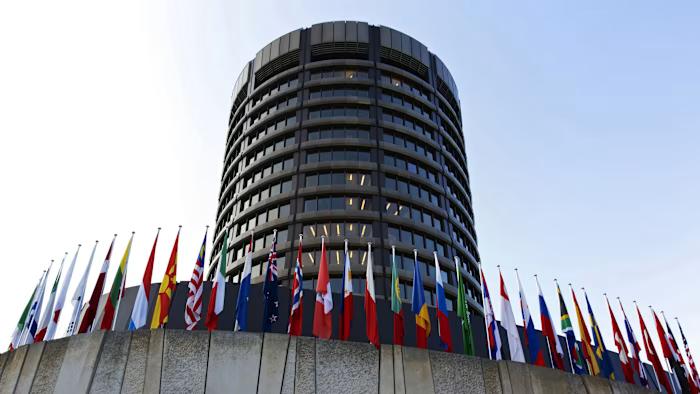
AI Investment Boom Could Mirror Dotcom Bust as BIS Warns of $1 Trillion Spending Spree
15 Jul 2026•Business and Economy

Investors warn AI bubble poses major economic risk as inflation fears and unsustainable spending mount
02 Jan 2026•Business and Economy

Recent Highlights



Recent Highlights
Today's Top Stories







Don’t drown in AI news. We cut through the noise - filtering, ranking and summarizing the most important AI news, breakthroughs and research daily. Follow topics that matter to you and stay ahead.


