AI Breakthrough Accelerates Discovery of New Tuberculosis Drug Candidates


2 Sources
[1]
AI-based technology accelerates discovery of new tuberculosis drug candidates
University of California - San DiegoFeb 7 2025 Tuberculosis is a serious global health threat that infected more than 10 million people in 2022. Spread through the air and into the lungs, the pathogen that causes "TB" can lead to chronic cough, chest pains, fatigue, fever and weight loss. While
[2]
AI Accelerates the Search for New Tuberculosis Drug Targets | Newswise
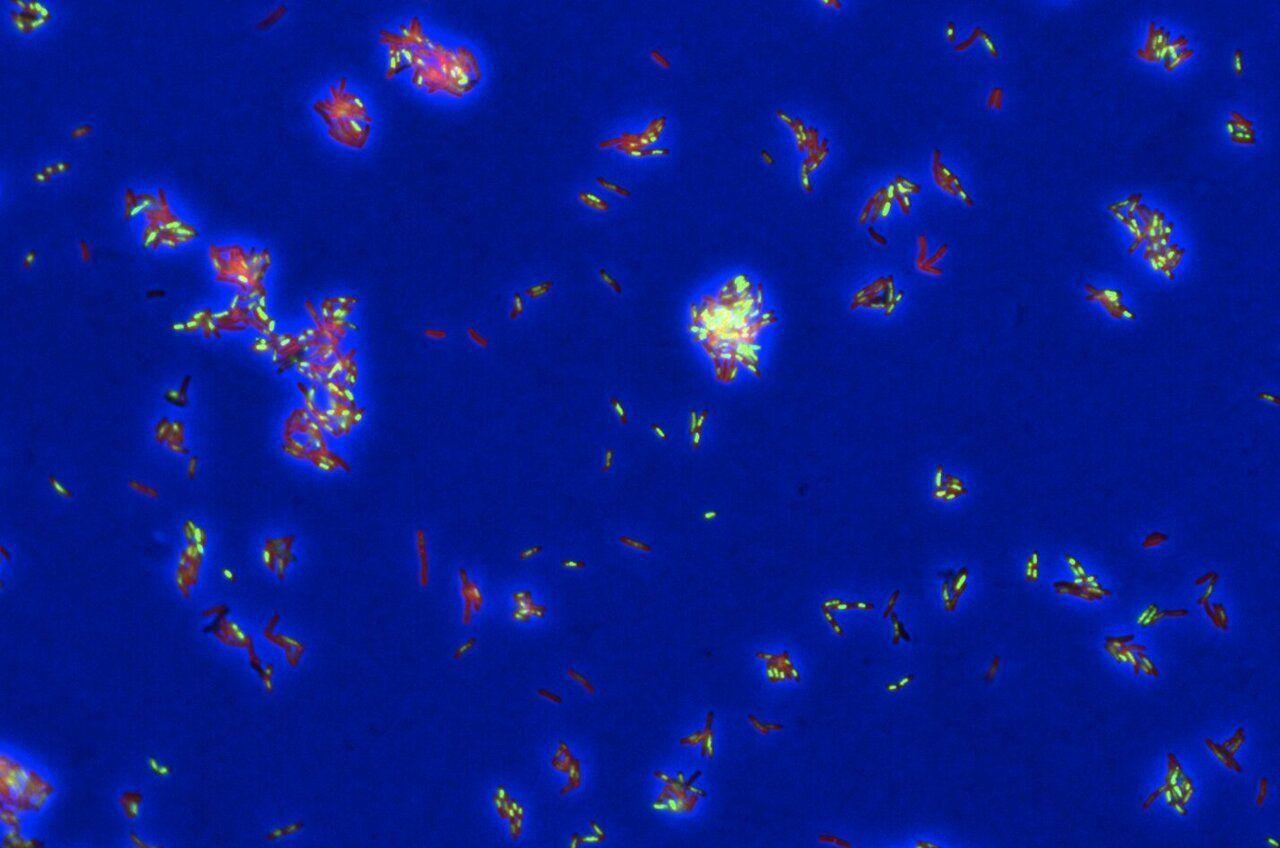
A fluorescence microscopy image reveals the tuberculosis-causing bacterium Mycobacterium tuberculosis after an antimicrobial treatment. Membranes are stained red, DNA blue and areas of membrane permeability appear green. These dramatic changes in bacterial cell structure form consistent patterns
Share
Copy Link
Researchers at UC San Diego and partners have developed an AI-powered technology called MycoBCP that significantly speeds up the identification of potential new tuberculosis treatments, addressing the urgent need for solutions against drug-resistant strains.

AI-Powered Technology Revolutionizes Tuberculosis Drug Discovery
In a groundbreaking development, researchers have harnessed the power of artificial intelligence to accelerate the discovery of new tuberculosis drug candidates. A study published in the Proceedings of the National Academy of Sciences details the novel use of AI in screening antimicrobial compounds that could lead to new treatments for tuberculosis (TB), a disease that infected over 10 million people in 2022
1
2
.The Urgent Need for New TB Treatments
Tuberculosis remains a serious global health threat, with drug-resistant strains posing a particular challenge. The urgency of finding new treatments is underscored by a recent outbreak in Kansas, which has become one of the largest on record in the United States, resulting in two deaths
1
2
.MycoBCP: A Next-Generation AI Solution
The study introduces "MycoBCP," a next-generation technology developed with funding from the Gates Foundation. This innovative method combines bacterial cytological profiling (BCP) with deep learning to overcome traditional challenges in understanding how new drugs work against Mycobacterium tuberculosis, the bacterium causing TB
1
.AI's Unique Advantage in TB Research
Dr. Joe Pogliano, a co-author of the study and professor at UC San Diego, explains the significance of this approach: "This is the first time that this kind of image analysis using machine learning and AI has been applied in this way to bacteria. Machine learning is much more sensitive in being able to pick up the differences in shapes and patterns that are important for revealing underlying mechanisms"
1
.Development and Training of AI Tools
Lead authors Diana Quach and Joseph Sugie developed the MycoBCP technology over two years, training convolutional neural networks with over 46,000 images of TB cells. This approach overcame the challenge of analyzing clumpy tuberculosis cells, which are difficult to interpret using traditional methods
1
2
.Related Stories
Collaboration and Impact
Linnaeus Bioscience, a San Diego-based biotechnology company, collaborated with tuberculosis expert Tanya Parish of Seattle Children's Research Institute to develop BCP for mycobacteria. The new system has already accelerated TB research capabilities and helped identify optimal candidate compounds for drug development
1
2
.From University Research to Biotech Success
Linnaeus Bioscience, founded in 2012 based on technology developed at UC San Diego, has played a crucial role in bringing this innovation to the market. The company's success story highlights the importance of supportive biotech communities and infrastructure, such as the San Diego JLABS incubator, in fostering groundbreaking research and its commercial applications
1
2
.This AI-driven approach to tuberculosis drug discovery represents a significant leap forward in the fight against a persistent global health threat, offering hope for more effective treatments in the near future.
References
Summarized by

Navi
Related Stories
AI-Powered Tool DECIPHAER Unveils Molecular Mechanisms of Tuberculosis Drug Action
26 Aug 2025•Health
AI-Driven Drug Discovery Accelerates Search for Tuberculosis Drugs Against World's Deadliest Infection
07 Jul 2026•Science and Research

AI Accelerates Antibiotic Discovery: New Drug Targets IBD with Unprecedented Precision
03 Oct 2025•Health
Recent Highlights
1
Meta Unveils Muse Wonder Frontier AI Models, Claims Performance Matching OpenAI and Anthropic
Technology

2
IMF Report Warns AI Market Correction Could Spark Global Financial Crisis With $1.4T at Risk
Business and Economy

3
OpenAI Releases 722 AI-Generated Math Solutions, Triggering Existential Crisis in Mathematics
Technology

Recent Highlights
Today's Top Stories









Don’t drown in AI news. We cut through the noise - filtering, ranking and summarizing the most important AI news, breakthroughs and research daily. Follow topics that matter to you and stay ahead.


