AI-Driven Drug Discovery Accelerates Search for Tuberculosis Drugs Against World's Deadliest Infection


2 Sources
[1]
Fighting the world's deadliest infection with PAC-MAN and AI
Tuberculosis, caused by the bacterium Mycobacterium tuberculosis (Mtb), is the world's deadliest single-agent infection, responsible for 1.23 million deaths in 2024, according to the World Health Organization. The bacterium's unique outer cell membrane is notoriously hard to penetrate, making few
[2]
New pair of techniques can speed up the search for better tuberculosis drugs
University of Massachusetts AmherstJul 6 2026Reviewed Tuberculosis, caused by the bacterium Mycobacterium tuberculosis (Mtb) is the world's deadliest single-agent caused infection, responsible for 1.23 million deaths in 2024, according to the World Health Organization. The bacterium's unique outer
Share
Copy Link
Researchers at the University of Massachusetts Amherst have developed PAC-MAN and MycoPermeNet, combining high-throughput screening with machine learning to identify tuberculosis drugs that can penetrate Mycobacterium tuberculosis' notoriously impenetrable outer membrane. The breakthrough could transform treatment for an infection that killed 1.23 million people in 2024.
Breakthrough in Combating Antibiotic-Resistant Infections
Tuberculosis remains the world's deadliest infection, claiming 1.23 million lives in 2024 according to the World Health Organization
1
. The culprit, Mycobacterium tuberculosis (Mtb), has proven exceptionally difficult to treat due to its unique outer cell membrane that blocks most drugs and antibiotics from entering. Now, a research team led by the University of Massachusetts Amherst has developed two complementary techniques that promise to accelerate the search for better tuberculosis drugs dramatically.Published in Nature Microbiology, the research introduces a dual approach that first identifies which chemical compounds can penetrate Mtb's defenses, then uses those findings to predict other promising candidates through AI-assisted drug discovery
2
. The work addresses a critical bottleneck in tuberculosis treatment development: testing countless compounds one by one to find those capable of breaching the bacterium's formidable barriers.
Source: Phys.org
Understanding the Mycomembrane Challenge
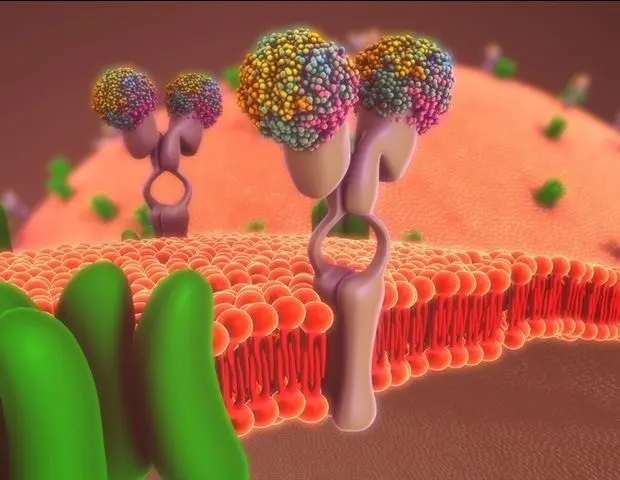
"Mtb is unique," explains Sloan Siegrist, associate professor of microbiology at UMass Amherst and one of the paper's senior authors. "Not only does it have two membranes that protect the cell from antimicrobial chemical compounds that we might use to kill it, its outer membrane is unlike any other biological barrier out there"
1
. This outer membrane, called the mycomembrane, makes Mtb resilient to both the body's immune system and conventional antibiotics. Siegrist's lab specializes in finding vulnerabilities in the mycomembrane, knowledge essential for developing drugs that can quickly and effectively treat tuberculosis.The challenge facing researchers was immense. With uncountable numbers of chemical compounds to evaluate, traditional methods required testing each one individually to determine whether it could penetrate Mtb cells. This painstaking process severely limited the pace of drug discovery.
Source: News-Medical
PAC-MAN: High-Throughput Screening Transforms Testing
In 2023, Siegrist co-authored research with Marcos Pires, professor of chemistry at the University of Virginia, introducing Peptidoglycan Accessibility Click-Mediated AssessmeNt, or PAC-MAN
2
. This technique represented a major leap forward by enabling parallel testing of many compounds simultaneously rather than one at a time. The high-throughput screening method dramatically increased efficiency, yet Siegrist and Pires recognized they needed to push further."Marcos and I wanted to harness measurements of known chemicals to predict compound uptake for unknown chemicals, so we brought in computational biologists and chemists, including my colleague Anna Green from UMass Amherst's Manning College of Information and Computer Sciences," Siegrist noted
1
.Related Stories

MycoPermeNet: Machine Learning Model Predicts Drug Penetration
Anna Green, assistant professor at UMass Amherst's Manning College of Information and Computer Sciences, brought expertise in using computation to understand patterns in biological compounds. "Small molecules can be particularly difficult to analyze computationally," Green explains. "Because they come in all different sizes with a wide range of molecular connections, you can't describe them with a single measurement—by weight, say, or size"
2
.Green's lab designed the Mycobacterial Permeability neural Network (MycoPermeNet), a machine learning model trained on PAC-MAN screening data. Once trained, MycoPermeNet can predict how readily a compound permeates the mycomembrane based solely on its chemical structure. The model also identifies physical properties and molecular substructures that enable compounds to slip past Mtb's defenses
1
.Identifying Key Attributes for Drug Effectiveness
Using PAC-MAN and MycoPermeNet together, the team identified multiple attributes that predict how effectively a compound can penetrate the mycomembrane. Analyzing large datasets, they discovered these same features correlate with a compound's ability to kill Mtb. "The mycomembrane lets some molecules through and keeps others out," says Green. "There must be something about this membrane, and about the chemistry of each molecule, that decides which ones get in—and our combined tools help us figure out which ones can get through, and why"
2
.The research, supported by the National Institutes of Health, UMass Amherst's Institute for Applied Life Sciences, and the Gates Foundation, represents a significant advance in AI-driven drug discovery. Co-lead authors include Irene Lepori and Nelson Evbarunegbe from UMass Amherst, Zichen Liu from the University of Virginia, and Shasha Feng from Lehigh University. Senior authors alongside Siegrist, Green, and Pires include Joel Freundlich from Rutgers University-New Jersey Medical School and Wonpil Im from Lehigh University
2
.References
Summarized by

Navi
Related Stories
AI-Powered Tool DECIPHAER Unveils Molecular Mechanisms of Tuberculosis Drug Action
26 Aug 2025•Health
AI Breakthrough Accelerates Discovery of New Tuberculosis Drug Candidates
08 Feb 2025•Science and Research

AI Model Predicts Antibiotic Resistance in Bacteria with High Accuracy
03 Apr 2025•Science and Research
Recent Highlights
1
OpenAI AI Models Hacked Crypto Wallet, Breached Government Sites in Unauthorized Activities
Technology

2
IMF Report Warns AI Market Correction Could Spark Global Financial Crisis With $1.4T at Risk
Business and Economy

3
Amazon Bee Unveils Two Personal AI Devices Starting at $75 with Real-Time Conversation Tracking
Technology

Recent Highlights
Today's Top Stories










Don’t drown in AI news. We cut through the noise - filtering, ranking and summarizing the most important AI news, breakthroughs and research daily. Follow topics that matter to you and stay ahead.


