11 Sources
[1]
OpenAI and Microsoft's alliance fractures as cloud exclusivity deal ends -- Azure's single-provider monopoly for ChatGPT is officially over
Microsoft and OpenAI have once again renegotiated the terms of their deal with one another, but it might be what's best for both of them. OpenAI and Microsoft have announced an end to their exclusive arrangement, and a re-jigging of how they handle model oversight, revenue sharing, and cloud deployments. Microsoft will no longer pay OpenAI for what it makes from Copilot, but OpenAI no longer has to exclusively use Azure servers for ChatGPT, opening it up for further deals with other cloud service providers. What this means for the ever-nebulous AGI clause that both companies were so keen to retain access to and control over, if and when it materializes, remains to be seen. It's an intriguing move that leaves the immediate future of both companies' AI efforts uncertain, but perhaps it's better than Microsoft's legal department firing all barrels at OpenAI over its recent deal with Amazon. Where's the ROI? One of the biggest questions of the AI industry over the past year and a half has been the source of profit. Not the infrastructure investment, or the circular deals and token IOUs, but the real profit. For the investors who pumped tens of billions of dollars into OpenAI, Anthropic, and xAI, and for the shareholders who ballooned Microsoft, Google, and Meta's stock prices off the back of these mega deals and unprecedented investment plans. Microsoft CEO Satya Nadella hinted at this in January, when he said at the World Economic Forum that AI companies needed to find a clear use for the technology or risk losing the "social permission" to continue the work. That seems to be more of a pressing issue for Microsoft by April, when it announced that Copilot use on GitHub would move to token-based billing -- that is, charging users for the amount of tokens they use, rather than on a per-request basis. No longer would shorter requests with shorter responses cost as much as longer, more in-depth queries. From June, this will result in users paying more when Copilot is verbose in its responses, or when it has to analyze more data before making its suggestions. Microsoft is already doing that with Azure agents, and it's also set to raise the price of Microsoft 365 with its Copilot integration by several dollars a month for most tiers. According to internal documents reportedly shared with journalist Ed Zitron, this move came because Microsoft had faced a more-than-doubling of its Copilot-related costs from January this year. He also claims Microsoft will take further steps to tighten controls and increase earnings from individual AI users, including reducing rate limits and forcing users onto different models, which could more than double costs. Things aren't much better at OpenAI, either. It was projected in January to be on track to run out of money entirely by the end of 2027, and despite announcements of enormous investments in the company, it's projected to burn through tens of billions over the coming years. All while somehow planning to turn a profit by the end of the decade, but to manage that, it would need to earn hundreds of billions of dollars a year. OpenAI's annualized revenue run rate is reportedly sitting at roughly $2 billion per month, or $24 billion a year. OpenAI also performed several major pivots and navigational shifts in recent months. We learned about its chip manufacturing ambitions in February, it announced it was building a GitHub competitor in March, the company warned that it would shutter the Sora text-to-video generation tool in April, and it bought a podcast for over $100 million that same month. Even OpenAI's own financial officer has said she doesn't see how OpenAI can afford its own promised infrastructure spending, as it misses key revenue targets in 2026, according to a new WSJ report. It's very hard to see how any of this takes OpenAI from a heavy-loss-making company to one that's incredibly profitable in just a few years. Don't drop the bag OpenAI was under pressure in 2025. To secure the promised investment of billions from Japanese investment firm Softbank, it needed to convert to a for-profit company and settle its disagreements with Microsoft. It managed that just in time, finally securing a long-term partnership agreement with Microsoft in the Fall. The Softbank money came rolling in, and just a few months later, the deal was renegotiated again. But rejigging the deal may be OpenAI's way of securing the next round of funding -- the $50 billion promised investment from Amazon in February, which Microsoft was none-too-pleased about. But in doing so, it's lost one of its limited revenue streams from Microsoft's Copilot earnings, and will still have to pay Microsoft 20% of its own limited earnings. That Amazon investment could come alongside another $60 billion from Nvidia and SoftBank (though not the $100 billion Jensen originally promised), if all goes to plan. That would also value the company at around $730 billion, making a potential IPO incredibly profitable for Altman and anyone else holding OpenAI shares at the time of a public offering. But even with OpenAI more than halving its compute ambitions from $1.4 trillion in expenditure to $600 billion by 2030, that's still contingent on increasing its own revenue to $280 billion a year by that same date. As of the time of writing, OpenAI hasn't even managed to earn 10% of that, while having close to a billion active users (though crucially, it also missed that milestone by the end of 2025), and it is losing mindshare to competitors like Anthropic. Regardless, OpenAI seems keen to push forward with its IPO plans. At this stage, that may be the only real avenue left for it to get anywhere close to its ambitious goals. Even with shifting goalposts, the timeline for its profitability is shrinking rapidly, and it still hasn't made a clear path toward it.
[2]
OpenAI Hits Back at Growth Fears, Says 'Firing on All Cylinders'
OpenAI backers and partners saw shares sink on the news, with the company's CFO reportedly expressing concern about affording future computing needs if sales don't grow fast enough. OpenAI pushed back against concerns over its sales growth on Tuesday, saying its consumer and enterprise businesses are "firing on all cylinders" despite a report about the AI startup missing internal targets. The ChatGPT creator said it continues to see growth in demand from business customers and its nascent advertising business. "The mood internally is incredibly positive," the company said in a statement. The Wall Street Journal reported late Monday that OpenAI had fallen short of several internal targets as rivals gained ground. OpenAI described the report as "prime clickbait." Shares of several OpenAI backers and partners including SoftBank Group Corp., Oracle Corp. and CoreWeave Inc. sank on the news Tuesday. The Journal also reported that OpenAI Chief Financial Officer Sarah Friar has expressed concern that the company may not be able to afford its future computing needs if sales don't grow fast enough. The share moves underscore OpenAI's central role in a complex web of investments and deals involving leading cloud computing providers and chipmakers. Investors had already been growing increasingly concerned about an AI infrastructure bubble, questioning the plans of OpenAI and other technology companies to spend hundreds of billions of dollars in the coming years on data centers and chips. OpenAI said in its statement Tuesday that the company continues to see its push for more computing capacity as "the great enabler," allowing it to "deliver a better product experience to our customers." Earlier this month, OpenAI told investors that its early efforts to dramatically increase computing resources has given it a key advantage over Anthropic at a moment when its longtime rival is gaining ground, Bloomberg reported. Even before the Journal report, however, OpenAI had begun adopting a more cautious approach to its infrastructure investments. OpenAI recently said it plans to pause a project in the UK. Microsoft Corp. also agreed to rent data center capacityBloomberg Terminal at a site in Norway that was initially intended for OpenAI. In March, Bloomberg reported that Oracle and OpenAI had scrapped plans to expand a flagship AI data center in Texas after negotiations dragged over financing. Oracle, a key data center partner for OpenAI, said Tuesday that it remains "incredibly excited" about working with the AI developer. "We're seeing firsthand how quickly adoption of their technology is accelerating, driven by the strength of their latest models," Oracle said in a statement. CoreWeave, meanwhile, noted that OpenAI isn't the company's only partner. The company said in a statement that its customers include Alphabet Inc.'s Google, Meta Platforms Inc., Anthropic and Microsoft, among others, adding that "demand for compute continues to grow."
[3]
OpenAI's revenue, growth estimates fall short as company races toward IPO: Report
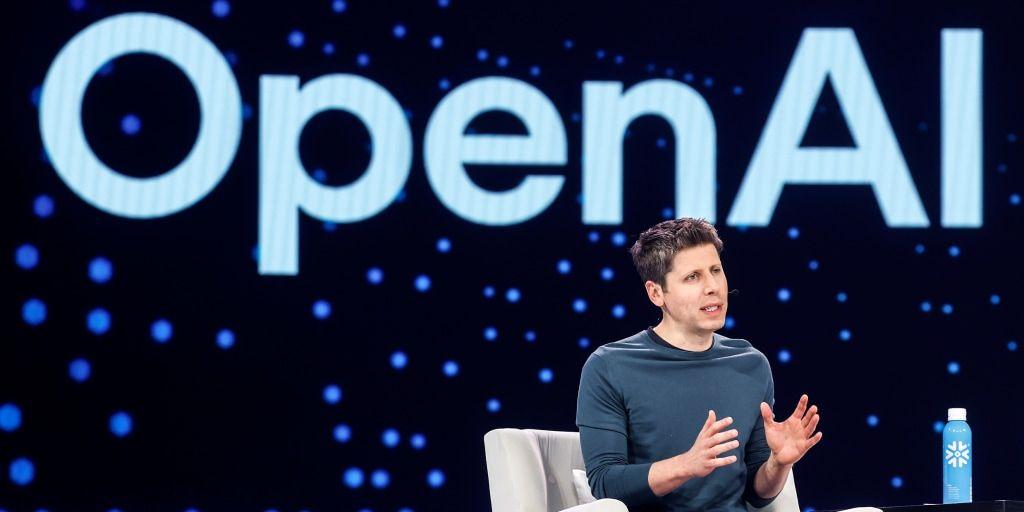
Sam Altman, CEO of OpenAI, at the AI Impact Summit in New Delhi, India, Feb. 19, 2026. OpenAI has fallen short of its own revenue and user growth estimates, raising questions about whether the AI company can meet its massive data center spending plans, the Wall Street Journal reported on Monday. Finance Chief Sarah Friar has expressed concerns over the company's ability to fund future compute agreements if the revenue slowdown continues, the outlet reported, citing sources familiar with the matter. According to the report, Friar is working with other executives to clamp down on costs as the board of directors more closely scrutinizes OpenAI's computing deals. "This is ridiculous," OpenAI CEO Sam Altman and Friar said in a joint statement to CNBC. "We are totally aligned on buying as much compute as we can and working hard on it together every day." Shares of chipmakers and tech companies, such as Oracle, slumped on the report. The setup raises questions about OpenAI's financial wherewithal ahead of its highly anticipated public offering expected later this year. In recent months, OpenAI and hyperscaler peers have shelled out billions to fund datacenters to meet ballooning compute demand. Many of those deals are closely tied to OpenAI. Oracle inked a $300 billion five-year computing deal with OpenAI, and Nvidia has pledged billions to the startup. OpenAI recently launched a major strategic partnership with Amazon and expanded an existing $38 billion spending agreement by $100 billion. This week, OpenAI announced major changes to its partnership with Microsoft, a longtime backer that has invested more than $13 billion in the company since 2019. As part of the changes, OpenAI will cap revenue share payments, and Microsoft will no longer have an exclusive license to its intellectual property.
[4]
OpenAI in Shambles as IPO Looms
Can't-miss innovations from the bleeding edge of science and tech OpenAI is still committed to a whopping $600 billion in AI infrastructure investments over the next four years, a gargantuan spending spree that requires the ChatGPT maker to make massive strides in attracting new users -- and, to put it crassly, make far more money than it currently is. The numbers don't paint a flattering picture, with OpenAI barely crossing the $20 billion annualized revenue line last year. It certainly doesn't bode well, considering the company's rumored plans to go public later this year, a major transition that could shine a bright light on what's sounding like a harrowing financial situation. What was supposed to be a meteoric rise to stardom is off to a rough start. As the Wall Street Journal reports, OpenAI missed its own targets of reaching one billion weekly active users for ChatGPT by the end of 2025 -- a threshold it still has yet to cross -- as well as several revenue targets, further highlighting concerns that the company could risk collapsing under its own weight. It's a foreboding portent for an industry currently burning through tens of billions of cash while revenues have fallen far behind. The Sam Altman-led company has contracts with many other key players in the AI space, tying ties its fate to the rest of the industry as well and further raising the stakes. For a while now, the company's CFO Sarah Friar has been ringing the alarm bells, reportedly warning other executives that OpenAI may not be able to afford future computing contracts if both user numbers and revenue don't start to grow at a breakneck pace soon. That's despite raising a Silicon Valley record-shattering $122 billion in a single round of funding earlier this year. The cash may buy OpenAI a little more time, but considering its extremely ambitious spending plans, the chickens could come home to roost within the next three years, per the WSJ. Meanwhile, access to compute is becoming increasingly difficult. AI companies including Anthropic and Microsoft are already starting to ramp up prices to match rapidly rising costs, frustrating many power users. For now, OpenAI is in a holding pattern, with Friar warning against going public any time soon. The company will also have to defend itself in court as of this week, as a dodgy lawsuit filed by OpenAI's long-estranged cofounder Elon Musk kicks into gear. Meanwhile, the competition only keeps growing. Anthropic recently surpassed OpenAI by surging to a trillion-dollar valuation on secondary markets, highlighting the Claude maker's considerable success in attracting enterprise users with its coding tools. The situation has become so dire, OpenAI is resorting to desperate measures to control the narrative. A provocative investigation linked OpenAI to a website that's using AI agents to publish pro-AI articles that attack the tech's critics. The company also bought the tech bro talk show TPBN last month, a move likely intended to control its waning public image. Nonetheless, OpenAI's leadership remains steadfast in its commitment to building out its AI empire, despite the significant setbacks and slowdowns. "We are totally aligned on buying as much compute as we can and working hard on it together every day," Altman and Friar told the WSJ in a joint statement.
[5]
OpenAI Fell Short of Its Own Targets as Compute Costs Piled Up: Report - Decrypt
Experts are divided on whether the stumbles signal a broader AI market correction or a temporary recalibration. OpenAI is facing a reckoning over the gap between its ambitions and its finances, experts told Decrypt, after the Wall Street Journal reported Monday that the company missed key internal targets for ChatGPT users and revenue while CFO Sarah Friar privately warned that ballooning compute costs could outpace the money coming in. Friar raised the alarm after the company fell short of its goal of reaching one billion weekly active users for ChatGPT by the end of last year, a milestone it never hit and never announced, unsettling some investors, the WSJ reported. "When the dust settles, I think companies will find out something they already knew -- a lot of the work still depends on human judgment, collaboration, and contextual understanding that AI can't yet replicate," Alice Li, Investment Partner at Foresight Ventures, told Decrypt. Li sees the current pressure as an internal rebalancing within the tech sector, not a leading indicator of a broader macro downturn. OpenAI has locked in roughly $600 billion in future data-center spending, accumulated through years of aggressive dealmaking under Altman's thesis that compute scarcity was the true constraint on AI growth. Friar told other company leaders she is worried that revenue may not grow fast enough to cover those contracts, the report said. Board directors have reportedly grown more probing about the data-center deals and have questioned why Altman continues to pursue even more computing capacity despite the slowdown. Anthropic has quietly overtaken OpenAI on share trading platform Forge Global, where it now trades at roughly $1 trillion against OpenAI's approximately $880 billion, according to Forge CEO Kelly Rodriques, the first time its rival has commanded a higher implied valuation. Markus Levin, co-founder of DePIN network XYO, told Decrypt that reading a market crash into these numbers misreads the underlying data. He noted that by the end of 2025, roughly 84% of the world's working-age population had still not used generative AI tools, and only around 44.8 million people held paying AI subscriptions globally. "Conflating a slow, uneven adoption curve with an imminent market reckoning reflects a tunnel vision the data is pushing back against," Levin said. The disruption, he pointed out, is real but narrowly concentrated, driven more by tech-sector over-hiring cycles and cost corrections than by automation sweeping through the broader economy. "A rational repricing phase is almost inevitable -- market sentiment tends to move ahead of fundamentals, and expectations need to be recalibrated," Li said. She frames current valuations as priced ahead of time rather than fundamentally broken, with fundamentals likely to catch up if capability development stays on track. Decrypt has reached out to OpenAI for comment. Pavel Bezhin, CFO at AI development company Napoleon IT, told Decrypt the pattern is familiar from prior technology cycles, and the outcome is not predetermined. "In human history, such breakthroughs have indeed often preceded crises and recessions, but they have never been their direct cause," he said. Bezhin pointed to the dot-com crash as the relevant lesson: economic systems built on outdated models fail to adapt, and it is that failure, not the technology itself, that triggers collapse. "If global financial institutions have learned the right lessons from the dot-com crash, discussions about recession and systemic collapse will remain nothing more than cautionary tales," he added. OpenAI's IPO ambitions are caught in the middle of all this, with Altman pushing for a public listing by year-end, while Friar has privately cautioned that the company's internal controls are not yet built for the reporting standards public markets demand. On prediction market Myriad, owned by Decrypt's parent company Dastan, users place a 64% chance on Anthropic carrying out its IPO before OpenAI. Away from the boardroom, Altman spent last week apologizing to the community of Tumbler Ridge, British Columbia, after OpenAI acknowledged it had banned a ChatGPT account tied to the suspect in a February mass shooting that killed eight people without ever notifying law enforcement.
[6]
OpenAI's Reported Missed Revenue Targets Are Spooking Investors Ahead of Its Rumored $1 Trillion IPO
Artificial intelligence giant OpenAI recently missed some self-imposed user growth and revenue targets, the Wall Street Journal reported in an exclusive scoop -- and the markets are not thrilled. OpenAI chief financial officer Sarah Friar has told colleagues that she is "worried the company might not be able to pay for future computing contracts if revenue doesn't grow fast enough," the Journal added, with efforts to keep down costs now sometimes putting her in conflict with CEO Sam Altman's full-steam-ahead ambitions. The reports of internal tensions come in the lead-up to a widely-anticipated IPO by the software powerhouse, which although not yet officially filed for is widely expected to happen as soon as this year. If and when OpenAI does go public, analysts are expecting a potentially record-breaking listing which could see the firm valued at $1 trillion -- although such estimates assume the company maintains its current momentum. "We are totally aligned on buying as much compute as we can and working hard on it together every day," Altman and Friar jointly told the Journal, and the idea that they're dialing back efforts to expand their computing resources is "ridiculous." Nevertheless, the company reportedly missed a goal last year of hitting one billion weekly active users on ChatGPT, its flagship product, and also failed to hit a yearly revenue target for the product just as Google's competing Gemini service enjoyed gangbusters growth. The Journal also cites claims of repeated missed monthly revenue targets this year and high churn among ChatGPT subscribers. Although financial data about privately-held OpenAI is, for now, hard to come by, the company's peers and allies on the public markets offer some insight into how investors feel about the news of the missed benchmarks and internal tensions. In a word: concerned. The Journal's story came out at 9pm ET Monday night. Between then and the opening of trading the next morning, Google Finance data indicates, share-prices at OpenAI partners including Oracle, Nvidia, Broadcom, Qualcomm, CoreWeave, SoftBank, Amazon and Advanced Micro Devices fell sharply. (Notably, Microsoft, which has long had a tight relationship with OpenAI but announced on Monday plans to loosen those ties, hasn't taken a sustained hit.) It's not just public-market investors giving OpenAI the side-eye. The Journal reports that board directors at OpenAI are also beginning to scrutinize its spending on data centers as business pressures rise. What this means for OpenAI's public market ambitions remains to be seen. Last fall, Altman said an IPO was "the most likely path" for his company given its capital requirements, and Friar claimed earlier this month that the company will set aside some shares for retail investors when it goes public, although demurred on the timeline of such an offering. Yet the Journal's story on Monday suggested that Friar may now be growing hesitant about an IPO -- at least a 2026 one -- over concerns about the firm's ability to meet public-company reporting requirements. The extended deadline to apply for the 2026 Inc. 5000 is Friday, May 1, at 11:59 p.m. PT. Apply here.
[7]
Sam Altman's Problems Mount: Why Elon Musk And Google Relish OpenAI Latest Developments - Microsoft (NASD
OpenAI was hoping its new GPT-5.5 model, released last week to strong benchmark scores, would shift the narrative. The problems are mounting up faster than the company can answer them. The ChatGPT maker missed its internal target of one billion weekly active users by year-end. CFO Sarah Friar has reportedly told colleagues she is worried OpenAI may not be able to pay for future computing contracts if revenue does not accelerate. The company is on the hook for roughly $600 billion in compute commitments and expects to burn through its recent $122 billion funding round, the largest in Silicon Valley history, within three years. Friar has also pushed back on CEO Sam Altman's preferred year-end IPO timeline, saying OpenAI is not yet ready for the financial reporting demands of a public company. Anthropic Stays Ahead On Polymarket Despite GPT-5.5 getting good reviews, Polymarket still gives OpenAI only a 9% chance it has the best AI model by the end of June. Anthropic is at 50%, ahead of Google at 36% on almost $5 million in volume. A separate Polymarket contract gives OpenAI just a 32% chance of completing an IPO by year-end, down from a peak of over 50% in February. The Musk Trial Begins Jury selection began yesterday in Oakland federal court in Elon Musk's lawsuit. Musk seeks damages exceeding $180 billion, the removal of Altman and President Greg Brockman, and the unwinding of OpenAI's for-profit restructuring. Any one of those outcomes would likely complicate the IPO path. Anticipated testimony includes Altman, Ilya Sutskever and Microsoft (NASDAQ:MSFT) CEO Satya Nadella. The case turns on a breach of charitable trust claim, the argument that Musk's roughly $40 million in original funding was intended for an open-source nonprofit. Judge Yvonne Gonzalez Rogers cited Brockman's own diary in allowing the case to proceed, including the line that the restructuring was "the only chance we have to get out from Elon." Legal experts think Musk is likely to lose, but Kalshi now disagrees. The contract on whether Musk wins was over 55% in January and bottomed near 33% in March. With proceedings now underway, it has rallied to 57%, on $408,761 in total volume. OpenAI launched the AI mania that has carried tech valuations for three years. The next few months will determine whether it remains the company defining the era or a footnote in someone else's. Image: Shutterstock Market News and Data brought to you by Benzinga APIs To add Benzinga News as your preferred source on Google, click here.
[8]
OpenAI Data Center Plans in Question After Revenue Miss | PYMNTS.com
That's according to a report late Monday (April 27) from the Wall Street Journal (WSJ), which says these misses have sparked concern among some executives about whether the artificial intelligence (AI) startup will be able to fund its data center plans. Chief Financial Officer Sarah Friar has told other leaders that she is concerned OpenAI might not be able to pay for future computing contracts if revenue doesn't grow quickly enough, sources familiar with the matter told the WSJ. The report added that OpenAI missed an internal goal of reaching one billion weekly active users for ChatGPT by the end of 2025. The company has yet to announce that achievement, which has some investors uneasy, the WSJ said. OpenAI is also dealing with a loss of subscribers, the sources said. These people said members of the company's board have been scrutinizing OpenAI's data center deals in recent months, questioning CEO Sam Altman's move to accrue even more computing power even as business slows. According to the WSJ, this closer oversight is limiting Altman's ambitions ahead of a possible stock market listing this year. Friar and other executives have begun trying to control spending and establish more business discipline, putting them at odds with Altman, sources said. PYMNTS has contacted OpenAI for comment but has not yet gotten a reply. The company issued a joint statement from Altman and Friar to the WSJ, in which the executives said they were "totally aligned on buying as much compute as we can and working hard on it together every day." The idea that the two are divided or pulling back on landing more computing resources is "ridiculous," the statement added. The report is the latest in a series of news accounts of friction behind the scenes at OpenAI. Earlier this month, The Information reported that Altman and Friar were at odds over the timing of the company's initial public offering (IPO). The report also cited sources who said that Altman had excluded Friar from conversations with investors and from meetings concerning key financial decisions. Both executives denied the report, saying they were "fully aligned." The following week, the Financial Times reported that OpenAI's $852 billion valuation had caused concern among its investors, amid the company's new focus on enterprise customers. In recent months, OpenAI has made a series of moves to further a new strategy, one that involves maintaining ChatGPT's place as the top consumer AI product, while also competing with Anthropic for corporate customers. Some investors say these changes could leave OpenAI vulnerable to Anthropic and Google as it prepares for its IPO, the report said.
[9]
OpenAI misses revenue, new user goals in painful stumble ahead of blockbuster IPO: report
OpenAI fell short of internal revenue and new user goals ahead of a potential IPO later this year - raising concerns about whether it will be able to offset massive spending on AI, according to a report. Shares in tech firms Oracle and SoftBank fell 3.4% and 11.3%, respectively, Tuesday as the report reheated fears of an AI spending bubble similar to the dot-com crisis of the early 2000s. The disappointing results have reportedly sowed doubt among top leadership, as Chief Financial Officer Sarah Friar has raised concerns that the company might not be able to pay for future computing contracts if its growth doesn't speed up, the Wall Street Journal reported late Monday. OpenAI CEO Sam Altman, meanwhile, has signed the firm up for $600 billion in future spending commitments on the idea that extra data-center capacity will fuel ChatGPT's growth, sources told the WSJ. In the meantime, the firm has missed an internal goal of 1 billion weekly active ChatGPT users by the end of last year; missed a yearly revenue target for ChatGPT; missed multiple monthly revenue targets this year; and struggled with subscriber defection rates, the report said. "We are totally aligned on buying as much compute as we can and working hard on it together every day," Altman and Friar told the Journal in a joint statement, adding that any suggestion otherwise is "ridiculous." A spokesperson for OpenAI told The Post that "this is clickbait from our friends at the WSJ." "Sarah just raised $122B with a plan that outlines our compute strategy in detail, so think that should be all the evidence you need that there is full alignment in the strategy!" the spokesperson said, adding that "business is firing on all cylinders." The spokesperson nodded to a positive response to new ChatGPT features like ads and AI image generation and fast growth in its coding tool Codex - claiming its massive compute deals have driven these successes. OpenAI and News Corp, which owns The Post, have a content-licensing deal. OpenAI also recently launched ChatGPT-5.5, a powerful model that exceeded industry standards, and is cutting down on costs by scrapping projects like its AI video app Sora. But the company has signed up for so much computing power in the coming years that it expects to burn through the $122 billion in funding in just three years, according to the Journal. In a recent memo to investors, OpenAI boasted that it has clinched more computing power than Anthropic - and seemingly jabbed at the rival firm's CEO Dario Amodei, who recently said some companies had pulled "the risk dial too far" on data-center spending, the report said. "In hindsight, that caution looks less like discipline and more like understanding how fast demand would arrive," OpenAI said in the memo, per the report. But in recent months, after ChatGPT's growth slowed at the end of the last year, board directors have started questioning Altman's efforts to secure more computing power, sources told the Journal. Friar has also expressed reservations about OpenAI's plans to go public by the end of the year, arguing to execs and board directors that the company isn't ready to meet the reporting standards required of a public company, the report said. Altman - who is currently entangled in a legal battle with Elon Musk - has favored a more aggressive timeline for an IPO, according to the report.
[10]
OpenAI falls short of revenue and user targets as it races toward IPO, WSJ reports
April 27 (Reuters) - OpenAI has fallen short of its goals for new users and revenue in recent months, sparking concern among some company leaders over whether it can support its extensive data-center spending, the Wall Street Journal reported on Monday, citing people familiar with the matter. Here are a few details: o CFO Sarah Friar has expressed concerns to other company leaders that the ChatGPT creator might not be able to pay for future computing contracts if revenue doesn't grow fast enough, according to the report. o OpenAI missed multiple monthly revenue targets earlier this year after losing ground to Anthropic in coding and enterprise markets, the report said. o "This is ridiculous. We are totally aligned on buying as much compute as we can and working hard on it together every day," CEO and co-founder Sam Altman and Friar said in an emailed statement to Reuters. o ChatGPT's growth slowed toward the end of last year, the WSJ report said, adding that OpenAI fell short of an internal target to reach 1 billion weekly active users for the artificial intelligence chatbot by year-end. o The company has also grappled with subscriber defections, the report added. (Reporting by Disha Mishra in Bengaluru, additional reporting by Chandni Shah in Bengaluru; Editing by Rashmi Aich)
[11]
OpenAI loosing money? Report suggest ChatGPT maker going through massive financial pressure
The company may slow expansion and focus on profitable areas while planning for a future IPO. OpenAI is reportedly facing a new internal concern after missing important growth targets, which include revenue with other targets. The shortcoming has raised fresh questions about how long the company can keep spending on computing power. The most loved and widely used product from OpenAI is ChatGPT, but the product is now seeing a slower user growth. Not only that but the revenue generated by ChatGPT is also lower than what OpenAI expected from it. The issues have not started causing tension among the top leadership of OpenAI, especially about the financial stability of the company. Sarah Friar, the CFO of OpenAI, has warned that if growth does not improve, then the company may struggle to meet future commitments linked to its large data centre investments. The board members are also taking a closer look at the situation and are rethinking the company's fast expansion plans. Also read: WhatsApp may soon let you back up chats without Google Drive, here is how A major concern is OpenAI's huge spending on computing systems, as over the past year alone the company has agreed to deals worth hundreds of billions of dollars for future data centres. However, this decision was based on the idea that demand for AI would keep rising quickly. At that time, ChatGPT was also growing very fast at that time and seemed unstoppable. Now, growth has slowed. OpenAI did not reach its internal goal of one billion weekly ChatGPT users. It also missed revenue targets. This is partly because of stronger competition from companies like Google with its Gemini AI and Anthropic. Keeping subscribers has also become harder, which adds more pressure on its finances. Friar has said internally that without better revenue growth, it may be difficult to pay for long-term computing contracts. Some board members are now questioning whether it is wise to keep securing large amounts of computing capacity right now. Also read: Oppo Find X9s vs Vivo X300 FE India: Launch date, specs, price and other leaks. Even with these concerns, OpenAI leaders say they are still committed to expanding their computing resources. They think getting resources early can help them stay ahead as demand for AI increases. The company has raised a lot of money, which helps for now. But since it has made very large commitments, that money could be used up in a few years if the business doesn't grow faster. OpenAI is now reportedly trying to balance its big ambitions with more careful planning. Furthermore, reports also claim that the company is stopping some of its projects and focusing more on areas that are growing quickly, like coding tools. OpenAI is also planning to go public soon, which further makes managing the issue more important.
Share
Copy Link
OpenAI has fallen short of internal revenue targets and user growth projections, raising concerns about its ability to fund massive data center commitments. CFO Sarah Friar warned that compute costs could outpace revenue growth, while the company's partnership with Microsoft undergoes major restructuring ahead of a planned public offering.
OpenAI has missed several internal revenue targets and user growth projections, intensifying questions about the company's financial trajectory as it prepares for a highly anticipated public offering later this year
3
. The ChatGPT creator failed to reach its goal of one billion weekly active users by the end of 2025, a milestone it still hasn't crossed, according to a Wall Street Journal report5
. The company's annualized revenue run rate sits at roughly $24 billion per year, far below what's needed to sustain its ambitious expansion plans1
. Despite raising a record-shattering $122 billion in a single funding round earlier this year, OpenAI faces mounting pressure to demonstrate it can transform massive investments into sustainable profitability4
.
Source: Digit
Sarah Friar, OpenAI's Chief Financial Officer, has expressed concern that the company may not be able to fund future computing needs if sales don't grow fast enough. Friar is working with other executives to clamp down on costs as the board of directors more closely scrutinizes OpenAI's computing deals
3
. The company has committed to roughly $600 billion in data center spending over the next four years through aggressive dealmaking under Sam Altman's thesis that compute scarcity was the true constraint on AI growth5
. Board directors have reportedly grown more probing about these data center spending plans and have questioned why Altman continues to pursue even more computing capacity despite the slowdown5
. However, Altman and Friar pushed back in a joint statement, saying "We are totally aligned on buying as much compute as we can and working hard on it together every day"3
.
Source: New York Post
OpenAI and Microsoft have announced an end to their exclusive arrangement, fundamentally reshaping their partnership terms
1
. Microsoft will no longer pay OpenAI for what it makes from Copilot, but OpenAI no longer has to exclusively use Azure servers for ChatGPT, opening it up for deals with other cloud computing providers1
. The renegotiation may be OpenAI's way of securing the next round of funding, including a $50 billion promised investment from Amazon in February, which Microsoft was none-too-pleased about1
. Microsoft has invested more than $13 billion in OpenAI since 2019, and as part of the changes, OpenAI will cap revenue share payments while Microsoft will no longer have an exclusive license to its intellectual property3
.
Source: Tom's Hardware
The missed revenue targets have ripple effects across OpenAI's complex web of partnerships. Shares of several OpenAI backers and partners including SoftBank Group Corp., Oracle Corp., and CoreWeave Inc. sank on the news. Oracle inked a $300 billion five-year computing deal with OpenAI, and Nvidia has pledged billions to the startup
3
. OpenAI recently launched a major strategic partnership with Amazon and expanded an existing $38 billion spending agreement by $100 billion3
. Investors had already been growing increasingly concerned about an AI infrastructure bubble, questioning the plans of OpenAI and other technology companies to spend hundreds of billions of dollars in the coming years on data centers and chips.Related Stories
The financial challenges complicate OpenAI's plans for a public offering expected later this year. Friar has privately cautioned that the company's internal controls are not yet built for the reporting standards public markets demand
5
. On prediction market Myriad, users place a 64% chance on Anthropic carrying out its IPO before OpenAI5
. Anthropic has quietly overtaken OpenAI on share trading platform Forge Global, where it now trades at roughly $1 trillion against OpenAI's approximately $880 billion valuation, the first time its rival has commanded a higher implied valuation5
. Despite the setbacks, OpenAI maintains that its consumer and enterprise businesses are "firing on all cylinders" and described concerns as "prime clickbait," with the company saying "the mood internally is incredibly positive".Industry experts remain divided on whether OpenAI's stumbles signal a broader AI market correction or a temporary recalibration. Alice Li, Investment Partner at Foresight Ventures, sees the current pressure as an internal rebalancing within the tech sector rather than a leading indicator of a broader macro downturn
5
. Markus Levin, co-founder of DePIN network XYO, noted that by the end of 2025, roughly 84% of the world's working-age population had still not used generative AI tools, and only around 44.8 million people held paying AI subscriptions globally5
. The situation raises fundamental questions about profitability across the AI sector, where companies are burning through tens of billions while revenues have fallen far behind4
. What remains unclear is whether OpenAI can bridge the gap between its current $24 billion annual revenue and the hundreds of billions needed to justify its AGI ambitions and massive funding rounds.Summarized by
Navi
[1]
[4]
21 Mar 2026•Business and Economy

19 Feb 2026•Business and Economy

19 Jan 2026•Business and Economy

1
Technology

2
Policy and Regulation

3
Science and Research