AI Bubble Threatens Economy as Tech Giants Pour $700B Into Infrastructure With No Clear Returns


5 Sources
[1]
A.I. Is Lifting Markets and the Economy and Raising Risks for Both
Ben Casselman is the chief economics correspondent. Joe Rennison covers financial markets. There is an adage in the financial world: The stock market is not the economy. Except that, right now, maybe it is. Major stock indexes have set record after record in recent years, fueled by seemingly
[2]
The AI Bubble Is No Ordinary Bubble
Tech companies need to generate huge revenues fast, or the economy could be in trouble. The American stock market is booming, thanks to artificial intelligence. Tech giants are borrowing billions to acquire AI talent, purchase chips and hardware, and construct data centers. And market watchers are
[3]
AI critic Ed Zitron warns OpenAI collapse could crash markets
Ed Zitron, a technology critic and newsletter author, is warning that OpenAI's failure would function as a market-shaking collapse comparable to the fall of Lehman Brothers, arguing that the entire AI industry's financial architecture depends on a single company continuing to exist. In a post
[4]
The AI honeymoon appears over amid stock sell-off
The artificial intelligence spending spree sparked by the release of ChatGPT 3.5 in November 2022 has been unprecedented in its scale. Global AI infrastructure spending is expected to reach $758 billion by 2029, according to the International Data Corporation. That's more than double the $300
[5]
Ed Zitron predicts an OpenAI collapse
The release of ChatGPT 3.5 in November 2022 was an indelible moment in the modern history of Silicon Valley tech. Over the coming months, all of the SV big whigs would let the media and people know that the future had arrived, and the world would not be the same now that generative artificial
Share
Copy Link
The AI-driven economic boom has pushed U.S. stock market value past $75 trillion, but concerns mount over unsustainable AI spending. OpenAI alone plans to spend over $50 billion on compute this year while posting massive losses. Critics warn that if investor confidence falters, the resulting stock market decline could trigger a recession comparable to the dot-com crash.
AI Investment Reaches Unprecedented Scale as Economic Risk Mounts
The AI bubble has inflated to staggering proportions, with the total value of the U.S. stock market surpassing $75 trillion—roughly two and a half times the annual output of the entire U.S. economy, itself a record ratio
1
. AI-linked firms have added $27 trillion in market value over the past three years, equivalent to 36 percent of the entire U.S. stock market's current value2
. This AI-driven economic boom is pumping massive capital into semiconductor factories, data centers, power plants and transmission lines, with Amazon, Microsoft, Alphabet, and Meta alone spending more than $700 billion on AI infrastructure buildout this year2
.
Source: The Atlantic
Global AI infrastructure spending is expected to reach $758 billion by 2029, according to the International Data Corporation—more than double the $300 billion spent in 2025
4
. AI infrastructure investments are now responsible for essentially all American GDP growth at the moment, meaning that without this spending, the economy might already be in a recession2
. The Magnificent Seven companies—Meta, Alphabet, Amazon, Apple, Tesla, Nvidia and Microsoft—account for roughly a quarter of the value of all publicly listed stocks in the United States1
.OpenAI Collapse Could Trigger Market Crisis
Technology critic Ed Zitron is warning that OpenAI's failure would function as a market-shaking collapse comparable to the fall of Lehman Brothers, arguing that the entire AI industry's financial architecture depends on a single company continuing to exist
3
. OpenAI intends to spend more than $50 billion on compute this year and has made roughly $748 billion in performance obligations to Microsoft, Amazon, and Oracle3
. The company posted a net loss of $38.5 billion in 2025 on $13.07 billion in revenue3
.OpenAI is carrying the weight of a $122 billion funding round that has not fully closed, with SoftBank Group contributing $30 billion in tranches—the third of which is due October 1, 2026
3
. The company submitted a confidential IPO filing with the Securities and Exchange Commission last month at an $852 billion valuation, with Goldman Sachs and Morgan Stanley leading the process, though it is leaning toward delaying its public offering until 2027 after advisers warned that a $1 trillion valuation may not be achievable in current market conditions3
.Unsustainable AI Spending Draws Investor Scrutiny
The return on investment remains elusive despite the massive capital expenditure. "The AI bubble isn't a result of any actual return on investment," Zitron wrote, calling the outsized AI spending "the greatest capital misallocation in history"
4
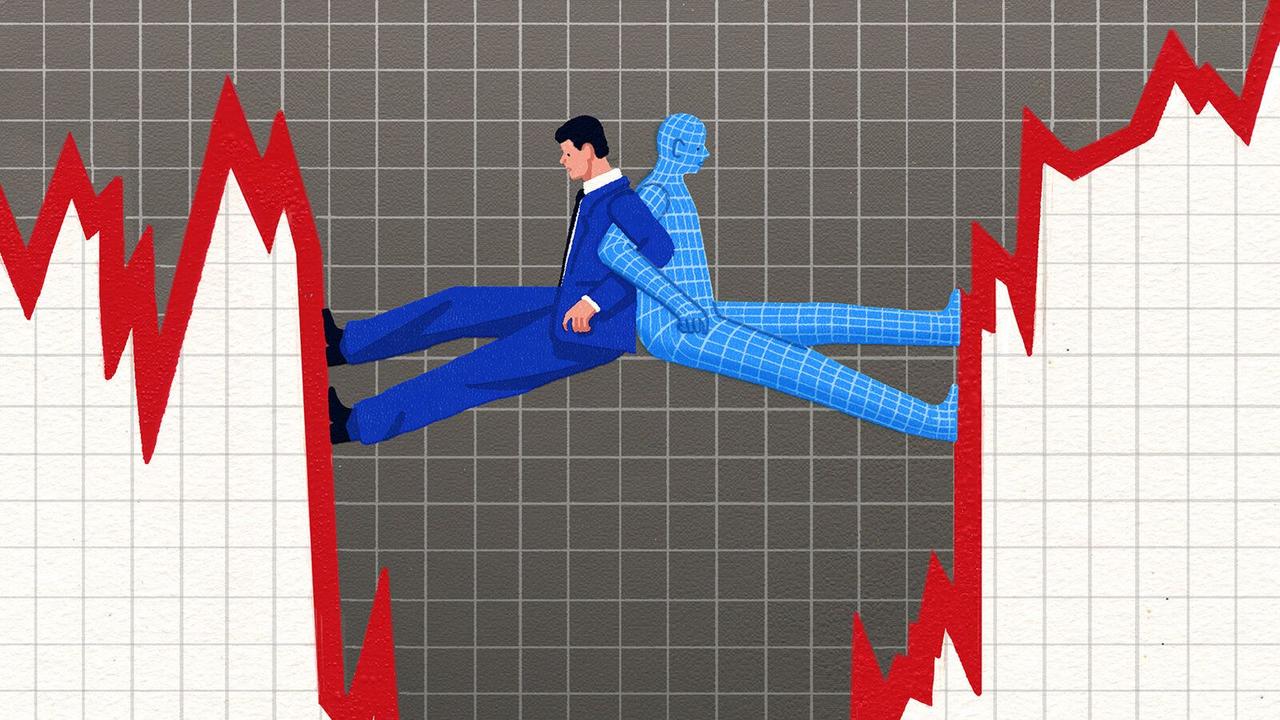
. Investors made major pullbacks in chip stocks last week, with information technology becoming the worst-performing group in the S&P 500 Index, falling 1.6 percent, while the tech-heavy Nasdaq 100 Index lost 4.1 percent4
.
Source: NYT
Investor concern about runaway AI spending with little return on investment is behind the market sell-off, analysts report. "Investors are getting to the point where they're uncomfortable with how much money is being spent, and they're worried about a bubble," said Jake Seltz, portfolio manager at Allspring Global Investments
4
. The hyperscalers' spending has decimated their free cash flow, with 2026 estimates for the group dropping to nothing from $300 million in 20244
.Related Stories
Economic Vulnerability Through the Wealth Effect
What makes this AI bubble particularly dangerous is the wealth effect it creates. Economic research has found that for every $100 investors gain in their stock portfolios, they spend about $3 more on goods and services
1
. At present valuation, a 30 percent stock market decline could lead to a nearly $700 billion pullback in consumer spending—enough to set off a recession on its own1
. "Times when the market seems like it's highest are times when that wealth effect can have the biggest bite," said Gabriel Chodorow-Reich, a Harvard economist who has studied the wealth effect1
.Bank of America's monthly global fund-manager survey for July reported a bursting of the AI bubble as the key risk to financial markets—and now the key economic risk to the economy
1
. The International Monetary Fund is citing it as a significant risk to financial stability and warning about what might happen when it bursts: diminished investment, tighter credit, reduced consumption, disrupted trade flows2
. Unlike the dot-com bubble or housing crisis, this bubble is being inflated by hyper-rich corporations rather than kitchen-table investors, potentially making it both longer lasting and more painful when it pops2
.References
Summarized by

Navi
[2]
[4]
[5]
Related Stories
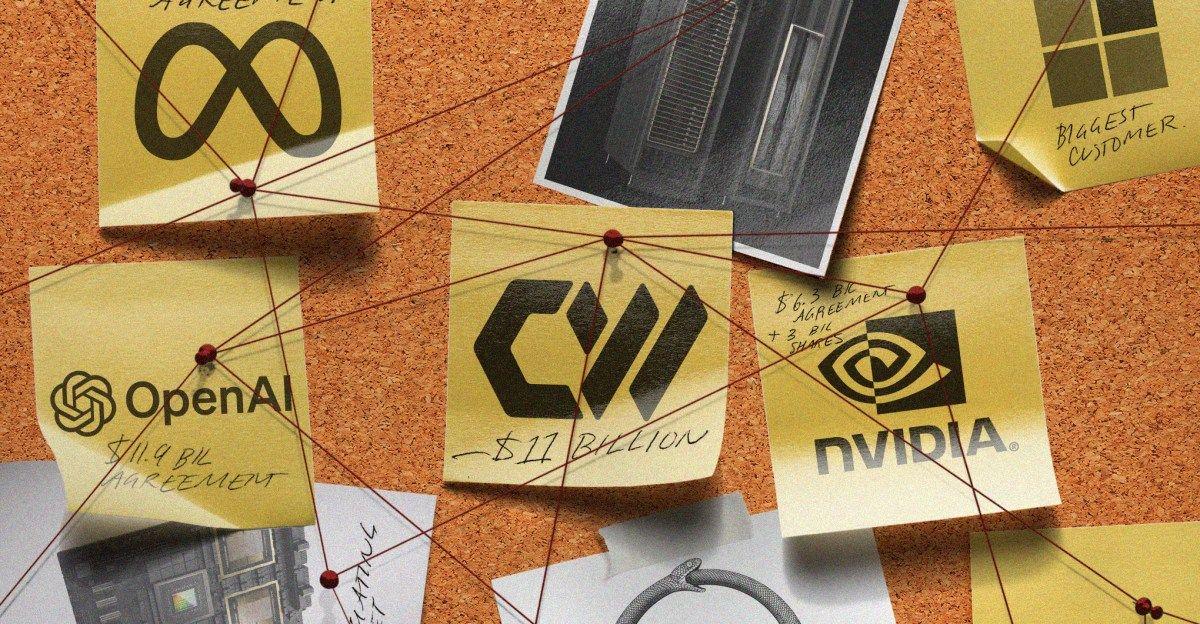
AI Infrastructure Bubble Concerns Mount as CoreWeave's Financial Engineering Raises Red Flags
18 Nov 2025•Business and Economy
OpenAI's Trillion-Dollar Gamble: Massive Investments in AI Computing Power Raise Bubble Concerns
03 Oct 2025•Business and Economy

Sam Altman Warns of AI Bubble While OpenAI Seeks $500B Valuation
16 Aug 2025•Business and Economy
Recent Highlights



Recent Highlights
Today's Top Stories









Don’t drown in AI news. We cut through the noise - filtering, ranking and summarizing the most important AI news, breakthroughs and research daily. Follow topics that matter to you and stay ahead.


