3 Sources
[1]
AI-designed drug candidate reverses biological age in clinical study
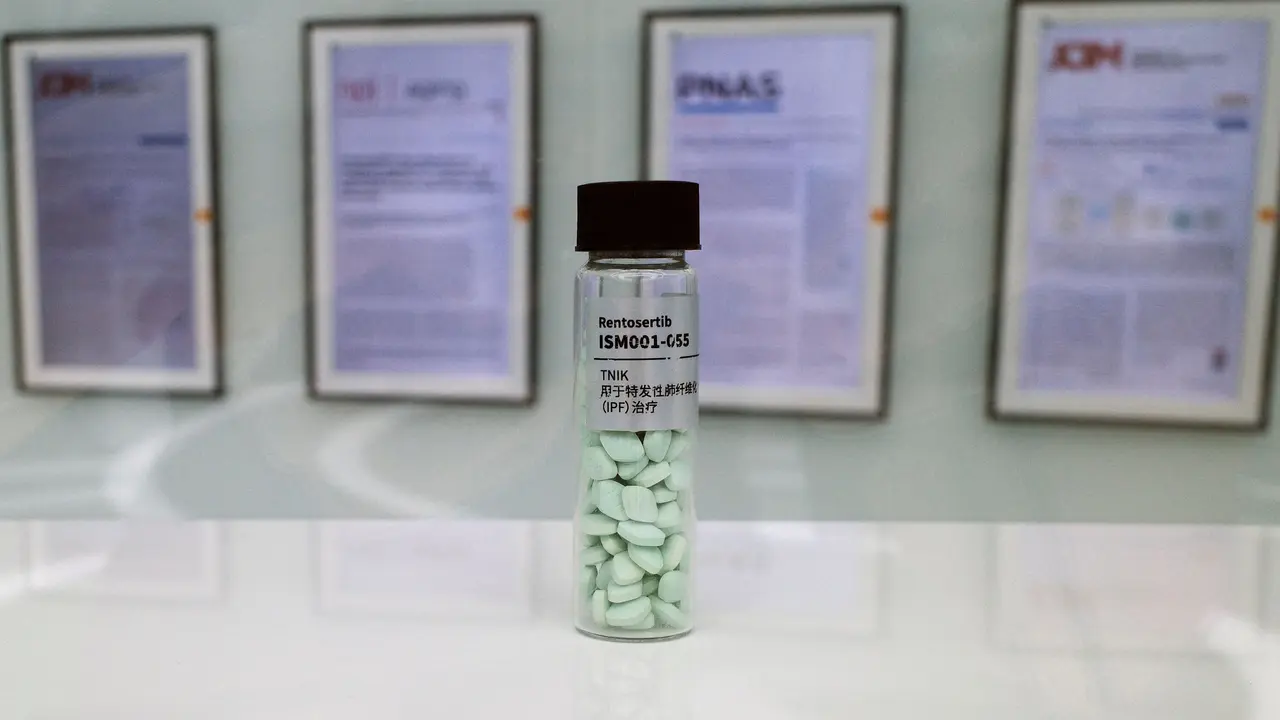
Insilico Medicine ("Insilico"), a clinical-stage company focused on generative AI-driven drug discovery and development, today announced the publication of a new study conducted in collaboration with an international team of scientists from Harvard Medical School, Stanford University, The Broad Institute, RWTH Aachen University, Peking University and Westlake University. Using longitudinal Olink proteomic data (CNCB OMIX accession: OMIX008341) collected during a Phase IIa clinical trial of rentosertib, researchers evaluated biological age using six internationally recognized, independently developed proteomic aging clocks. All six models consistently indicated a reduction in predicted biological age among patients treated with rentosertib. In addition, the Forced Vital Capacity (FVC), the essential measure of lung function declining with age, showed promising dose-dependent reversal compared to placebo aligning with the proteomic aging clock age reversal. Recently published in Nature Biotechnology, the study represents the first clinical evaluation of a potentially first-in-class drug candidate featuring both an AI-discovered target with relevance to aging and disease biology and an AI-designed molecule, rather than a repurposed generic drug such as rapamycin or metformin. The findings also provide a proof-of-concept framework for integrating aging biomarkers into standard clinical trials to accelerate the discovery of geroprotective drugs and longevity therapeutics. The results will be presented by first author Alex Zhavoronkov, founder and CEO of Insilico Medicine, at the Nature conference: Redefining Healthcare in the Age of AI, to be held at Sorbonne University in Paris on September 8, 2026. From aging biology to a clinical drug Unlike traditional geroscience studies that rely on repurposed drugs like rapamycin or metformin, Insilico pursued a different approach by incorporating aging biology into its drug discovery strategy from the outset. Using its AI-powered target discovery platform, Insilico identified TNIK as a novel target implicated in aging and fibrosis and performed hallmarks of aging assessment where TNIK scored highly in 6 hallmarks. TNIK was subsequently prioritized as a dual-purpose target relevant to both underlying aging biology and idiopathic pulmonary fibrosis (IPF). Insilico's generative chemistry platform, Chemistry42, was then deployed to design the small-molecule candidate rentosertib targeting TNIK. The program progressed from target identification to preclinical candidate nomination in approximately 18 months, with the preclinical findings published in Nature Biotechnology in 2024. In June 2025, Insilico reported the results of a Phase IIa trial of Rentosertib for IPF (NCT05938920) in Nature Medicine. The trial met its primary safety endpoint and demonstrated a promising dose-dependent trend in efficacy. One of the common efficacy outcome measures is Forced Vital Capacity (FVC), the essential measure of lung function. The typical age of onset of IPF is around 65 years. Interestingly, in healthy individuals older than 65, FVC declines as well typically at the rate of 20-50 mL/year and may also serve as a potential physiological biomarker of aging. In the previous publication, it was revealed that in the 60-mg once-daily group, patients experienced a mean improvement in forced vital capacity (FVC) of +98.4 mL, compared with a mean decline of -20.3 mL in the placebo group (-62.3 excluding outlier). Crucially, the trial protocol prospectively included longitudinal serum proteomic screening for exploratory biomarker analyses, which proved consistent with the drug's proposed anti-fibrotic and anti-inflammatory activity. All data collected from the trial were subsequently deposited with the China National Center for Bioinformation (CNCB), enabling the current investigation of biological aging biomarkers. Six different clocks point to strong biological age reversal measured by proteomics In the current study, researchers evaluated serum proteome profiles from 42 trial participants across 2,841 proteins. The team applied six independently developed proteomic aging clocks, including ProtAge, OrganAge (chronological and mortality variants), PAC, ipfP3GPT, and PAOPAC. Despite relying on diverse methodologies and training criteria, all six clocks consistently exhibited a trend toward reversed biological age among rentosertib-treated patients compared to placebo. The peak effect is observed at Week 4 in participants receiving 30 mg BID with approximately 3-4 years reversal in biological age and up to 6 years in a certain aging clock. Rentosertib decreases predicted biological age across various regimens as measured by most aging clocks, most significantly in the 30 mg BID group and in week 4. Beyond changes in biological age scores, the study showed that rentosertib's anti-aging effects operate partially independent of its respiratory benefits. Notably, the dose associated with the greatest improvement in lung function differed from that producing the strongest age-reversal signal, suggesting that the drug's geroprotective activity was not merely a downstream consequence of disease improvement. This systemic impact was further validated through comparisons with 55,319 UK Biobank profiles, which showed that rentosertib directly reversed the typical age-related protein-expression trajectories. Mechanistically, the drug acted as a senomorphic agent, suppressing key drivers of cellular senescence, including EREG, ESM1, IGFBP4, ITGA2, MMP10, MMP13, and SPP1 while downregulating growth-factor signaling pathways associated with accelerated aging, including RTK-PI3K and RAS-ERK, and modulating antioxidant and cholesterol metabolisms. A framework for the future To support reproducibility and further research, all research data have been deposited at CNCB (accession OMIX008341), and the underlying pipeline code has been published as the open-source Python library on GitHub. Beyond these specific findings, the study lays out a scalable blueprint for embedding geroscience endpoints into disease-focused drug development. The research proposes a stepwise framework: collecting aging and senescence biomarkers prospectively as exploratory endpoints in disease trials, and ultimately pursuing biomarker qualification or composite clinical endpoints under the FDA Biomarker Qualification Program and FDA-NIH BEST framework. Such an approach could surface geroprotective candidates years or even decades earlier than the traditional path of post-approval drug repurposing. Insilico's dual-purpose therapeutic strategy is also proving its viability as a sustainable commercial model. Recently, Insilico reported total revenue of approximately $106 million in the first half of 2026, a 287% year-over-year increase, and achieved its first profitable half-year since listing, with an adjusted net profit exceeding $51 million. This milestone was driven by a series of out-licensing, co-development, and R&D collaborations with global partners, including Eli Lilly, Servier, Takeda, SK Biopharmaceuticals, Qilu Pharmaceutical, Hygtia Therapeutics, CMS, and Tenacia. As of the latest practicable date, the total contract value of transactions announced by Insilico in 2026 reached approximately $7.3 billion, pushing the cumulative contract value of its major collaborations since 2021 approximately $11 billion. On the AI-driven R&D front, Insilico nominated nine development candidates within nine months of 2026 as of late August, setting a new company record for annual pipeline productivity and achieving eight clinical milestones across its proprietary and co-developed programs. Leading this progress is rentosertib (ISM001-055), the world's first drug candidate discovered and developed using generative AI, which has advanced to a Phase III trial evaluating for idiopathic pulmonary fibrosis (IPF). In addition, Insilico Medicine launched a comprehensive set of benchmarks that allow foundation models to be evaluated in all tasks needed for drug discovery and launched state of the art (SOTA) foundation models outperforming other models and even internal tools in benchmarks. Using this new capability Insilico hopes to expand and accelerate longevity drug discovery and development both in terms of scale, therapeutic modalities, and indications. Industry commentary "Six proteomic clocks from six independent groups, applied to the same 42 patients, all reported a younger biological age in the treated arms. What convinces me is not the size of the effect but the agreement, because these models share neither their features nor their training data." said Michael Levitt, PhD, 2013 Nobel Prize laureate in Chemistry. "This trial cannot yet separate slower aging from a treated lung, and the authors say so plainly. The experiment in healthy volunteers is the one I want to see next." " Insilico Medicine was built with one purpose - to develop a credible and sustainable business model for the development of frontier deep learning technology and its application to practical aging research and drug discovery with the purpose of developing using AI and practical discovery and development of longevity therapeutics. This first program demonstrates the first proof of concept for the novel dual-purpose therapeutic targeting aging but proposed toward the age-related disease discovered in record time making exploratory development in multiple indications commercially viable. Today, the majority of Insilico's 40+ drug programs have dual purpose targeting aging and disease in a broad range of therapeutic areas. By pursuing a credible biotechnology business model, the company reached profitability and established the longevity board, which is rare for the publicly-traded frontier biotechnology company. I am also happy that the drug carries the name of the true hero of the AI drug discovery revolution, our co-CEO, Dr. Ren. The social and economic opportunity for drugs reversing biological age is vast - trillions of dollars and billions of life years. If you add just 3 extra years to everyone's lifespan, that translates into roughly 25 billion life years on the global scale - at current life expectancy, that is roughly 340 million human lifetimes. More lifetimes than humanity lost in all the wars ever fought. If you manage to add 3 years to everyone's life, the drug should be able to significantly extend the healthy portion of life as well translating into trillions of dollars in productivity and savings" , said Alex Zhavoronkov, PhD, founder and co-CEO of Insilico Medicine. " In this study, we evaluated clinical trial data to compare the blood proteomic profiles of pulmonary fibrosis patients treated with Rentosertib versus placebo" , said Ludger Goeminne, Research Fellow in Medicine at Harvard Medical School, and co-author of the paper. "Using six proteomic aging clocks including models our team published in Cell Metabolism, we observed significant reductions in predicted biological age across multiple organ-specific clocks, and further pathway analysis confirmed that Rentosertib's biological impact extends far beyond merely reducing fibrosis." "As the developer of PAOPAC (Proteome-Aware Organ Proxy Aging Clock), I am thrilled to see our tool applied to the analysis of the Phase IIa clinical trial for rentosertib. Dr. Zhavoronkov and his colleagues are the first to systematically evaluate a novel drug candidate using multiple proteomic aging clocks within a single clinical trial cohort. The methodologies underlying these clocks range from traditional machine learning (OrganAge, PAOPAC, PAC) to deep learning (ProtAge, ipfP3GPT), with training targets encompassing both chronological age (ProtAge, OrganAgechrono, ipfP3GPT, PAOPAC) and mortality risk (PAC, OrganAgemortality). Across the board, these clocks consistently predicted a reduction in biological age within the rentosertib treatment group. This cross-model consistency demonstrates that rentosertib's effect on aging-related proteomic signals is not a model-specific artifact, but rather a highly robust biological phenomenon." said Professor Jing-Dong Jackie Han, Peking-Tsinghua Center for Life Sciences, Academy for Advanced Interdisciplinary Studies, Center for Quantitative Biology (CQB), China. " Furthermore, this study establishes a relatively comprehensive workflow for the standardized application of aging clocks in clinical trials, covering cohort establishment, omics profiling, multi-clock parallel analysis, result cross-validation, and mechanistic interpretation. It also introduces an innovative practical approach to clinical trial design: evaluating aging biomarkers in parallel during trials targeting specific indications, particularly age-related diseases. This strategy holds great promise for accelerating the discovery and validation of longevity interventions. Finally, my congratulations on the breakthrough achieved with rentosertib -- an innovative drug discovered in China and clinically evaluated primarily in Chinese patient cohorts. As a domestic Chinese research team behind the development of aging clocks, we look forward to witnessing more industry-academia-research collaborations driving future clinical trials in aging interventions." Source: Insilico Medicine Journal reference: Zhavoronkov, A., et al. (2026). Integration of proteomic aging clocks in a phase 2a clinical trial supports simultaneous geroprotective assessment. Nature Biotechnology. DOI: 10.1038/s41587-026-03286-y. https://www.nature.com/articles/s41587-026-03286-y
[2]
Early Data Indicates an A.I.-Generated Drug Could Slow Aging
Sign up for Science Times Get stories that capture the wonders of nature, the cosmos and the human body. Get it sent to your inbox. Last year, a clinical trial conducted by Insilico Medicine, a company that aims to accelerate drug discovery using artificial intelligence, indicated that one of its drug candidates could help treat patients suffering from a chronic lung disease. Now, the company says that data from the same clinical trial shows a more intriguing possibility: that the drug could also slow the aging process. The molecular structure of the drug, called rentosertib, was generated with the assistance of A.I. Results of the new study, published Monday in the journal Nature Biotechnology, show that the drug reduced the biological markers of age as measured by six "aging clocks," a different kind of A.I. technology designed to predict a person's morbidity and mortality. This elaborate clinical trial is a milestone in the widespread effort to improve health care using the same A.I. techniques that underpin popular chatbots like ChatGPT and image generators like Midjourney. Insilico is just one of many start-ups, tech giants and academic labs working to accelerate drug discovery and hone other medical tasks with help from these methods. The recent rise of aging clocks is helping to push these efforts beyond short-term treatments and into the realm of longevity research. These systems estimate how quickly a person's body is aging -- or even how quickly individual organs are aging relative to the rest of the body. But scientists continue to debate how much useful information these so-called clocks are able to provide. While Insilico's clinical trial shows the promise of several A.I. techniques, its drug candidate could still be years away from regulatory approval, even for use in sick patients. And the company has not yet tested its anti-aging effects in healthy patients. "This drug looks encouraging," said Eric Topol, a cardiologist and the author of the book "Super Agers." "But we do not yet have a definitive trial to make the final judgment." Insilico began exploring the new wave of A.I. technologies more than a decade ago. Founded in 2014 by Alex Zhavoronkov, a Latvian-Canadian mathematician, physicist and biotechnologist, the company was among the earlier efforts to streamline drug discovery using what are called neural networks. Using techniques similar to those that train A.I. systems like ChatGPT, Insilico first built a model to analyze a giant pool of data spanning health records for thousands of medical patients; blood tests describing the microscopic proteins created inside their bodies; and myriad academic papers detailing the effects of these proteins. With this system, the company is trying to identify particular proteins that lead to illness and disease. Insilico then built a second system that analyzes troves of data describing the physical shape of proteins and the way these tiny biological mechanisms bind to other molecules. This system is designed to generate entirely new molecules that could bind to a particular drug target and neutralize its effects. "It is like scanning a lock and generating a key that fits the lock," Dr. Zhavoronkov said in an interview. This is how he and his company developed rentosertib, which is meant to treat a disease called idiopathic pulmonary fibrosis, or I.P.F. Sometimes called "the Alzheimer's of the lungs," I.P.F. is a chronic disease that thickens and scars pulmonary tissue, reducing its ability to move oxygen into the bloodstream. The condition can lead to death, even within a few years. Last year, with its clinical trial, Insilico showed that its drug candidate could significantly expand air capacity inside the lungs of patients who had I.P.F. But that was only part of the trial. Dr. Zhavoronkov said his company also designed the drug in an effort to generally extend a patient's life span. Separate from the tests involving I.P.F., the trial used six aging clocks to measure the markers of age in patients both before and after treatment with the drug. Across the 43 patients who participated in the trial, the clocks -- which essentially try to predict a person's age based on measurements of how well their cell, tissues and organs are functioning -- showed significant reductions in the predicted age. Each clock relies on a different analysis of those markers that yields a different prediction. During the trial, all six clocks showed a reduction in predicted age after patients took the drug for 12 weeks. "This is the first study that shows, very clearly, that predicted biological age can be reduced," said Vadim Gladyshev, a Harvard Medical School professor who helped build one of these aging clocks. He acknowledged, however, that the study was far from conclusive, pointing out that the sample size was small and that aging clocks are not always reliable. Most notably, Insilico's drug has not yet been tested in healthy patients: Because the company conducted its clinical trial solely with I.P.F. patients, the results could be unique to those with this particular condition. But some experts believe that Insilico's elaborate study could serve as a blueprint for future longevity research. "These are methods we will use in future trials," said Evelyne Bischof, a professor of medicine at Tel Aviv University who specializes in longevity.
[3]
Insilico says its AI-designed lung drug lowered biological age markers in a 42-patient trial
Six proteomic ageing clocks agreed the treated arms looked younger. The authors say they cannot yet separate slower ageing from a treated lung. Blood samples from a small lung-disease trial have been run through six independently built ageing clocks, and all six returned the same answer: the patients on the drug looked biologically younger than the patients on placebo. "More lifetimes than humanity lost in all the wars ever fought. If you manage to add 3 years to everyone's life, the drug should be able to significantly extend the healthy portion of life as well, translating into trillions of dollars in productivity and savings", said Alex Zhavoronkov, PhD, founder and co-CEO of Insilico Medicine. The analysis, published in Nature Biotechnology by Insilico Medicine, concerns rentosertib, a TNIK inhibitor for idiopathic pulmonary fibrosis that the company designed using generative AI. The work is a secondary analysis rather than a new trial. Of the 71 patients in rentosertib's phase 2a study, 42 consented to proteomic profiling, giving samples at baseline and at weeks two, four, and twelve. Some 2,841 proteins were measured on an Olink panel and scored against six clocks built by different groups using different methods, with 55,319 UK Biobank profiles as the reference population. The largest effect appeared at week four in the 30mg twice-daily arm, where the chronological clocks put the treated patients between 2.7 and 3.5 years younger than expected. Insilico's own summary of the work describes roughly three to four years, and up to six on certain clocks, which is the upper end of the range rather than its centre. The authors are direct about the problem with all of it. The study, they write, cannot yet separate slower ageing from a treated lung. Idiopathic pulmonary fibrosis is itself an inflammatory disease that shows up in blood proteins, so a drug that improves the lung would be expected to move the same markers without touching ageing anywhere else. They attempted to address this by showing that the 30mg twice-daily arm reversed age-associated protein patterns while placebo drifted along a normal ageing trajectory, which is suggestive rather than conclusive. The disease is why anyone is trying. Idiopathic pulmonary fibrosis scars the lungs progressively and without a known cause, and the two approved antifibrotics, nintedanib and pirfenidone, slow the decline in lung function rather than halt or reverse it. A drug that produced a measured gain in forced vital capacity rather than a slower loss would be a meaningful result on its own terms, entirely separately from anything to do with ageing. The clocks themselves are real research instruments, not marketing. Proteomic ageing scores of this kind predict mortality and the risk of common age-related disease across large and diverse populations, and organ-specific versions have been validated on similar cohorts. What they are not is a regulatory endpoint. No medicines regulator licenses a drug on a change in proteomic age. Michael Levitt, the 2013 chemistry Nobel laureate, framed his interest carefully. "Six proteomic clocks from six independent groups, applied to the same 42 patients, all reported a younger biological age in the treated arms. What convinces me is not the size of the effect but the agreement, because these models share neither their features nor their training data," he said. That is the study that would settle whether anything here generalises beyond sick lungs. The trial underneath the analysis was modest, and its primary endpoint was safety. Across 21 Chinese sites over 12 weeks, adverse events occurred at similar rates in every arm, and the 60mg once-daily group gained 98.4ml of forced vital capacity against a 20.3ml decline on placebo. Seven patients discontinued because of liver toxicity, four of them while also taking nintedanib, the existing standard of care. Rentosertib entered phase 3 in July, which is where the efficacy question gets answered for the lung, though not for ageing. Insilico deposited the proteomic data with the China National Center for Bioinformation and released its analysis pipelines as open-source software, which makes the claim checkable by people who did not write it. For a field where AI drug discovery has produced more announcements than approvals, the deposited data and open pipelines are arguably the more interesting result here. The biological age number is a hypothesis with a sample size of 42.
Share
Copy Link
Insilico Medicine's AI-generated drug rentosertib reduced biological age markers by 3-4 years in a 42-patient trial for idiopathic pulmonary fibrosis. Published in Nature Biotechnology, the study used six proteomic aging clocks that all showed consistent age reversal. However, researchers cannot yet separate the anti-aging effects from improved lung function.
Insilico Medicine published groundbreaking clinical trial data in Nature Biotechnology
1
showing that rentosertib, an AI-designed drug, reduced biological age markers in patients. The clinical trial evaluated 42 participants who consented to proteomic profiling from a larger 71-patient Phase IIa study3
. Using longitudinal Olink proteomic data across 2,841 proteins, researchers applied six independently developed proteomic aging clocks to measure changes in predicted biological age. All six models consistently indicated a reduction in biological age among patients treated with the AI-generated drug1
.The peak effect appeared at Week 4 in participants receiving 30 mg twice daily, with approximately 3-4 years reversal in biological age and up to 6 years on certain aging clocks
1
. The six aging clocks used included ProtAge, OrganAge, PAC, ipfP3GPT, and PAOPAC, each relying on diverse methodologies and training criteria1
. This marks the first clinical evaluation of a drug candidate featuring both an AI-discovered target with relevance to aging biology and an AI-designed molecule, rather than repurposed generic drugs like rapamycin or metformin1
.
Source: NYT
Insilico Medicine built its AI-driven drug discovery approach using neural networks similar to those powering ChatGPT
2
. Founded in 2014 by Alex Zhavoronkov, the company developed two complementary systems. The first analyzes health records, blood tests describing microscopic proteins, and academic papers to identify proteins that lead to illness. The second system uses generative AI to analyze protein structures and generate new molecules that could bind to specific drug targets2
.
Source: The Next Web
Using its AI-powered target discovery platform, Insilico Medicine identified TNIK as a novel target implicated in aging and fibrosis. TNIK scored highly in 6 hallmarks of aging assessment and was prioritized as a dual-purpose target relevant to both underlying aging biology and idiopathic pulmonary fibrosis
1
. The company's generative chemistry platform, Chemistry42, then designed the small-molecule candidate rentosertib targeting TNIK. The program progressed from target identification to preclinical candidate nomination in approximately 18 months1
.The Phase IIa trial of rentosertib for idiopathic pulmonary fibrosis met its primary safety endpoint and demonstrated promising dose-dependent efficacy trends
1
. In the 60 mg once-daily group, patients experienced a mean improvement in Forced Vital Capacity (FVC) of +98.4 mL, compared with a mean decline of -20.3 mL in the placebo group1
. This lung function measure is significant because FVC typically declines at 20-50 mL per year in healthy individuals older than 651
.The trial was conducted across 21 Chinese sites over 12 weeks, with adverse events occurring at similar rates in every arm
3
. However, seven patients discontinued because of liver toxicity, four of them while also taking nintedanib, the existing standard of care3
. Rentosertib entered Phase 3 trials in July, which will answer the efficacy question for lung function, though not specifically for aging effects3
.The study's authors acknowledge a fundamental limitation: they cannot yet separate slower aging from improved lung function
3
. Since idiopathic pulmonary fibrosis is itself an inflammatory disease that shows up in blood proteins, a drug that improves the lung would be expected to move the same markers without necessarily affecting aging elsewhere in the body3
. The authors attempted to address this by showing that the 30 mg twice-daily arm reversed age-associated protein patterns while placebo drifted along a normal aging trajectory, though this remains suggestive rather than conclusive3
.Eric Topol, a cardiologist and author of "Super Agers," noted that while the drug looks encouraging, "we do not yet have a definitive trial to make the final judgment"
2
. Most notably, the AI-designed drug has not yet been tested in healthy patients2
. Testing in healthy populations would be essential to determine whether the biological age reversal effects generalize beyond sick lungs3
.Related Stories
The rise of aging clocks is pushing AI-driven drug discovery efforts beyond short-term treatments and into longevity research
2
. These systems estimate how quickly a person's body is aging or even how quickly individual organs are aging relative to the rest of the body. Vadim Gladyshev, a Harvard Medical School professor who helped build one of these proteomic aging clocks, stated: "This is the first study that shows, very clearly, that predicted biological age can be reduced"2
.However, scientists continue to debate how much useful information these aging clocks provide
2
. Proteomic aging scores predict mortality and the risk of common age-related disease across large and diverse populations, and organ-specific versions have been validated on similar cohorts3
. What they are not is a regulatory endpoint—no medicines regulator licenses a drug based on a change in proteomic age3
. The study provides a proof-of-concept framework for integrating aging biomarkers into standard clinical trials to accelerate the discovery of geroprotective drugs and longevity therapeutics1
.
Source: News-Medical
Insilico Medicine deposited the proteomic data with the China National Center for Bioinformation (CNCB OMIX accession: OMIX008341) and released its analysis pipelines as open-source software
3
. This makes the claim checkable by researchers who did not write it. Michael Levitt, the 2013 chemistry Nobel laureate, emphasized the significance of the methodological agreement: "Six proteomic clocks from six independent groups, applied to the same 42 patients, all reported a younger biological age in the treated arms. What convinces me is not the size of the effect but the agreement, because these models share neither their features nor their training data"3
.For a field where AI drug discovery has produced more announcements than approvals, the deposited data and open pipelines represent a meaningful step toward transparency
3
. The biological age number remains a hypothesis with a sample size of 42, but the open methodology allows independent verification. Watch for Phase 3 trial results on lung function efficacy and potential future trials in healthy populations to determine whether these biological age reversal effects extend beyond treating disease to enhancing healthy lifespans.Summarized by
Navi
16 Mar 2025•Science and Research

28 Jan 2025•Science and Research

15 Aug 2026•Science and Research

1
Technology

2
Policy and Regulation

3
Technology