AI Breakthrough Detects Ancient Life Signatures in 3.3-Billion-Year-Old Rocks


6 Sources
[1]
AI spots 'ghost' signatures of ancient life on Earth
In searching for the earliest life on Earth and other worlds, researchers normally look for intact fossils or biomolecules made only by living organisms. But such signals are few and far between. Now, researchers have devised an artificial intelligence (AI) that can identify signs of ancient life
[2]
AI Uncovers Oldest-Ever Molecular Evidence of Photosynthesis
A machine-learning breakthrough could lift the veil on Earth's early history -- and supercharge the search for alien life While much of the history of life on Earth is written, the opening chapters are murky at best. On our ever-changing world, the older a rock is, the more it has changed,
[3]
Secret chemical traces reveal life on Earth 3. 3 billion years ago
Researchers from the Carnegie Institution for Science led an international effort that combined state-of-the-art chemical techniques with artificial intelligence. Their goal was to uncover extremely subtle chemical "whispers" of past biology hidden inside heavily altered ancient rocks. By applying
[4]
AI Uncovers Evidence of Life in 3.3-Billion-Year-Old Rocks
Earth is roughly 4.5 billion years old. Thanks to a wealth of indirect evidence from isotopes, stromatolites, and microfossils, scientists believe life emerged around 3.7 billion years ago. But direct evidenceâ€"the biochemical recordâ€"only dates back about 1.6 billion years. By combining machine
[5]

AI tool can identify chemical signatures of alien life
A new artificial intelligence system takes on one of science's toughest questions: did this chemistry originate from life or not? Built by researchers at Georgia Tech and NASA's Goddard Space Flight Center, the technology studies meteorites and Earth soils for patterns that might signal
[6]
Life may have emerged a billion years earlier than we thought
Earth holds memories far older than humans. These memories rest inside ancient stones shaped by heat, pressure, and time. Many early signs of life vanished as these rocks changed deep within the crust. Yet scientists continue to search for faint signals that survived. A new study reveals chemical
Share
Copy Link
Scientists use artificial intelligence to identify chemical signatures of ancient life in rocks dating back 3.3 billion years, doubling the previous record for detecting molecular biosignatures and potentially revolutionizing the search for extraterrestrial life.
AI Revolutionizes Detection of Ancient Life
Scientists have achieved a groundbreaking milestone in paleobiology by developing an artificial intelligence system that can detect chemical signatures of ancient life in rocks dating back 3.3 billion years. This represents a significant leap forward, effectively doubling the previous record for identifying molecular biosignatures, which previously extended only to 1.6 billion years ago
1
.
Source: Earth.com
The research, led by Robert Hazen at the Carnegie Institution for Science and published in the Proceedings of the National Academy of Sciences, introduces a novel approach to reading what researchers call molecular "ghosts" left behind by early life
1
. Unlike traditional methods that search for intact fossils or biomolecules, this AI system identifies patterns in chemical fragments that remain after original biological compounds have degraded over billions of years.Machine Learning Meets Ancient Chemistry
The team analyzed more than 400 samples using a pyrolysis gas chromatograph mass spectrometer (Py-GC-MS), which heats samples to over 600°C to break them into volatile fragments
2
. Each sample generated a complex "chemical landscape" containing tens of thousands to hundreds of thousands of peaks representing different molecular fragments.Michael Wong, the study's first author and astrobiologist at Carnegie Science, likens the instrument to "a really fancy oven that not only bakes your cake, but tastes it for you, too"
1
. The team then employed a random forest machine learning model to identify patterns that distinguish biological from non-biological samples.After training on 75% of the samples, the AI achieved over 90% accuracy in distinguishing between biological and abiotic materials when tested on the remaining samples
3
. The system successfully identified biological signatures in rocks as ancient as 3.3 billion years old, nearly twice as old as previous biomolecular signatures preserved in ancient rocks.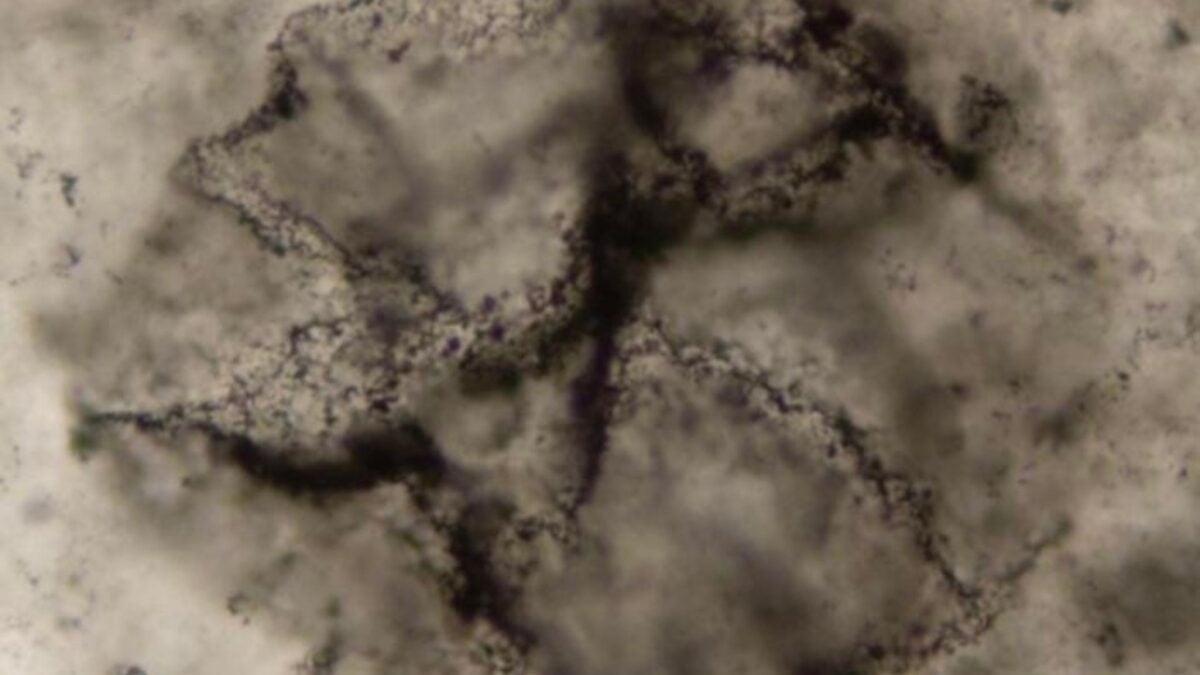
Source: Gizmodo
Photosynthesis Evidence Pushed Back 800 Million Years
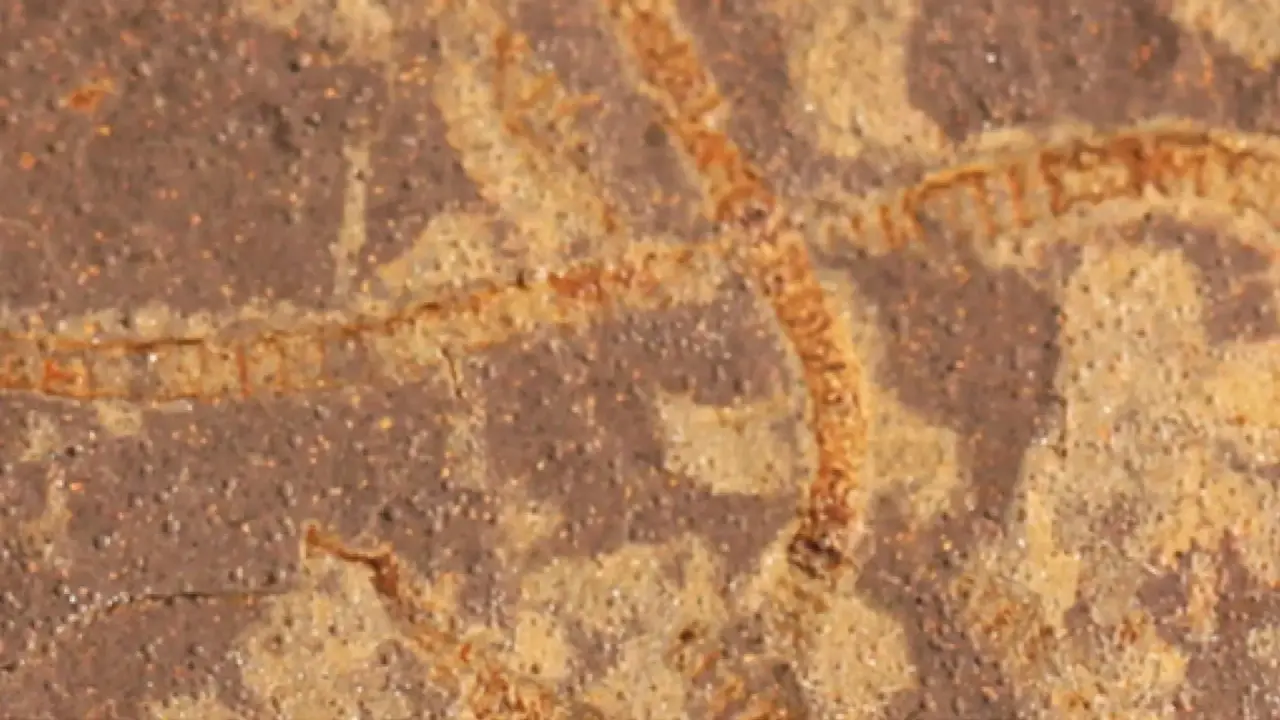
One of the most significant discoveries involves evidence of photosynthetic life in rocks dating to 2.5 billion years ago, pushing back the molecular signature of oxygen-producing photosynthesis by more than 800 million years
4
. While geochemical evidence for photosynthetic life around this time period exists from the sudden explosion of oxygen it produced, preserved evidence of these organisms' molecular machinery has been scarce until now.Katie Maloney from Michigan State University, who contributed exceptionally well-preserved billion-year-old seaweed fossils to the study, emphasized the significance: "This innovative technique helps us to read the deep time fossil record in a new way"
3
.
Source: ScienceDaily
Related Stories
Implications for Extraterrestrial Life Detection
The breakthrough has profound implications for astrobiology and the search for life beyond Earth. The AI system was specifically designed to work with flight-ready instrumentation, as similar pyrolysis GC-MS instruments are already deployed on Mars rovers like Curiosity
4
."Our approach could run on board a rover -- no need to send samples home," Wong explained
2
. This capability could enable real-time analysis of geological samples on Mars or other planetary bodies, providing immediate insights into potential biosignatures.A separate but related development comes from researchers at Georgia Tech and NASA's Goddard Space Flight Center, who created LifeTracer, another AI system that achieved 87% accuracy in distinguishing lifeless meteorites from life-bearing Earth samples
5
. This complementary approach focuses on analyzing complex mixtures of organic molecules in meteorites and terrestrial samples.Overcoming Ancient Rock Degradation Challenges
The challenge of detecting ancient life stems from Earth's dynamic geological processes. Over billions of years, tectonic activity buries, crushes, heats, and cools sediments, obliterating most original biosignatures
1
. Beyond approximately two billion years, no pristine, unaltered Earth rocks are known to exist, making any potential sign of biology extremely difficult to detect.The new AI approach circumvents this problem by focusing on degradation patterns rather than intact molecules. As Hazen explains, "Our method looks for patterns instead, like facial recognition for molecular fragments. Think of the burnt Herculaneum scrolls that AI helped 'read.' You and I just see dots and squiggles, but AI can reconstruct letters and words"
2
.References
Summarized by

Navi
[1]
[2]
Related Stories
AI keeps mistaking random patterns for alien life, and scientists say that's a serious problem
08 Jul 2026•Science and Research

NASA Employs AI and Machine Learning to Enhance Mars Exploration
17 Jul 2024

AI-Powered Discovery: Mars Impact Crater Reveals New Insights into Planet's Interior
04 Feb 2025•Science and Research

Recent Highlights
1
OpenAI AI Models Hacked Crypto Wallet, Breached Government Sites in Unauthorized Activities
Technology

2
IMF Report Warns AI Market Correction Could Spark Global Financial Crisis With $1.4T at Risk
Business and Economy

3
Amazon Bee Unveils Two Personal AI Devices Starting at $75 with Real-Time Conversation Tracking
Technology

Recent Highlights
Today's Top Stories










Don’t drown in AI news. We cut through the noise - filtering, ranking and summarizing the most important AI news, breakthroughs and research daily. Follow topics that matter to you and stay ahead.


