AI keeps mistaking random patterns for alien life, and scientists say that's a serious problem


2 Sources
[1]
AI labels a lot of stuff as alien life
Don't expect a dramatic, AI-assisted sci-fi encounter if humanity ever definitively detects evidence of intelligent extraterrestrial life. Scouring the stars for signs of aliens is less about waiting for giant unidentified aerial phenomena (UAPs) to fly into view, and more about pouring through
[2]
Scientists say AI is falling for 'alien hoaxes' too easily -- and that's a problem for research
* Researchers have spotted problems with AI pattern matching in science data * It could mean false flags for signatures of life on other planets * AI can still be useful, but checks need to be built in One of the ways AI can be most helpful is in trawling through masses of scientific data that
Share
Copy Link
Researchers at Michigan State University discovered that AI systems designed to detect extraterrestrial biosignatures can be fooled 100% of the time by false positives. The study reveals a critical vulnerability in AI systems used for space exploration, raising concerns about autonomous Mars rovers and deep-space telescopes making life-detection decisions without human oversight.
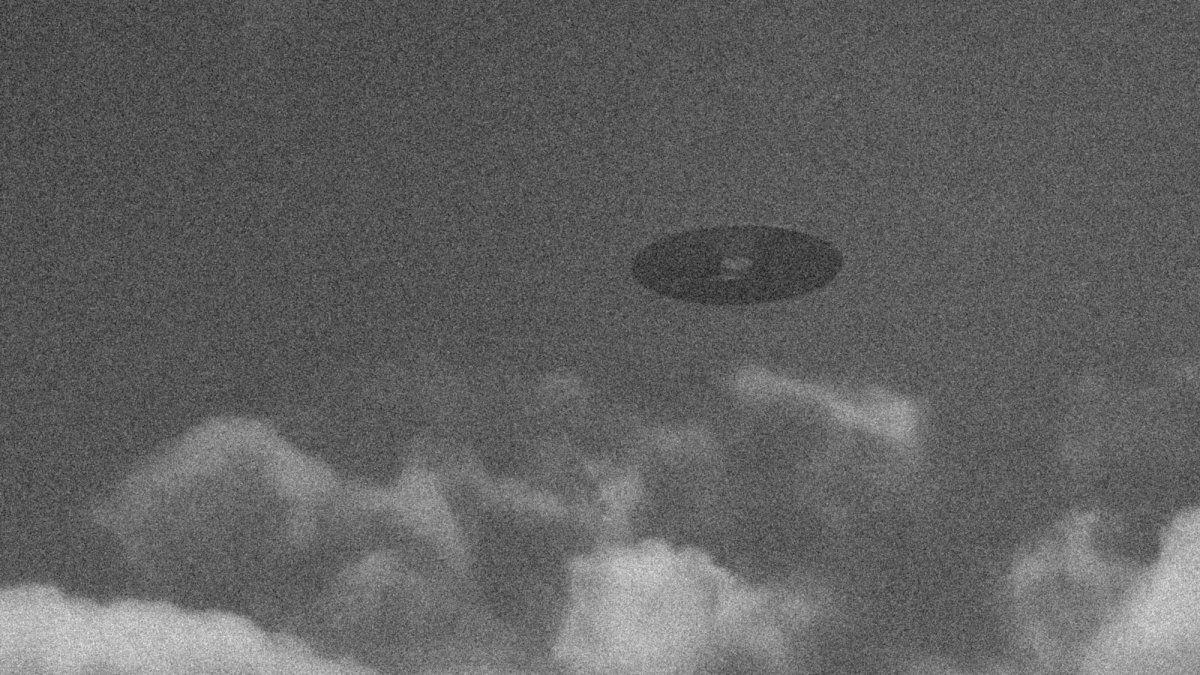
AI Struggles to Accurately Identify Alien Life in New Study
Researchers at Michigan State University have uncovered a troubling weakness in AI systems designed to search for extraterrestrial organisms. In experiments led by computer science engineer Ankit Gupta and colleague Christoph Adami, AI trained to identify biosignatures was fooled by false positives 100% of the time when presented with slightly modified data
1
. The findings suggest that AI misclassifying alien life could undermine future space missions that rely on machine learning to analyze complex data from Mars rovers and planetary probes.The team used a computer program called Avida to simulate evolutionary processes with digital organisms, treating replicating biological molecules like DNA as computer code
1
. After training a neural network on tens of thousands of these digital organisms—some capable of self-replication and others not—the AI achieved a nearly perfect 99.7% accuracy rate on familiar data2
. However, this confidence collapsed when researchers introduced organisms the system hadn't previously encountered.Neural Network Misclassification Reveals Critical Vulnerability
The vulnerability in AI systems became apparent through a simple test. Researchers started with a digital organism that couldn't copy itself, which the AI correctly identified, then made incremental edits—as few as 150 tiny shifts in the organisms' computer code
1
. Each small modification pushed the AI further from its training data comfort zone, causing it to mistake non-living patterns for signs of life. "AI has an Achilles' heel. It can see a pattern and completely misclassify it," Adami explained1
.This pattern-matching reliability issue extends far beyond the search for extraterrestrial organisms. The same AI fooled by false signatures could affect facial recognition software, autonomous technologies like self-driving cars, and medical diagnostics where machine learning programs make critical decisions
1
. The researchers found a vast number of sequences that could trip up the AI, meaning the risk of mistakes is more likely than initially thought2
.Related Stories

Human Oversight in AI Remains Essential for Scientific Discovery
The implications for space missions are particularly concerning. Future Mars rovers and deep-space telescopes may identify life signatures with high confidence without necessarily having humans available to verify their findings
2
. Unlike on Earth, ensuring a second set of human eyes on AI's work aboard remote planetary probes could prove challenging1
.Despite these limitations, the Michigan State University researchers emphasize their findings aren't an indictment of AI in scientific discovery. "You need an independent way of checking [AI's] work," said Adami. "There needs to be a human in the loop"
1
2
. The technology can still prove valuable for analyzing mountains of complex data that human researchers lack time to process, but careful checks and supervision must be built into these systems. As AI continues to assist in the search for life beyond Earth, establishing robust verification protocols will be critical to distinguish genuine discoveries from algorithmic errors.References
Summarized by

Navi
[1]
Related Stories
AI Breakthrough Detects Ancient Life Signatures in 3.3-Billion-Year-Old Rocks
18 Nov 2025•Science and Research

AI fact-checking tools help spot misinformation but weaken your ability to do it independently
11 Jun 2026•Science and Research
Generative AI is contaminating citizen science records with fake wildlife images
20 Jul 2026•Science and Research

Recent Highlights



Recent Highlights
Today's Top Stories






Don’t drown in AI news. We cut through the noise - filtering, ranking and summarizing the most important AI news, breakthroughs and research daily. Follow topics that matter to you and stay ahead.


