AI images claiming to unmask ICE agent in Minneapolis shooting spread confusion and false accusations


6 Sources
[1]
BBC Verify Live: Debunking false claims about Minneapolis ICE shooting
Thomas Copeland BBC Verify Live journalist As footage from yesterday's deadly shooting in Minneapolis has spread online, BBC Verify has seen many attempts to use AI to unmask the ICE agent involved in the shooting. At no point in the footage reviewed by BBC Verify does this agent remove his
[2]
Stop Using AI to Unmask the ICE Agent Who Killed Renee Good
An ICE agent shot and killed 37-year-old Renee Good in Minneapolis on Wednesday, just the latest example of federal authorities terrorizing communities with deadly force at the direction of President Donald Trump. The ICE agent can be seen shooting at Good's car in three separate viral videos,
[3]
See how AI images claiming to reveal Minneapolis ICE agent's face spread confusion
Armchair online detectives keep using artificial intelligence to try to identify people involved in high-profile incidents. It doesn't work. An amateur forensics mob assembled after a federal immigration officer shot and killed Renee Nicole Good in Minneapolis on Wednesday. Using images taken
[4]
AI images and internet rumors spread confusion about ICE agent involved in shooting
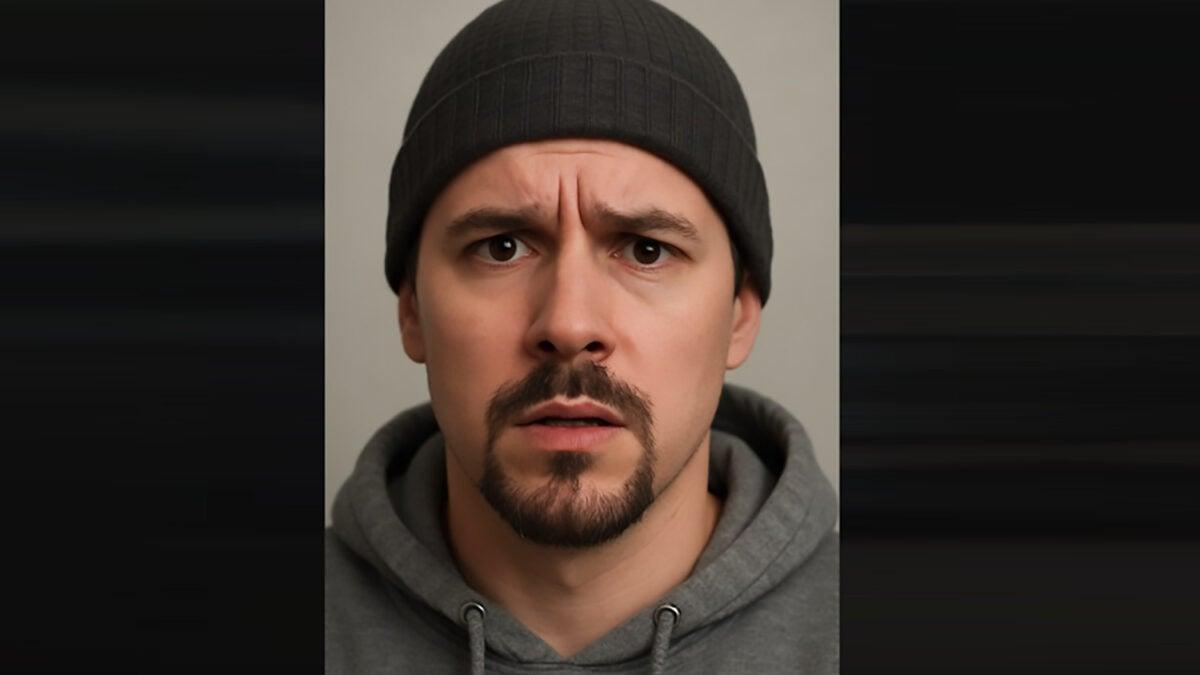
An original still image from an eyewitness video shows the masked ICE agent who shot Renee Nicole Good (Left). Users on social media "unmasked" the agent using Grok (Right). Experts warn AI cannot "unmask" individuals. NPR is publishing both images to show how AI is being used to manipulate images
[5]

After Minneapolis shooting, AI fabrications of victim and shooter
Washington (United States) (AFP) - Hours after a fatal shooting in Minneapolis by an immigration agent, AI deepfakes of the victim and the shooter flooded online platforms, underscoring the growing prevalence of what experts call "hallucinated" content after major news events. The victim of
[6]

The ICE Shooter's Face Was Everywhere Online Within Hours. There's Just 1 Problem.
"In this situation where half of the face [on the ICE agent] is obscured, AI or any other technique is not, in my opinion, able to accurately reconstruct the facial identity," Farid said. And yet, so many people continue to use AI-generated image tools because it takes seconds to do so. Solomon
Share
Copy Link
After a fatal shooting in Minneapolis by an ICE agent, AI-generated images flooded social media claiming to reveal the masked shooter's identity. Internet sleuths used tools like Grok to create fake unmasked images, leading to false accusations against innocent people. Experts warn that AI cannot accurately unmask individuals and only generates plausible predictions, highlighting the growing problem of hallucinated content polluting the information ecosystem.
AI Images Flood Social Media After Fatal Shooting in Minneapolis
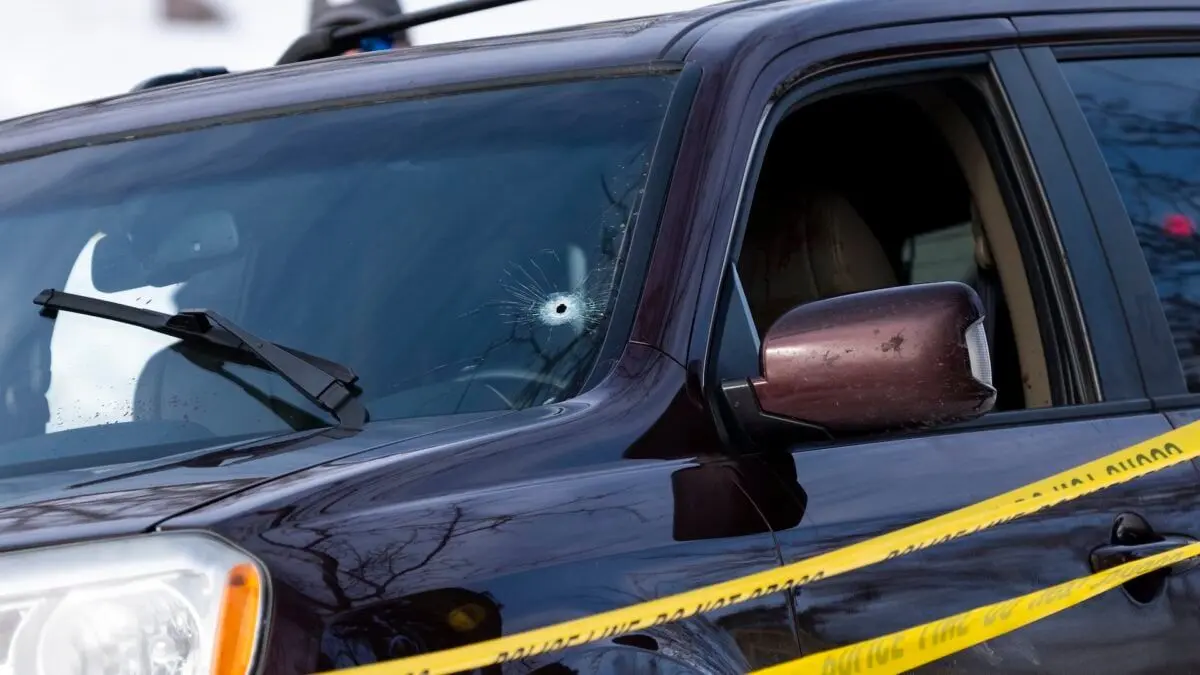
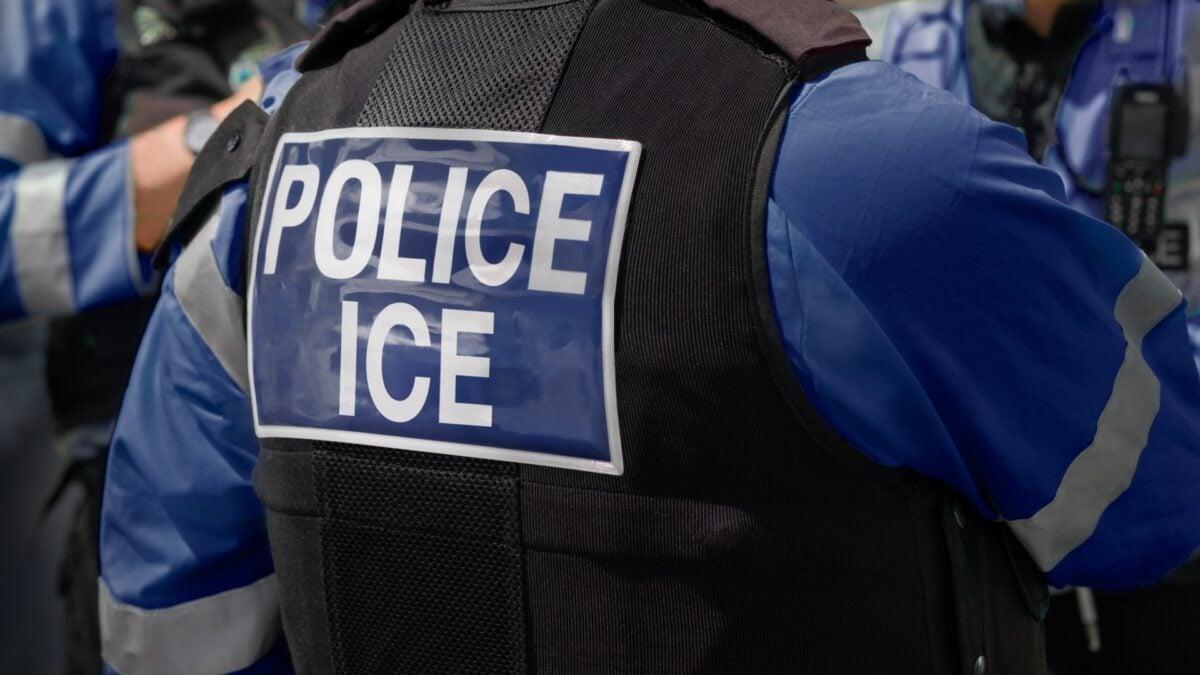
Hours after an ICE agent shot and killed 37-year-old Renee Nicole Good in a fatal shooting in Minneapolis on Wednesday, AI-generated images claiming to unmask the ICE agent flooded social media platforms. The masked agent, who has not yet been publicly identified in official channels, became the target of internet sleuths attempting to use AI image generation tools to reveal his face
1
2
. Screenshots from eyewitness videos were fed into the AI chatbot Grok, developed by Elon Musk's xAI, with users prompting the tool to digitally remove the agent's mask5
.
Source: Gizmodo
The problem is that AI cannot accurately perform this task. "AI will only ever be able to generate a likely image, of which there are many different equally plausible versions," Prof Thomas Nowotny, head of the AI research group at the University of Sussex, told BBC Verify
1
. When asked to generate an image, AI tools can only make predictions based on the images they have been trained on, resulting in very different outcomes every time. At no point in the footage reviewed by BBC Verify does the agent remove his mask1
.
Source: NPR
AI Fabrications Lead to Misinformation and False Accusations
The AI fabrications quickly spread confusion across platforms like X, TikTok, and Instagram, with many of these manipulated images circulating without being labeled as AI-generated content. One image attracted over 1.3 million views in a single post
5
. Along with the fake images, a name began circulating: Steve Grove. This led to an outpouring of anger directed at two innocent men who share that name .
Source: Washington Post
Steven Grove, a gun shop owner in Springfield, Missouri, awoke to find his Facebook page under attack. "I never go by 'Steve,'" Grove told the Springfield Daily Citizen. "And then, of course, I'm not in Minnesota. I don't work for ICE, and I have, you know, 20 inches of hair on my head, but whatever" . The second Steve Grove, publisher of the Minnesota Star Tribune, also became a target. The paper issued a statement monitoring what it believed to be a "coordinated online disinformation campaign" .
Meanwhile, news outlets including NPR and the Star Tribune have identified the ICE agent as Jonathan Ross, based on court documents showing Ross was dragged by a car during another traffic stop in June of last year in Bloomington, Minnesota .
Experts Warn Against Using AI for Biometric Identification
Hany Farid, a professor at the University of California, Berkeley who specializes in the analysis of digital images and co-founder of GetReal Security, emphasized the dangers of using AI for biometric identification. "AI-powered enhancement has a tendency to hallucinate facial details leading to an enhanced image that may be visually clear, but that may also be devoid of reality with respect to biometric identification," Farid wrote to NPR . He described these AI distortions as "problematic" and contributing to the "growing pollution of our information ecosystem"
5
.The issue extends beyond attempting to unmask an ICE agent. AI detection software, including tools like Gemini, struggles to identify whether images have been created with artificial intelligence. When Gizmodo tested an AI-generated image with Gemini, the chatbot incorrectly identified it as "likely a real photograph"
2
. Google's SynthID watermark detector only works for images created with Google tools, leaving content generated by other platforms undetectable2
.Related Stories
Deepfakes and Hallucinated Content Become Standard Practice
The Minneapolis shooting represents a troubling pattern where deepfakes and hallucinated content emerge immediately after major news events. Walter Scheirer from the University of Notre Dame told AFP that "given the accessibility of advanced AI tools, it is now standard practice for actors on the internet to 'add to the story' of breaking news in ways that do not correspond to what is actually happening, often in politically partisan ways"
5
.Beyond the attempts to identify the shooter, AI was also used to dehumanize Renee Nicole Good. Some X users used Grok to digitally undress photos of Good, generating images showing her in a bikini, including one of her body slumped over after the shooting
5
. Grok has faced heavy criticism over its "edit" feature that has unleashed a wave of sexually explicit imagery. Creating such content of minors constitutes child sexual abuse material and is a federal crime, yet Grok continues to comply with these requests2
.This incident mirrors previous cases where social media users relied on AI as an investigative tool. BBC Verify has reported on similar misinformation fueled by "AI-enhanced" images, including manipulated photos of President Trump, a suspect in the Charlie Kirk shooting, and images from the Epstein files
1
. When security camera images of the Charlie Kirk shooting suspect were released, people ran them through AI tools attempting to get clearer pictures without sunglasses. When Tyler Robinson was eventually arrested, his mugshot looked nothing like the AI-altered images circulating online2
.Hany Farid concluded with a sobering assessment: "I fear that this is our new reality"
5
. As AI tools become more accessible and social media platforms scale back content moderation, the challenge of distinguishing authentic evidence from AI fabrications will only intensify, threatening the integrity of the information ecosystem that people rely on to understand critical news events.References
Summarized by

Navi
[3]
Related Stories
AI-Altered Image of Alex Pretti Reaches US Senate Floor, Exposing Misinformation Crisis
31 Jan 2026•Entertainment and Society

Trump's White House pushes AI images further, eroding public trust in government communications
23 Jan 2026•Entertainment and Society

ICE AI tool hiring malfunction sent recruits into field without proper training
16 Jan 2026•Technology
Recent Highlights



Recent Highlights
Today's Top Stories









Don’t drown in AI news. We cut through the noise - filtering, ranking and summarizing the most important AI news, breakthroughs and research daily. Follow topics that matter to you and stay ahead.


