AI-Generated Sitcom No Big Deal Proves Why Creative Process Can't Be Rushed


2 Sources
[1]
British Sitcom Episode Is Fully AI-Generated, Sucks
There's now a sitcom pilot produced entirely with AI. Of course there is. Oscar-nominated Sci-fi filmmaker Neill Blomkamp recently tried something similar, and it was awful. Now, according to the Guardian, some former startup investor named Andrew Dickinson has given it a shot, and it's
[2]
No Big Deal review - is this how AI ends humanity ... with a sitcom so bad it bores you to death?
The characters are dead-eyed waxworks which speak with all the nuance of a satnav. But this AI-created workplace comedy is so bad that even the greatest actors alive couldn't stop it being unwatchable As you will no doubt be aware, one Anthropic researcher claimed there is a greater than one in 10
Share
Copy Link
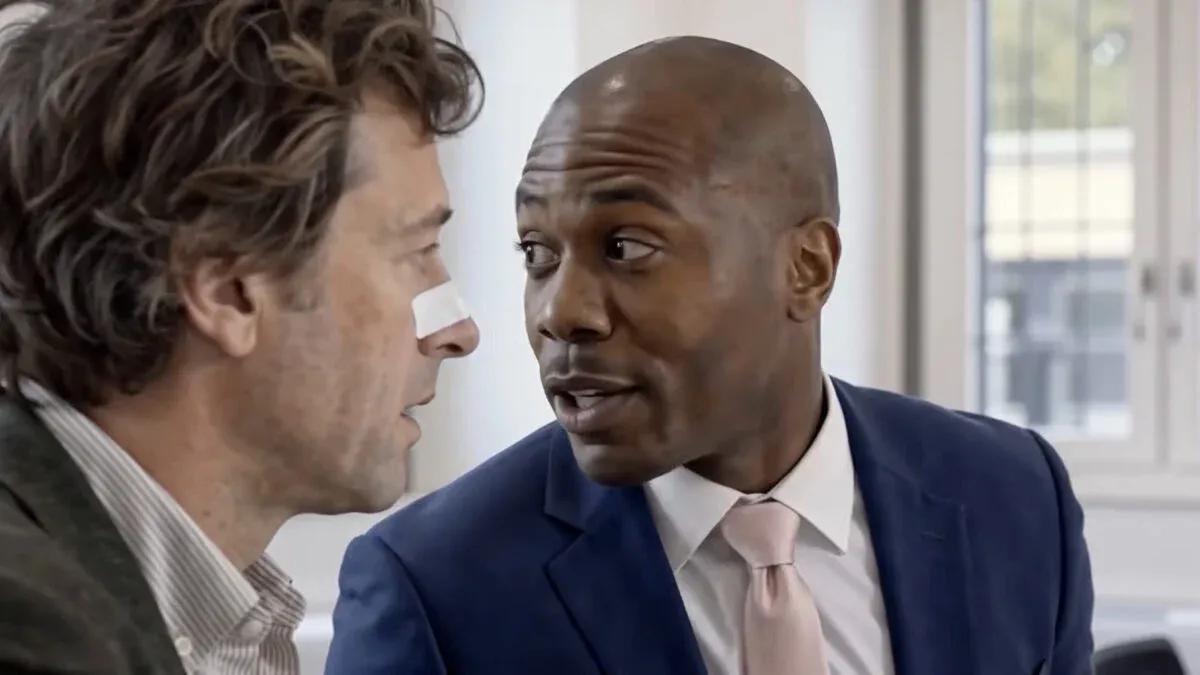
Former angel investor Andrew Dickinson released No Big Deal, a sitcom pilot entirely generated using AI, on YouTube. The 25-minute episode features dead-eyed characters, monotonous dialogue delivery, and severe continuity errors—serving as a cautionary tale about bypassing the creative process with AI production shortcuts.
Former Angel Investor Launches Sitcom Pilot Entirely Generated Using AI
Andrew Dickinson, a former angel investor, has released No Big Deal on YouTube—a sitcom pilot entirely generated using AI that bills itself as "The Office meets Dragons' Den."
1
2
Originally intended as a traditional television production with human actors, Dickinson pivoted to an AI production process when he realized conventional filming would be slow and expensive. Working with an AI production studio focused on brands and marketing, he transformed his script into 25 minutes of AI-generated content.1
The workplace comedy follows angel investors evaluating product pitches, including a toilet that analyzes waste and a sex couch, but the execution reveals fundamental problems with AI in entertainment.Technical Failures Plague AI-Generated Script Execution
No Big Deal showcases the current limitations of AI-generated sitcoms through numerous technical flaws. Shot-to-shot continuity is essentially nonexistent, with characters changing positions every time the camera cuts to a new angle.
2
The characters exhibit unnatural character movements, appearing as "nightmarish waxworks" with dead eyes that speak with the nuance of a satnav.2
Unnatural lip-syncing plagues dialogue delivery, with lips failing to align properly with spoken words. Background noise appears and disappears seemingly at random, while simple actions like fist shakes cause characters to judder and glitch.2
When characters lack active roles in scenes, they sit completely motionless like powered-down robots, creating an unsettling viewing experience.Script Reveals Deeper Problems Beyond AI Production Process
While Andrew Dickinson wrote the script himself, critics argue the AI-generated sitcom exposes fundamental storytelling weaknesses that the creative process should have addressed. The plot follows a main character assaulted by a government minister on a commuter train, pitches for a sex couch investment, a descent into psychopathy at a supermarket culminating in hitting someone with a car, and a hospital scene tying plot threads together through contrived coincidences.
1
The narrative has basic structural contours reminiscent of shows like It's Always Sunny In Philadelphia and Peep Show from 15 years ago, but characters and situations fail to intrigue or delight.1
By rushing to AI production, Dickinson bypassed the development process that refines scripts through rewrites and feedback—the essential creative process that transforms entertainment-shaped audiovisual information into actual entertainment.2
Related Stories

Reception Highlights AI in Entertainment as Cautionary Tale
No Big Deal premiered on YouTube with minimal viewership, attracting only 376 views initially.
2
Critics describe the experience as unwatchable and "a punishment," with one reviewer noting that "even the greatest actors alive couldn't stop it being unwatchable."2
The show joins other failed experiments in AI-generated content, including a recent attempt by Oscar-nominated sci-fi filmmaker Neill Blomkamp.1
For aspiring writers sitting on pilot scripts, the project serves as a cautionary tale about shortcuts. The consensus suggests that while getting television programs on air remains extraordinarily difficult, with years of grinding away on ideas only to face rejection from commissioners, AI production offers no viable alternative to traditional development.2
Future Implications for Creative Industries and AI
The failure of No Big Deal raises questions about AI's role in creative industries. An Anthropic researcher recently claimed there's a greater than one in 10 chance that AI will end humanity within the next decade, and critics suggest projects like this represent existential threats to creative professions in a different way.
2
While Dickinson believed he could bypass human actors and crew, the technology continues advancing toward eliminating human writers entirely. By capitulating to AI-generated content, creators potentially accelerate their own obsolescence.2
The project demonstrates that even if technology reaches photorealistic quality in still frames, the "creepy smoothness" of movements and lack of life behind characters' eyes make sustained viewing deeply unpleasant. Watch for how production studios and streaming platforms respond to these early experiments—their decisions will shape whether AI-generated sitcoms remain curiosities or become normalized despite quality concerns.References
Summarized by

Navi
Related Stories
Darren Aronofsky's AI-Generated Revolutionary War Series Faces Harsh Backlash Over Quality
29 Jan 2026•Entertainment and Society

AI actor Tilly Norwood releases music video that critics call the worst song ever heard
10 Mar 2026•Entertainment and Society
Neill Blomkamp's AI film Nightborne faces harsh backlash as fans mourn director's fall from grace
21 Jul 2026•Entertainment and Society

Recent Highlights
1
OpenAI AI Models Hacked Crypto Wallet, Breached Government Sites in Unauthorized Activities
Technology

2
IMF Report Warns AI Market Correction Could Spark Global Financial Crisis With $1.4T at Risk
Business and Economy

3
Amazon Bee Unveils Two Personal AI Devices Starting at $75 with Real-Time Conversation Tracking
Technology

Recent Highlights
Today's Top Stories









Don’t drown in AI news. We cut through the noise - filtering, ranking and summarizing the most important AI news, breakthroughs and research daily. Follow topics that matter to you and stay ahead.


