AI has a proof of the Riemann hypothesis, and mathematicians can't agree what it means


2 Sources
[1]
'If we can solve Riemann, what can't we do?': mathematicians shocked and excited by AI breakthroughs
The news came on a Friday -- and it was ground-shaking. For months, reports have mounted of artificial-intelligence models toppling some of the toughest problems in mathematics, plunging the field into turmoil. But the latest claim was the most shocking yet: an AI model had helped to solve the
[2]
AI's stunning progress in maths shows how little we understand it | New Scientist
The biggest problem in maths has been cracked by AI, but it remains impossible to predict how its capabilities will advance in other fields There is a story, possibly apocryphal, that when the mathematician G. H. Hardy was about to undertake a dangerous sea voyage, he sent a postcard to a
Share
Copy Link
A mathematician at Anthropic has released a proof of the Riemann hypothesis, built with help from an advanced version of the company's Claude model, and it was independently verified within a day
1
. The result settles a problem that had stood since the 19th century, and it has landed on a field already arguing about what AI is doing to it.A proof no human has read
The Riemann hypothesis, a number theory problem about the randomness of primes, had been unsolved since the 19th century and was widely seen as maths' most famous open problem
1
2
. Levent Alpöge released his AI-assisted proof on 20 November1
. It runs to 17 million lines of code in Lean, a programming language that turns mathematical arguments into a form a computer can check1
.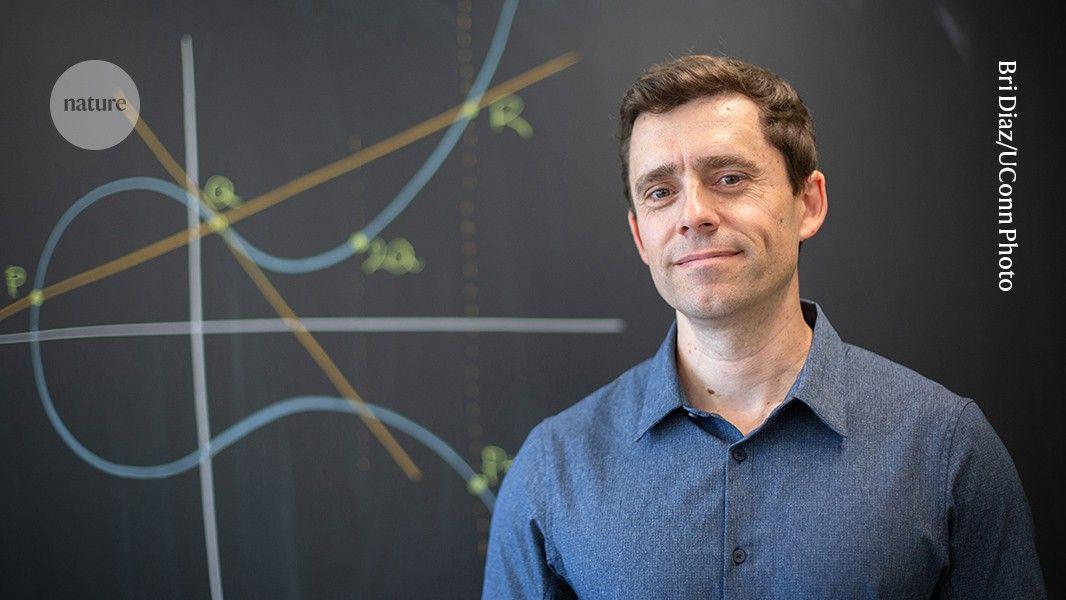
Source: Nature
That checkability is what made rapid verification possible
1
2
. The non-profit behind Lean and the Mathlib Initiative verified the proof independently. On 21 November it said: "We have full confidence that Alpöge's proof of the Riemann Hypothesis is correct, and we congratulate him"1
. Being correct and being understood have come apart. The proof is broadly accepted as likely correct, but no one yet comprehends it, and making millions of machine-checked lines legible will take considerable time1
2
.Why now
The result did not come from nowhere: AI models had been toppling hard mathematics problems for months, in a year mathematicians describe as one of rapid, disruptive change
1
2
. Last month Terence Tao, described by New Scientist as a leading mathematician, said AI might not solve the Riemann hypothesis before 20502
. Some mathematicians now wonder whether other long-standing problems could fall within months2
.Within hours of the release, a separate group of mathematicians produced a proof of their own
1
.Related Stories
Celebration and alarm
The community's response ranges from excitement to anxiety. Tasmin Chu, a Caltech PhD student who organizes with the Association for Human Mathematics, told Nature: "My reaction is grave concern." She says a pause on AI development and democratic oversight of AI companies is needed
1
. Marcus Du Sautoy, a professor at Oxford, describes excitement mixed with anxiety about 'math 2.0'. "There's quite a lot of anxiety about what 'math 2.0' is going to look like," he says1
.Per New Scientist's argument, that fast checking may explain why AI's gains have come fastest in maths and coding. Whether the same advantage can ever be built for fields without machine-checkable answers is an open question
2
. Postdoc Harini Desiraju notes that understanding the Lean proof will take time, and raises questions about what role frontier AI labs should play in research1
.As Xin Zhang, an assistant professor at the University of Hong Kong, asked, "If we can solve Riemann, what can't we do?"
1
Source: New Scientist
References
Summarized by

Navi
[1]
Related Stories
Anthropic mathematician says Claude helped him prove math's most famous problem
20 Nov 2026•Science and Research

A machine proved math's most famous problem, and nobody can read the answer
23 Nov 2026•Science and Research
AI disproves 87-year-old Jacobian conjecture, sparking debate on AI's role in mathematics
21 Jul 2026•Science and Research
Recent Highlights

Recent Highlights
Today's Top Stories








Don’t drown in AI news. We cut through the noise - filtering, ranking and summarizing the most important AI news, breakthroughs and research daily. Follow topics that matter to you and stay ahead.


