AI in Payroll: How Growing Businesses Cut Complexity and Boost Accuracy


2 Sources
[1]
How AI Is Helping Growing Businesses Take the Complexity Out of Payroll
The strongest payroll applications act as an intelligent second reviewer, identifying and explaining potential problems while leaving final decisions to human administrators. For most growing businesses, payroll is one of those functions that receives little attention when everything goes right.
[2]
The Benefits of AI-Powered Payroll for Modern Businesses
AI has taken the world by storm in recent years, and it's now being used in both our personal and professional everyday lives. For businesses, AI is becoming increasingly beneficial in a number of ways, but there is one area where it's made a very noticeable difference - payroll. In the past,
Share
Copy Link
AI in payroll is reshaping how growing businesses handle one of their most critical functions. As companies scale from 40 to 150 employees, payroll complexity multiplies with multi-location operations and varying compliance requirements. New AI-powered systems act as intelligent reviewers, flagging discrepancies early and reducing manual workload while keeping humans in control of final decisions.
AI in Payroll Shifts Review From Reactive to Proactive
AI in payroll is fundamentally changing how growing businesses manage one of their most detail-intensive processes
1
. For companies expanding from 40 to 150 employees across multiple locations, payroll management evolves from a straightforward task into a complex operation involving varying overtime rules, changing tax withholdings, and evolving compliance requirements1
. Traditional batch processing systems wait until the end of the pay period to surface problems, creating a compressed review window crowded with last-minute corrections. AI transforming payroll management introduces continuous processing that reviews information as it changes throughout the pay period, identifying tax withholding issues, overtime thresholds, or pay rate discrepancies days earlier1
. This shift flattens the late-cycle workload spike and gives payroll administrators time to investigate issues without delaying pay.Benefits of AI-Powered Payroll for Modern Businesses Include Error Detection
The strongest payroll applications act as intelligent reviewers rather than autonomous decision-makers
1
. These systems review pay runs before finalization, flag payroll discrepancies, explain findings, and leave final decisions to human administrators. AI is helping growing businesses spot abnormalities in timesheets or salary calculations before payroll completion, preventing costly over or underpayments2
. This approach proves particularly valuable where payroll is managed by HR generalists, office managers, or finance leaders handling multiple responsibilities. UKG research indicates that 84% of employees welcome AI tools that automate workplace processes, while 79% believe AI could free up time for more important work1
. Employees embrace AI when it helps people perform jobs better rather than removing them from processes altogether.Automating Payroll Processes Handles Growing Data Volumes
Streamlining payroll processes becomes critical as businesses scale their workforce
2
. Instead of HR teams spending hours inputting employee data, generating payslips, and calculating wages, deductions, and contributions, AI-powered systems complete these tasks within minutes2
. This automation proves especially helpful for businesses with multiple locations and rotating shift patterns, where different areas and working hours carry different pay rates and shift premiums2
. AI processes large volumes of employee data efficiently, allowing businesses to scale operations without overwhelming HR teams. Reducing time spent on repetitive tasks allows HR teams to focus on strategic initiatives like improving employee retention.Related Stories


System Integration Eliminates Manual Reconciliation Across Functions
Payroll for modern businesses doesn't operate independently from other systems
1
. Every paycheck reflects information from HR, scheduling, timekeeping, benefits, and compliance systems. When HR, time, and payroll share underlying data through system integration, changes flow naturally across platforms1
. A manager updates an employee's pay rate, an overtime threshold is reached, or an employee changes tax withholdings, and payroll reflects these updates without requiring manual reconciliation between multiple systems. This integration reduces duplicate work while improving operational efficiency.Compliance and Employee Experience Drive Adoption
Incorrect salary calculations, missed payments, or late report submissions carry financial costs and damage trust between employees and companies
2
. AI-powered payroll reduces human error while maintaining compliance, with most modern tools updated to align with latest legislation and regulations2
. Consistent payroll accuracy directly impacts the employee experience—late or error-prone processes frustrate workers and affect financial wellbeing2
. AI-powered employee payroll apps allow staff to access payslips and documents quickly without disturbing HR teams. These systems also enable data-led decision-making by consolidating payroll trends, revealing true labor costs, overtime patterns, and demand peaks that remain hidden across multiple spreadsheets2
. However, businesses must remember that AI can still make mistakes, requiring regular information reviews especially following regulation updates or workforce changes.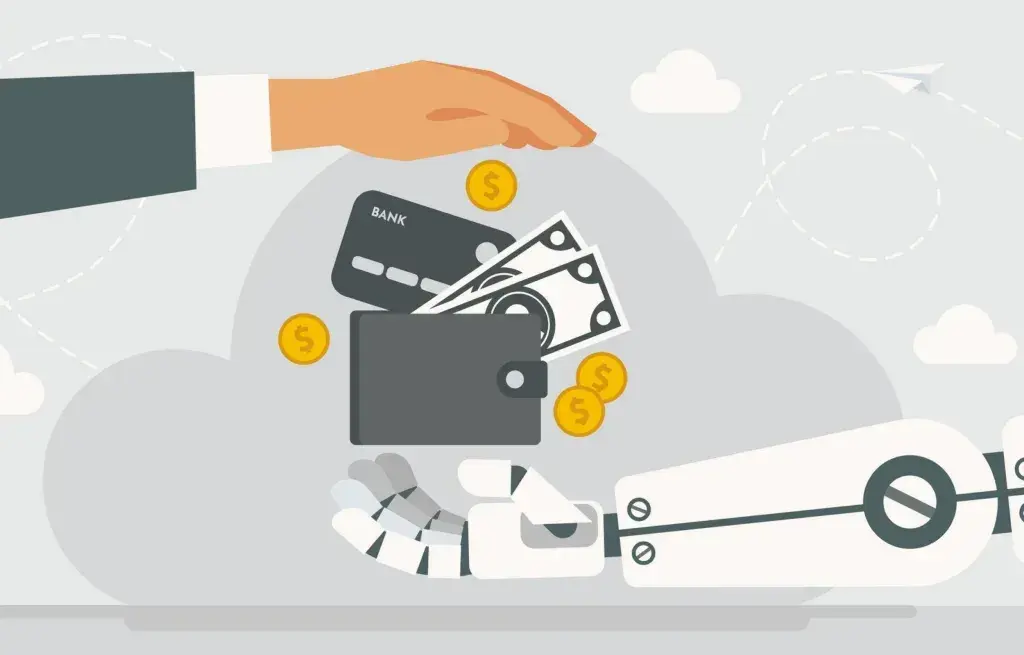
Source: Entrepreneur
References
Summarized by

Navi
[2]
Related Stories
AI in HR raises questions about trust as managers use tools to decide pay raises and promotions
05 Feb 2026•Technology
AI Revolution: Empowering Small Businesses with Cutting-Edge Tools
09 Sept 2025•Business and Economy

AI-Powered Payroll Platforms Gain Traction as Businesses Seek Flexibility and Compliance
11 Jan 2025•Business and Economy

Recent Highlights
1
Microsoft and Nvidia Launch Surface Laptop Ultra: A $2,599 AI-Ready PC With RTX Spark Chip
Technology

2
OpenAI Releases 722 AI-Generated Math Papers on GitHub, Igniting Fury Among Mathematicians
Science and Research

3
Trump Consulted Grok AI Before Ordering Venezuela Invasion and Capture of Nicolás Maduro
Policy and Regulation

Recent Highlights
Today's Top Stories









Don’t drown in AI news. We cut through the noise - filtering, ranking and summarizing the most important AI news, breakthroughs and research daily. Follow topics that matter to you and stay ahead.


