Nvidia's Record Earnings Highlight AI Boom and Future Challenges


6 Sources
[1]
The A.I. Spending Frenzy Is Propping Up the Real Economy, Too
The trillions of dollars that tech companies are pouring into new data centers are starting to show up in economic growth. For now, at least. It's no secret by now, as investors await an earnings report on Wednesday by the chip behemoth Nvidia, that optimism around the windfall that artificial
[2]
Nvidia's $46.7B Q2 proves the platform, but its next fight is ASIC economics on inference
Want smarter insights in your inbox? Sign up for our weekly newsletters to get only what matters to enterprise AI, data, and security leaders. Subscribe Now Nvidia reported $46.7 billion in revenue for fiscal Q2 2026 in their earnings announcement and call yesterday, with data center revenue
[3]
Is the tide turning on the AI boom's myth of destiny?
For the last year and a half, AI hasn't just been a technology -- it's been a worldview. Nvidia's stock tore through Wall Street expectations and crowned the company more valuable than Microsoft and Apple. Microsoft pledged to spend like a sovereign wealth fund to bulk up Azure. Google rewired its
[4]
Wall Street shrugs at Nvidia's record Q2 earnings report
Every frenzy has its moment -- a point where record-breaking stops feeling record-breaking and jaw-dropping starts to sound like last quarter's news. On Wednesday, the AI frenzy had one of those moments. Nvidia posted a huge quarter -- $46.7 billion in revenue, $26.4 billion in profit, gross
[5]
NVIDIA's 56% revenue growth isn't enough for greedy short termists on Wall Street. But is there genuine reason for concern?
The world's most valued company turned in revenue growth in excess of 50% year-on-year yesterday - and its share price went down. Have we finally passed through the Looking Glass into an AI-powered realm where nothing can be taken for granted? The firm, of course, was NVIDIA, which turned In Q2
[6]

Nvidia Just Sounded the Silent Alarm -- but Are Investors Paying Attention? | The Motley Fool
Two subtle warnings in Nvidia's latest report point to possible trouble for Wall Street's most important artificial intelligence (AI) stock. Over the past three years, nothing has moved markets more than the rise of artificial intelligence (AI), and no stock has benefited more from the evolution
Share
Copy Link
Nvidia reports record Q2 earnings, showcasing the ongoing AI boom. However, concerns arise about market saturation, geopolitical tensions, and the sustainability of AI investments.
Nvidia's Record-Breaking Earnings
Nvidia, the world's most valued chip company, reported staggering Q2 2026 earnings with revenue of $46.9 billion, up 56% year-over-year, and net income of $26.1 billion
1
.
Source: Quartz
5
. Despite these impressive figures, Nvidia's stock price dipped slightly, indicating a potential shift in market sentiment.AI Boom Driving Economic Growth
The AI spending frenzy is not just inflating stock prices but is also boosting the real economy. Companies are projected to spend $375 billion globally on AI infrastructure in 2025, rising to $500 billion in 2026
1
. This massive investment in data centers, semiconductor factories, and power supply is creating significant business activity, accounting for a quarter of all economic growth in the past year according to Commerce Department data1
.Infrastructure and Energy Challenges
The rapid expansion of AI infrastructure is putting pressure on existing systems. U.S. electricity demand is surging towards record highs, with AI data centers being a primary driver. The International Energy Agency expects data-center power use to more than double by 2030, equaling Japan's entire national consumption
4
. This has led to concerns about the sustainability and scalability of AI investments.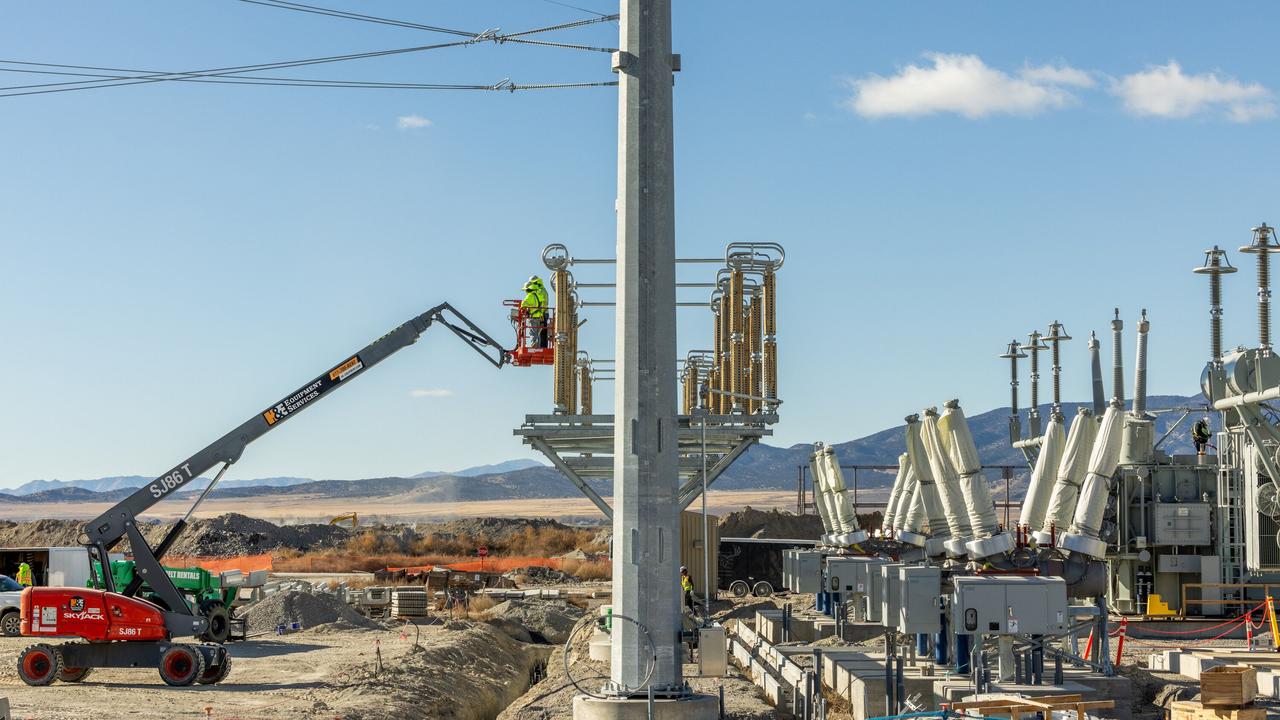
Source: NYT
Geopolitical Tensions and Market Risks
Nvidia's growth is partially constrained by geopolitical factors, particularly U.S.-China relations. The company estimates the Chinese market represents a $50 billion opportunity this year, but export restrictions have limited access
5
. Huang emphasized the importance of addressing the Chinese market, noting that "about 50% of the world's AI researchers are in China"5
.Market Saturation and Competition
As the AI boom matures, there are signs of market saturation and increased competition. Custom application-specific integrated circuits (ASICs) are gaining ground on performance and cost advantages over Nvidia GPUs
2
. Major tech companies like Google, Meta, and Microsoft are deploying their own custom silicon at scale, potentially challenging Nvidia's dominance in the long term2
.Related Stories


Investor Sentiment and Future Outlook
While Nvidia's growth remains impressive, there's a sense that the market has "largely caught up to the growth potential," according to Morgan Stanley analyst Joe Moore
4
. The company's high valuation (trading at 27-37 times forward earnings) means that even record-breaking results may be seen as merely meeting expectations rather than exceeding them4
.Conclusion

Source: Quartz
Nvidia's Q2 earnings report showcases the ongoing strength of the AI boom and its impact on the broader economy. However, it also highlights emerging challenges such as infrastructure limitations, geopolitical tensions, and potential market saturation. As the AI industry matures, companies like Nvidia will need to navigate these complexities to maintain their growth trajectory and market position.
References
Summarized by

Navi
[2]
Related Stories
Recent Highlights
1
Meta Unveils Muse Wonder Frontier AI Models, Claims Performance Matching OpenAI and Anthropic
Technology

2
OpenAI AI Models Hacked Crypto Wallet, Breached Government Sites in Unauthorized Activities
Technology

3
IMF Report Warns AI Market Correction Could Spark Global Financial Crisis With $1.4T at Risk
Business and Economy

Recent Highlights
Today's Top Stories






Don’t drown in AI news. We cut through the noise - filtering, ranking and summarizing the most important AI news, breakthroughs and research daily. Follow topics that matter to you and stay ahead.


